The first encounter
At the gates,
the ordinary world ended.
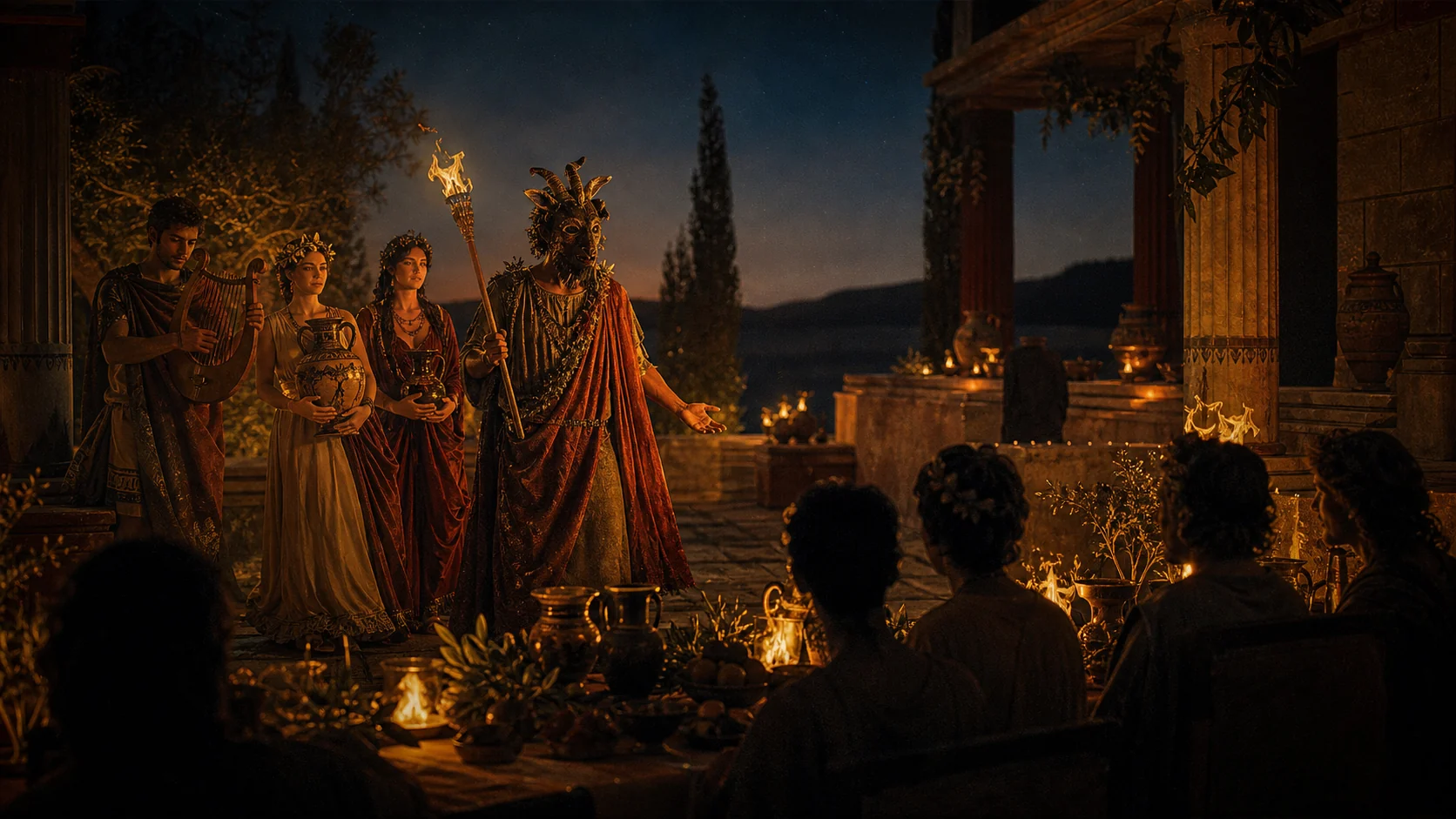
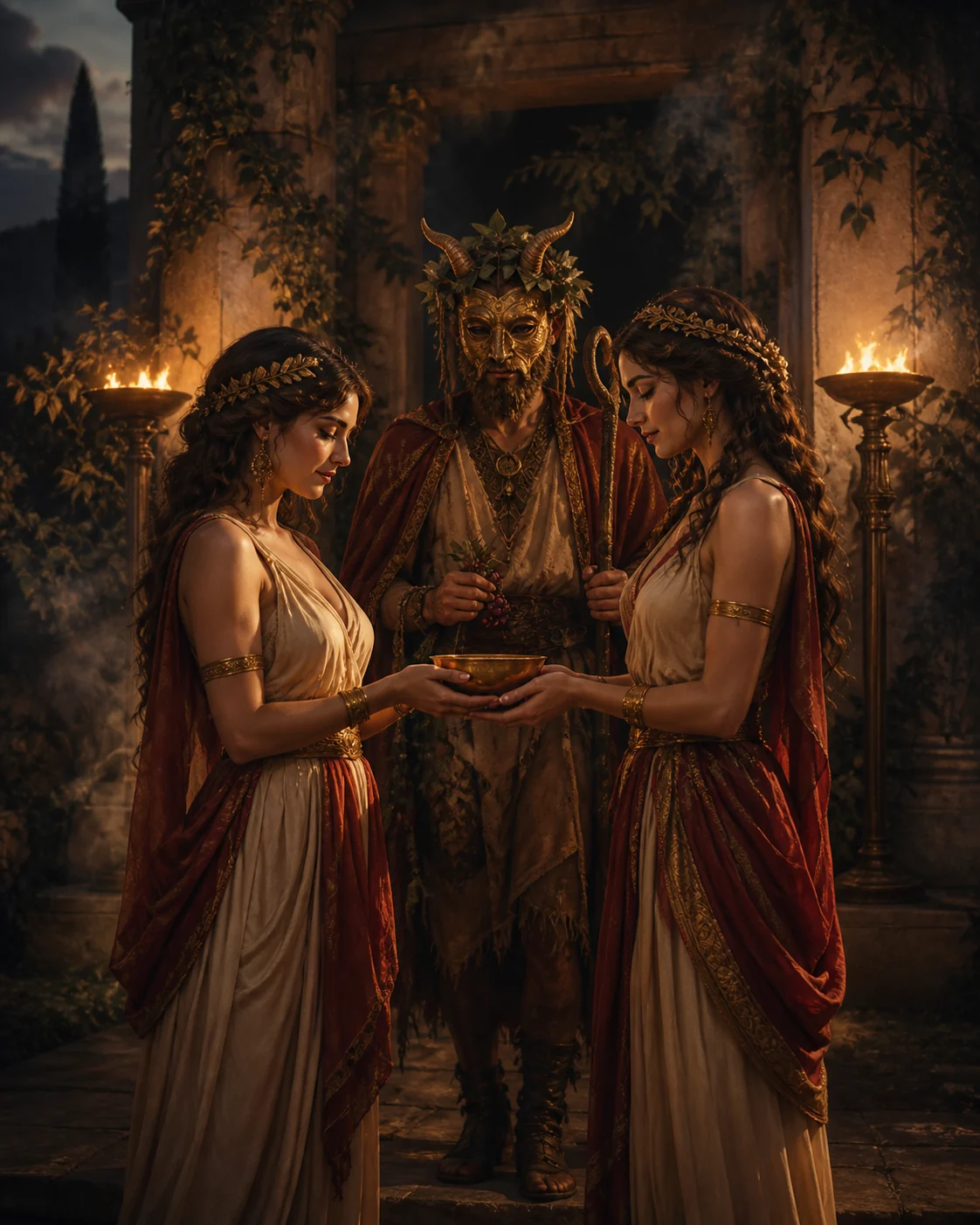
Before a menu was opened or a seat was taken, the story had begun. Pan and his Nymphs belonged to the landscape of the entrance; their music reached the guests before their faces came fully into view.
The offered cup of wine, honey, pomegranate and herbs was both welcome and invitation. It asked the guests to slow down, taste, listen and cross the threshold together.
Behind the mythic hosts stood the Spartan guard. Bronze, shields and full armour changed the scale of the arrival. This was no longer the entrance to a conventional private dinner, but the guarded doorway to another time.
Four crossings
The night kept changing
the people inside it.
Each passage carried the guests further from an evening they recognised and deeper into one they could inhabit.
- Ⅰ
A sound beyond the gateThe evening announced itself before it appeared. Pipes, footsteps, Nymphs and Pan, then the first dark cup offered through the music.
- Ⅱ
The present left outsideBronze caught the light and Spartans held the doorway. Between them, an invitation became a passage into another time.
- Ⅲ
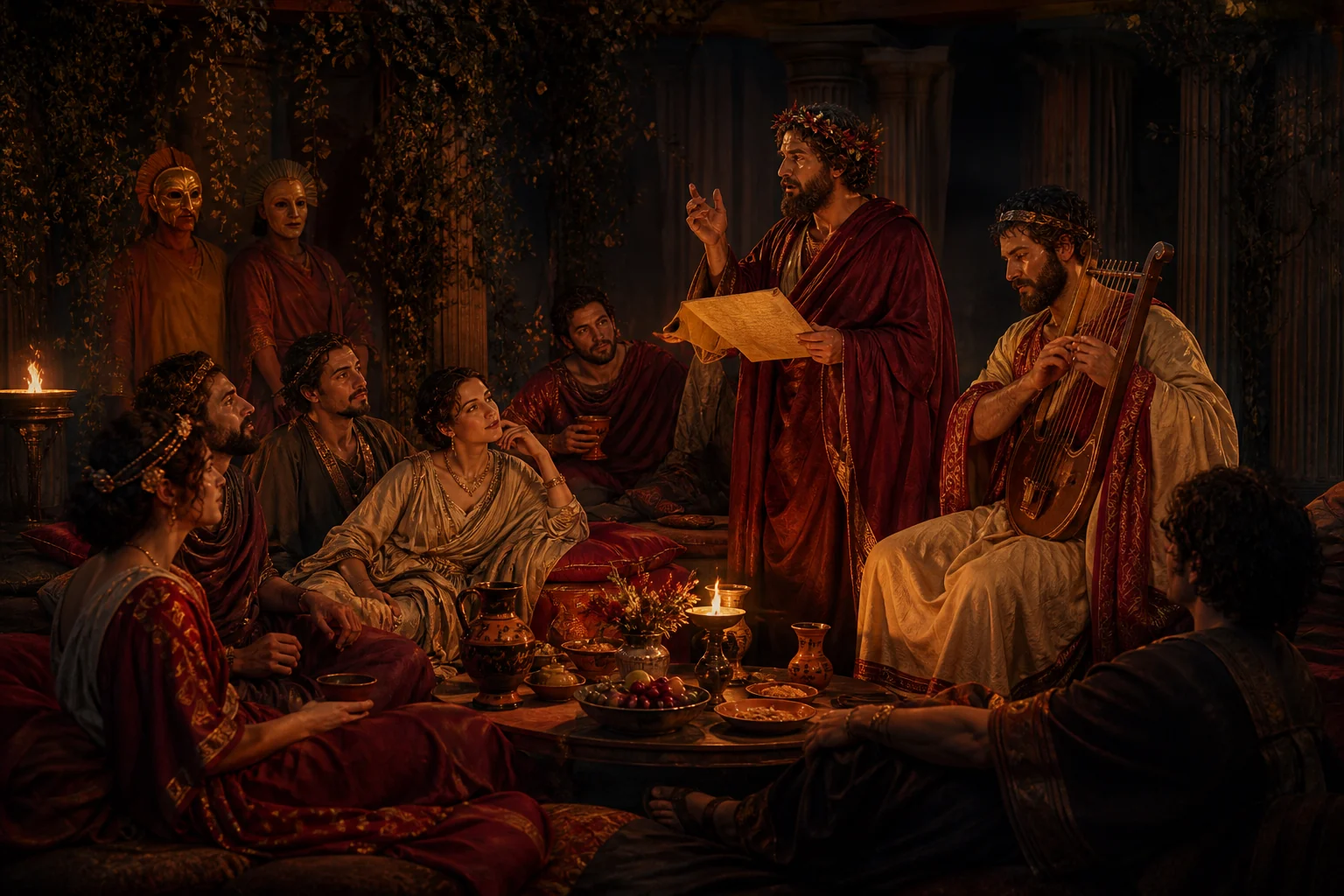
The feast found its voicePerfume rose, the phorminx answered and the rhapsode let Homer and Hesiod move from table to table.
- Ⅳ
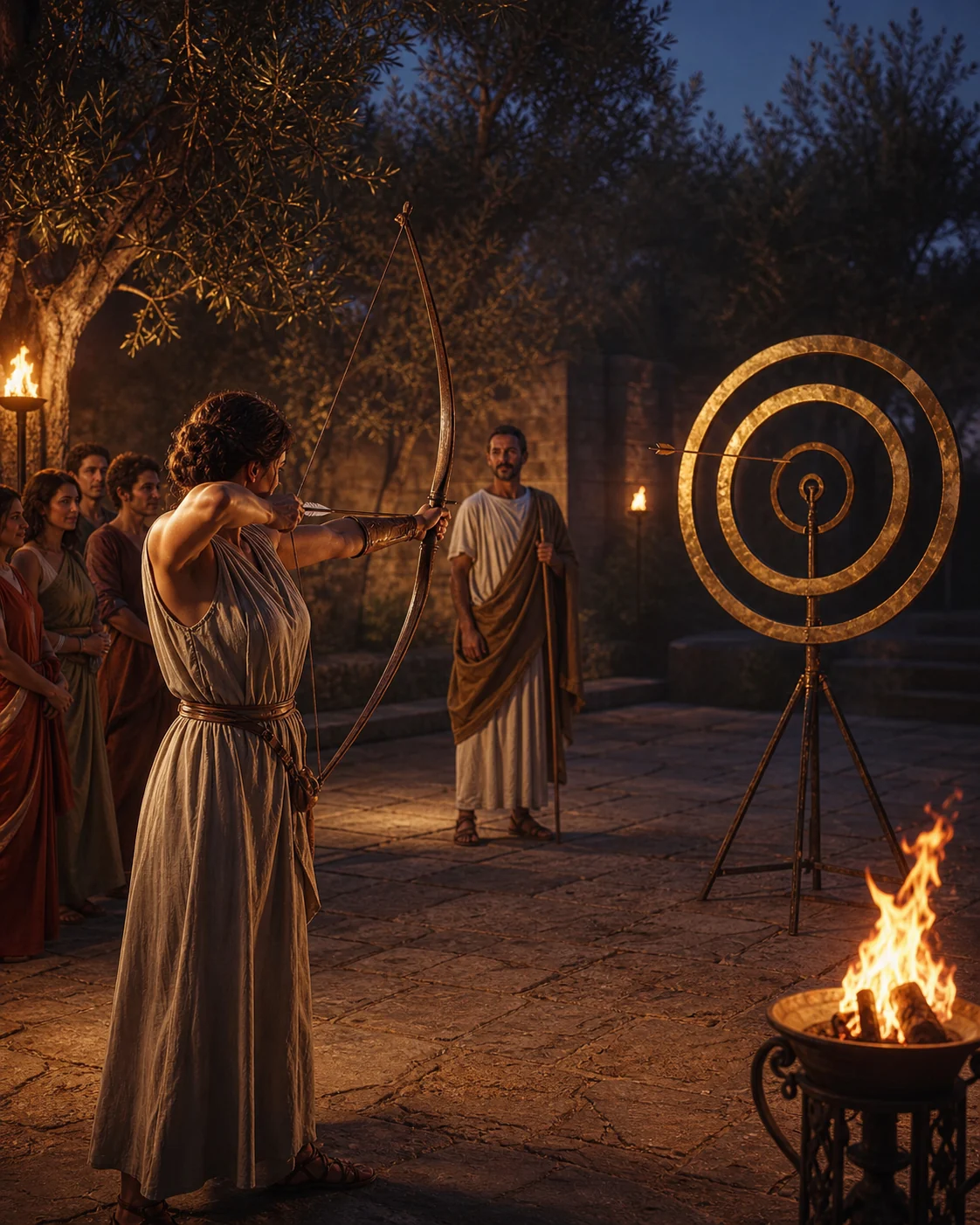
No longer spectatorsHands drew the bow of Odysseus. Bodies felt the force of pankration. Each guest left with clay in hand and wings overhead.
01Akratisma
The first taste.
The feast opened with bread touched by unmixed wine, then spread outward into an abundance of grain, herbs, cheese, fruit, fish, meat, sesame and honey.
02Names carried
to the table.
There was Hercules' pea mash with leek and pomegranate with honey, Polyphemus' yoghurt cooled by mint, Mithaecus' chickpeas, Sappho's salted sardine sharpened with fruit sauce, and bulbs dressed with olive oil and spice. Each small plate carried a name, a flavour and a fragment of a larger world.
03A feast
made of bread.
Lentil and hard wheat, goat cheese and anise, carob, barley, millet, linseed, nuts and honey formed a procession of breads. Chicken, pork and a fragrant rice pie followed with crowned wheat, rocket, spice and apricot.
04Vessels that changed
the gesture.
All of it arrived in reconstructed vessels and tableware. A cup was not merely a container and a jug was never decoration. Their weight, handles and painted forms changed the way wine was poured, held and shared.