Mythological menu
Nectar-like wines, ambrosian drinks, Bread of Pan, the lentil preparation of Herakles and the Horn of Plenty form its narrative frame.
See the Mythological Menu at Our Mykonos Event →
Historical menus · Food & hospitality
Historically researched menus inspired by periods, places, rituals and figures of the ancient world.
Historical gastronomy
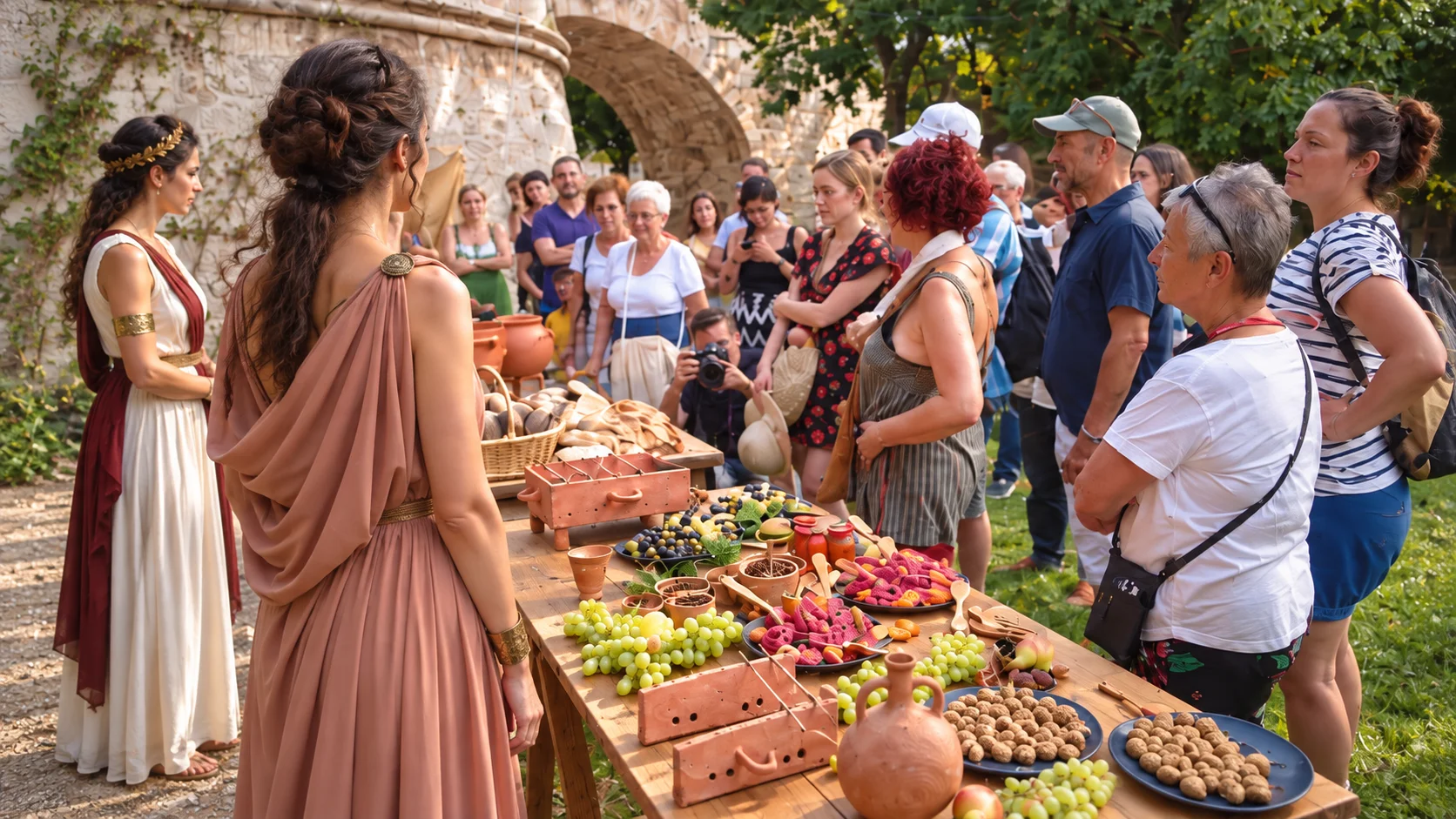
Discover the ingredients, flavours and stories behind Archaeopolis historical gastronomy. The menu families draw inspiration from mythology, daily life, celebration and hospitality in the ancient Greek world.
Explore each theme, then browse the breads, appetisers, main dishes, sweets and drinks that bring this culinary approach to the table.
Narrative structures
Nectar-like wines, ambrosian drinks, Bread of Pan, the lentil preparation of Herakles and the Horn of Plenty form its narrative frame.
See the Mythological Menu at Our Mykonos Event →
Food and drink are framed through Achilles, Patroclus, Agamemnon, Helen, Odysseus and epic hospitality.
Equal portions, diverse Athenian foods and symposium culture connect the meal with music, dance and conversation.
A menu inspired by Spartan life, from the Black Broth tradition and camp cooking to the food of the household.
A menu inspired by the journeys of Alexander, bringing a Macedonian starting point into conversation with ingredients and spices from Southern Greece, Asia Minor, Central Asia and India.
Food and drink are framed through Aphrodite, Helen and Phaon and organised around sensory hospitality.
Dionysos and Ariadne, Hera's bridal sphere, wine, shared dining and ceremonial hospitality provide the narrative structure.
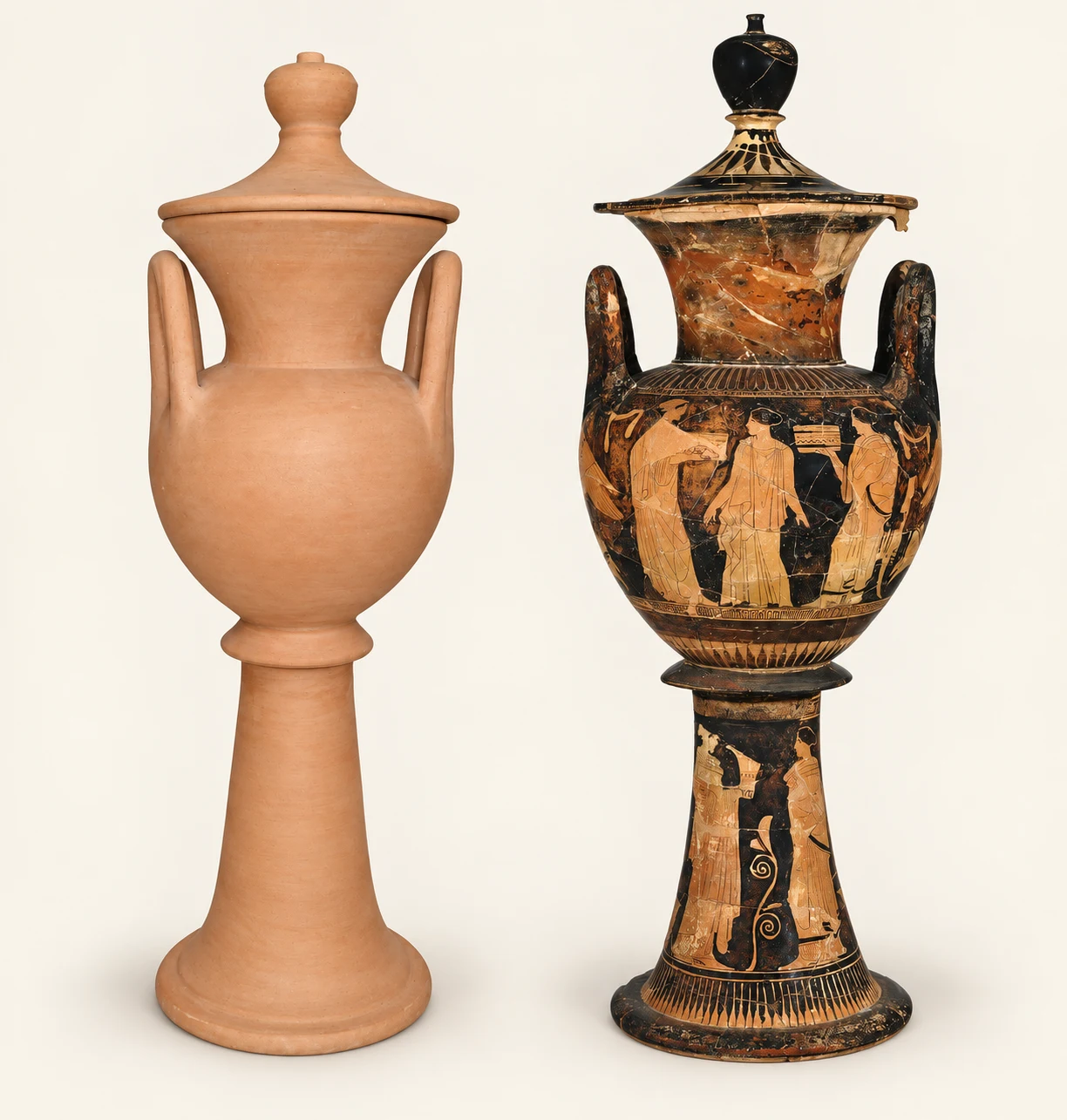
A menu inspired by the Greek cultural heritage of southern Italy and Sicily.
Food archive
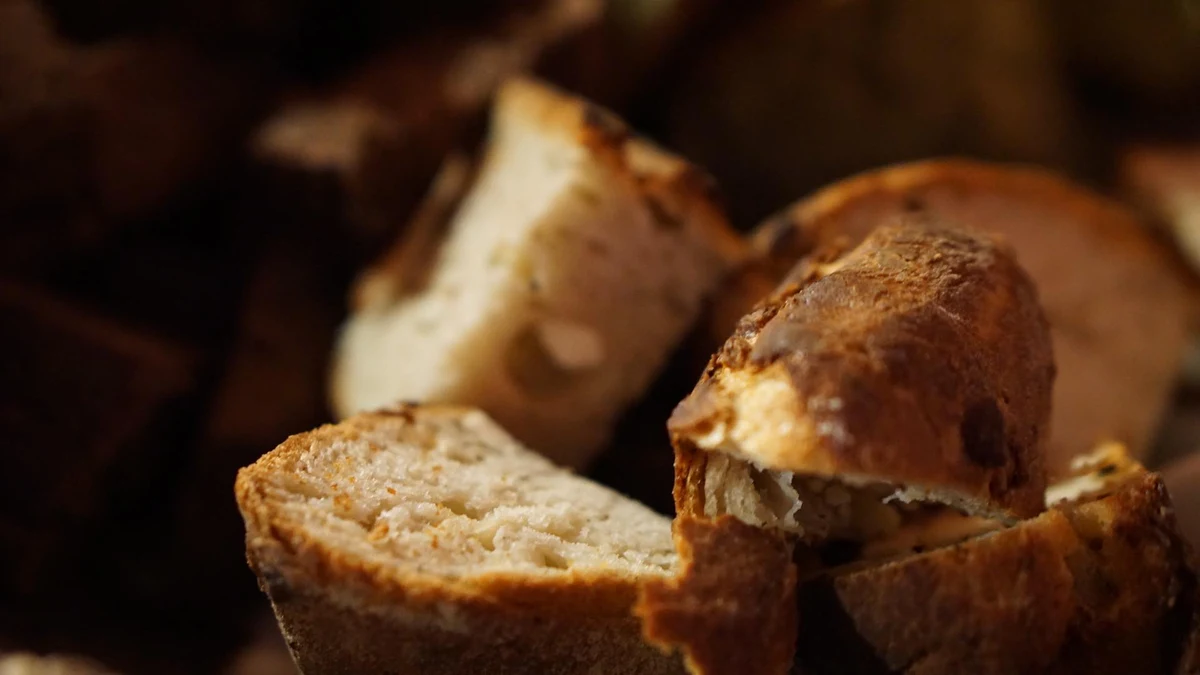
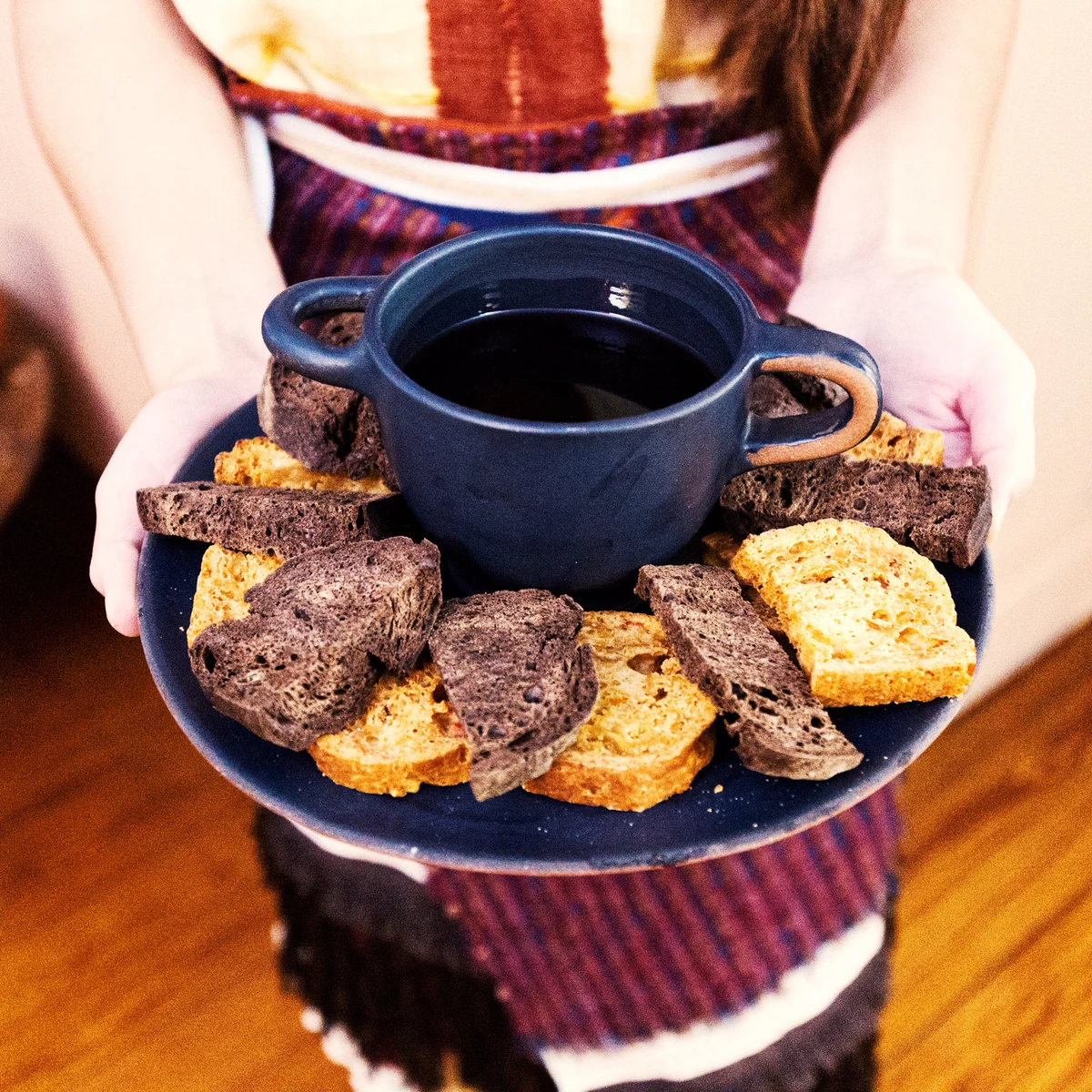
Bread dipped in unmixed wine: a simple pairing that introduces the morning meal through two staples of the ancient Greek table.
Food archive
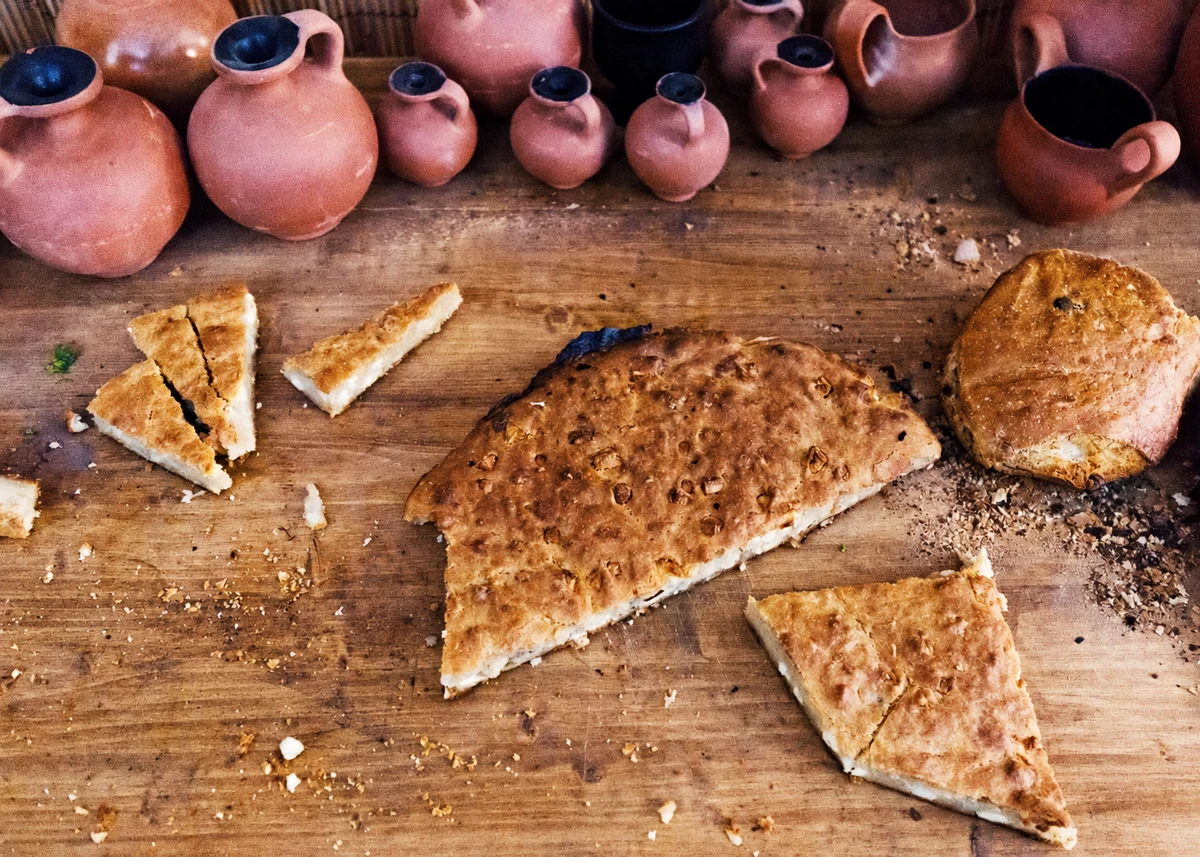
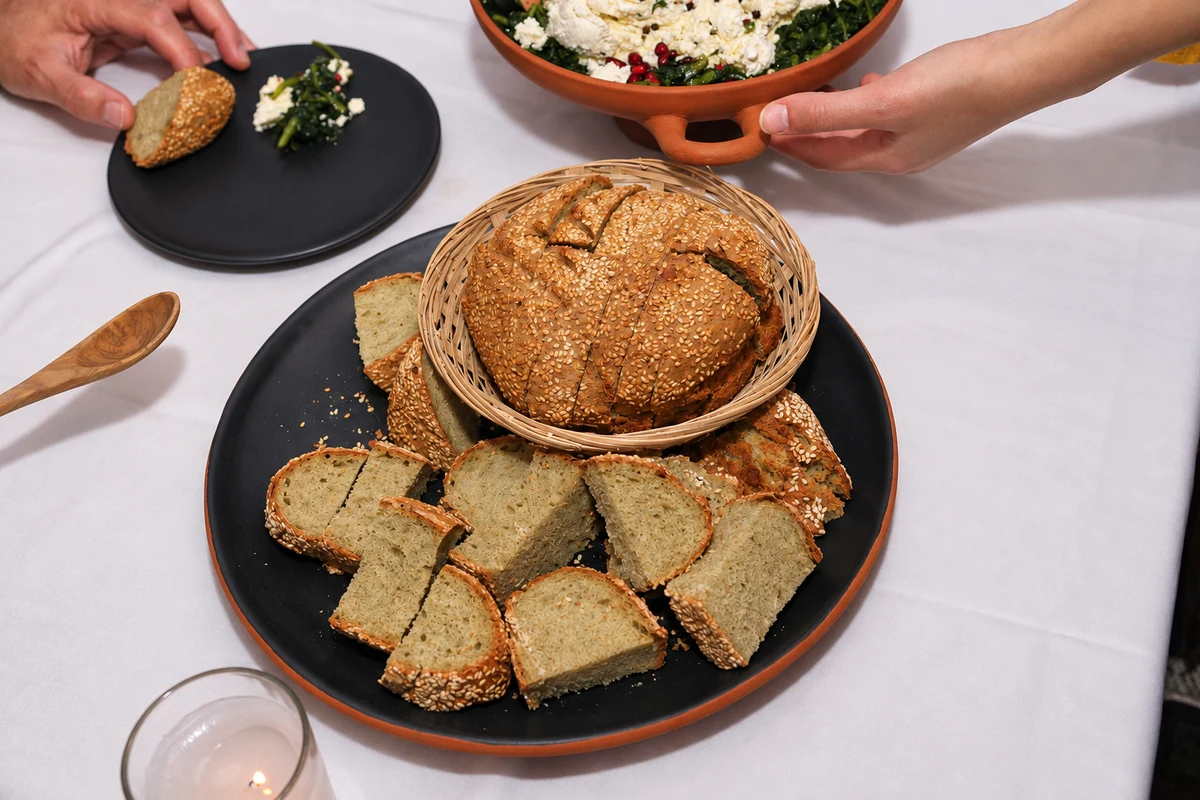
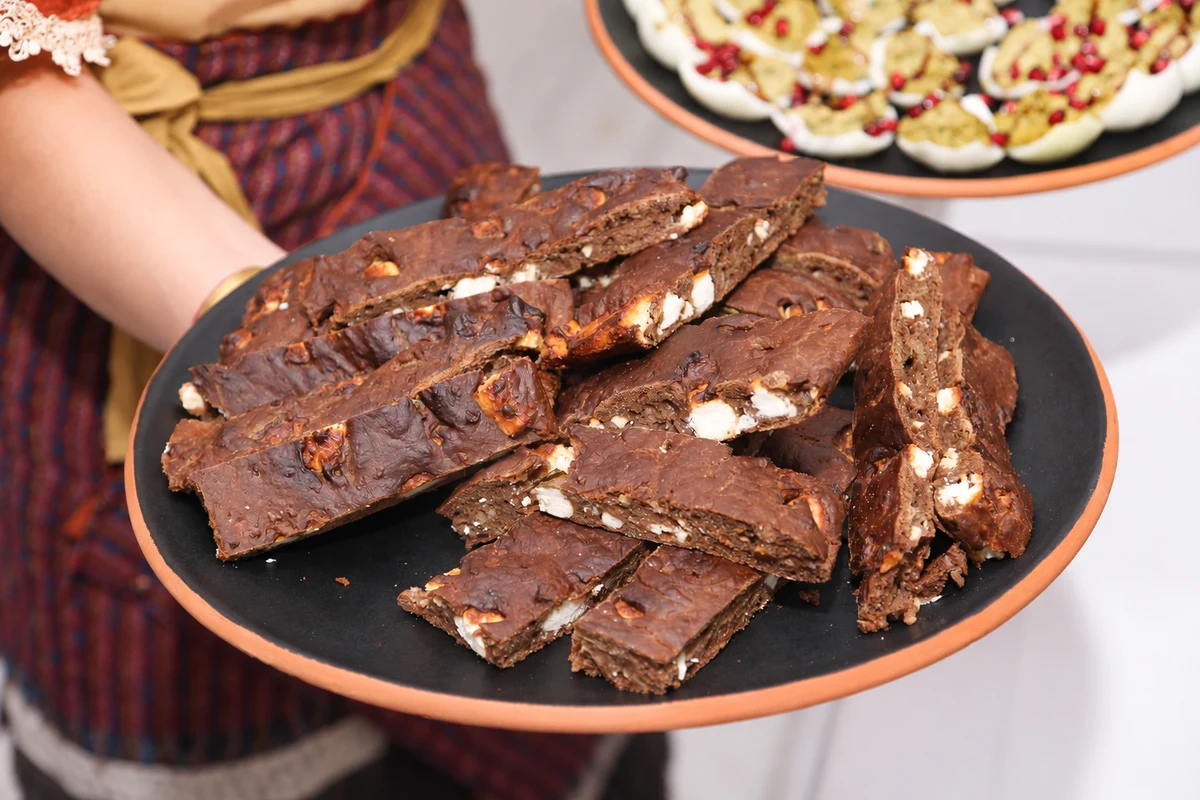
A bread combining red, yellow and brown lentils with hard wheat. Its mixture of grain and pulses gives the mythological menu a tangible link between pastoral imagery, staple foods and the figure of Pan.
Wheat and carob form a dark, direct bread preparation. In an interpreted meal it broadens the visitor's sense of ancient grain culture beyond a single familiar loaf.
Millet, linseed and wheat bring several grains and seeds into one preparation, making the bread itself a way to discuss agricultural variety.
Wheat, nuts and honey create a richer bread with a gently sweet identity. It can mark a transition from everyday staple to hospitality or celebration.
Food archive
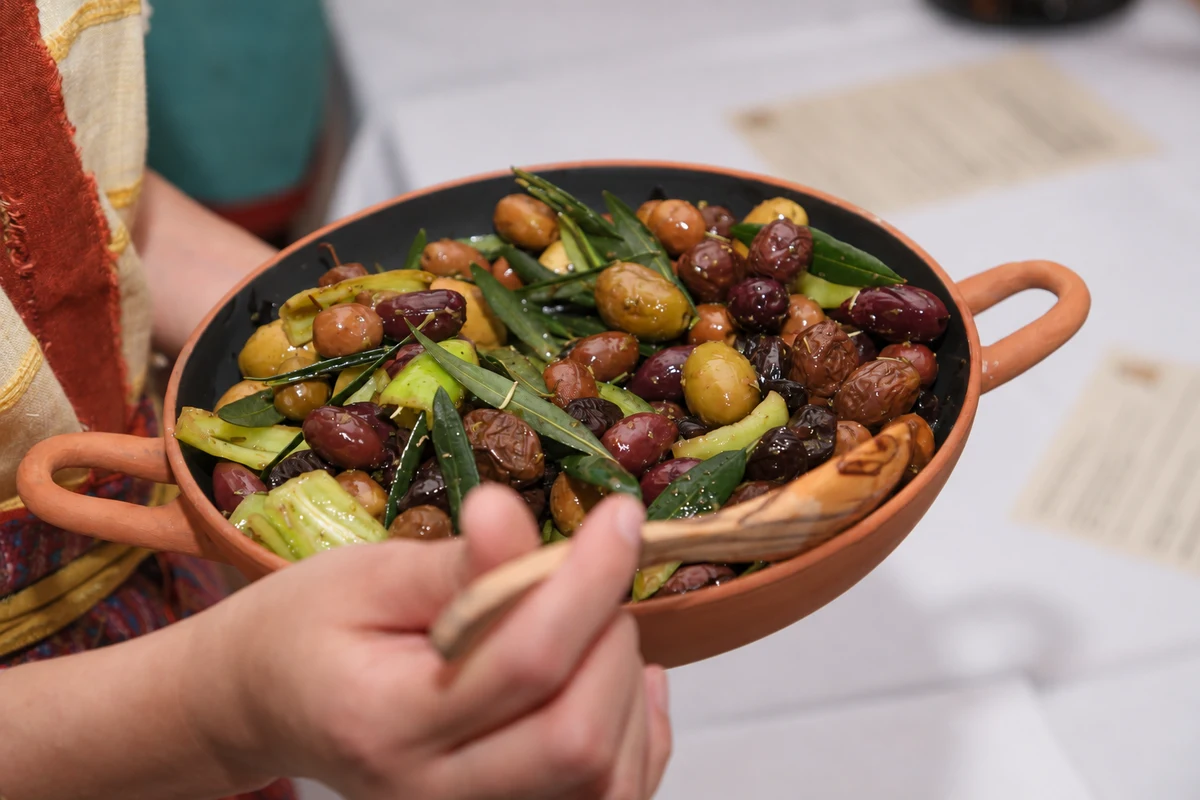
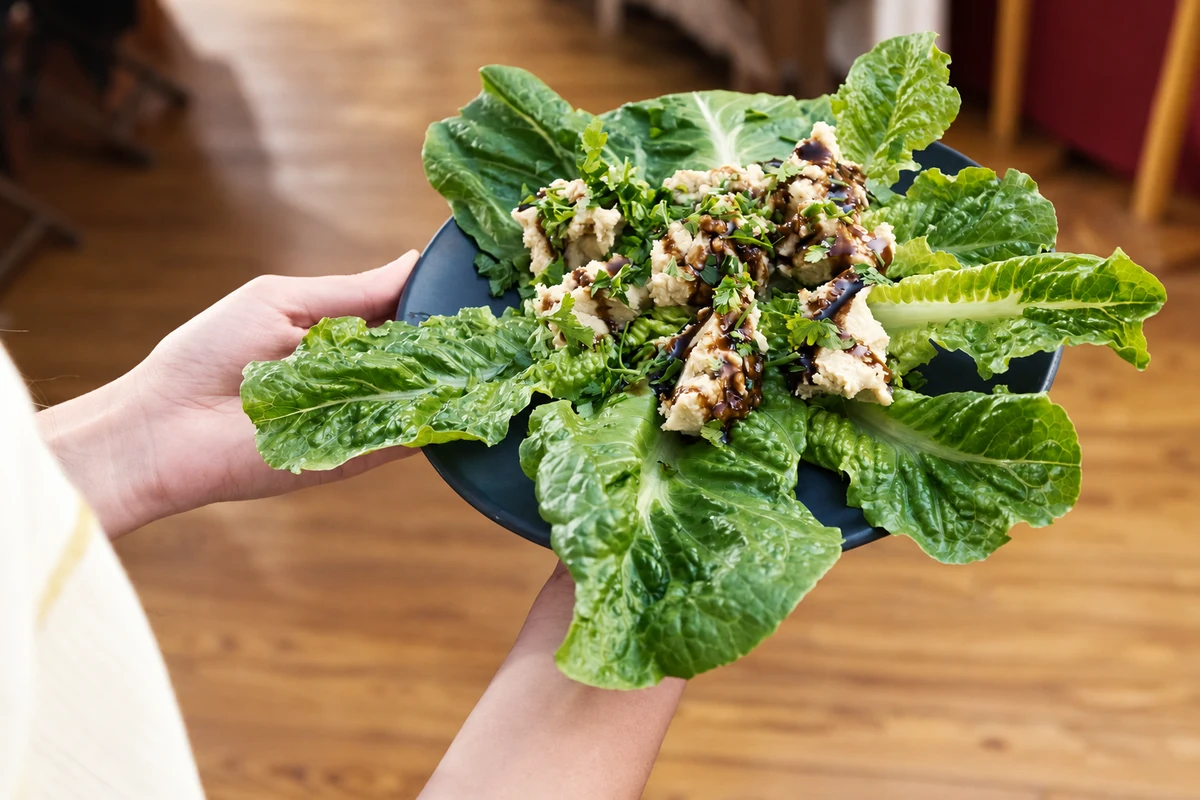
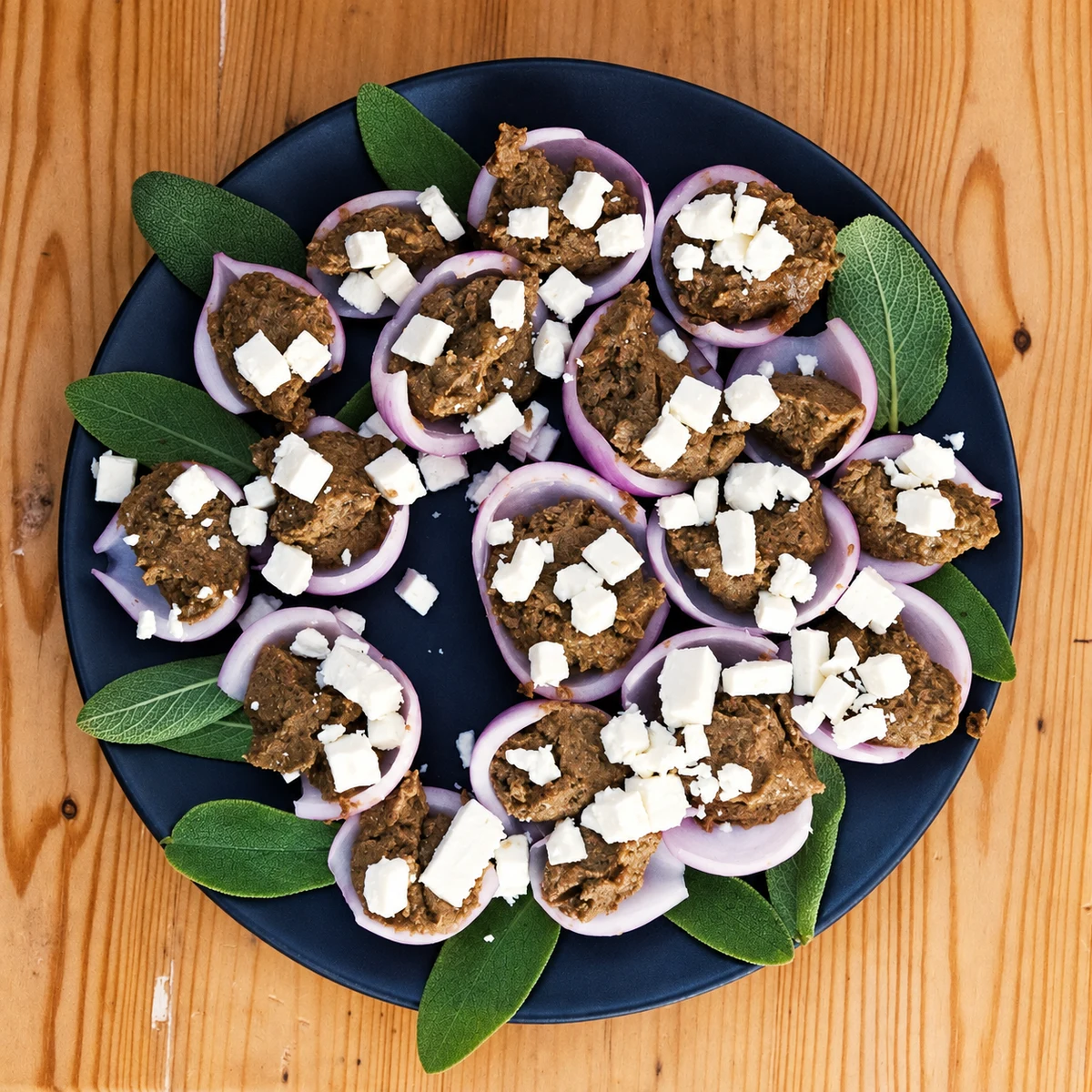
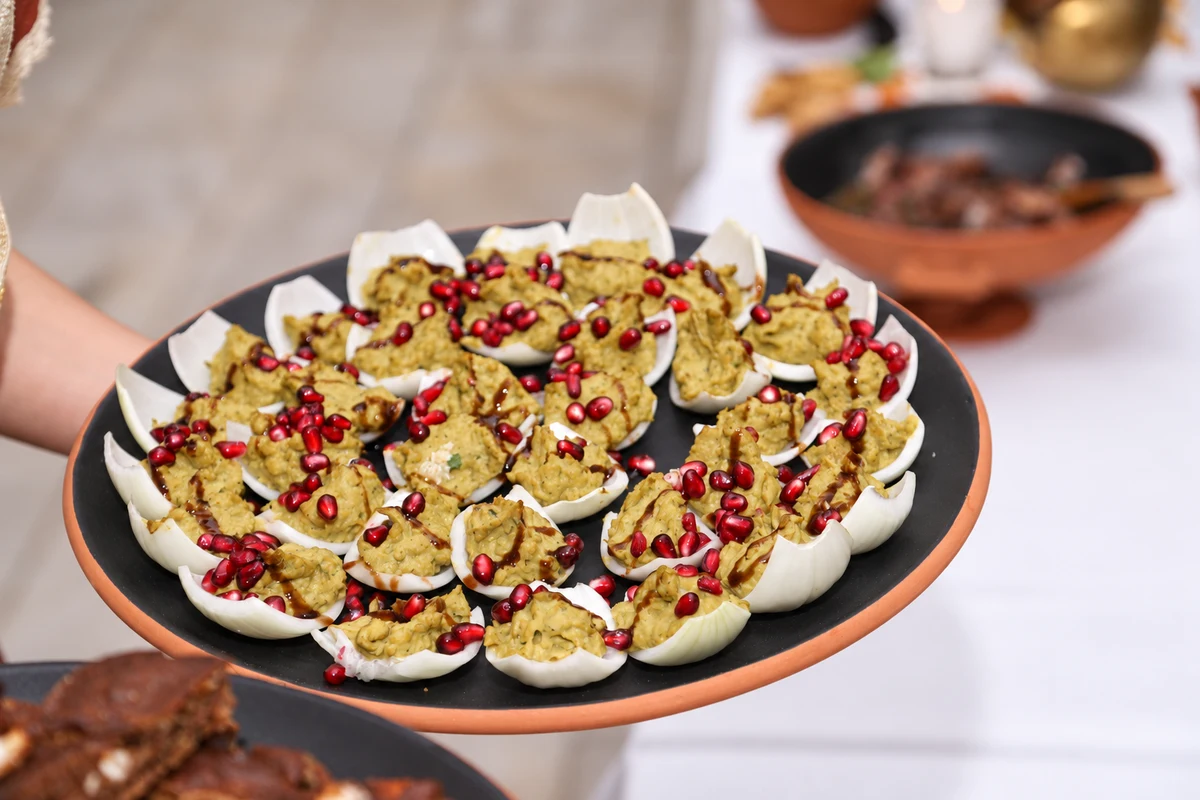
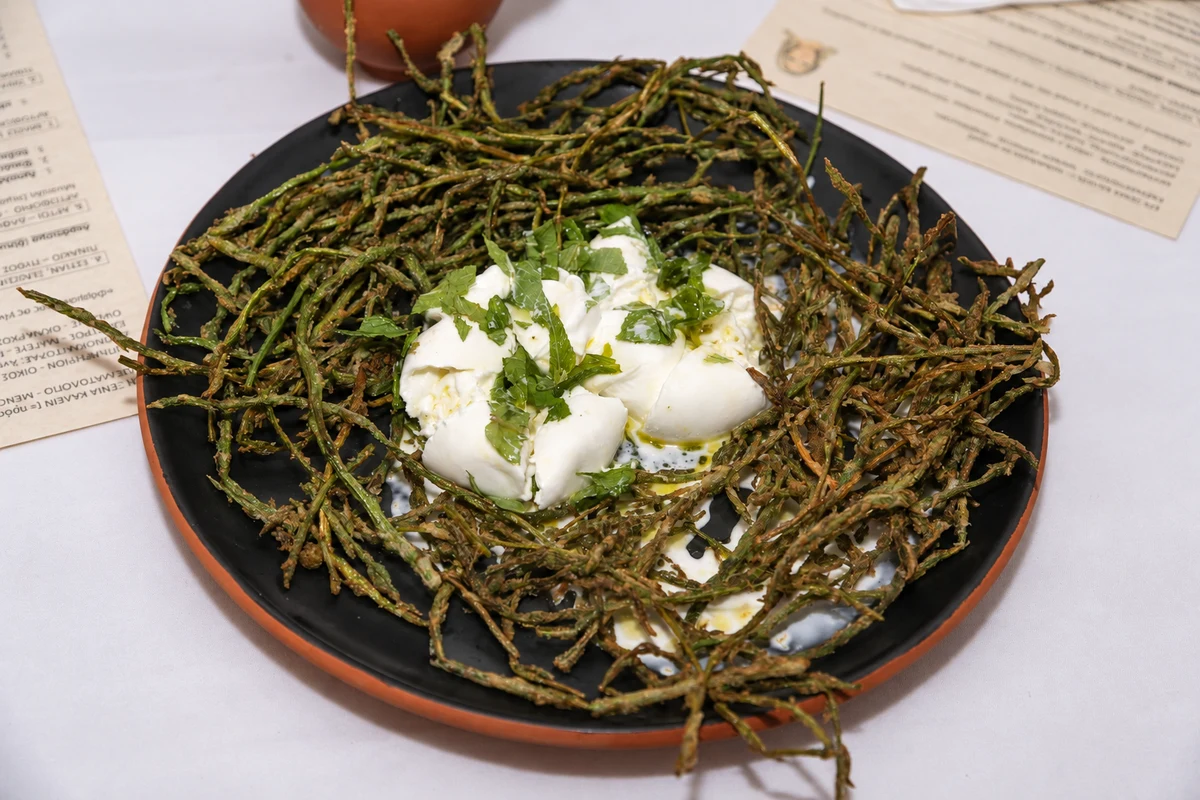
Crushed olives with honey, olive oil and aromatic plants balance saline, sweet and fragrant notes. Served with bread, the preparation makes the olive both food and a story of cultivation, trade and hospitality.
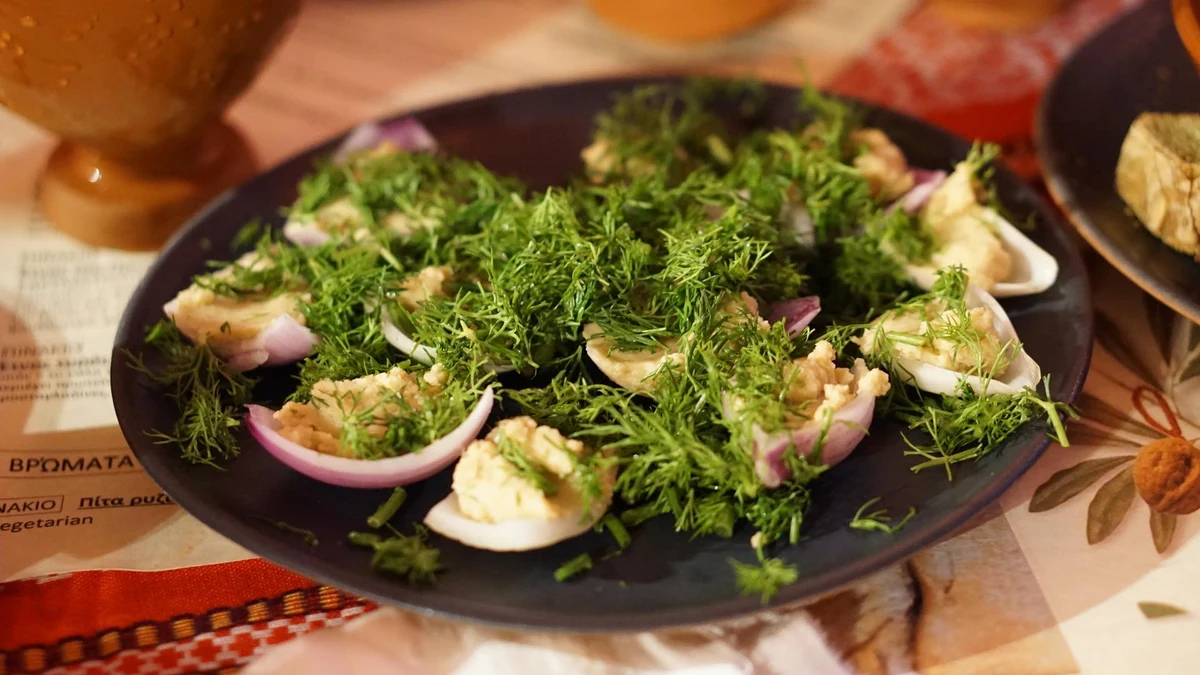
Crushed peas with dill and leek, finished with a pomegranate-and-honey dressing. The pulse base and vivid sweet-herbal accompaniment carry the mythological menu's association with Herakles.
Soft cheese with olive oil and cucumber gives a cool, mild counterpoint to grain, olive and pulse preparations in a shared table.
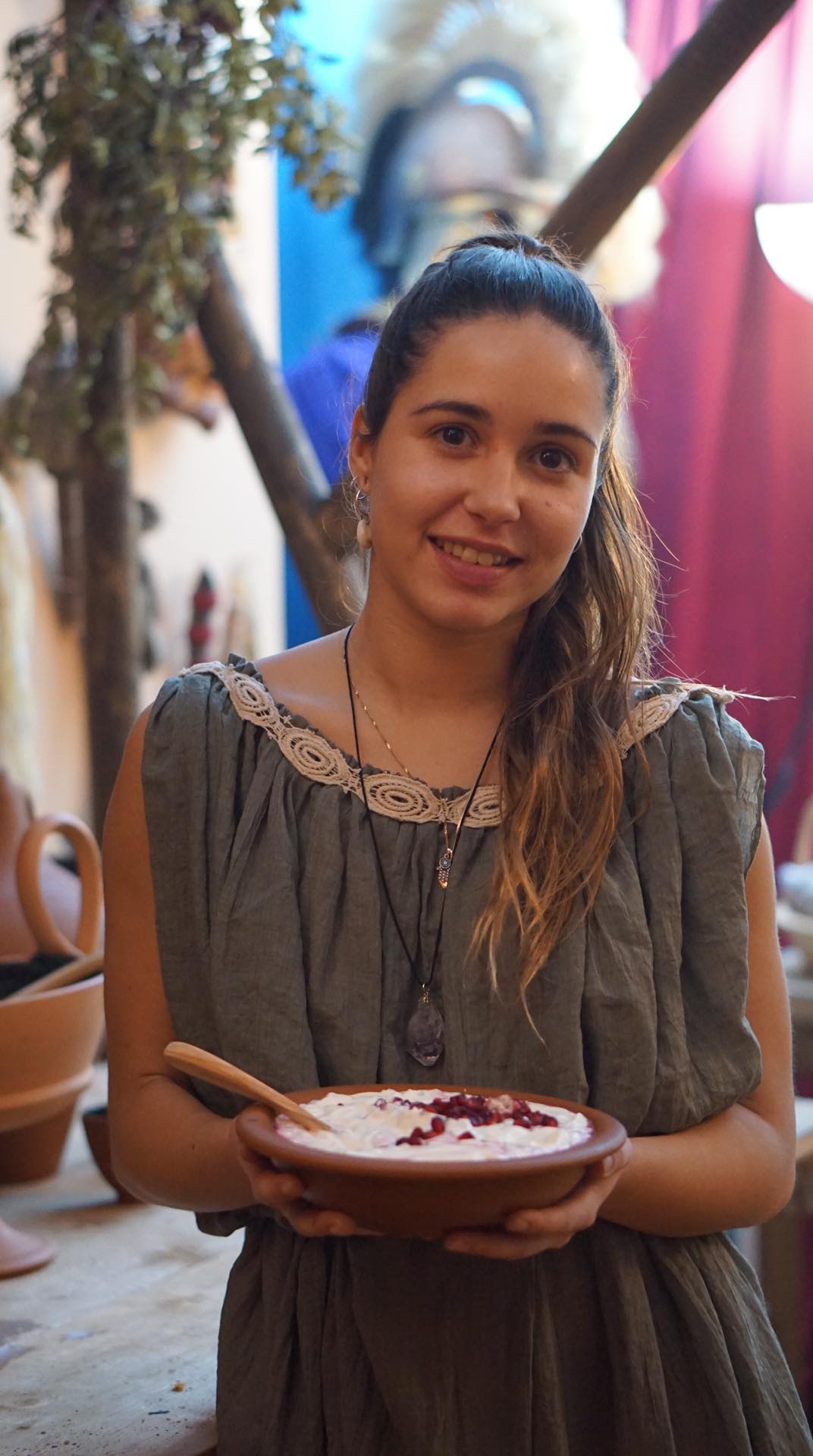
Yoghurt with olive oil, salt and mint combines creamy, saline and fresh herbal notes as a simple shared accompaniment.
Yoghurt, mint and spices create a cool, aromatic sauce named after Polyphemus.
Olives with olive oil and spices present a central Mediterranean ingredient with minimal intervention, suitable for interpreting cultivation, exchange and everyday eating.
Cream cheese and chicory pair a soft dairy element with the character of leafy greens, adding contrast to a sequence of breads and spreads.
A chickpea spread named after Mithaecus, bringing pulses to the shared table.
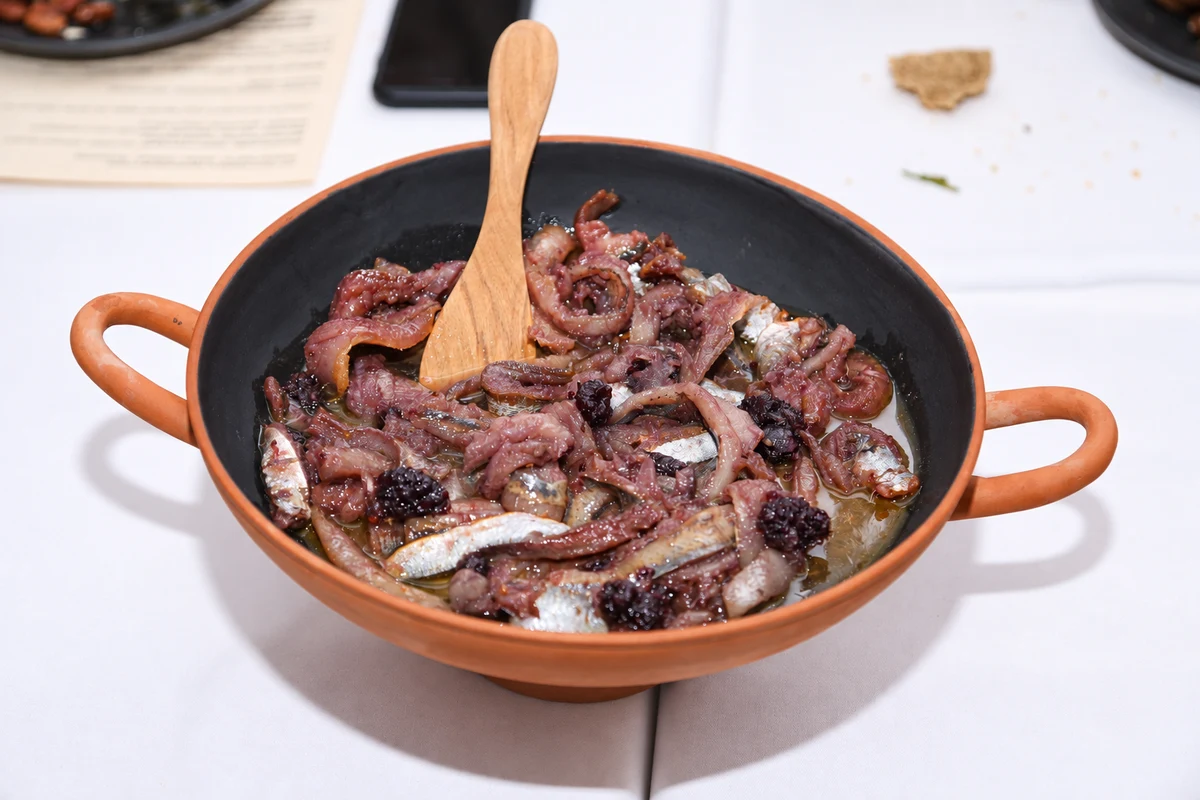
Salted sardine is paired with fruit sauce, bringing marine salinity and fruit sweetness together while linking the dish's narrative identity with Sappho.
Food archive
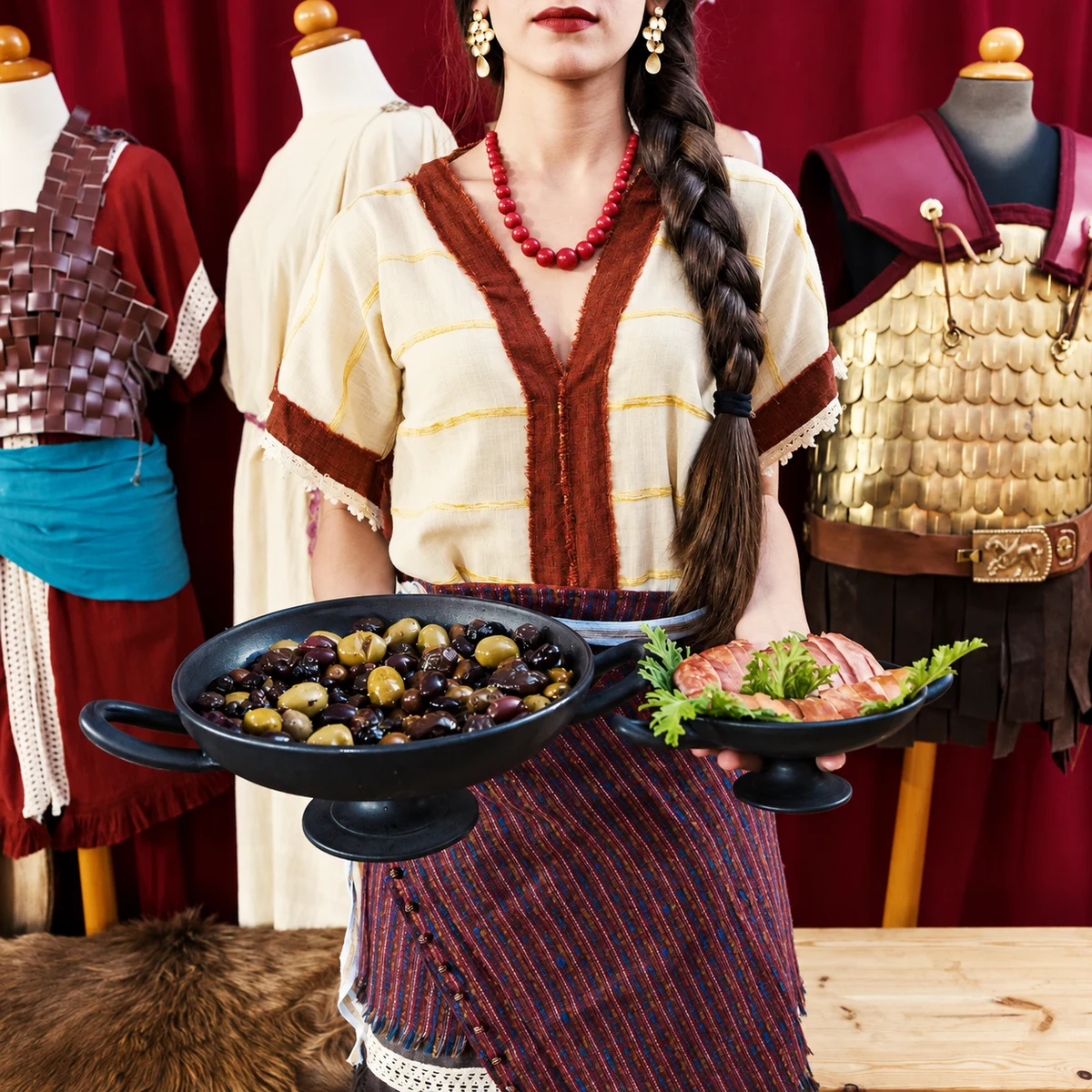
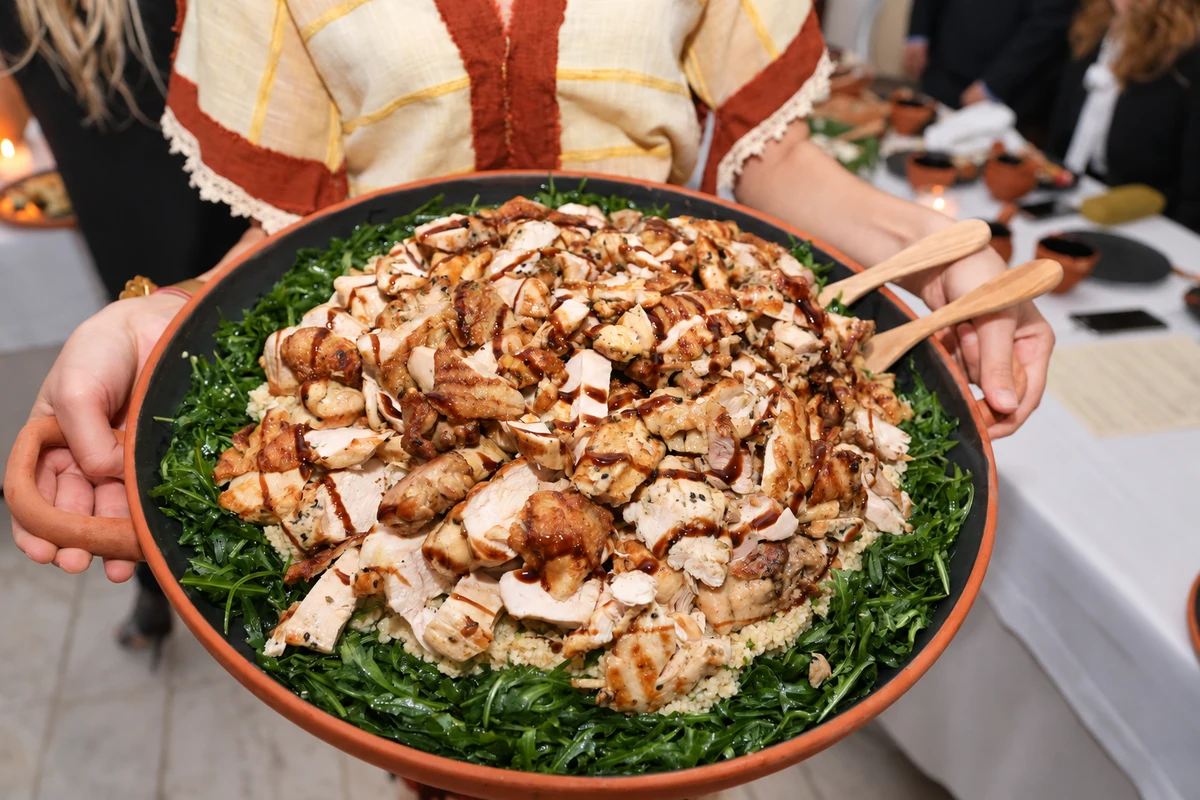
Chicken with coarsely ground barley joins poultry and grain in a substantial preparation. It can anchor a meal after lighter breads and shared appetisers.
Chicken, wheat, chickpeas and spices make grain and pulses part of the principal dish, giving a visitor a clear sense of several staples working together.
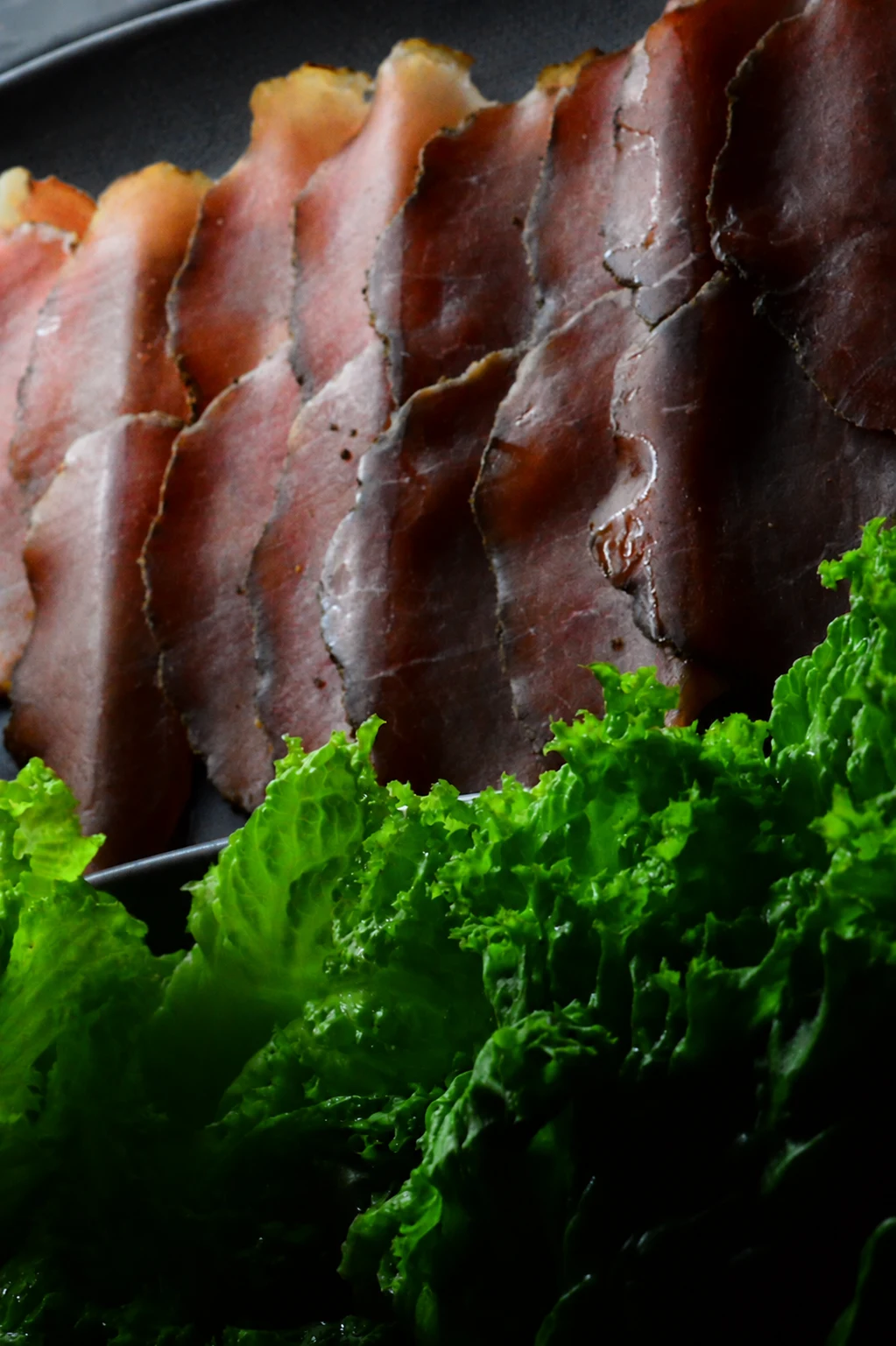
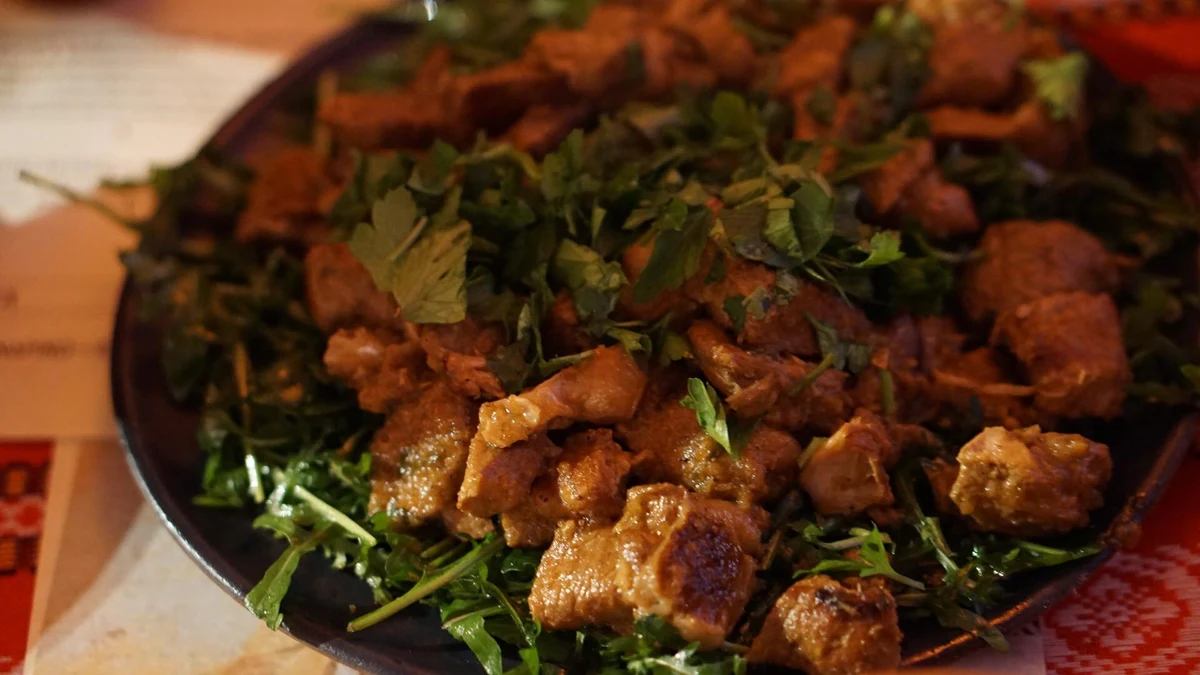
Pork and cracked wheat are sharpened by spices and rocket, combining meat, grain and a peppery green in one plate.
Pork, prunes and bulgur create a savoury-fruit combination with grain at its base, illustrating the archive's recurring movement between substantial and sweet elements.
Pork belly is balanced with honey, thyme and vinegar and accompanied by a smooth chickpea purée. The dish demonstrates the sweet, sour and aromatic combinations that recur in the reconstructed ancient Mediterranean food research.
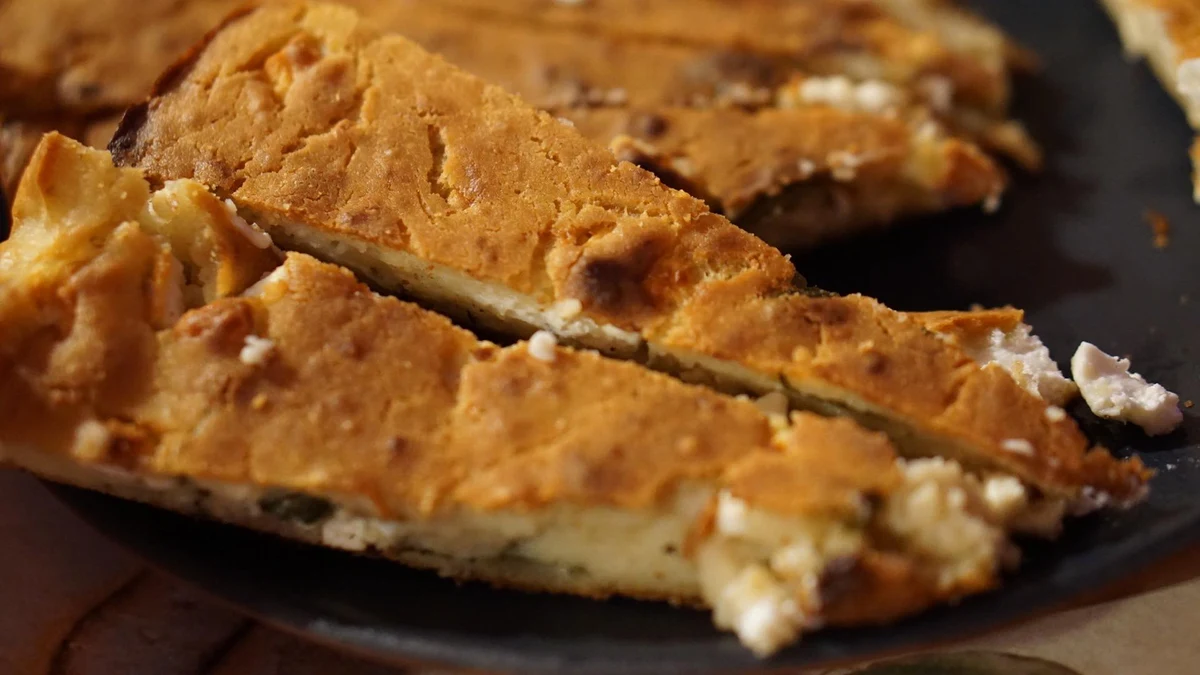
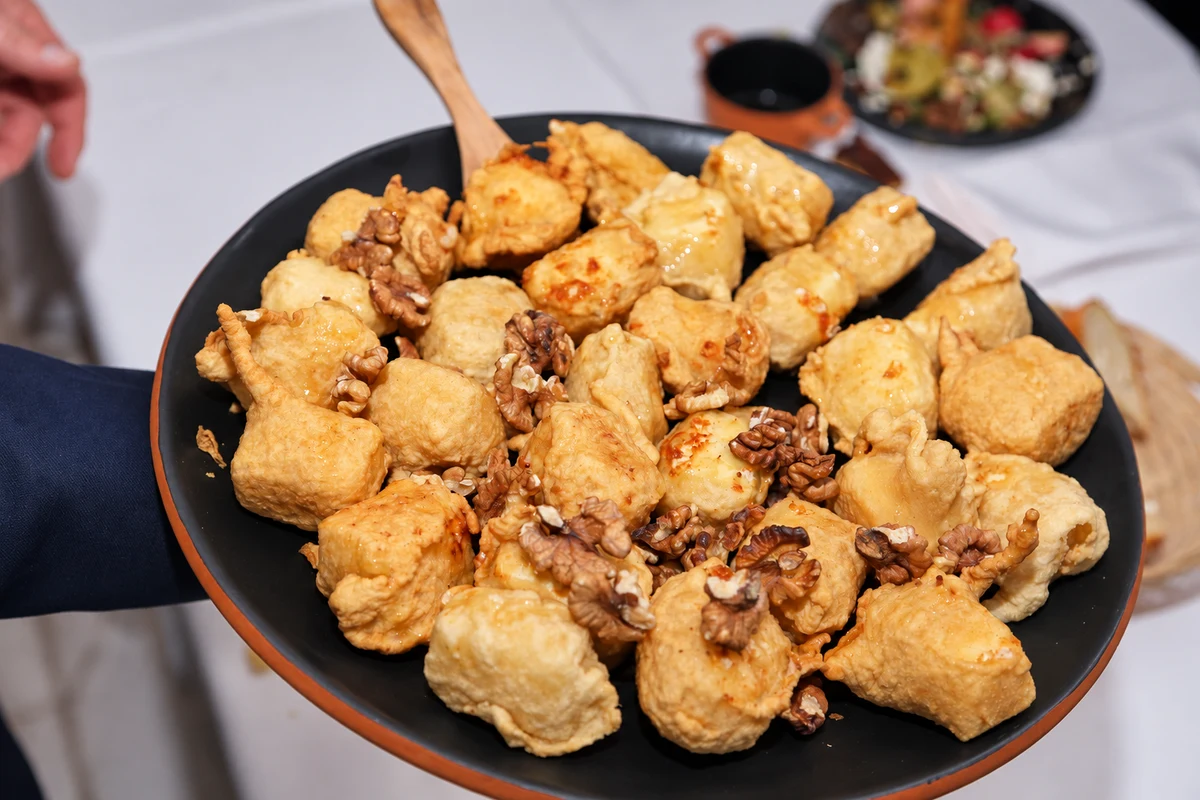
Fried cakes with white cheese combine a crisp cooking method with a soft dairy filling, suitable as a smaller savoury course or a shared thermopolion taste.
Food archive
Pancakes with ground sesame and honey, served with melimelon, bring toasted seed and honeyed sweetness to the close of a meal.
An apple, honey, walnut and cinnamon pancake with fruit, nut and warm aromatic notes.
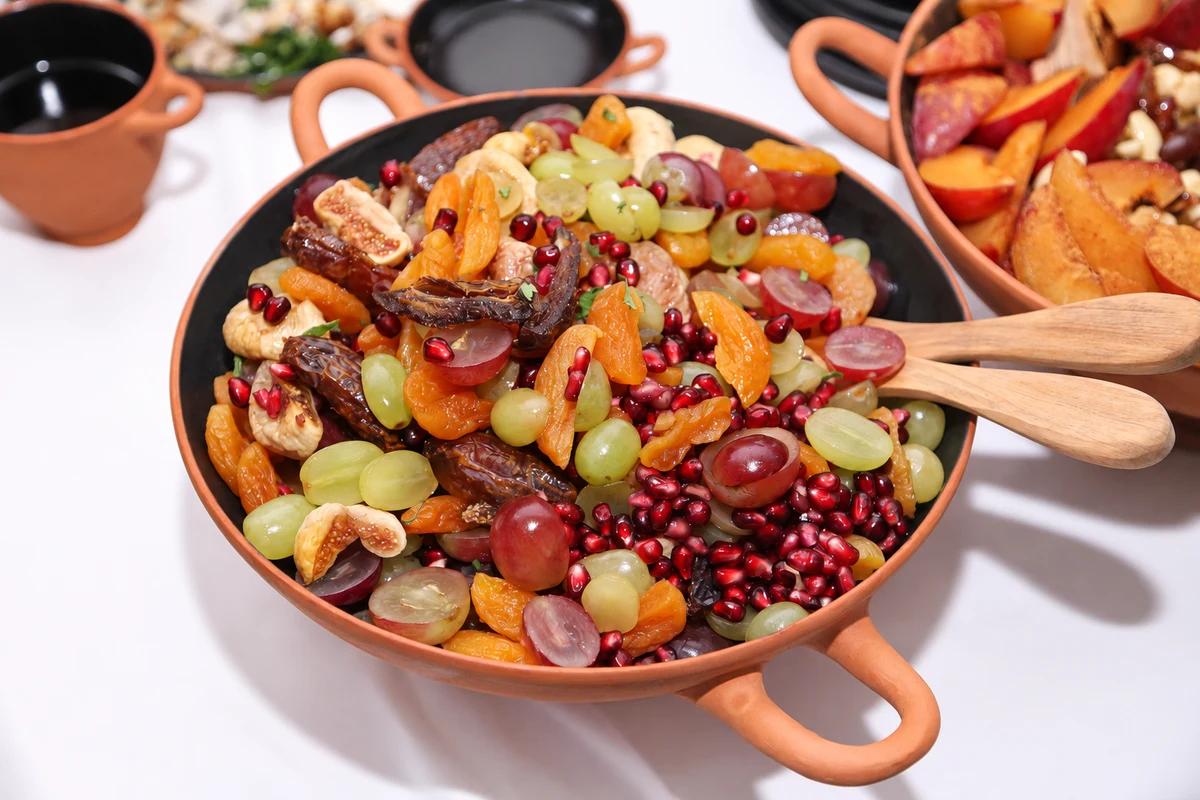
Bulgur and semolina carry honey, pomegranate juice, fig, walnut, sesame, chestnut, hazelnut, almond and pine nut. Its layered grains, fruits, seeds and nuts make abundance itself part of the presentation.
Sesame, nuts and pomegranate create a seed-and-fruit sweet whose texture and colour can close a tasting without separating flavour from visual storytelling.
Fruit and dried nuts are joined with Bibline wine in a sweet preparation named after Theophrastus.
Food archive

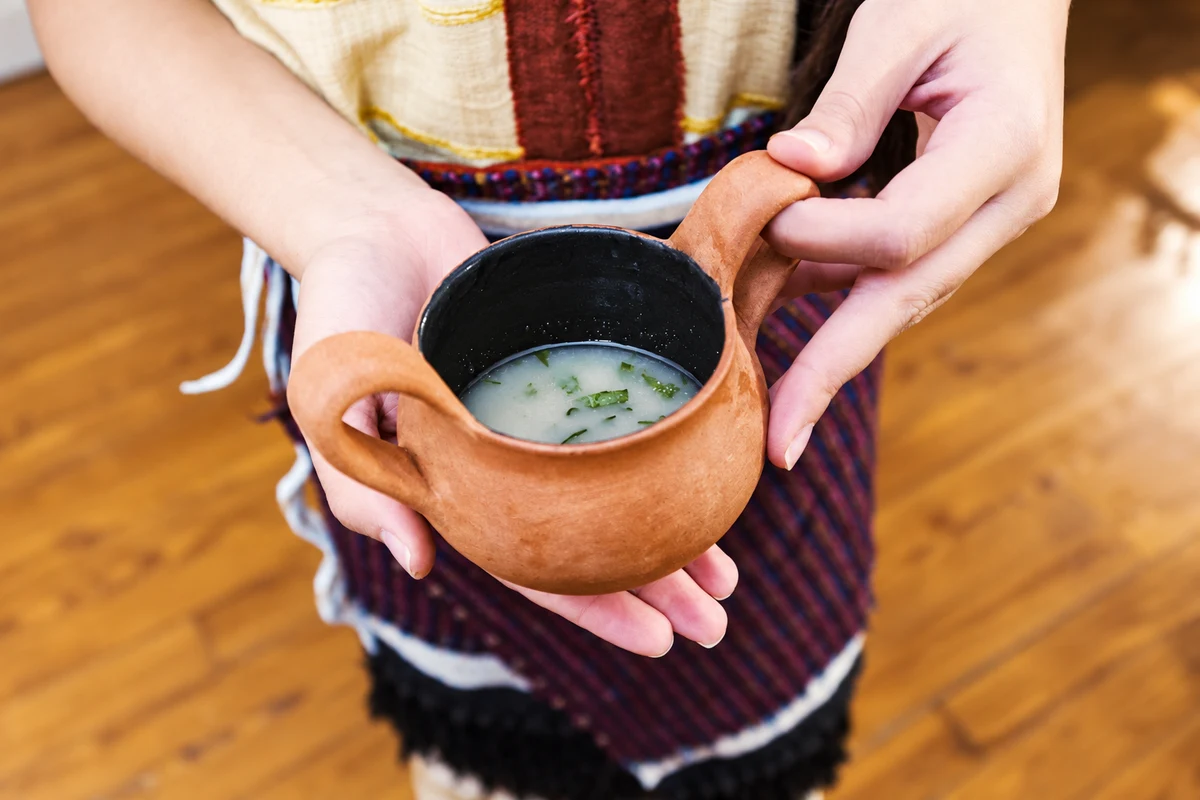
Water with mint offers a fresh herbal pause within a tasting and a non-wine counterpoint to the archive's symposium drinks.
Honey, verbena and mint give water a sweet, aromatic identity suited to an interpreted welcome or alcohol-free adaptation.
Wine with pomegranate juice brings fruit, colour and sweetness to the symposium table.
Grape juice with honey and aromatics offers a fragrant, alcohol-free accompaniment to the meal.
Wine is layered with sweetness, fruit acidity and aromatics, making the mixing and presentation of the drink part of the sensory interpretation.