A private dinner is a sequence, not a table photograph
The room may be beautiful before anybody arrives, but the experience begins with movement: the approach, the first welcome, the place where a drink is offered, the moment guests understand where to gather and the transition into dining.
Plan that sequence before decorating the table. If arrival, coats, bags, introductions, drinks and seating all compete for the same small area, the opening will feel crowded even when the styling is immaculate.
The table should become the centre of the evening at the right moment. It does not need to dominate every minute before and after dinner.
Let the setting define the possible format
Ask how many people can sit comfortably, where service enters, what the kitchen can support, where glassware and courses are held, how sound travels and whether outdoor exposure changes the plan. These questions determine the realistic menu and programme.
A long table, several smaller tables and a fluid standing dinner create different forms of conversation. Choose the format around the group and occasion rather than forcing a reference image into a space that behaves differently.
Any venue-specific permissions, fire rules, access conditions and technical limits must be confirmed with the responsible venue and appointed specialists.
Write the evening in chapters
A useful running order describes changes in energy rather than only clock times. It can move from arrival and first drink to seating, opening course, a musical or performative intervention, the main dining rhythm, a later release and departure.
Each chapter should have a clear owner and a simple trigger. Service needs to know when an intervention is about to enter. Musicians need to know whether a course is delayed. The host needs room to respond to the guests rather than chase the schedule.
Build enough space between chapters for conversation. A private dinner becomes tiring when every minute tries to prove that something has been planned.
Design the menu as part of the atmosphere
Food carries colour, aroma, temperature, texture and pace. It can connect the evening to the Aegean through ingredients and visual language without turning the table into a lecture or assigning historical claims that the evidence does not support.
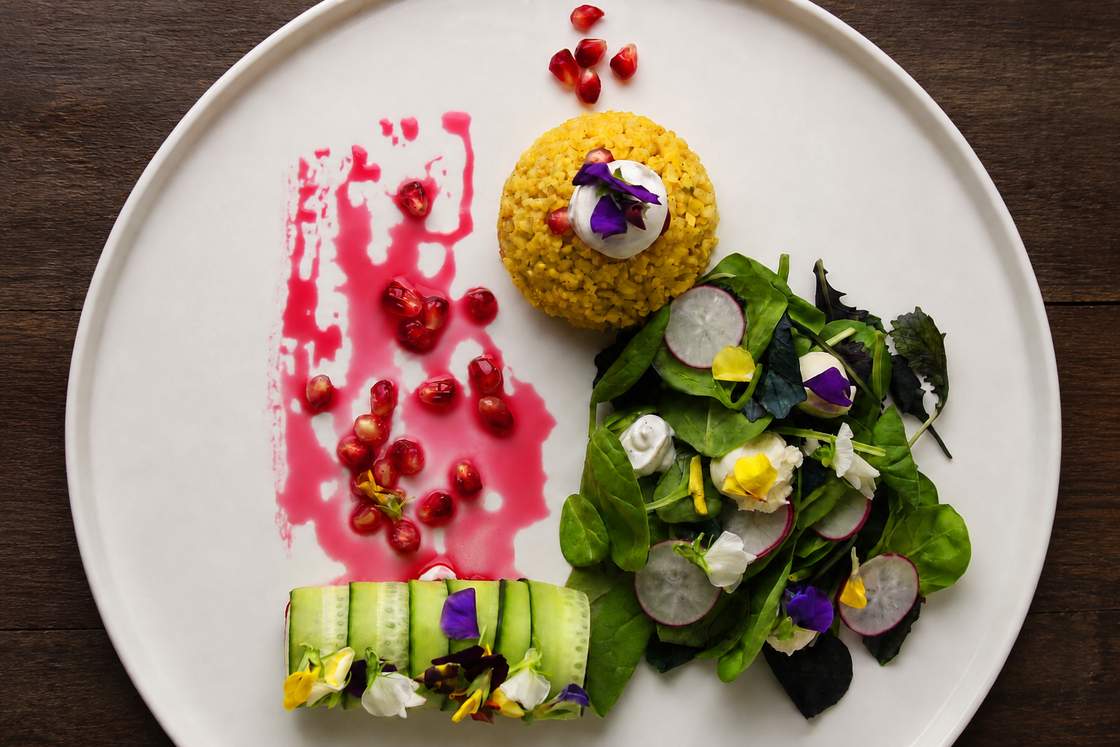
The documented Archaeopolis dining commission used expressive individual plating as part of the wider artistic direction. The published record describes what is visible—fresh leaves, grains, fruit, vegetables, seafood-led compositions, herbs, flowers and contrasting colours—without reconstructing unpublished recipes.
For a new event, the chef remains responsible for the menu, food safety, allergens and service feasibility. Creative direction can connect the culinary progression to light, sound and the guest journey once those foundations are secure.
Light the people, the food and the route
Lighting has several jobs. Guests need to see one another without feeling exposed; food needs enough clarity to remain appetising; service needs safe routes; steps and edges must remain legible; and any visual installation should still work after the room fills.
Test from the seated position, not only from the entrance or a camera. A dramatic source at eye level may become uncomfortable over a long dinner. A beautiful pool of darkness may conceal a cable, step or working surface.
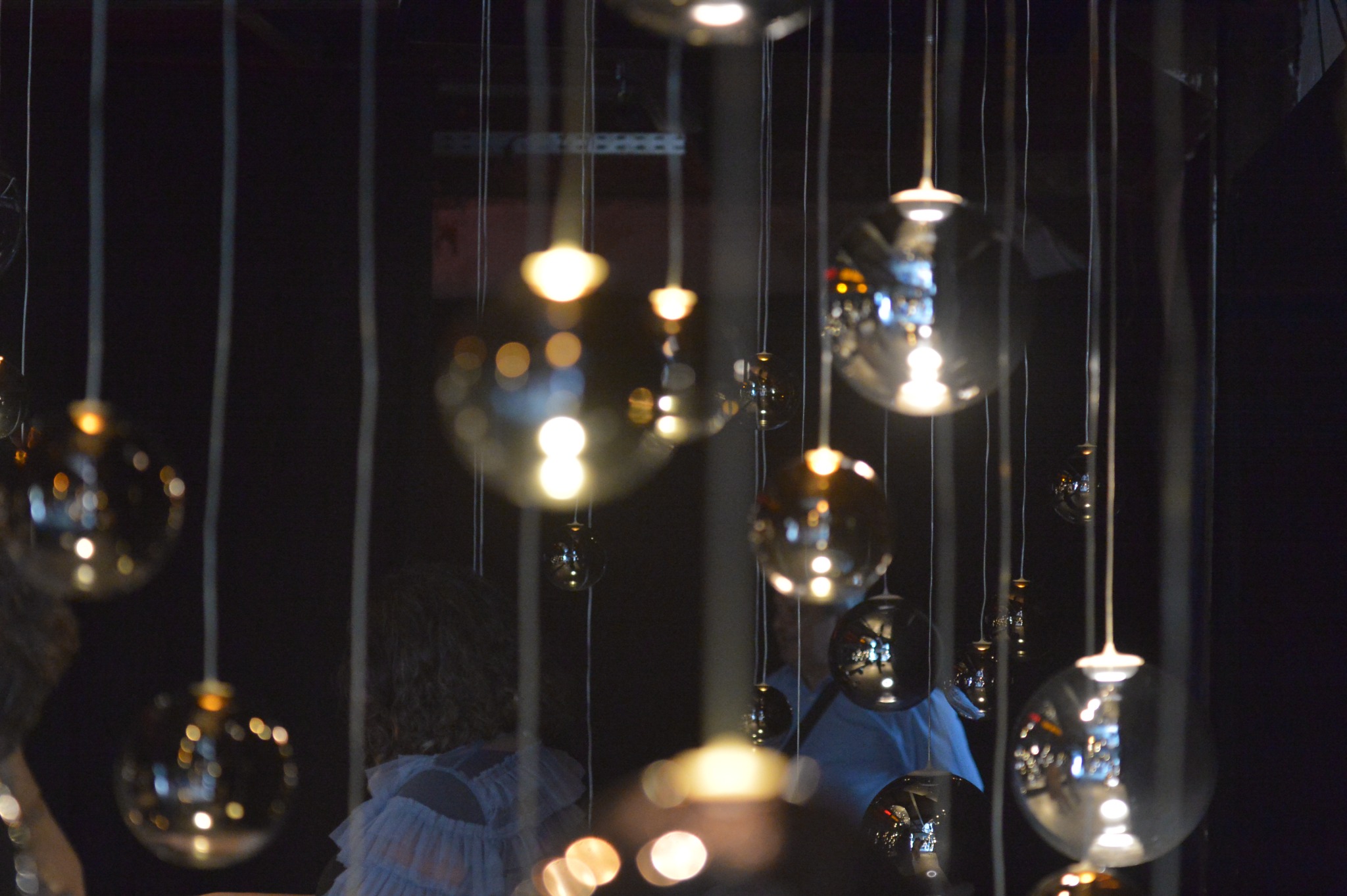
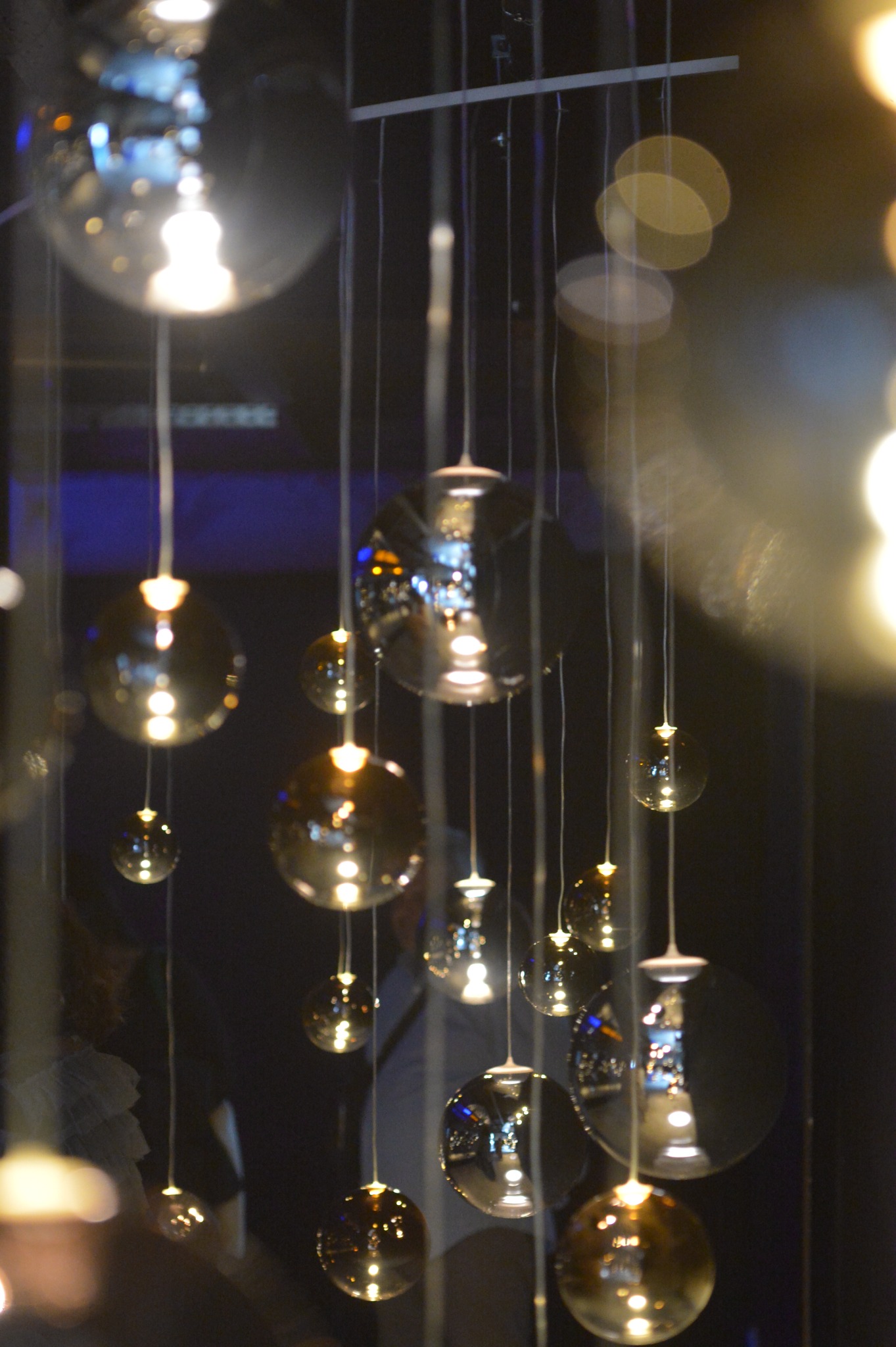
In the published Mykonos commission, suspended glass and warm reflection created depth without requiring the entire room to become a theatrical set. The intervention supported the dinner rather than replacing it.
Use sound to hold the room together
Music should respect conversation and service. Decide whether it is continuous atmosphere, a short live intervention, a moving procession or a later change of energy. Each role needs different volume, position, cueing and technical support.
Ancient Greek music entered the documented private dinner as an unfamiliar sound world within a contemporary setting. It was not presented as a lecture or a claim that the evening reproduced an ancient banquet.
That boundary matters. Cultural material can give an event depth without forcing guests to stop and receive an explanation. The research should support the confidence of the experience.
Protect the social rhythm
Courses, speeches, music and performance all ask for attention. Put them too close together and guests will feel managed. Leave them unrelated and the evening will lose shape.
Before service, agree who may hold or release a course, how a late arrival is handled, when staff can clear without crossing an intervention and who speaks to the host if timing changes. One calm decision-maker prevents several well-intentioned people from giving conflicting instructions.
The goal is generous hospitality: enough structure for the evening to unfold, enough flexibility for the people at the table to remain its centre.
Privacy determines what the team records
A confidential private dinner may restrict guest photography, venue identification, supplier posting or all visual documentation beyond approved details. Define the boundary in writing and repeat it in the supplier briefing.
The Archaeopolis project record publishes food and selected lighting views because broader photography was prohibited. No client, guest or exact venue is identified. The limited archive is therefore evidence of the agreed privacy standard, not evidence that the rest of the event was undocumented internally.
Decide who stores the approved files, how they are named and what may be shared after the event. Privacy should survive the moment when the room is dismantled.
Build the proposal from a useful brief
To begin, provide the occasion, approximate guest count, preferred date, possible setting, dining format, desired atmosphere, dietary and accessibility needs, appetite for music or performance, privacy level and any chef, venue, planner or concierge already appointed.
State the decisions that remain open. Archaeopolis can develop the creative direction, integrate dining with music and atmosphere, or collaborate within an existing Mykonos team. The scope should be explicit before production begins.
A strong proposal will explain what the evening is trying to make guests feel, who is responsible for each layer and which decisions must be verified at the venue.
The table is only one part of the evening; private dining becomes an experience when food, light, sound, service and privacy follow one direction.
Editorial standard: this article distinguishes broad historical evidence from Archaeopolis production practice. Specific dates, artefacts and quotations will only be added with named sources.