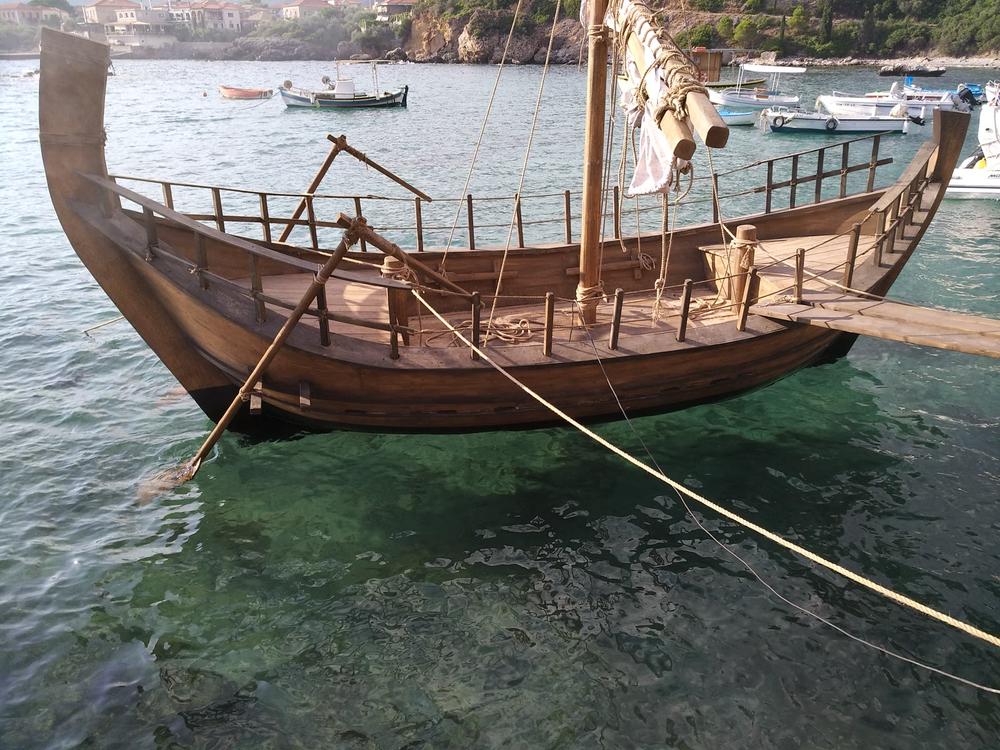
A world is read in details
Viewers may not name every historical inconsistency, but they feel when objects, costume, movement and environment do not belong to the same world. Credibility comes from relationships: how a vessel is held, how armour changes posture, where tools are placed and how performers occupy a space.
Accuracy is a production system
Research is most useful when it becomes practical direction. A production needs a defined place and period, a visual hierarchy, hero objects, background material and clear rules for action. That framework helps directors, designers, performers and camera departments make compatible choices under real production constraints.
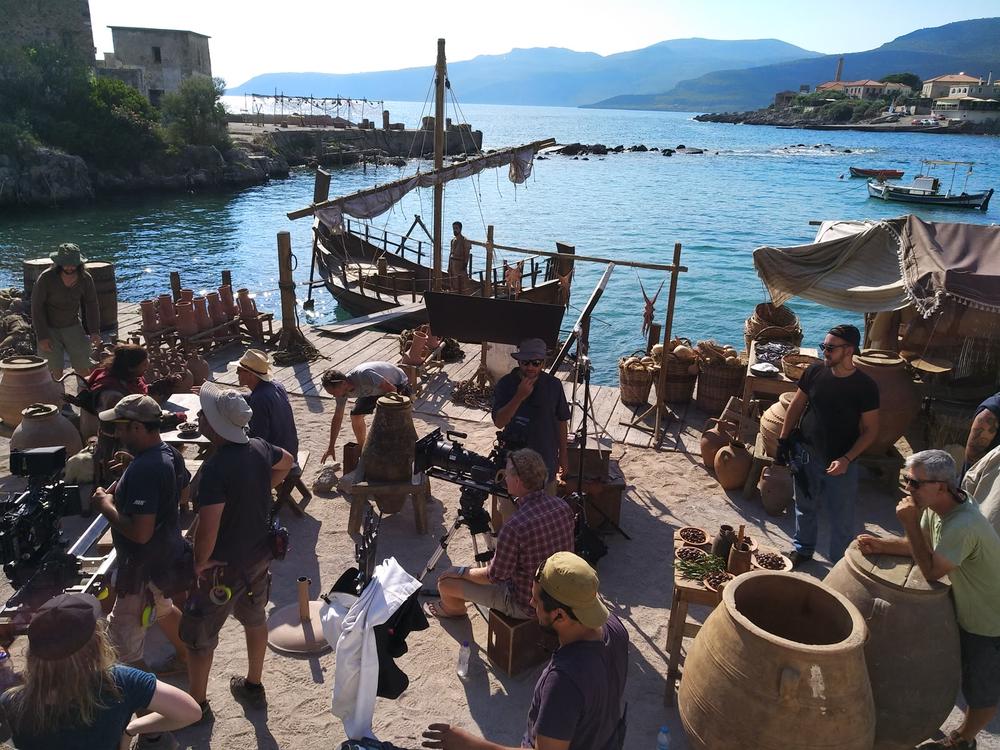
Evidence and interpretation
Not every visual decision can be proven with equal certainty. Strong historical production distinguishes documented evidence, plausible reconstruction and deliberate creative licence. Archaeopolis applies that distinction across consulting, props, costume, scenic construction and performer preparation.
Worked example: the Olkas ship and the Kyrenia reference
The Olkas case provides a concrete example of the distinction between evidence and production. Its historical starting point is the Kyrenia merchant ship. The Archaeopolis record explains how that reference informed the rounded timber hull, bow and stern, working deck, mast, sail profile and rigging of a full-scale interpretive vessel.
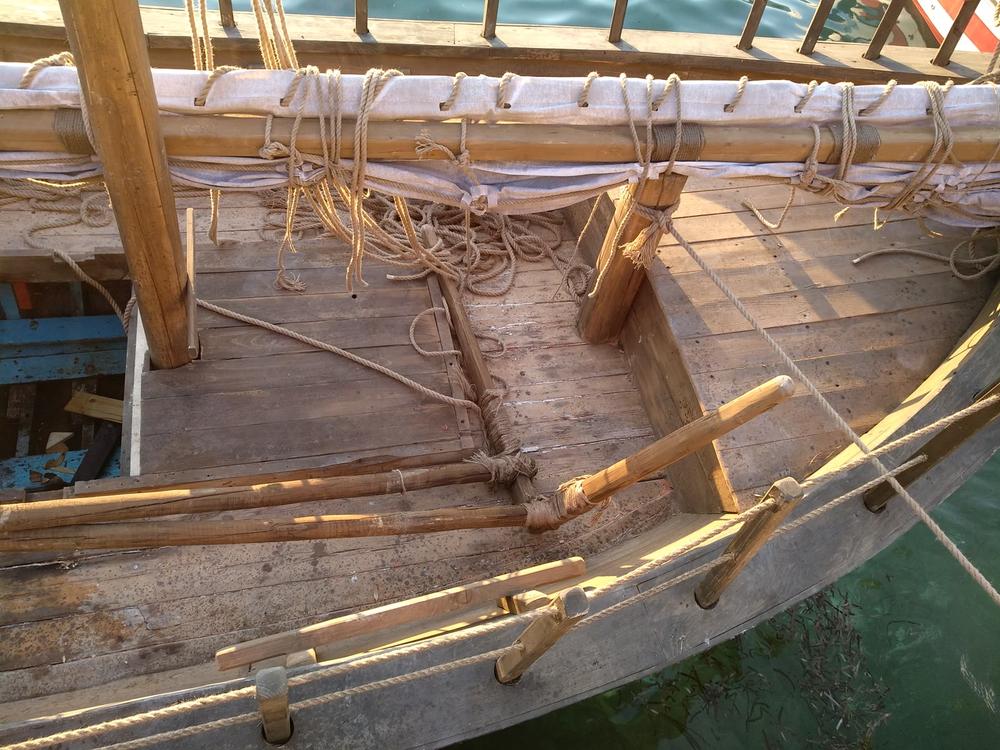
The production requirement is also visible in the archive: the Olkas is maintained, transported, lifted, installed and used in live settings. The decision is therefore larger than choosing an ancient-looking silhouette. A coherent historical reference has to become an object that can be handled and repeatedly put to work. Workshop, transport and presentation photographs allow the reader to examine that process.
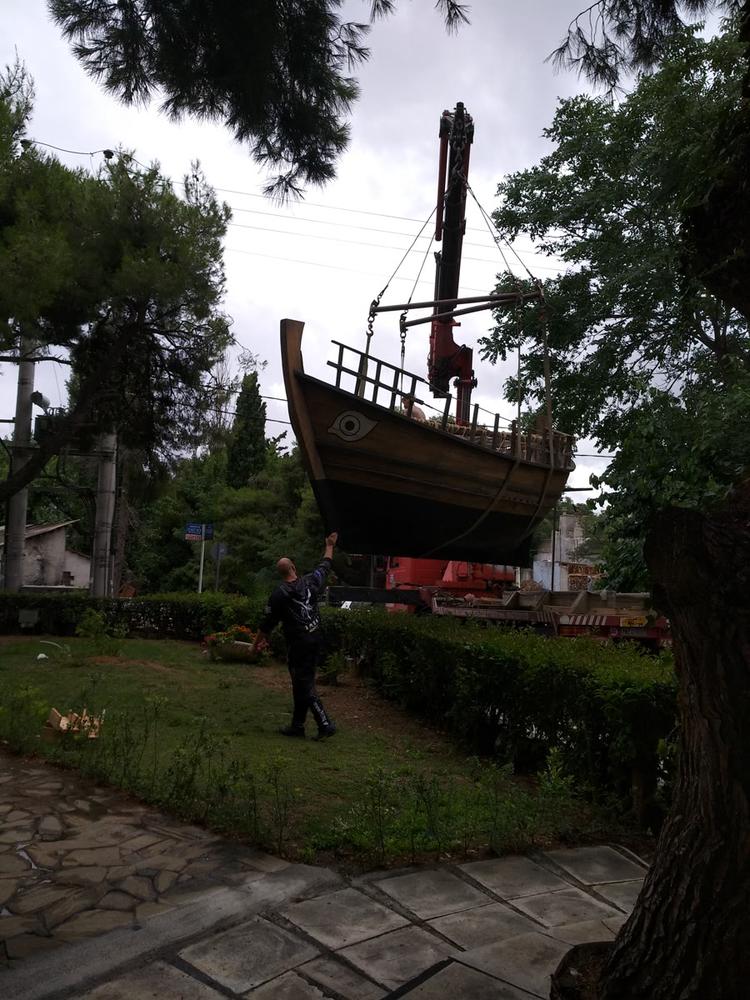
What this example can—and cannot—establish
The Olkas is an Archaeopolis interpretation and production asset. It is not the conserved ancient hull, nor a replica commissioned by the Kyrenia research project. A photograph of the modern vessel establishes what was built and used; it does not independently prove every construction detail of an ancient ship.
For a new film brief, record three things separately: the named historical reference, the intended use of the constructed object, and any adaptation that affects its appearance or operation. The Olkas archive illustrates why this distinction matters: historical coherence and practical suitability need to be assessed together, with the limits stated clearly.
Evidence sets the boundaries. Production gives the encounter its life.
Editorial standard: this article distinguishes broad historical evidence from Archaeopolis production practice. Specific dates, artefacts and quotations will only be added with named sources.