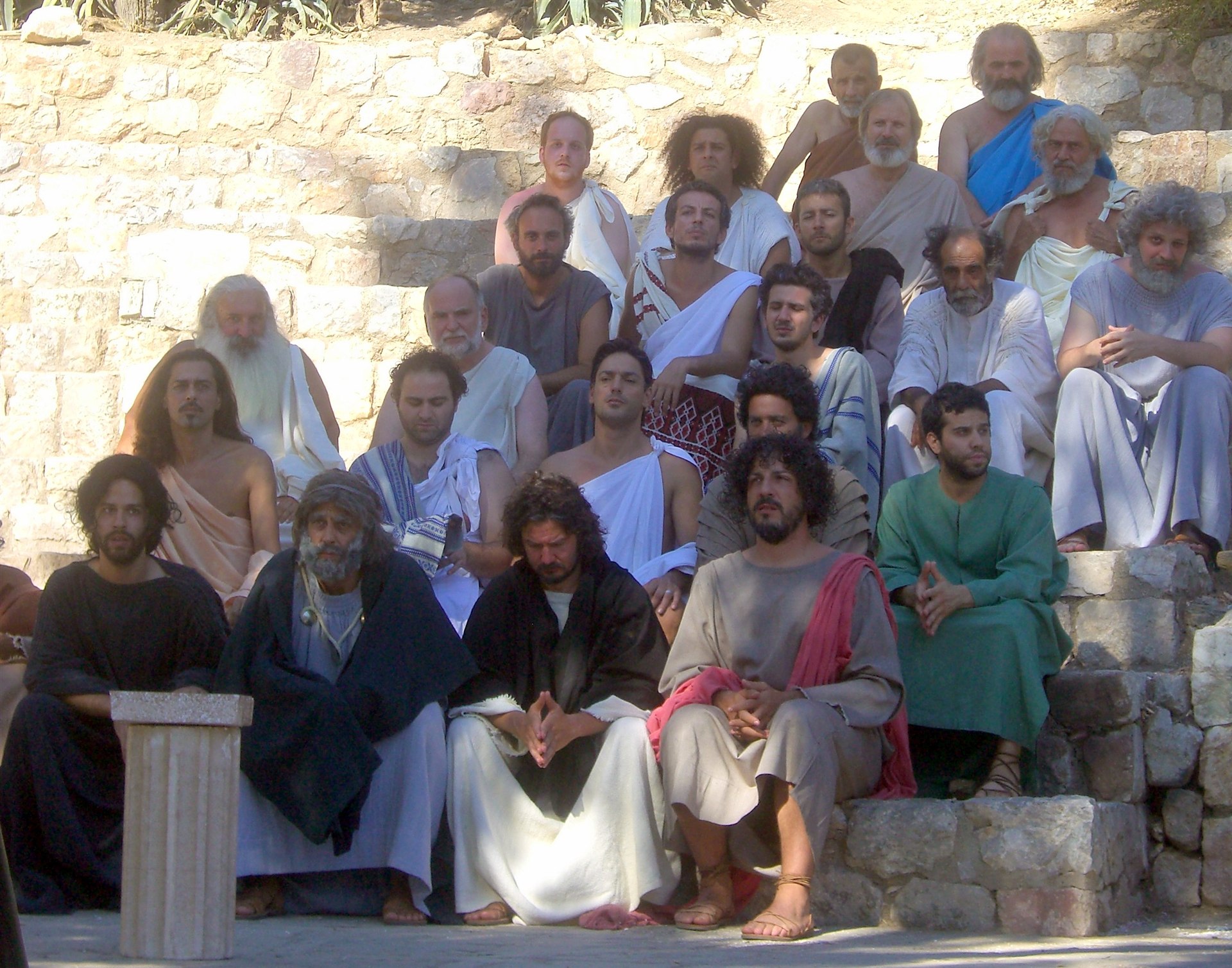
What Greece’s 2026 support can—and cannot—do
A cash rebate is a financial incentive. In simple terms, an eligible production spends money in Greece on approved production costs and may receive part of that approved expenditure back, provided that it follows the programme’s rules. Location-scouting support serves a different purpose: it may help an eligible international project investigate whether particular places in Greece can work for its story and production plan.
A foreign production will normally need an eligible Greek production company for applications and local production arrangements. Specialist partners may then join the project for particular requirements such as historical research, reconstructed objects, costume, armour or historical environments.
The distinction is straightforward. The incentive helps finance approved production expenditure. The production team and its partners must still create the world inside the frame.
What the Cash Rebate Greece programme means
For 2026, EKKOMED announced €100 million in total public expenditure across its audiovisual support schemes: €88 million for CRGR-FTV, €10 million for CRGR-Animate and AR/VR, and €2 million allocated to a separate instrument supporting video-game development and production.
Eligibility, minimum spending requirements and accepted expenses depend on the type and structure of the project. International producers should examine the current regulations and work with an eligible Greek production company or appropriately qualified adviser before making financial decisions.
A cash rebate supports approved spending. It does not select the historical period, obtain every required permit, decide which objects belong in a scene or make a costume work safely during repeated filming. Those responsibilities remain with the production and its chosen partners.
What location scouting means
Location scouting is the process of researching and visiting possible filming locations before production begins. It is not simply a search for a beautiful landscape. A location must also be safe, accessible and practical. The production needs to understand how cast, crew and equipment will enter the space, where people can prepare, what may be installed and whether the location can support the planned scenes.
For 2026, the renewed LOCATE (with)in GREECE programme supports certain eligible foreign film and television projects. It covers projects still deciding whether Greece is suitable and projects that have already chosen Greece and are preparing to film. The 2026 application period runs from 16 April to 31 October, with maximum support of €10,000 for an eligible project.
A useful scout asks practical questions. Can cast, crew and equipment reach the location safely? Is there space for costume changes, preparation and rehearsal? Can props, armour or set elements be transported and installed? Which modern objects, buildings or sounds may appear in the shot? What restrictions affect movement, lighting, sound and visitor access? A famous location is not automatically the correct or most workable location.
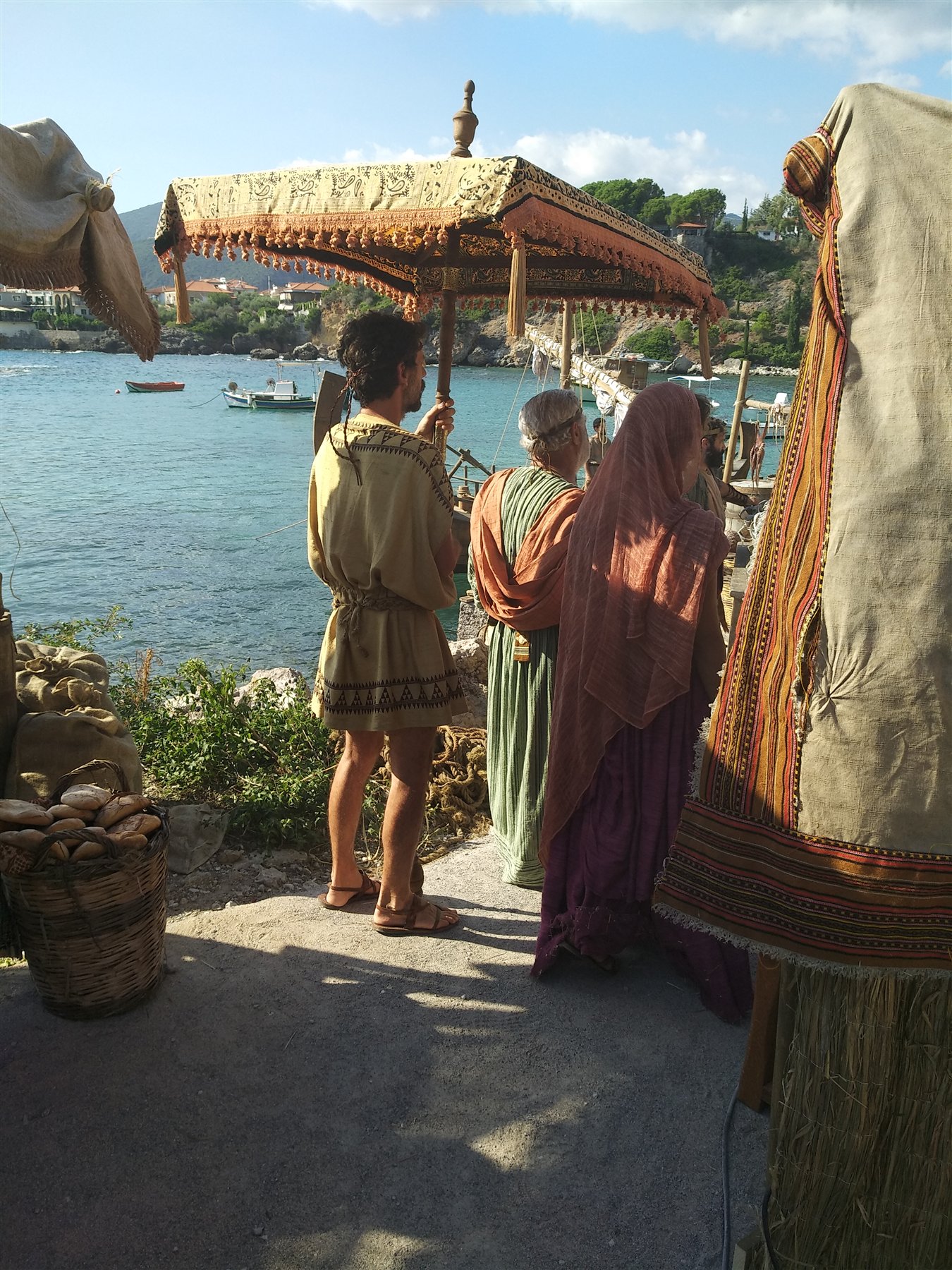
Filming at archaeological sites
Greek archaeological sites, monuments and museums are protected cultural environments. Permission must be obtained from the competent services of the Ministry of Culture. Depending on the production, the application may require a summary of the story, a written description of the planned scenes, proposed filming dates, crew and equipment lists, and production or budget information.
For fiction, advertising, television and documentary projects, an additional certificate may also be required confirming that the script or treatment does not promote violence, racism or sexism and does not violate Greek law and human rights. A treatment is simply a written description of the story, action and scenes before a final screenplay is available.
The permit process should begin early. A production must know what it intends to bring into the site, how performers will move and whether anything will touch, cover or affect the protected environment. Sometimes the right solution is to film at the archaeological site. Sometimes another location can be adapted more safely and with greater production control.
What funding cannot create
An incentive can help a production come to Greece. A location can provide landscape and architecture. Neither automatically creates a believable historical world.
That world is built through the relationship between costume and the human body, objects and the way performers use them, architecture and set design, movement, light and camera position, and the production’s balance between historical evidence and creative direction.
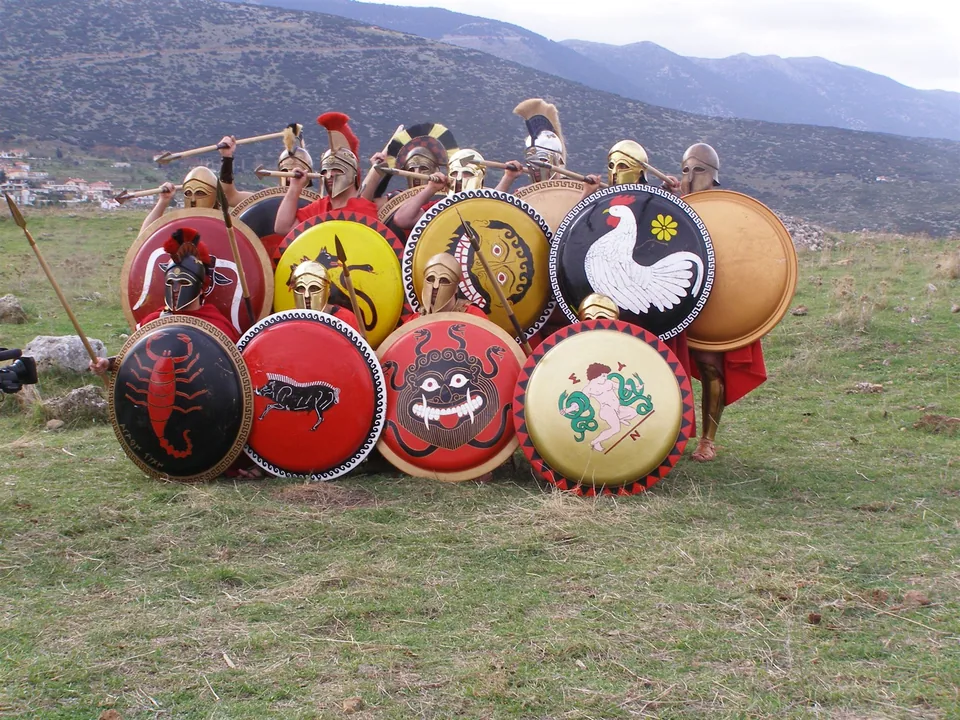
An audience may not recognise every specific mistake, but it often senses when the different parts of a scene do not belong together. A shield affects how a performer stands and moves. A helmet changes visibility, sound and communication. A garment changes posture. A dining vessel affects how an action is performed and how the scene is arranged. These elements are not simply decorations. They influence the performance itself.
What historical production support may include
The exact work depends on the project, its period and the level of detail required. Historical support may include research for scripts and visual development; reconstructed props, armour, tools and ceremonial objects; costume selection and fitting; historical set design; placing objects and details within the filmed environment; and preparing performers to handle historical equipment.
Productions needing historical sets, props and equipment must also consider intended handling, safety, continuity, transport, insurance and the distance between each object and the camera. An object that looks convincing in a still photograph may not survive repeated takes or allow the required action.
This work often connects several departments. The historical specialist may need to collaborate with the director, production designer, costume team, prop department, performers and safety personnel. The objective is not to fill every part of the image with historical objects. It is to select the right elements and make them function safely and convincingly during filming.
Historical accuracy and artistic licence
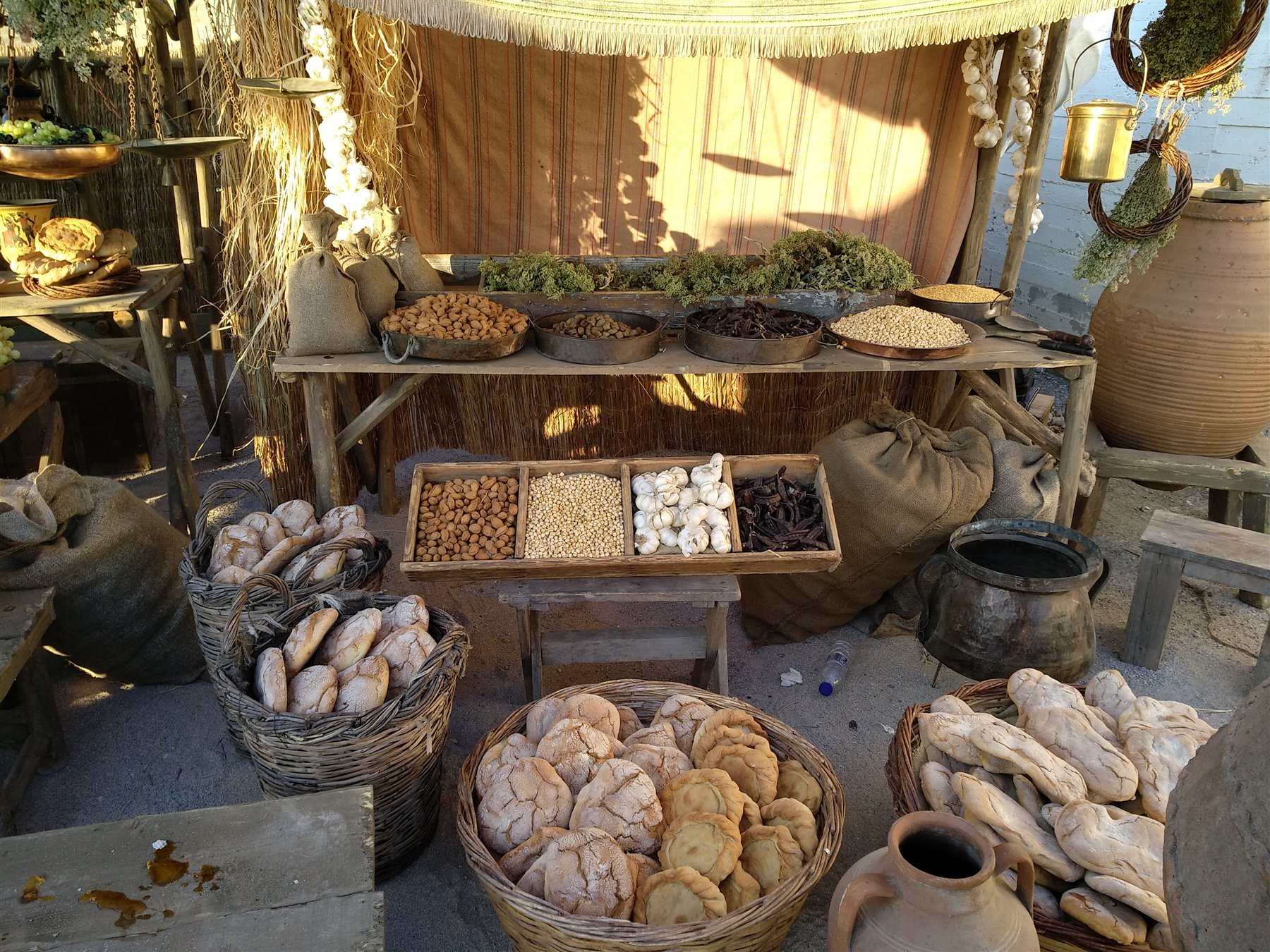
Historical accuracy does not mean that every production must become an academic reconstruction. A documentary, television drama, advertisement and video game have different creative and practical requirements. A director may deliberately change a colour, proportion, object or environment to make the story clearer. The camera may require a detail to be more visible, while a fragile historical technique may need to be adapted so that it can be repeated safely.
Artistic licence is not automatically a problem. The important question is whether the change is deliberate. Research-led work on historical accuracy for film and gaming helps the production understand what is supported by evidence, what remains uncertain, what has been changed and why that change helps the story or image.
The result can remain creative without becoming a random collection of things modern audiences have learned to recognise as ancient.
Why the historical layer should begin early
Historical support is most effective during development or early pre-production. Starting early gives the team time to identify difficult scenes, decide which objects can be sourced or constructed, coordinate costume and props with the location, arrange fittings and rehearsals, and prevent expensive last-minute substitutions.
International productions must also consider transport, customs, installation time and local fabrication. Some objects may come from an existing working collection. Others may need to be adapted or constructed locally. Equipment intended for performance may require testing before it is used on camera.
Early decisions protect both the historical quality and the production schedule. A smaller coherent world, designed around the actual shots and actions, is usually stronger than a large collection of unrelated historical-looking material.
Where specialist historical production support begins
Archaeopolis is an Athens-based studio working across bespoke event planning in Greece, immersive production and research-led historical projects. For screen projects, its specialist role is historical production support in Greece: consulting, reconstructed material culture, props, armour, costume, fittings, practical preparation, set dressing and on-set supervision.
This work does not replace the production’s Greek producer, location manager, legal adviser or permitting authorities. Its purpose is narrower and practical: to turn historical research into objects, environments and actions that function safely and convincingly on camera.
Documented work across international entertainment, factual television and cultural production includes the Assassin’s Creed Odyssey production case and specialist material prepared for COSMOTE HISTORY. The principle is simple: history must work in the frame, not merely appear behind it.
Preparing a historical-production enquiry
A useful initial enquiry should identify the project format, intended audience, historical period, geographical setting, relevant script pages or scenes, proposed dates and locations, and the number of performers. It should also explain what objects, costumes, sets or reconstructed equipment are required and how they will be handled.
This information makes it possible to identify suitable existing material, necessary adaptations and any additional research or construction required. It also exposes practical questions early, while the production still has time to solve them.
Producers planning a film, television, gaming, advertising or cultural project can send a production brief with the period, location, proposed dates and intended use.
History must work in the frame, not merely appear behind it.
Selected sources and further reading
Editorial standard: this article distinguishes broad historical evidence from Archaeopolis production practice. Specific dates, artefacts and quotations will only be added with named sources.