A Kingdom Reassembled

A shallow gold vessel catches the light inside a glass case. Elsewhere, a clay tablet is small enough to be overlooked until the signs beside it explain what it records. Painted plaster survives in patches against the outline of a much larger image. The photographs from this visit follow that change of scale, from isolated detail to the exhibition's attempt to assemble a kingdom.

At the National Archaeological Museum in Athens, the Kingdom of Nestor exhibition brings together material from Mycenaean Pylos in southwestern Messenia. It is the archaeological world associated with a name familiar from Homer's Iliad, but the objects tell a story that poetry cannot document: one of administration, skilled making and political organisation.

The exhibition uses objects, plans and reconstructed imagery to show how much can be read from incomplete evidence. It also makes clear how much remains beyond the surviving fragments.
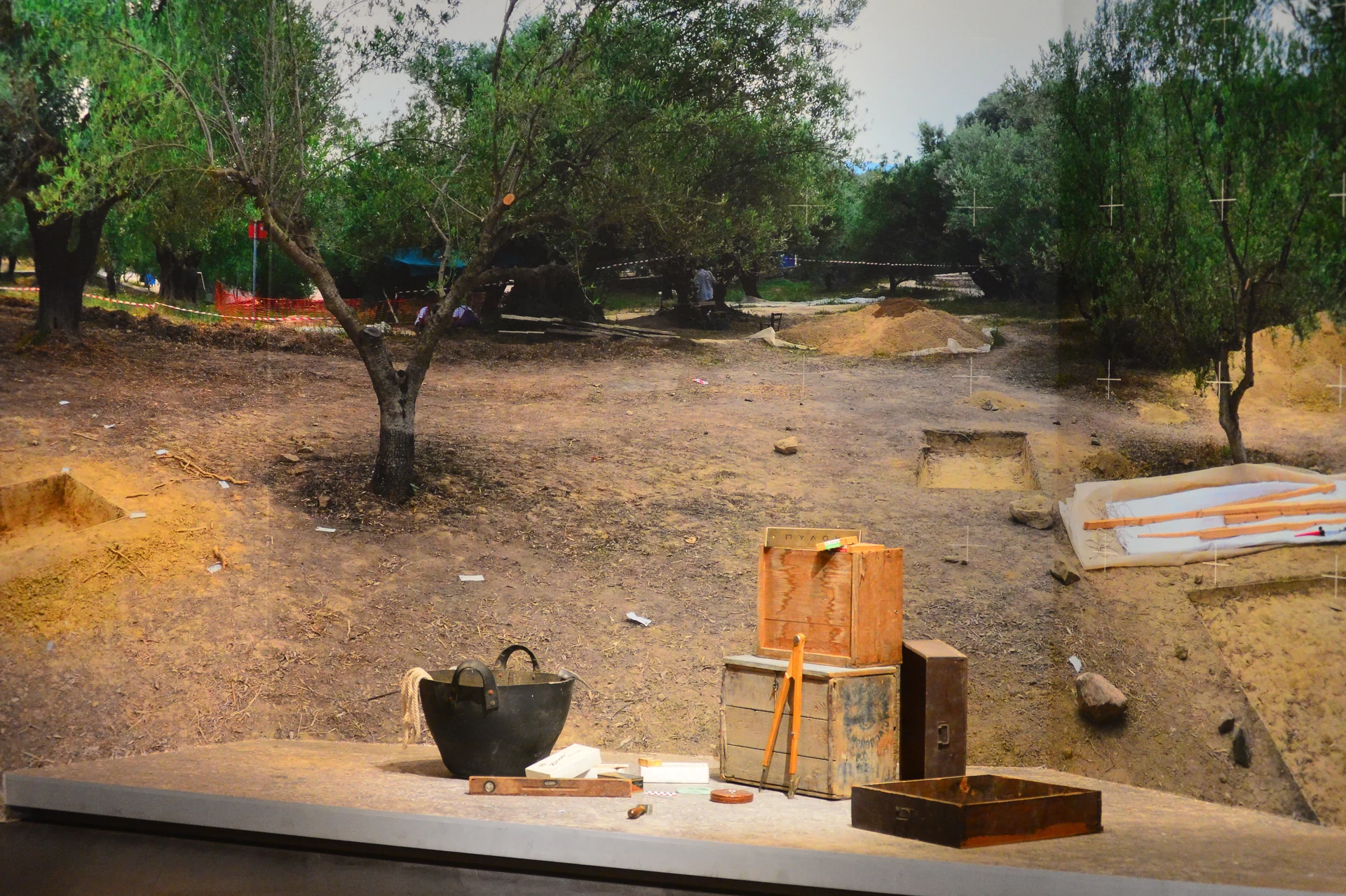
Archaeological excavation setting among olive trees, with tools and crates in the foreground.
An excavation scene among olive trees. Crates and tools in the foreground place the recovery of archaeological evidence before the display of finished objects.
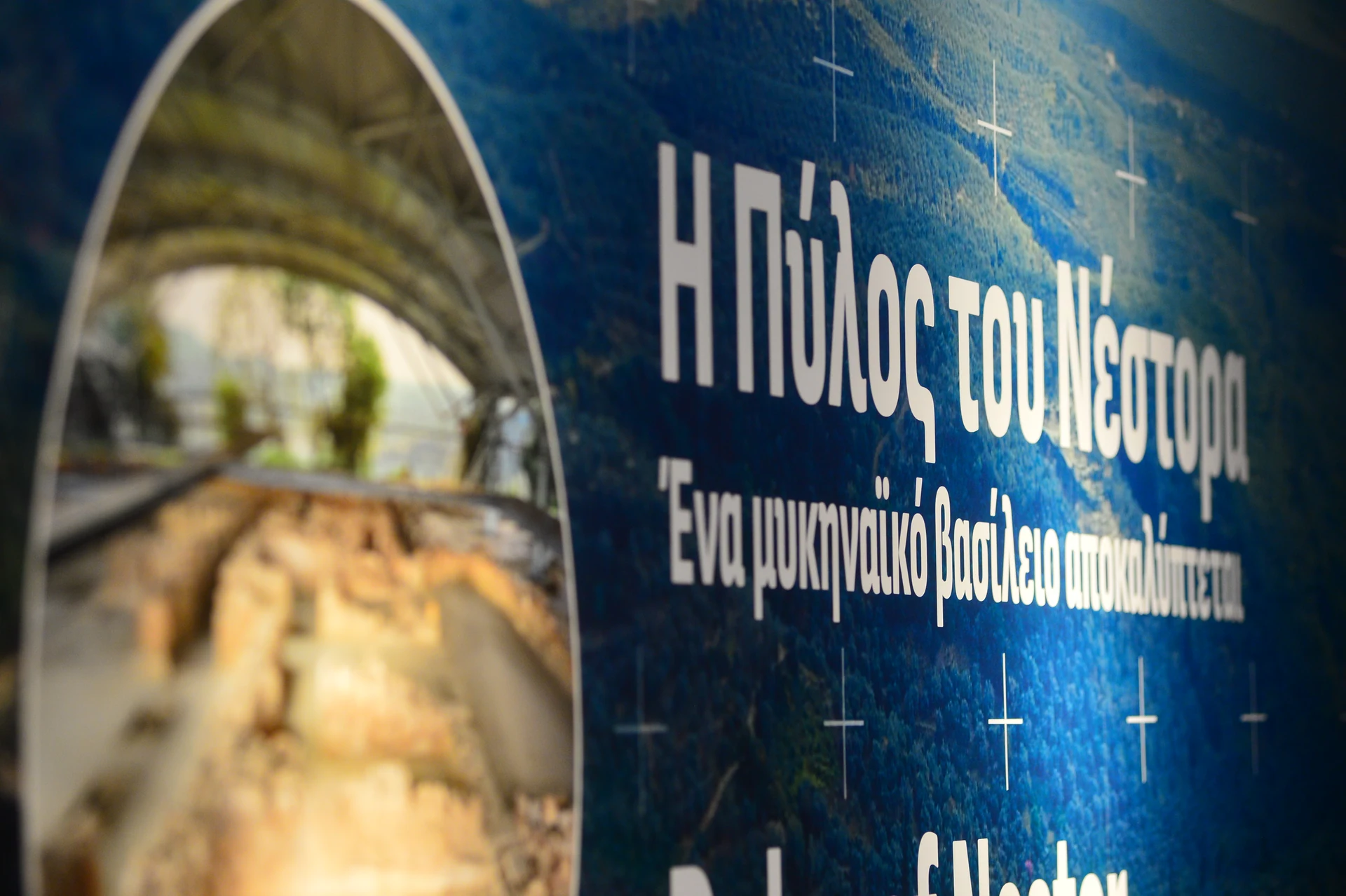
Blue Greek-language exhibition title panel reading The Pylos of Nestor: A Mycenaean Kingdom Revealed.
The exhibition title in Greek. The blue panel names The Pylos of Nestor and introduces the museum's account of a Mycenaean kingdom.

The Palace Behind the Legend

Homer's Nestor is an elderly king whose counsel carries weight at Troy. Archaeology cannot establish that this literary figure ruled the palace excavated at Ano Englianos, near modern Pylos. It can establish the presence there of a major Mycenaean centre, destroyed around the end of the thirteenth century BC.

The palace had a central megaron with a hearth, as well as spaces associated with storage, work and administration. Its layout gives physical form to the political and economic organisation suggested by the finds.

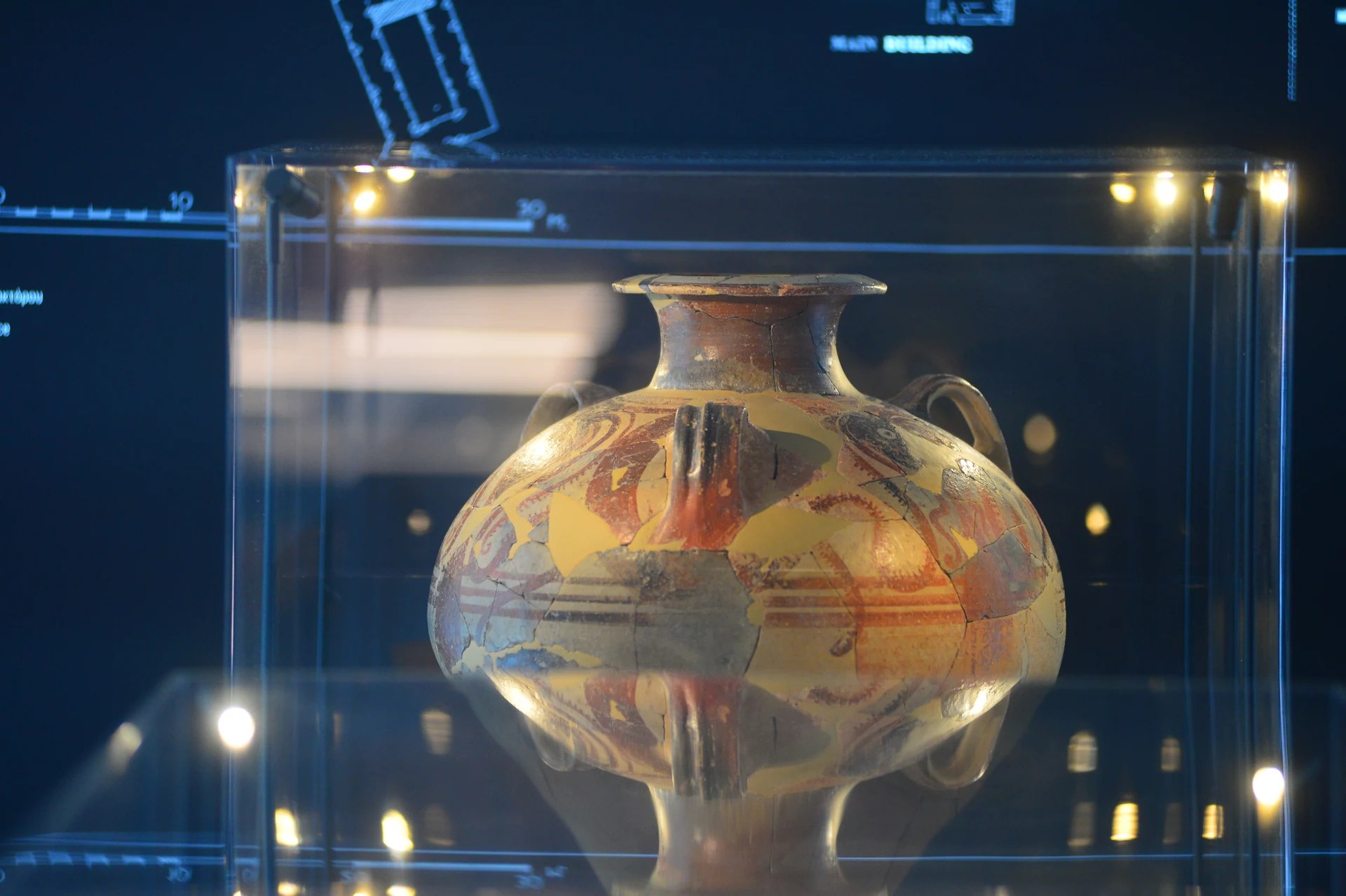
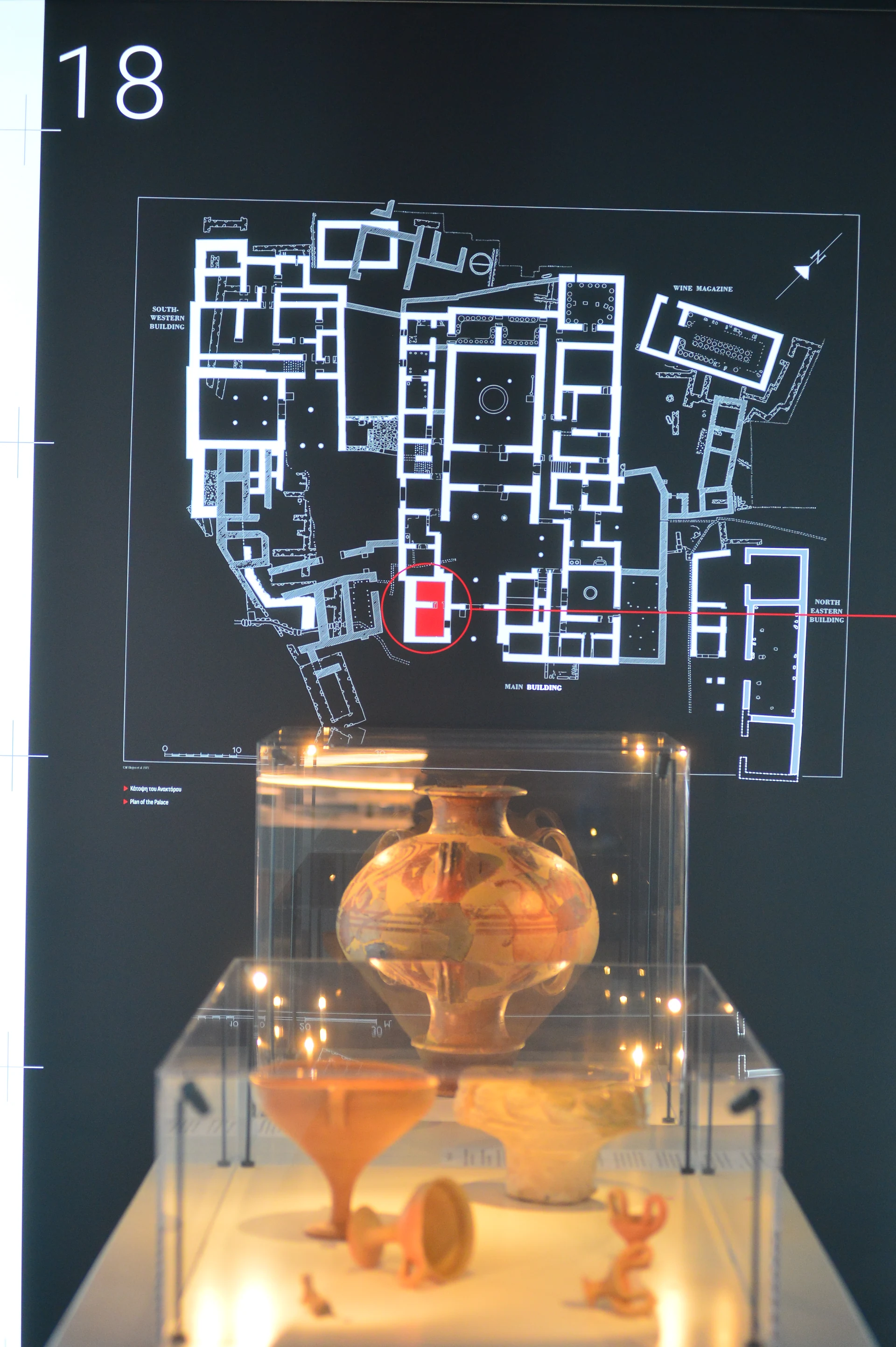
One photograph places a floor plan high on the exhibition wall, above a case of pottery. The image holds building and vessel in the same frame. The plan shows how the rooms related to one another; the objects give that outline human scale. Neither is a complete account of the palace on its own.
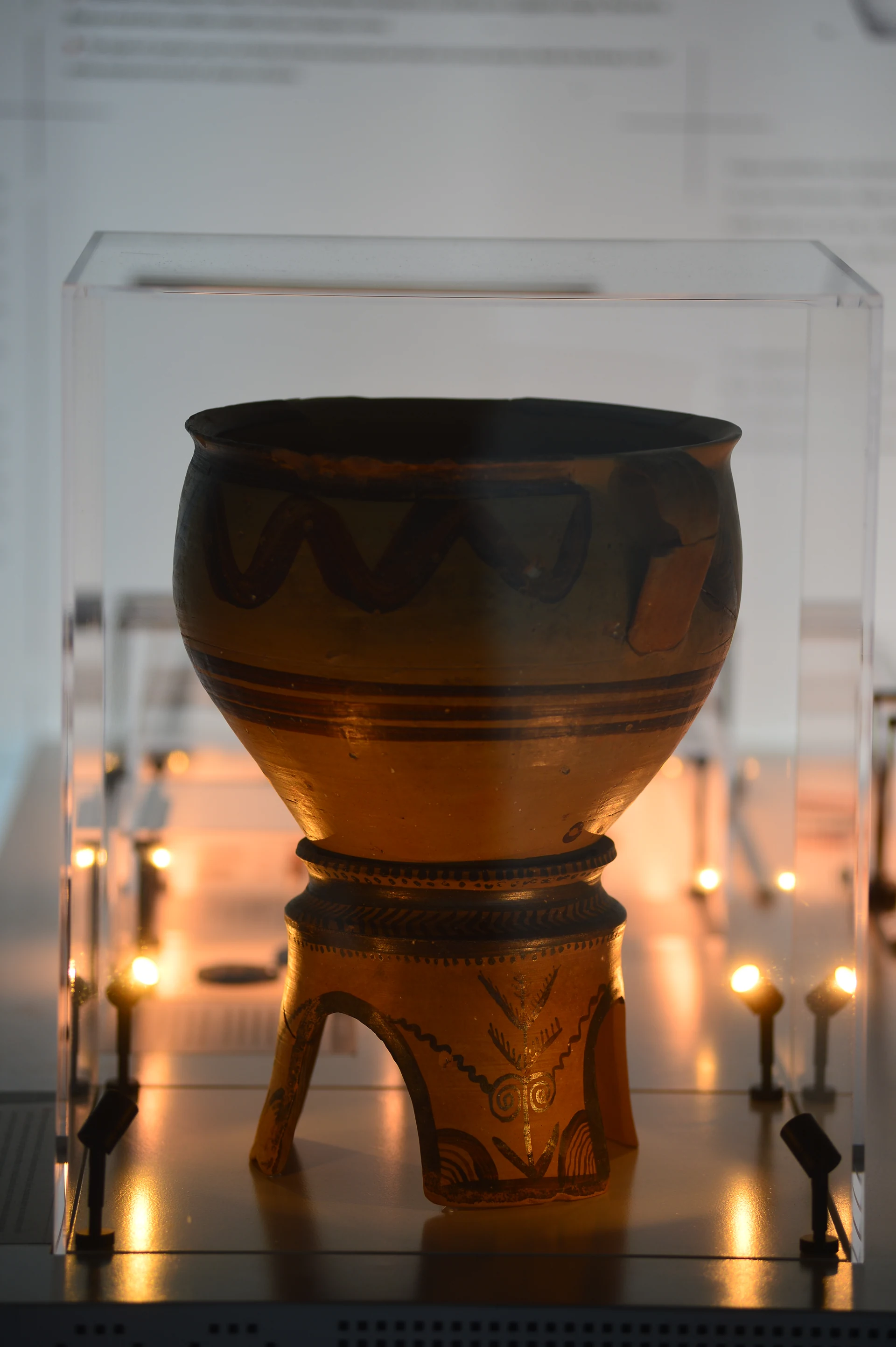
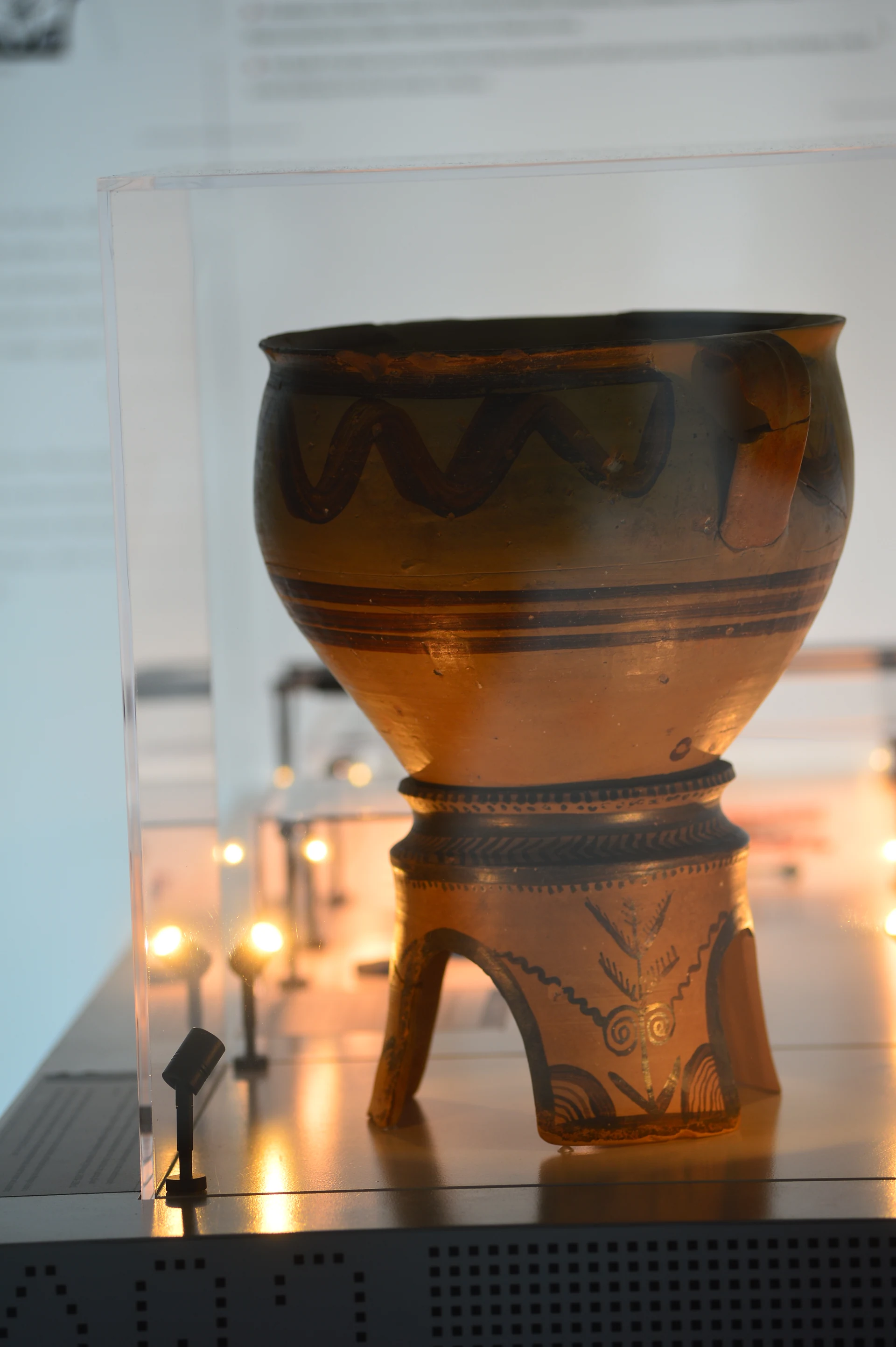
Large painted clay vessel with dark wave patterns on a decorated tripod stand.
A painted vessel on a patterned stand. Dark wave motifs run around the vessel, while the supporting tripod repeats the emphasis on ornament.
Floor plan of the Palace of Nestor displayed behind a museum case containing pottery and small artefacts.
The palace plan above a pottery case. The photograph places a vessel and smaller finds beneath the architectural drawing that gives them spatial context.
Large painted ceramic vessel with wave patterns on a decorated tripod stand, photographed from an angle.
The painted vessel and tripod from an angle. This second view shows the patterned stand, rounded body and surrounding case together.

When Administration Became History

The clay tablets from Pylos are among the palace's most consequential finds. Written in Linear B, an early form of Greek, they record the work of administration rather than epic or personal reflection. Commodities, personnel, animals and allocations appear in the surviving texts.

Michael Ventris deciphered Linear B in 1952, with John Chadwick contributing to the subsequent interpretation and publication. The tablets opened a way to study how Mycenaean authorities counted resources and coordinated activity across their territory. Many endured because the fire that destroyed the palace hardened clay never intended as permanent ceramic documents.

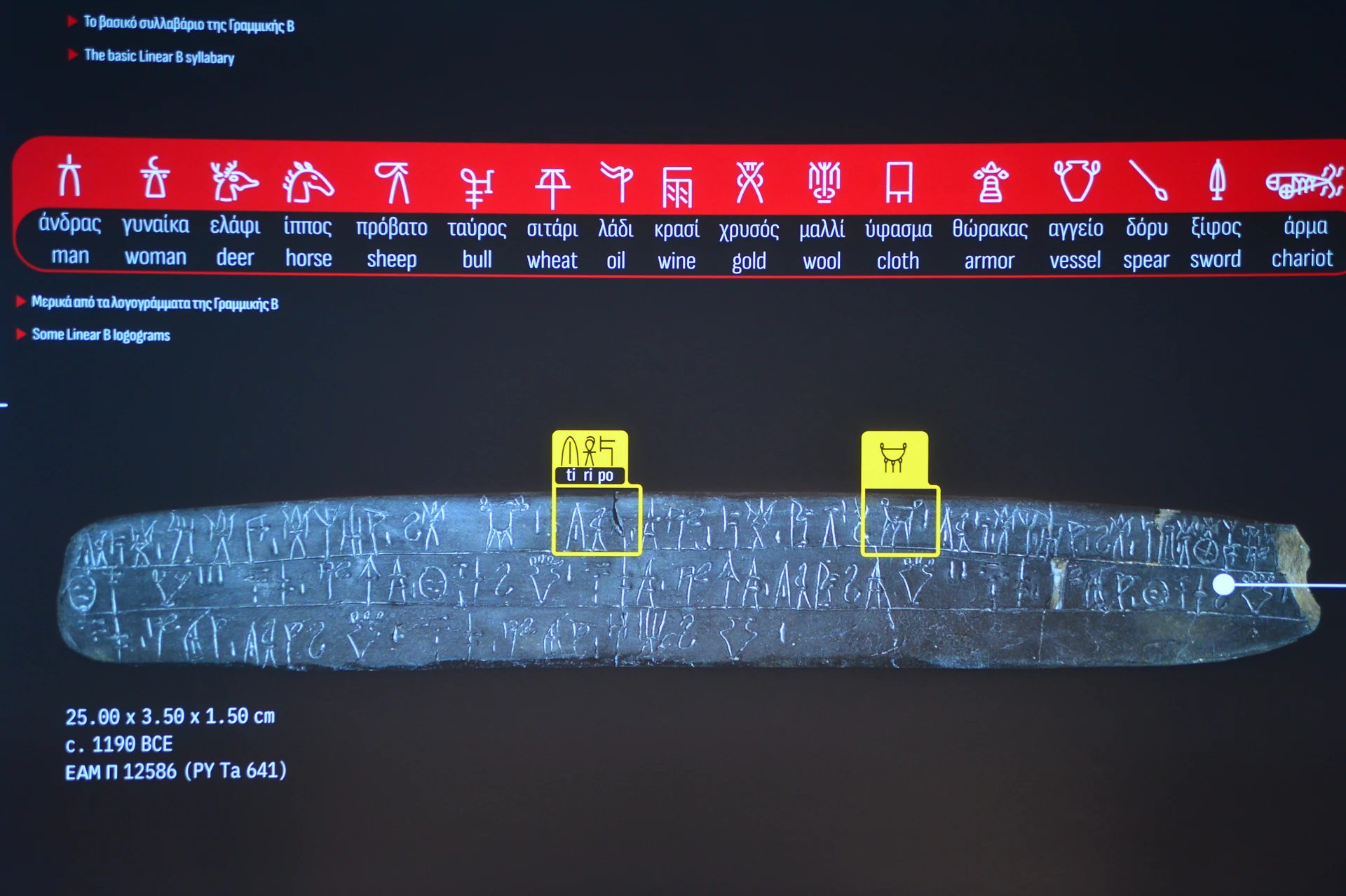
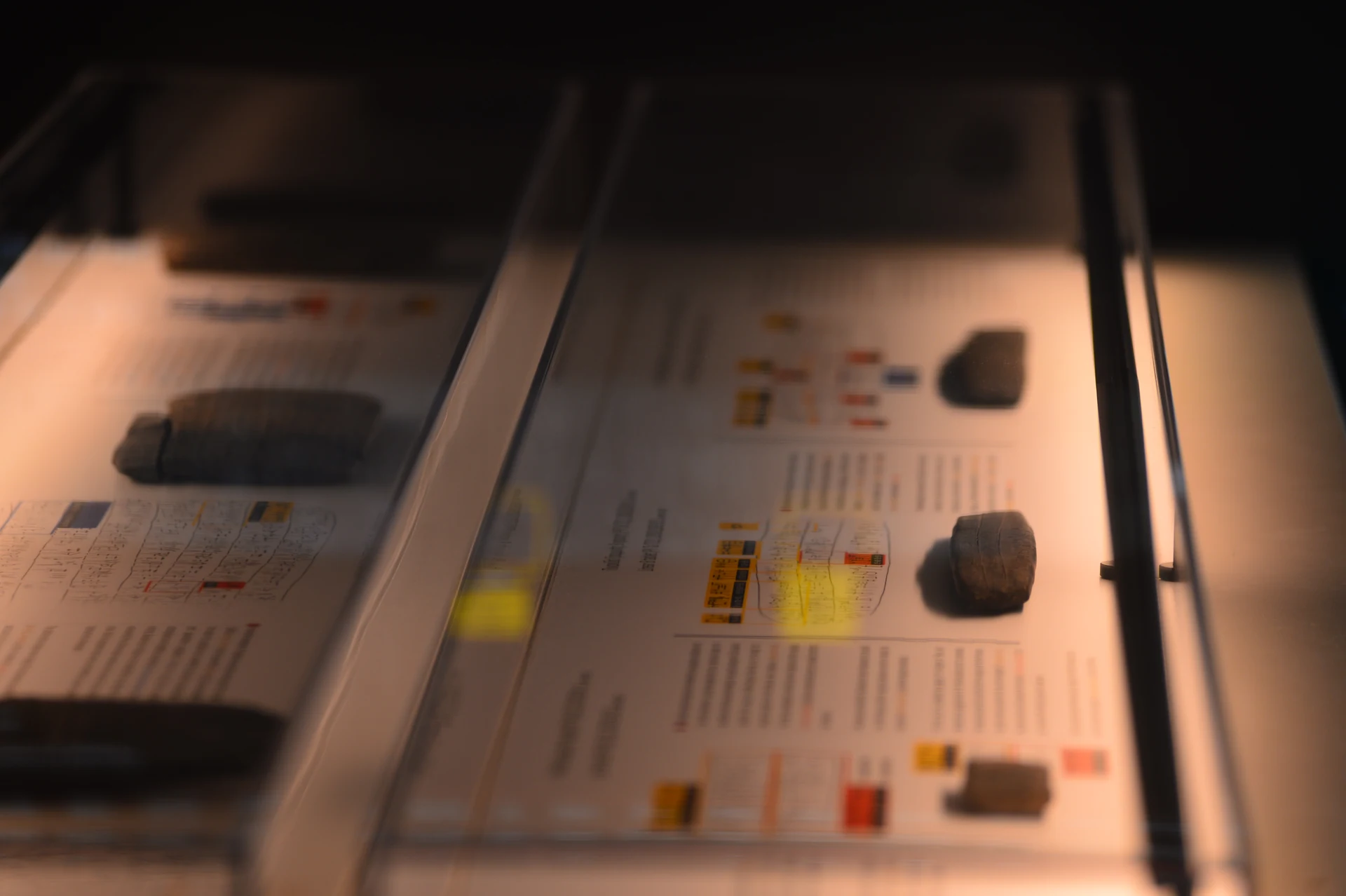
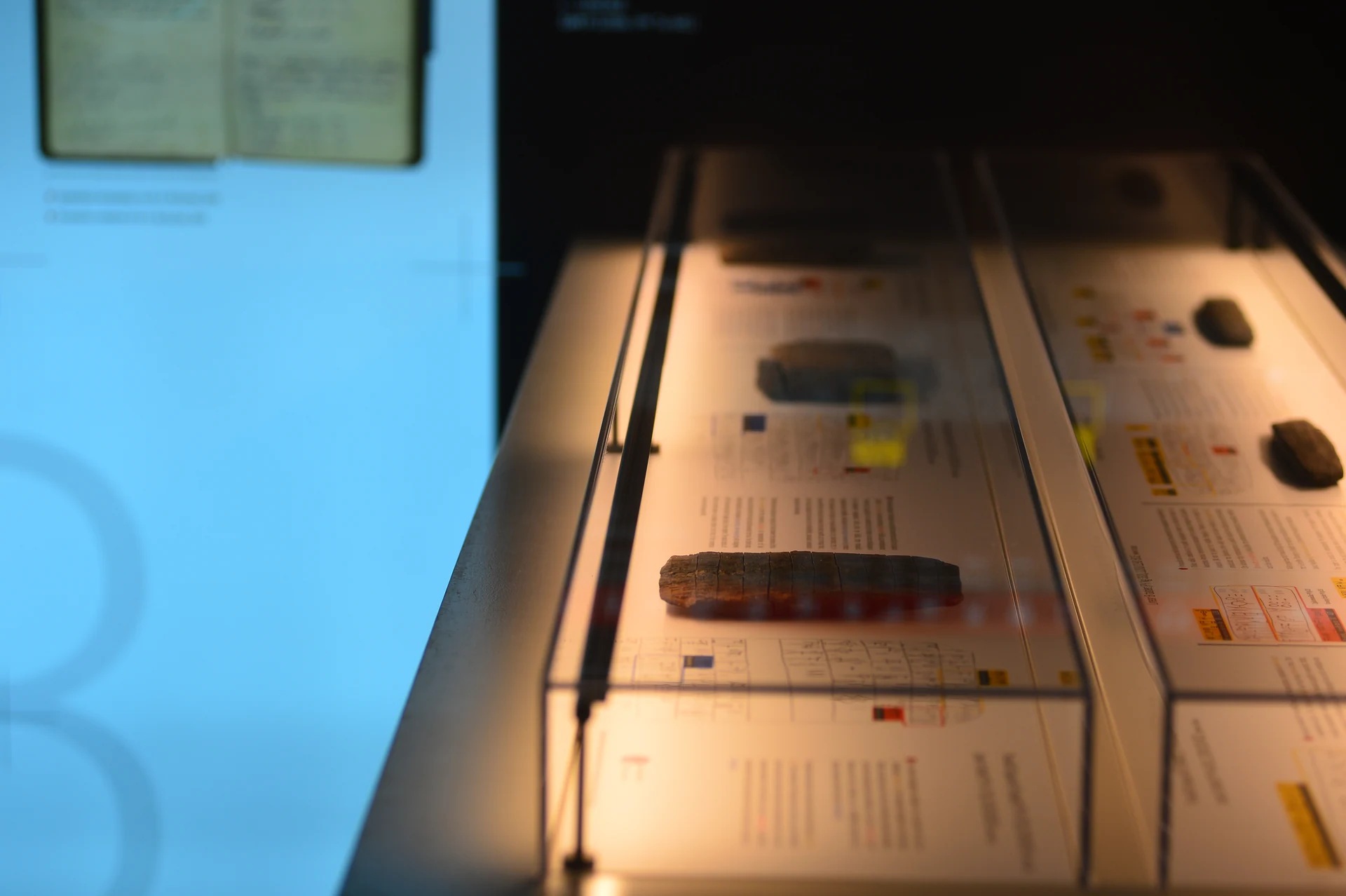
In the gallery, the tablets occupy modest spaces behind glass. The photographs bring their incised rows close enough to inspect, then widen to include diagrams of signs and ideograms. One panel spells out Pylos syllabically. The graphics do more than decorate the case: they let an unfamiliar script become readable evidence.
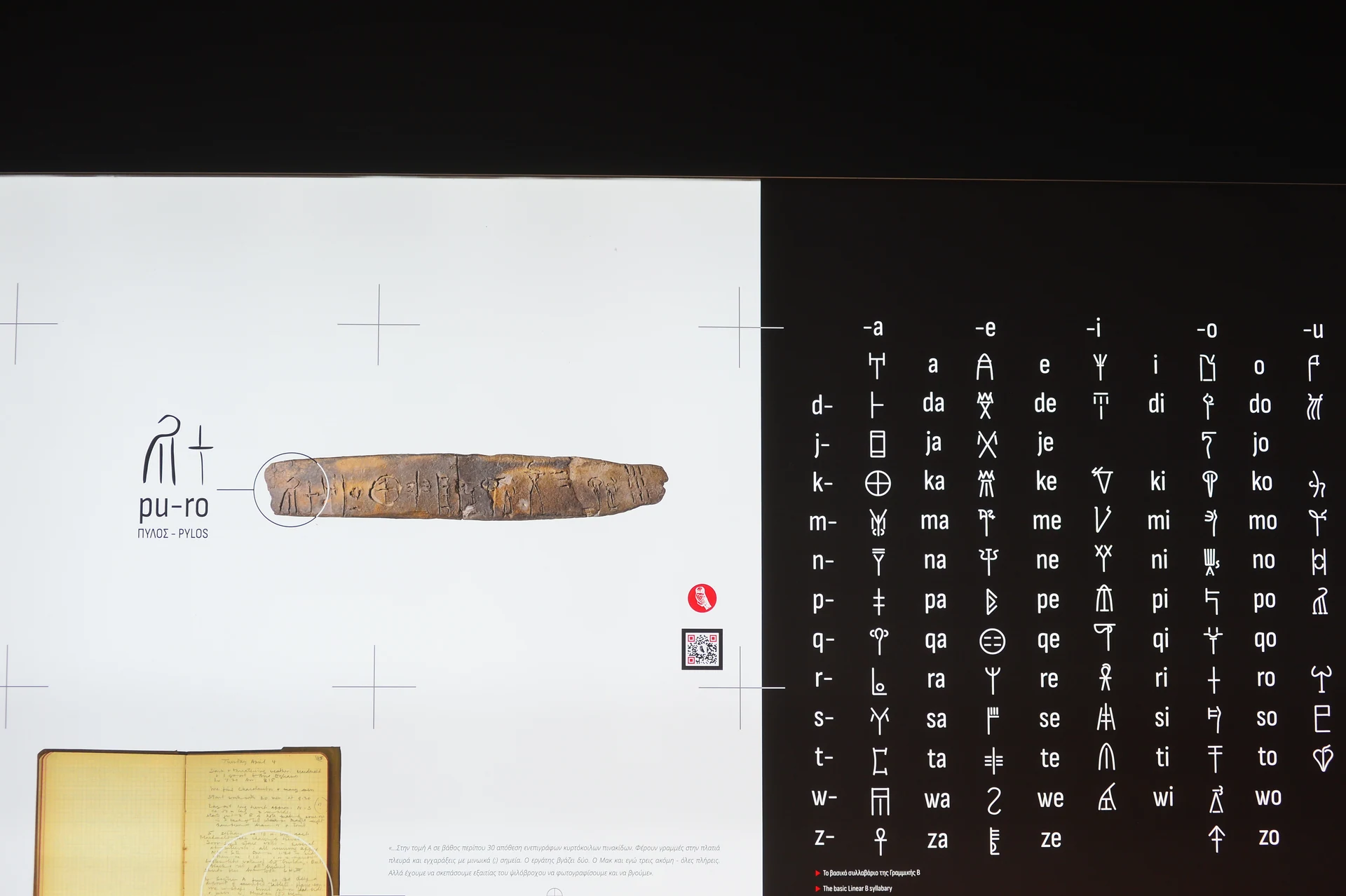
Museum panel explaining Linear B writing, including the syllabic spelling of Pylos and a clay tablet.
The name of Pylos in Linear B. A museum panel sets the syllabic spelling beside a tablet and an explanation of the script.
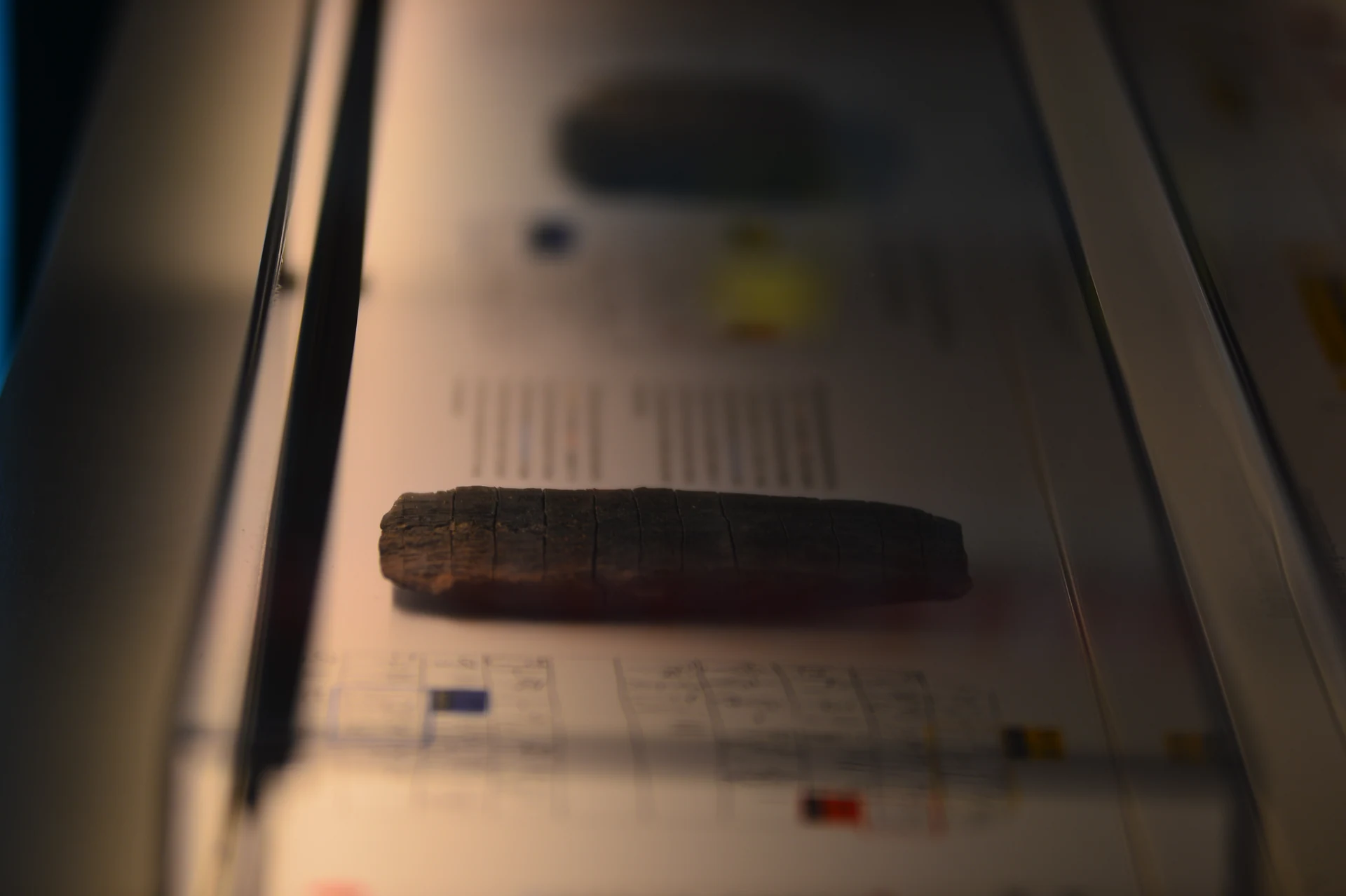
Elongated clay tablet with incised signs displayed above explanatory museum text.
A clay tablet above its label. The narrow object bears incised signs whose scale is easy to miss in a wider view of the case.
Close-up of an elongated clay tablet bearing rows of incised signs.
Incised signs on a clay tablet. This close view records the irregular rows and the texture of the surviving surface.
Exhibition panel showing Linear B ideograms, their meanings and an inscribed tablet.
Linear B ideograms and a tablet. The explanatory panel relates pictured signs to the goods and quantities recorded by palace administrators.
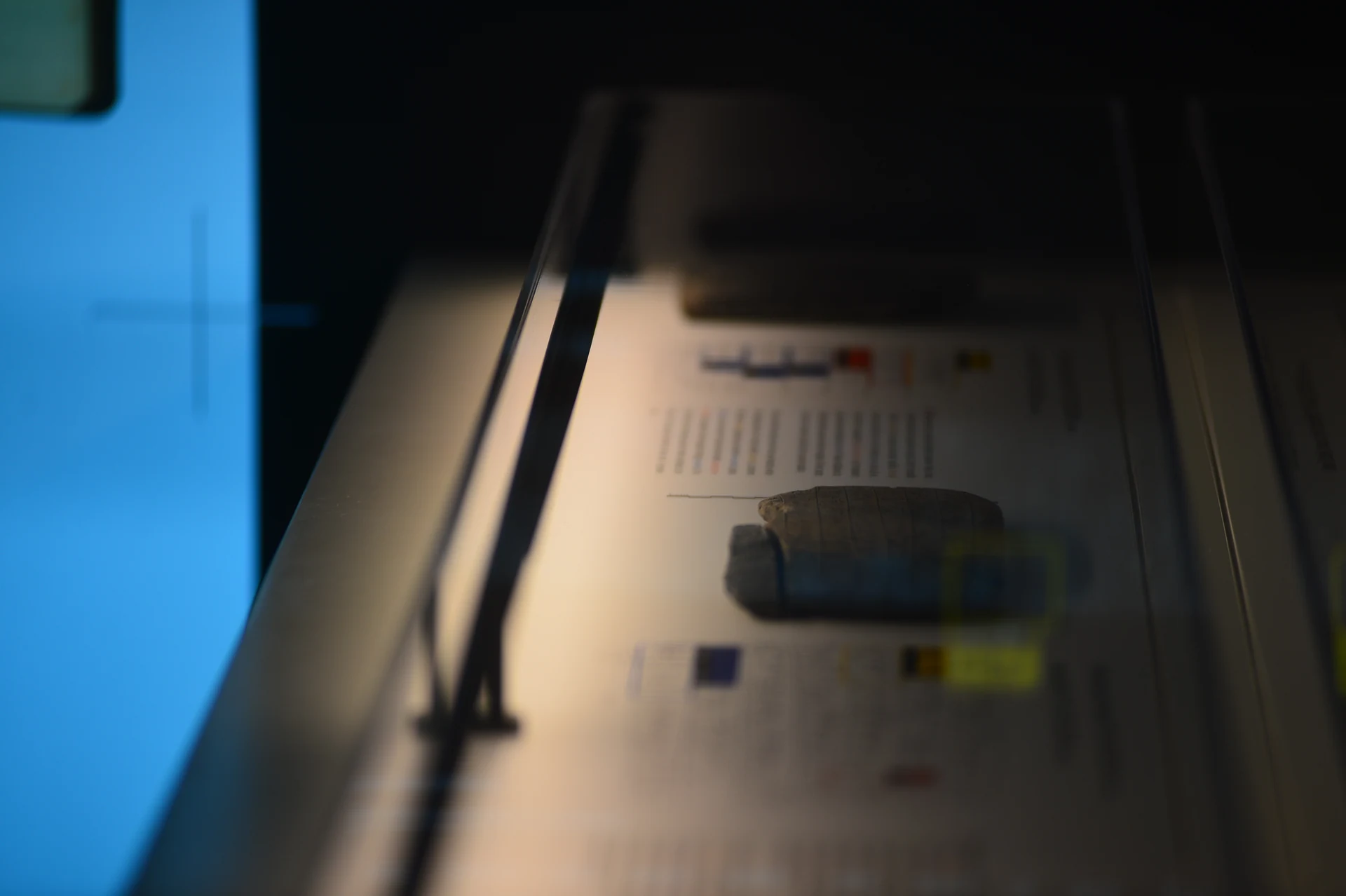
Angled view of several clay tablets with accompanying museum labels.
Several tablets viewed along the case. The angled photograph shows the relation between the clay records and their individual labels.
Angled display of inscribed clay tablets and explanatory diagrams.
Tablets and diagrams in an angled display. The arrangement lets the clay signs be read against the explanatory drawings behind them.

Gold and the Language of Craftsmanship

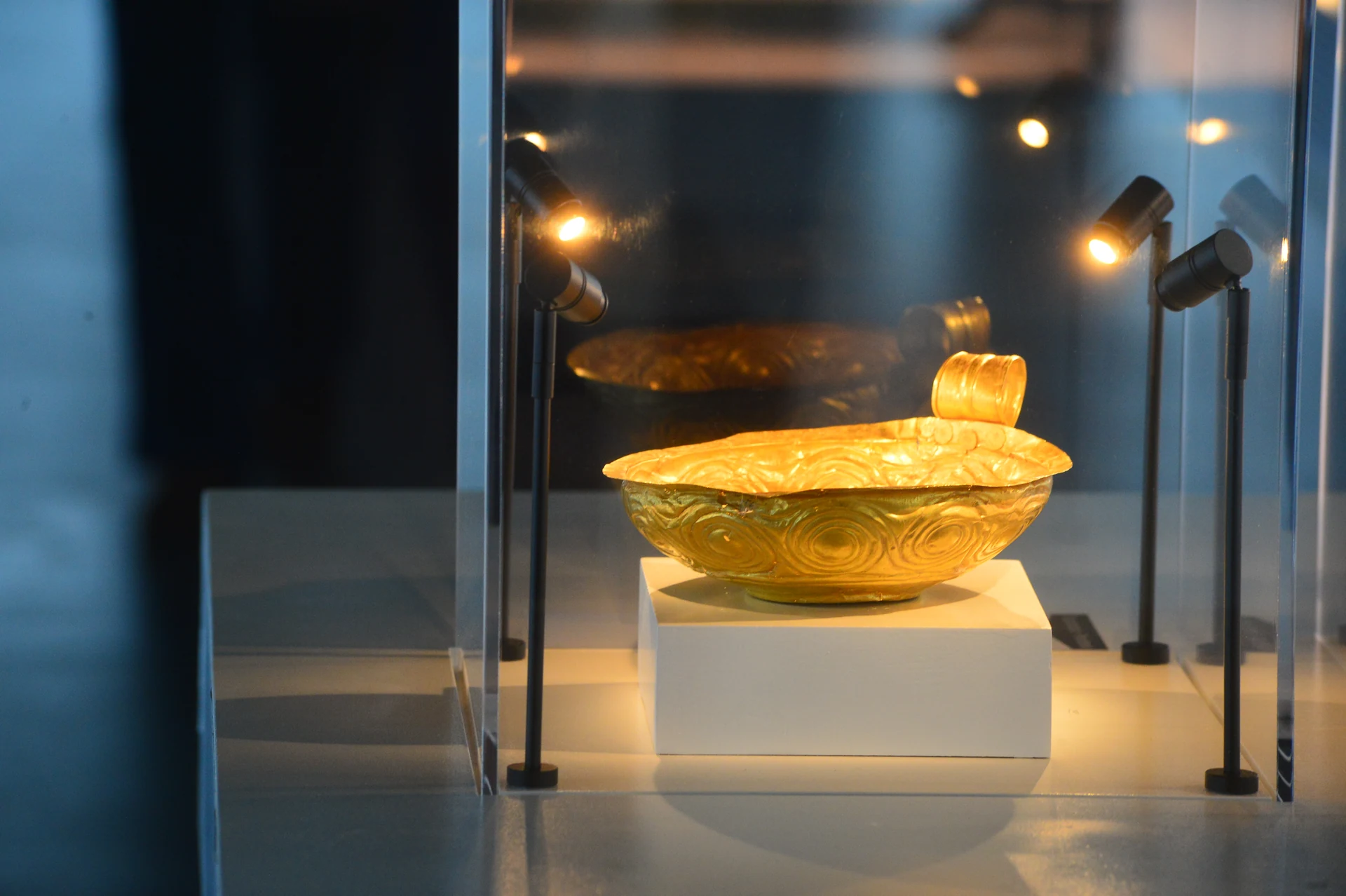
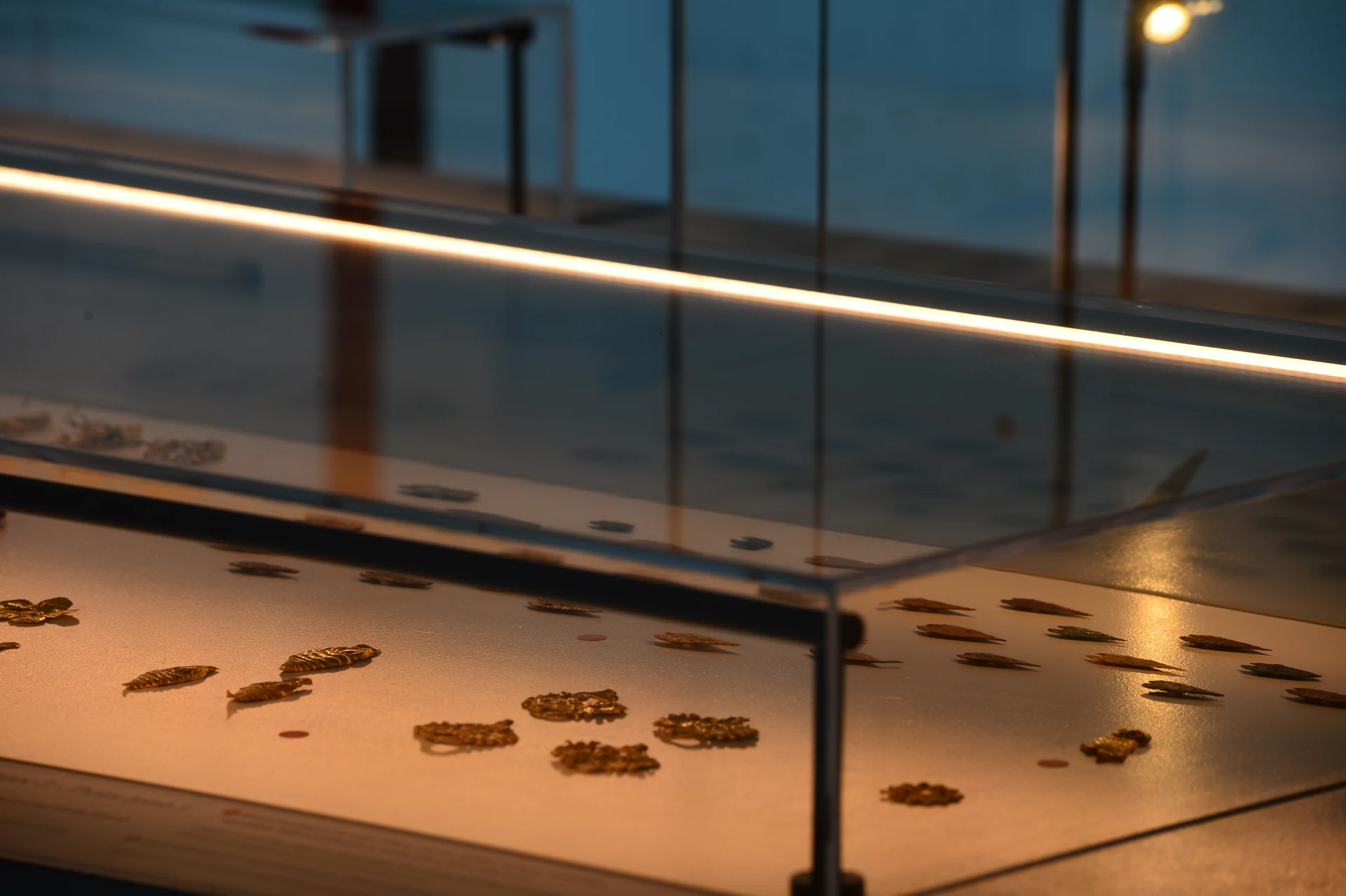
The gold photographs record two scales of looking. A pair of vessels is seen through case glass and focused lights; a single shallow vessel brings a band of spiral relief into view. Nearby, small ornaments spread across a display, while a magnifying lens sits beside a group of finer objects.

These arrangements make form and workmanship easier to compare. They also point beyond appearance. Shaping, joining and decorating precious metal demanded specialised skills and access to valuable material. The objects raise questions about status and exchange, although a photograph alone cannot settle how any particular piece was used.

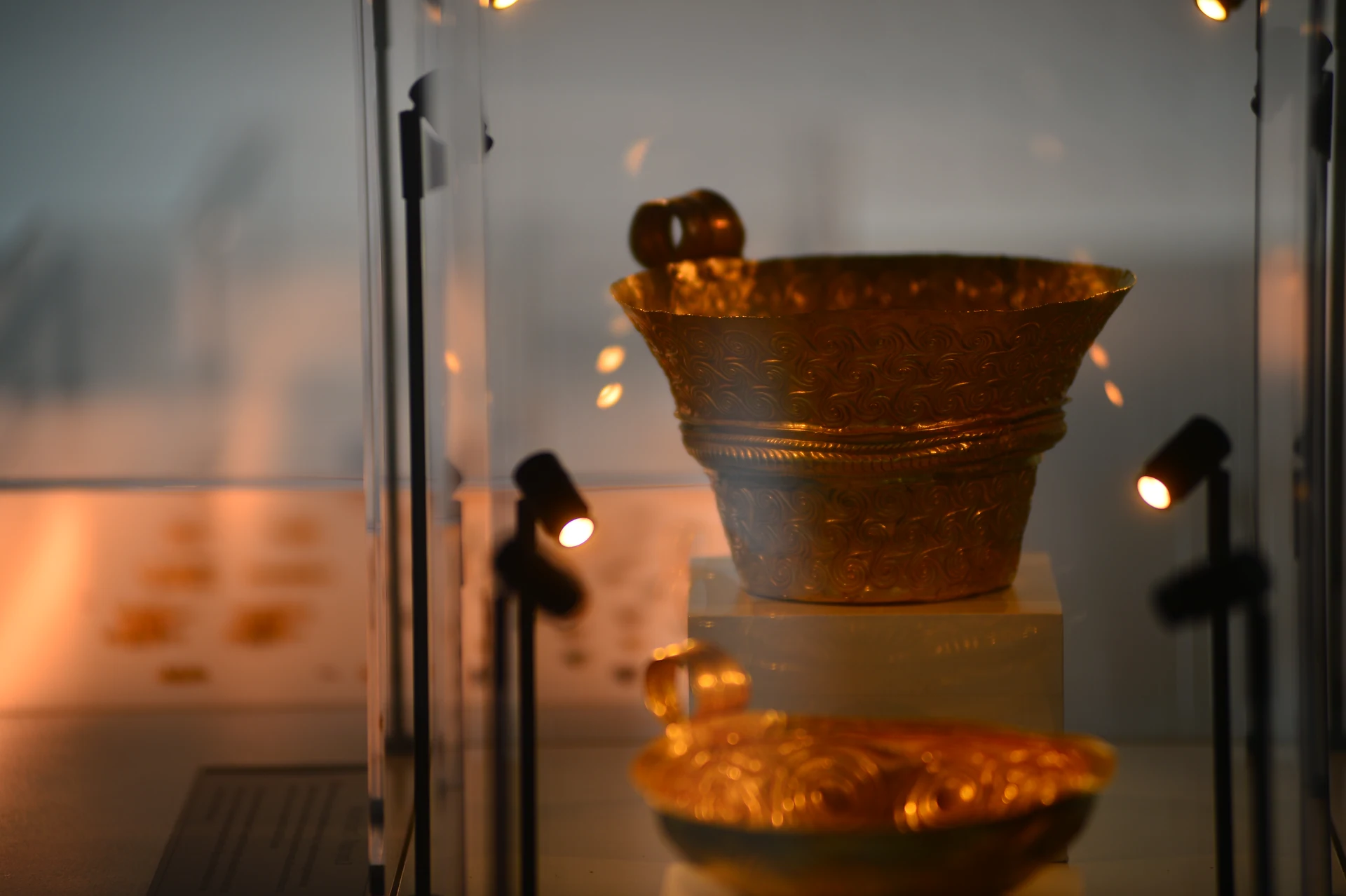
Light is part of the record here. Reflections mark the glass and sometimes interrupt a clear view, while the directed lamps pick out incised and raised surfaces. The photographs show the objects as encountered in the museum, not detached from their display.
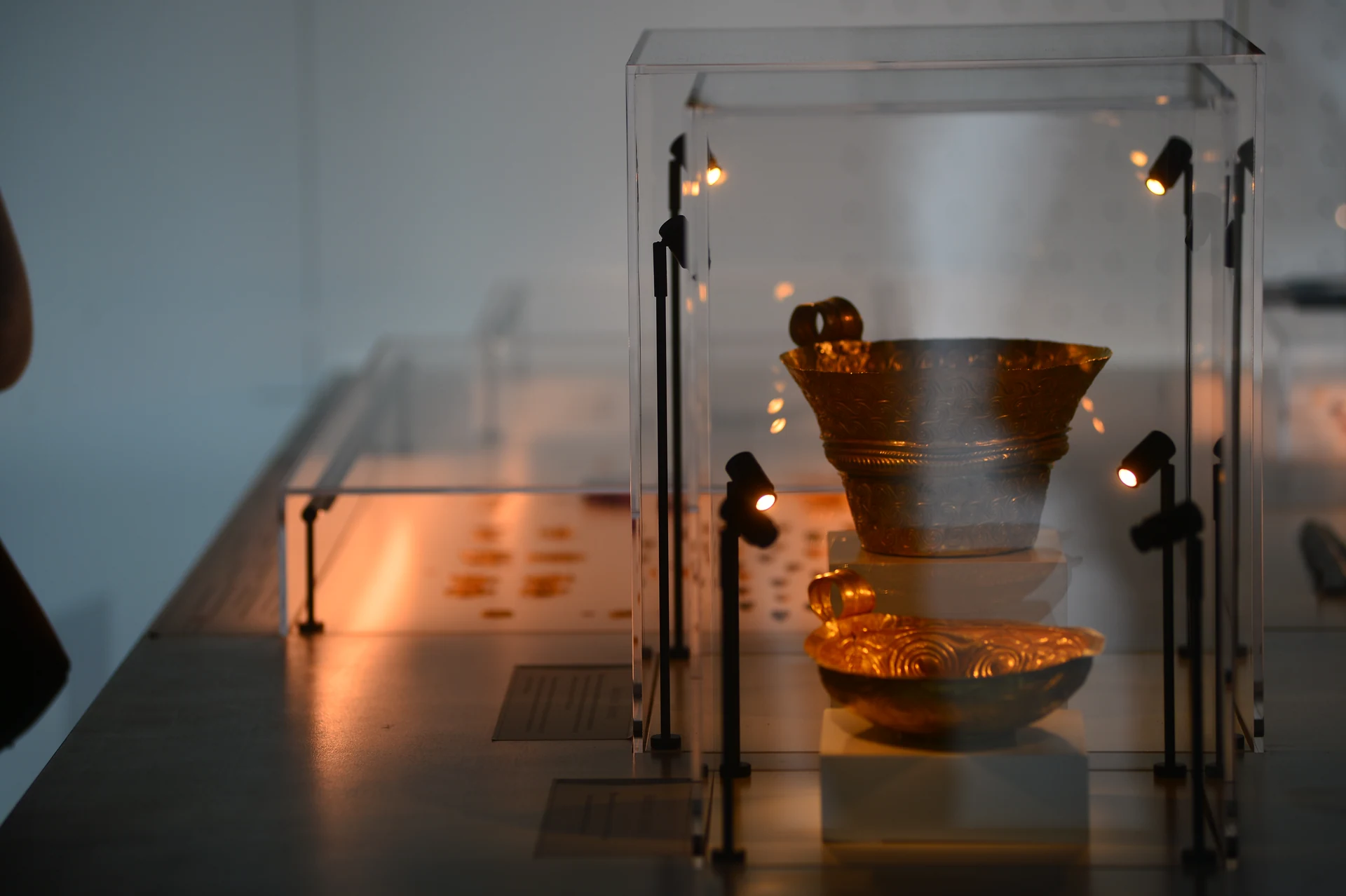
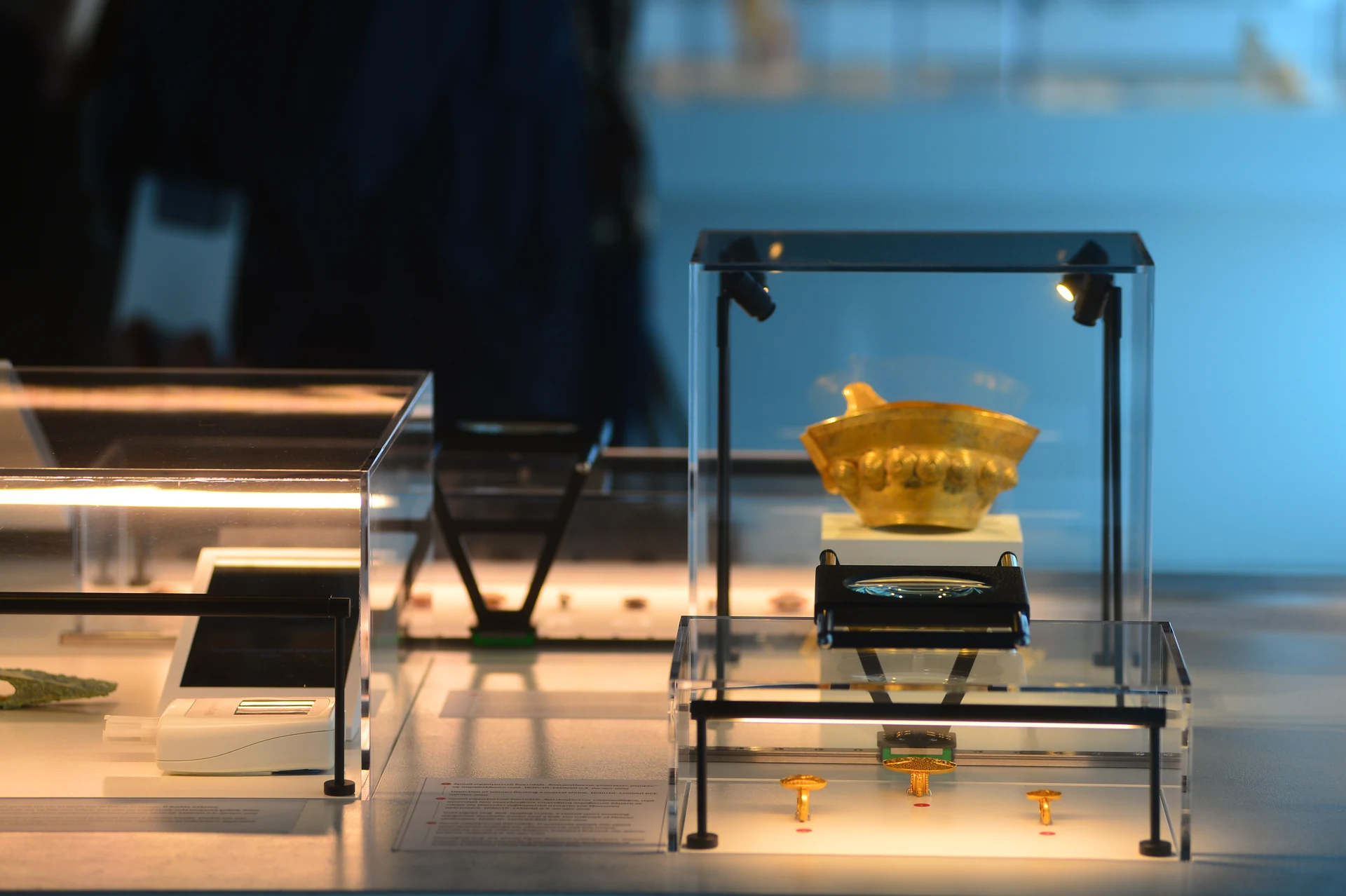
Two decorated gold vessels illuminated inside a museum display case.
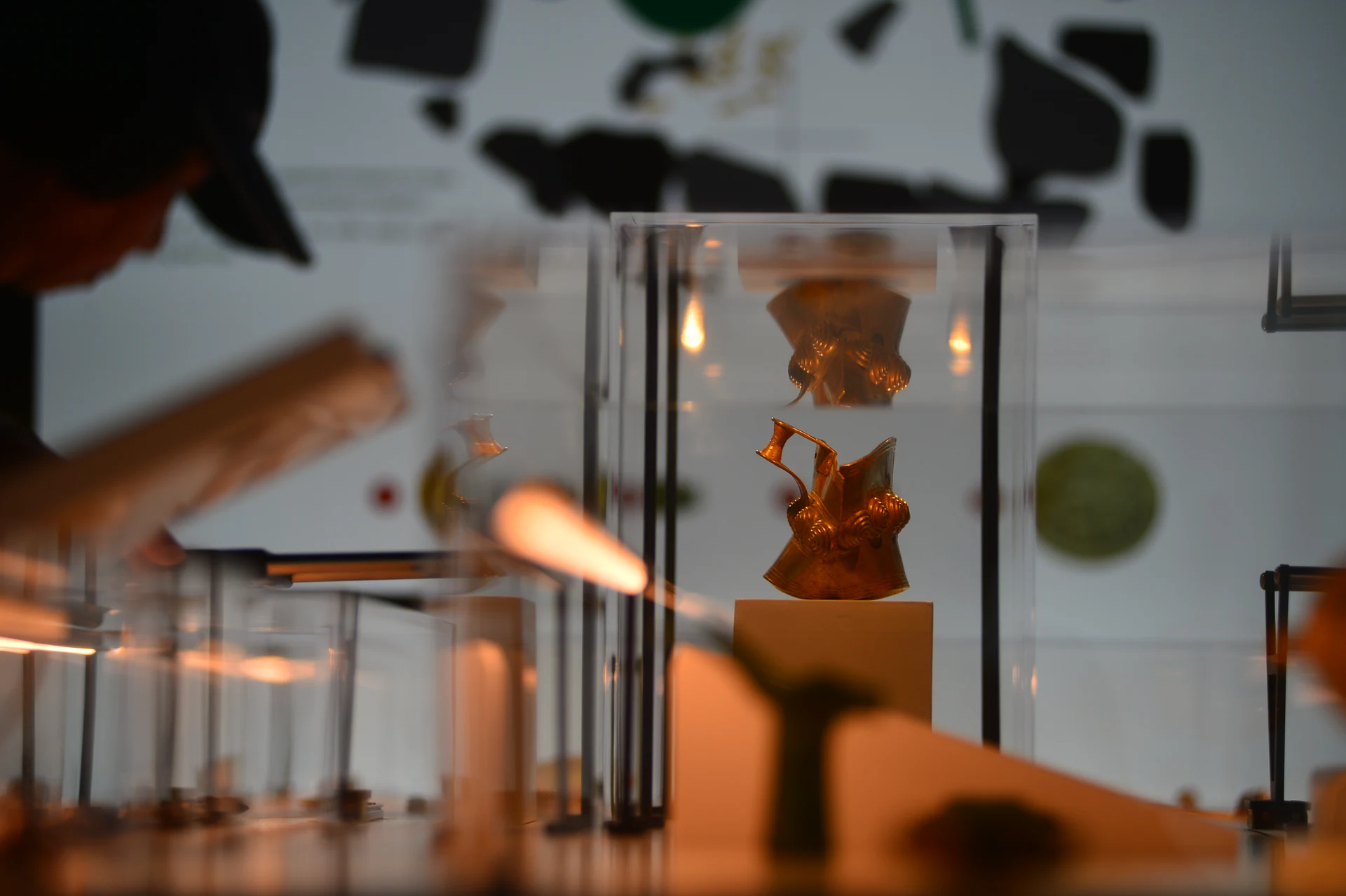
Two gold vessels in a lit case. The deeper vessel stands above a shallow bowl, allowing their different profiles and decorated surfaces to be compared.
Small gold vessel with three gold objects and a magnifying lens inside a display case.
Gold objects under a magnifying lens. The lens sits beside a small vessel and three smaller pieces, inviting close inspection of their worked surfaces.
Decorated gold artefact inside an illuminated museum case, with a blurred visitor in the foreground.
A gold object and a visitor's blurred silhouette. Focused case lighting defines the artefact while the background records the conditions of viewing it.
Close-up of two decorated gold vessels arranged vertically in a museum case.
Two decorated gold vessels, one above the other. Their stacked presentation invites comparison of rim, body and surface pattern.
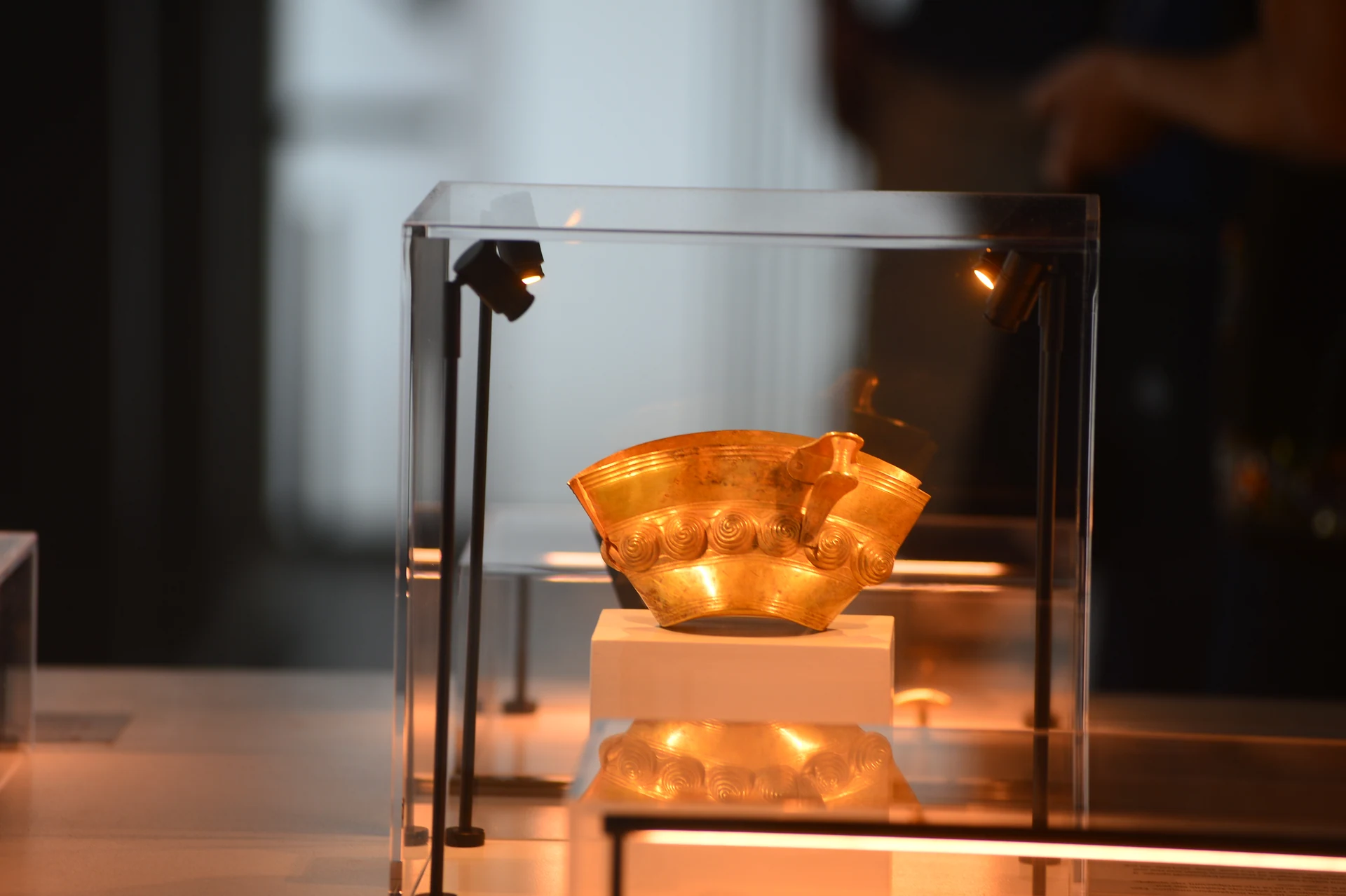
Shallow gold vessel with circular relief decoration displayed alone in a museum case.
A shallow gold vessel with circular relief. Focused light reveals concentric decoration across its interior.
Numerous small decorated gold pieces arranged across an illuminated museum display.
Small gold pieces in an illuminated group. The arrangement makes their varied outlines and surface decoration easier to compare.
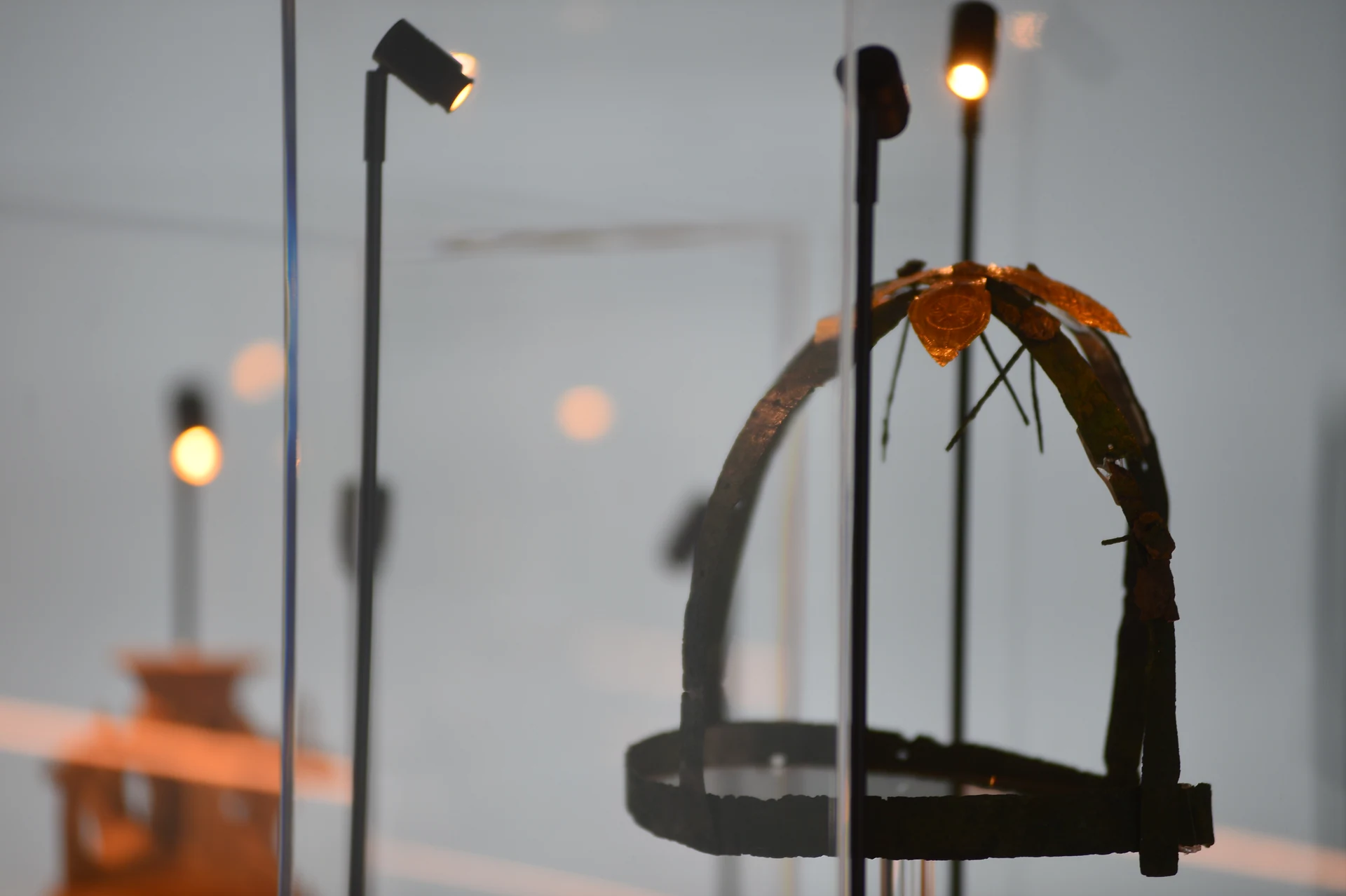
Circular metal artefact with gold decorative elements suspended inside a museum display.
A suspended circular metal object. Gold-coloured decorative elements contrast with the darker body and make its construction visible.
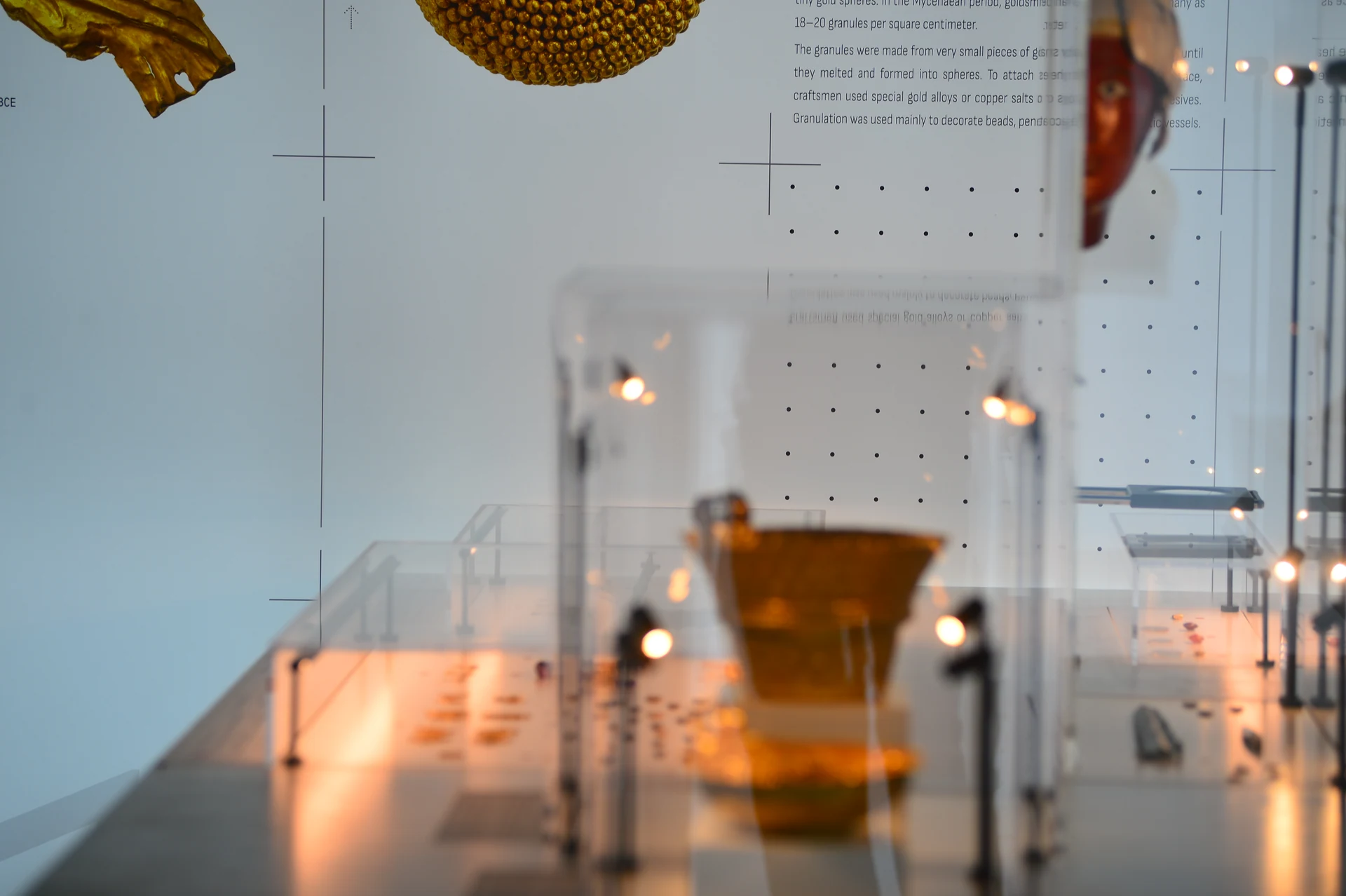
Museum cases containing gold vessels and small artefacts beside an explanation of goldworking techniques.
Goldwork beside its interpretation. Lit vessels and small objects are displayed near text explaining techniques of making and decoration.
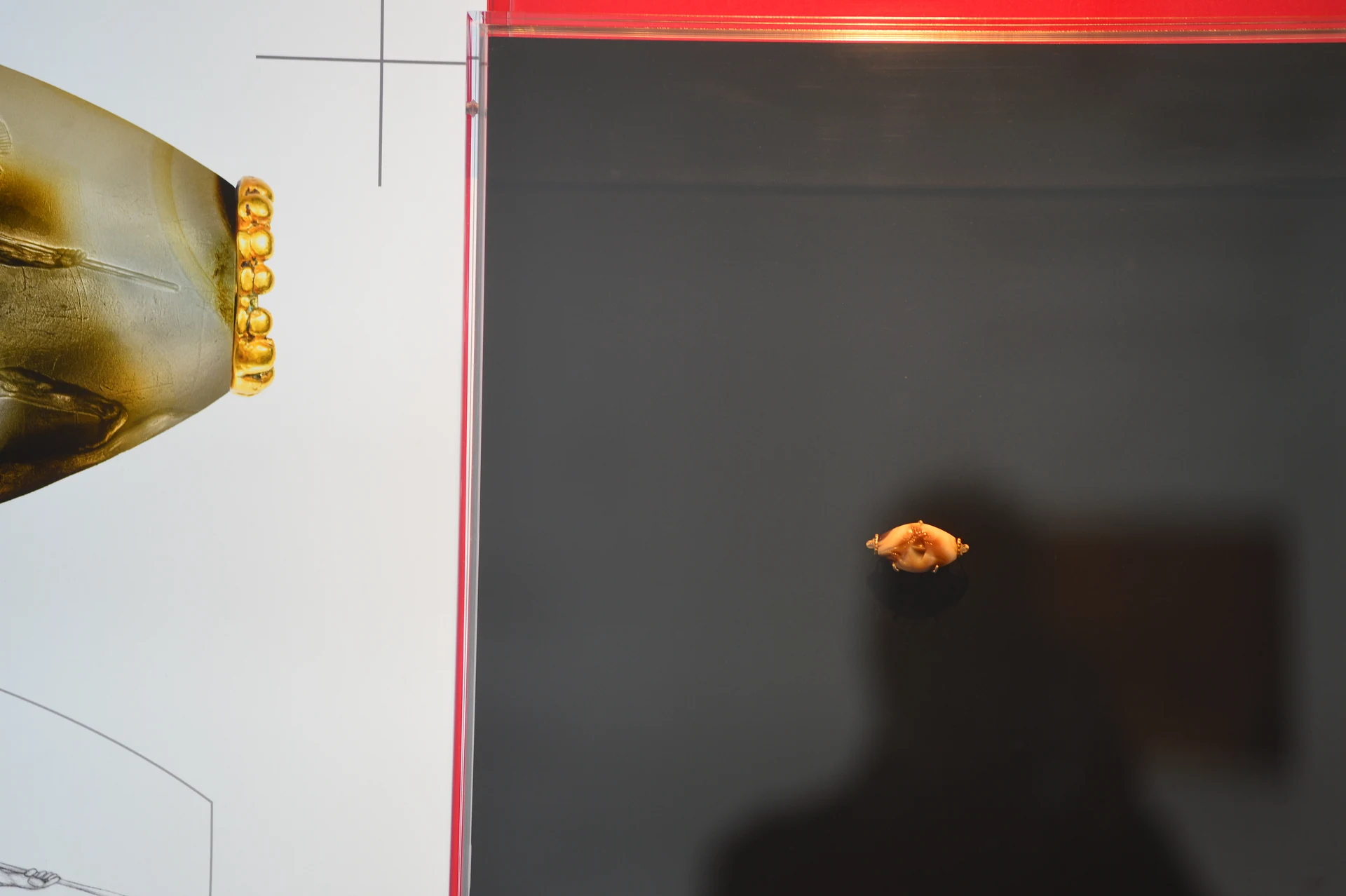
Tiny gold ornament displayed against a black background beside an exhibition graphic.
A tiny gold ornament beside an exhibition graphic. The dark surround and directed light make the object's small scale immediately apparent.

Clay, Colour and Everyday Material Culture

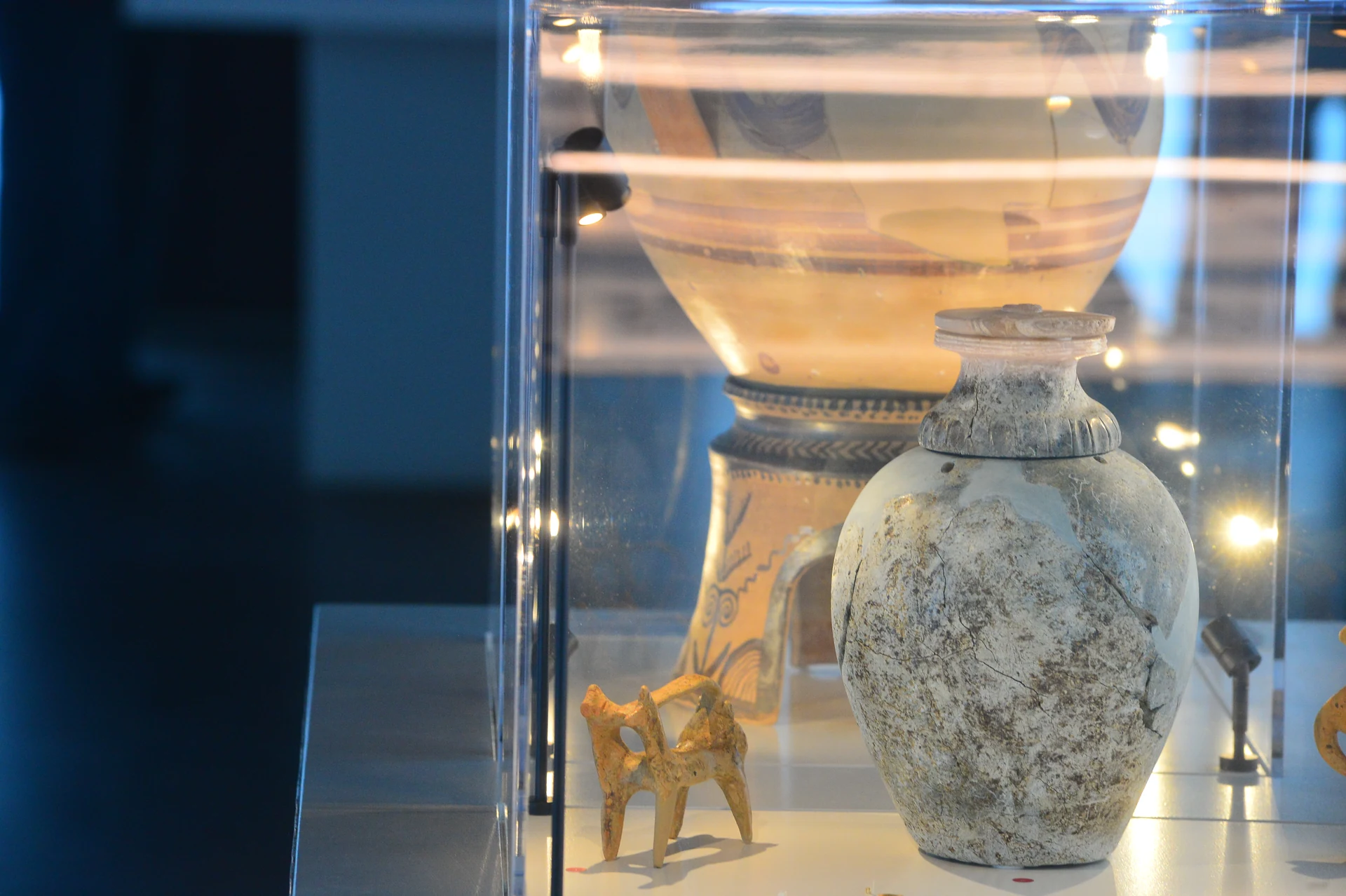
Ceramics fill a different range of the exhibition. A pale stemmed cup stands alone; two smaller vessels sit together; painted pots carry waves, plants and animal forms. A large vessel is photographed from two angles on its patterned stand, making the relationship between body, support and surrounding case visible.

Shape and surface offer evidence about making, handling and visual preference, although the use of an individual vessel depends on its archaeological context. The restored painted pot is especially revealing. Its surviving decoration and reconstructed sections can be seen together. The repair helps recover the overall form without making the fragmentary survival disappear.

Close photographs of a rim or painted motif allow an inspection that a wider case view cannot. The wider views, in turn, show how vessels of very different size are brought into conversation by the exhibition.
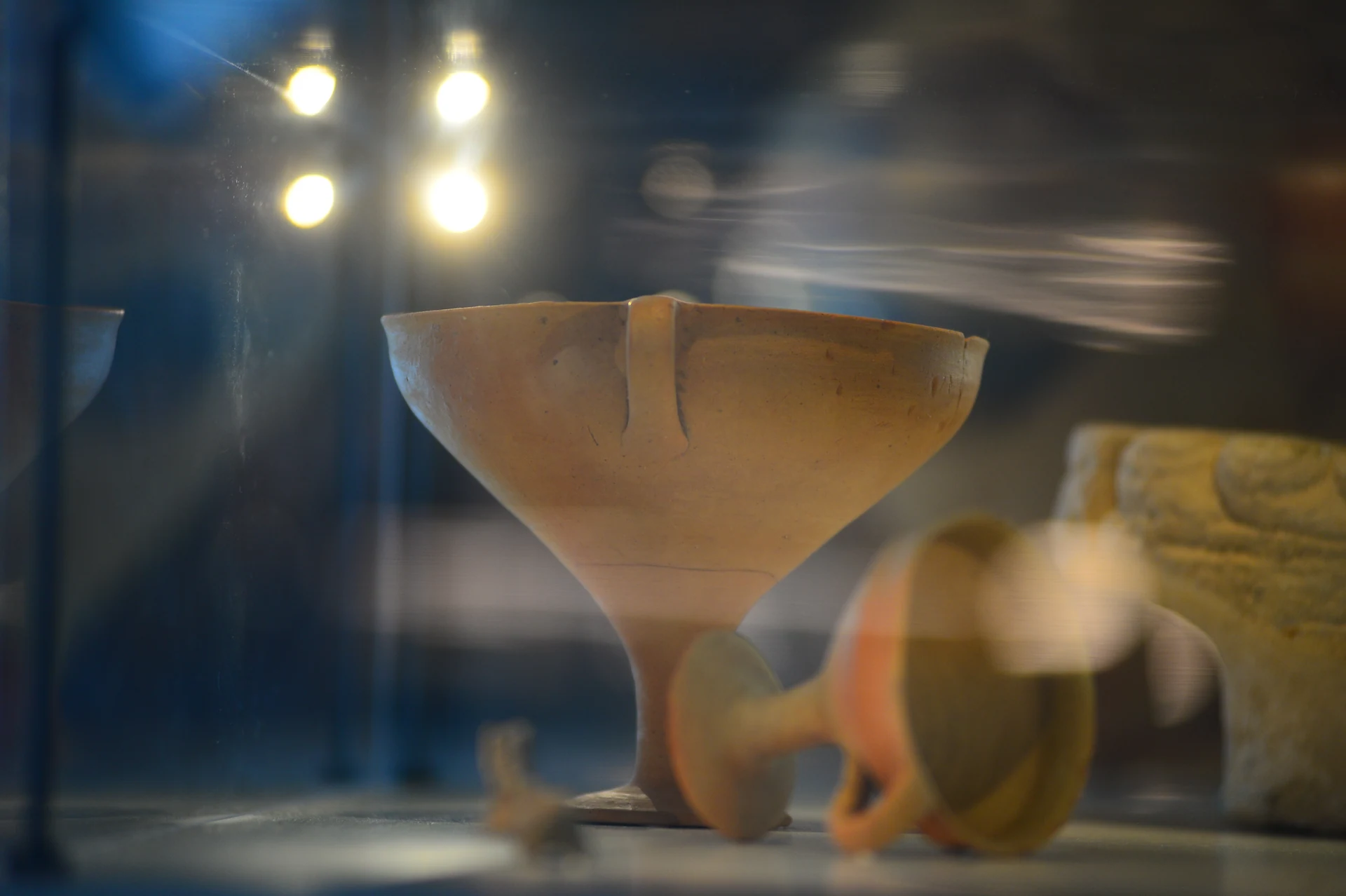
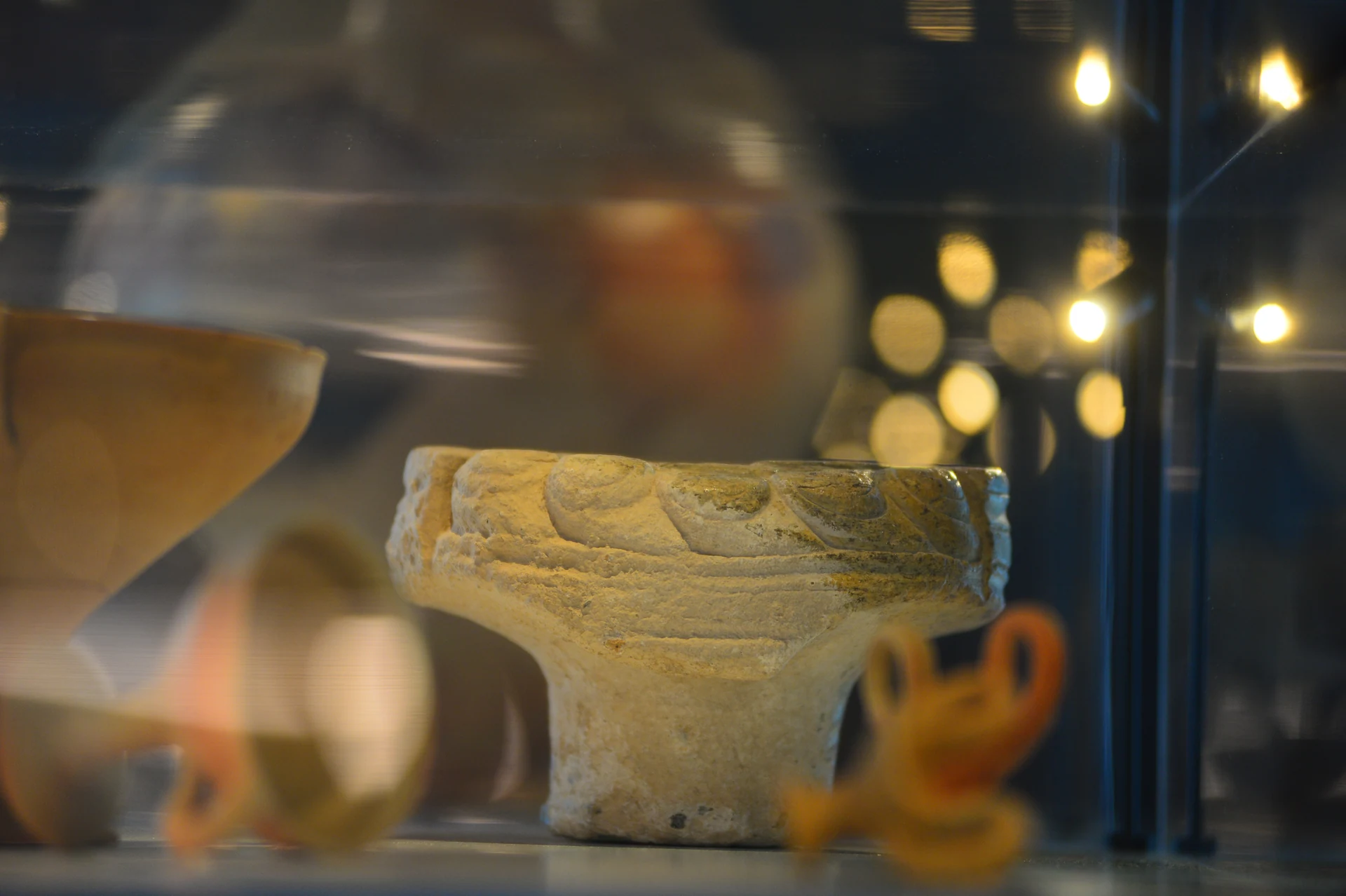
Pale ceramic stemmed cup displayed behind glass.
A pale stemmed cup behind glass. Its raised foot, slender stem and open bowl give the small ceramic object a clearly legible profile.
Pale clay vessel with raised decoration around its rim.
Detail of a decorated vessel rim. The close view isolates the raised treatment around the upper edge of the pale clay form.
Large multicoloured painted ceramic vessel with handles and visible restored sections.
A restored painted vessel. Surviving coloured fragments and quieter reconstructed areas remain visibly different across its body and handles.
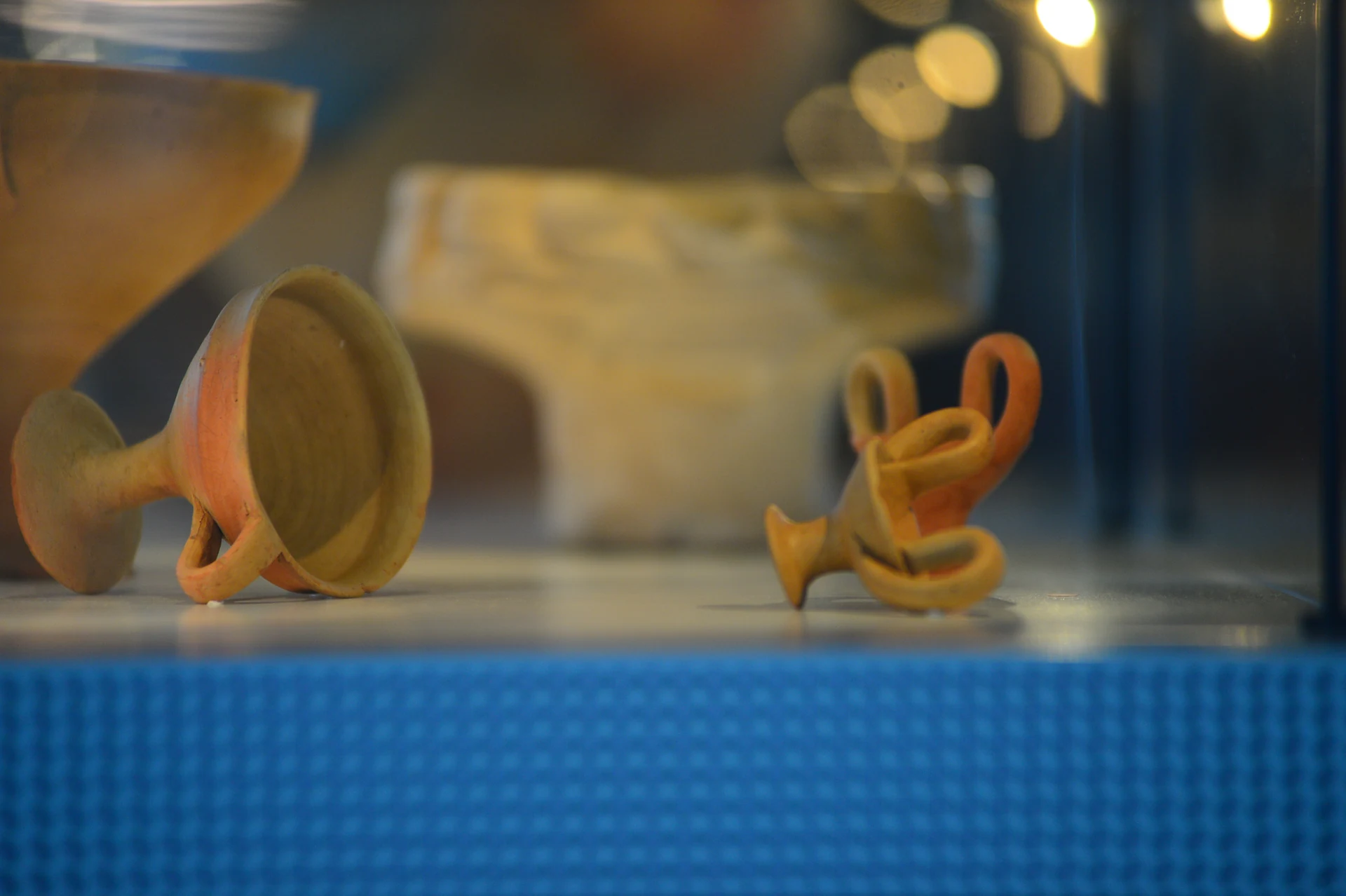
Two small clay vessels, including a tilted cup and a pot with circular handles.
Two small ceramic vessels. A tilted cup stands beside a pot with circular handles, making their contrasting forms clear at the same scale.
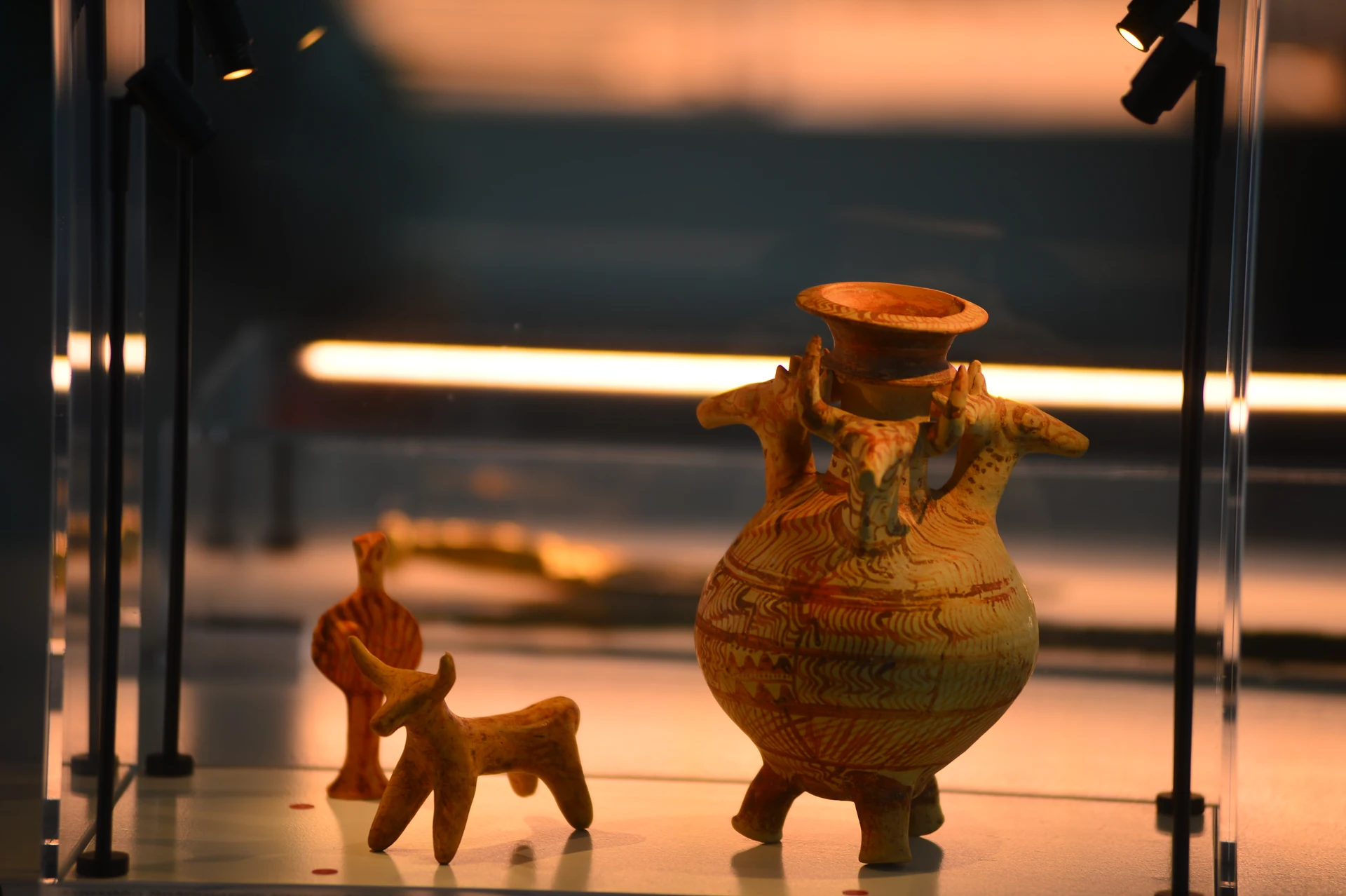
Painted animal-shaped ceramic vessel displayed beside small clay animal figurines.
Animal forms in clay. A painted animal-shaped vessel is shown with smaller figurines in the same case.
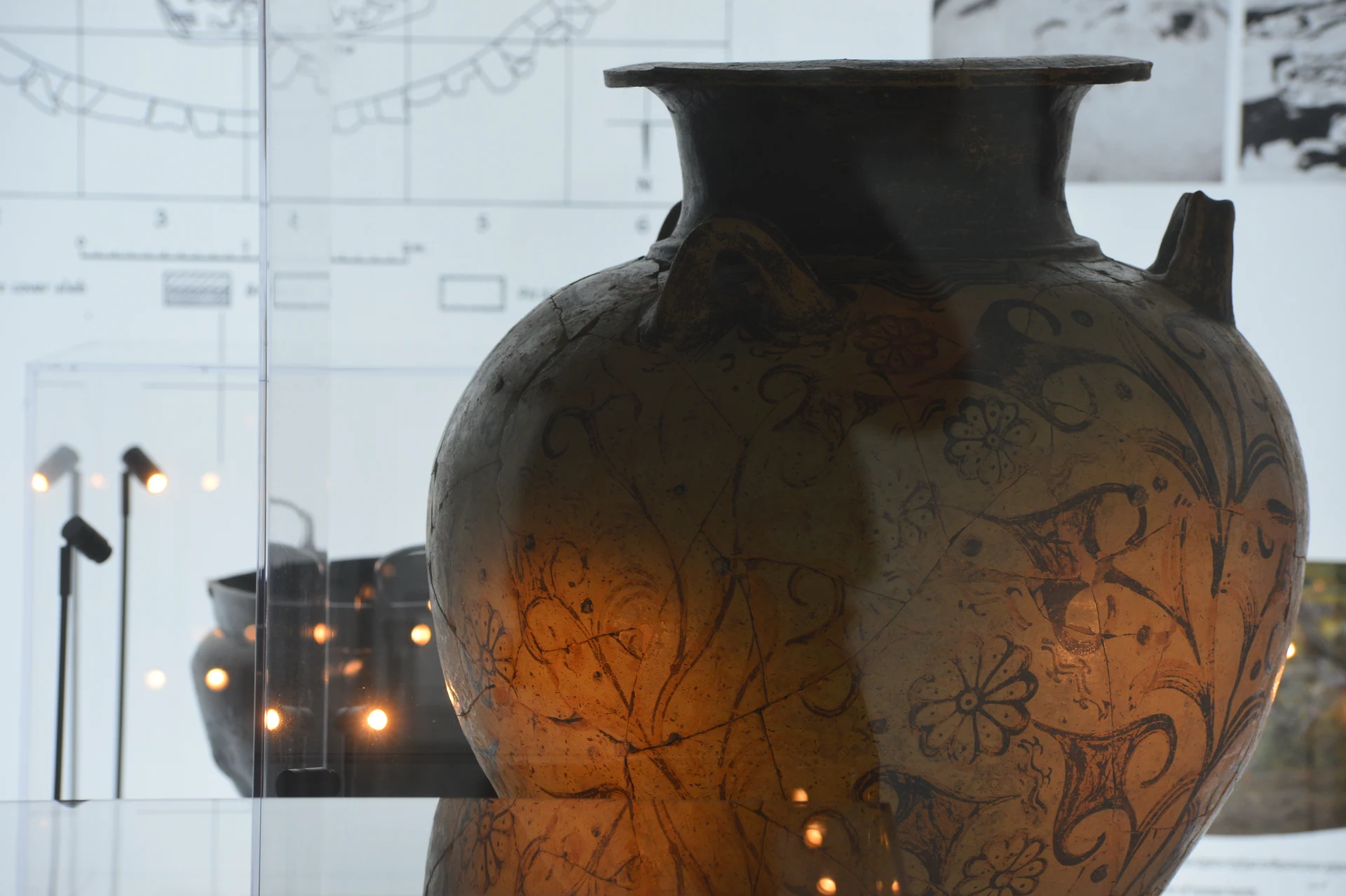
Close-up of a large painted clay vessel decorated with plant and animal motifs.
Painted motifs on a large ceramic vessel. A close view brings plant and animal decoration into focus on the surviving surface.
Pale ceramic vessel and small animal figurine displayed before a larger painted pot.
Ceramics and a small animal figure in one case. A pale vessel and figurine stand before a larger painted pot, showing the range of scale in the display.
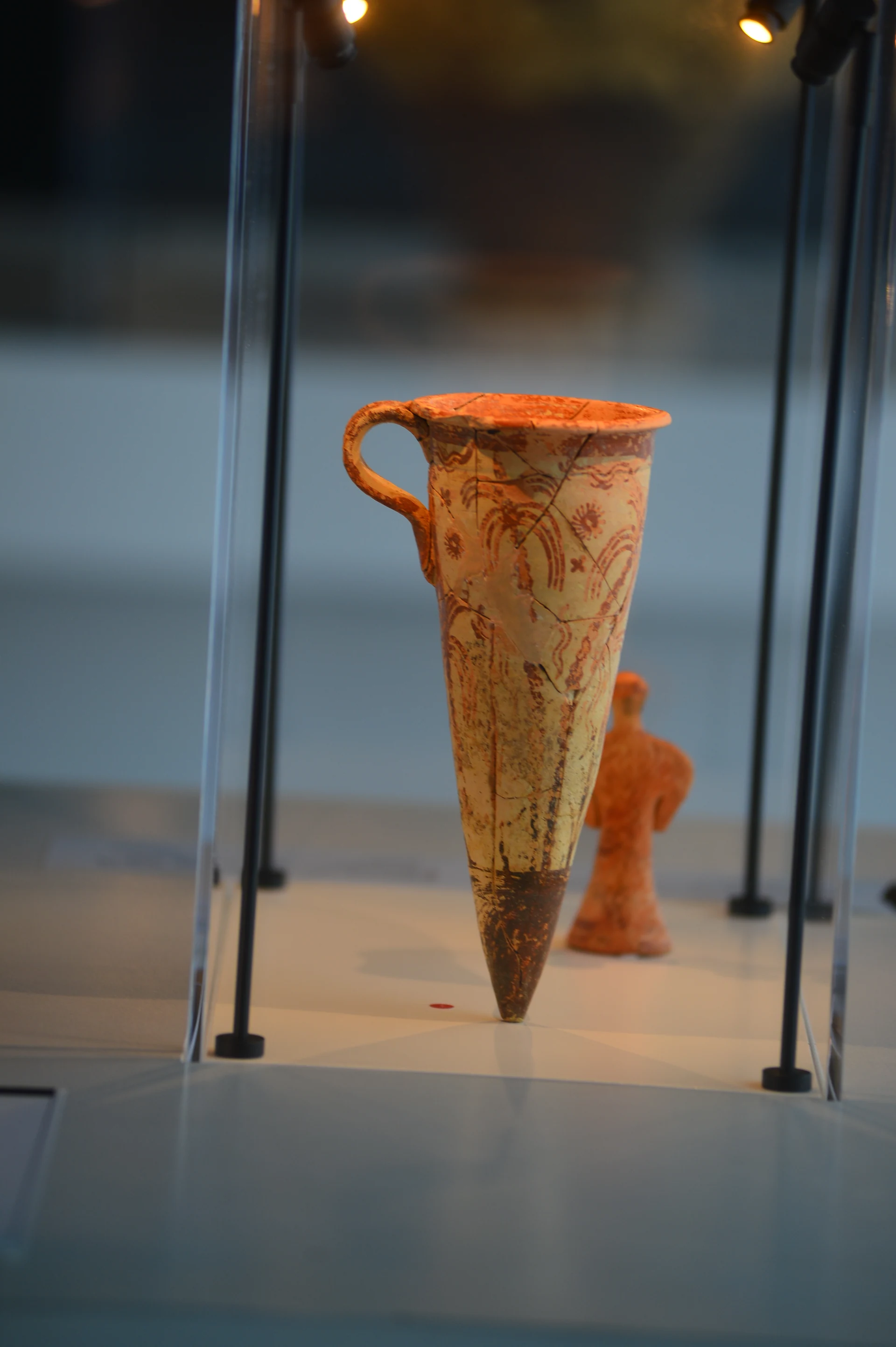
Tall narrow painted ceramic vessel with one handle and a pointed base.
A tall painted vessel with a pointed base. Its single handle and elongated body are clear against the darker background of the case.
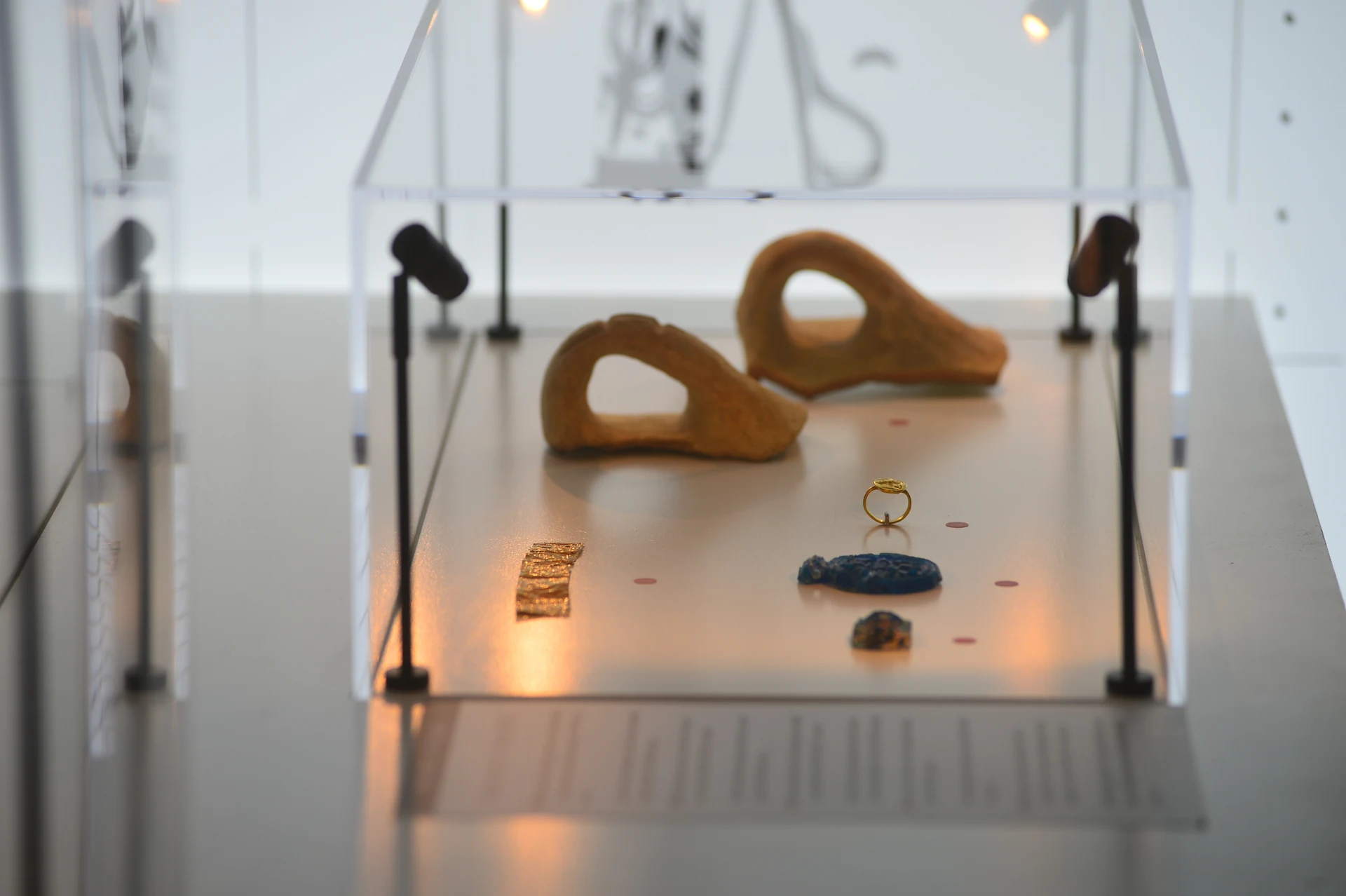
Two large terracotta fragments displayed with a ring and small blue and gold-coloured ornaments.
Terracotta fragments with smaller objects. Two large pieces share a case with a ring and blue and gold-coloured ornaments; the photograph records their grouping without assigning a common use.
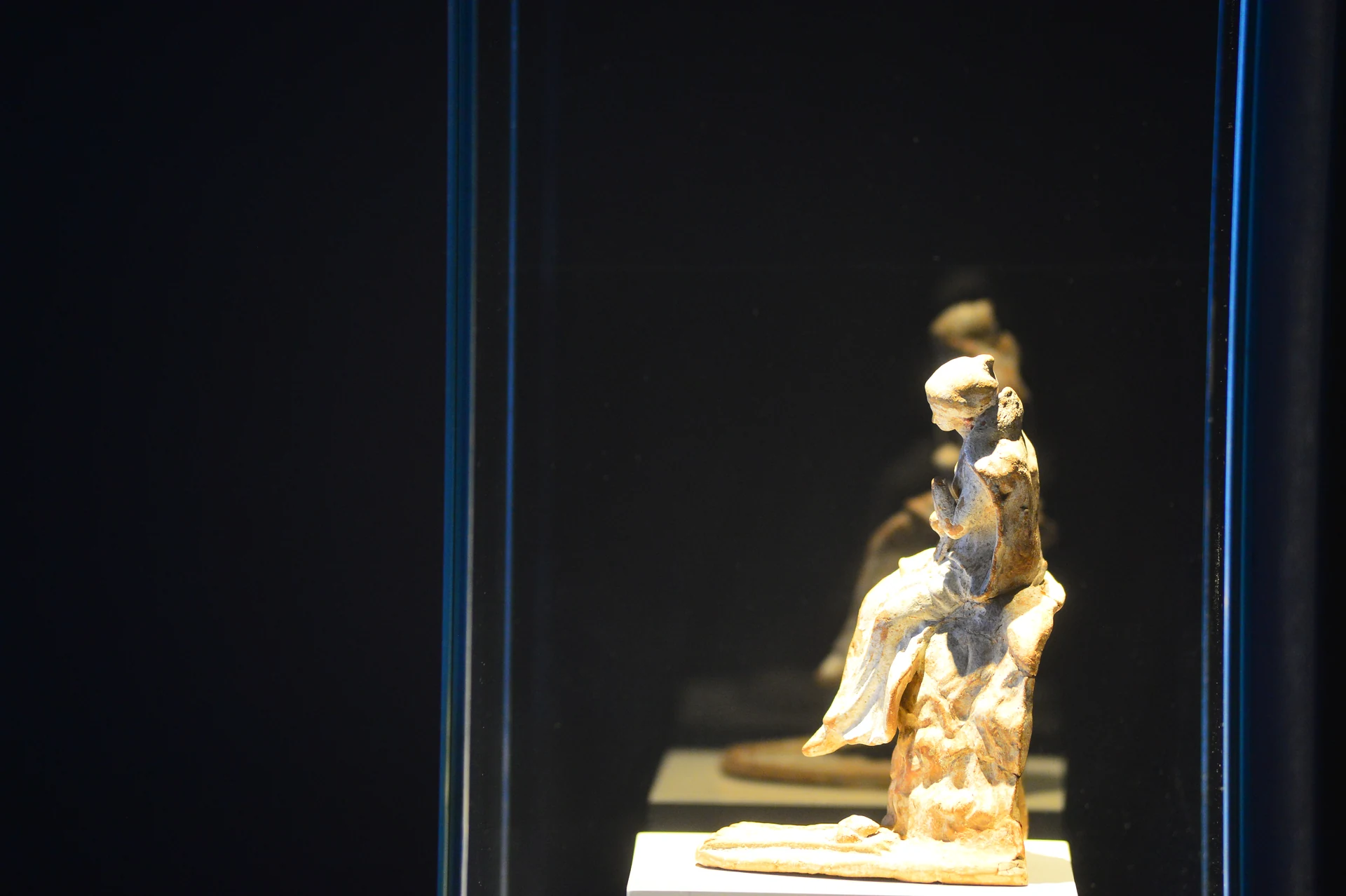
Pale seated terracotta human figurine shown in side view against a dark museum background.
A seated terracotta figure in profile. Side lighting separates the pale clay form from the dark background.

Weapons, Metalwork and the Organisation of Power

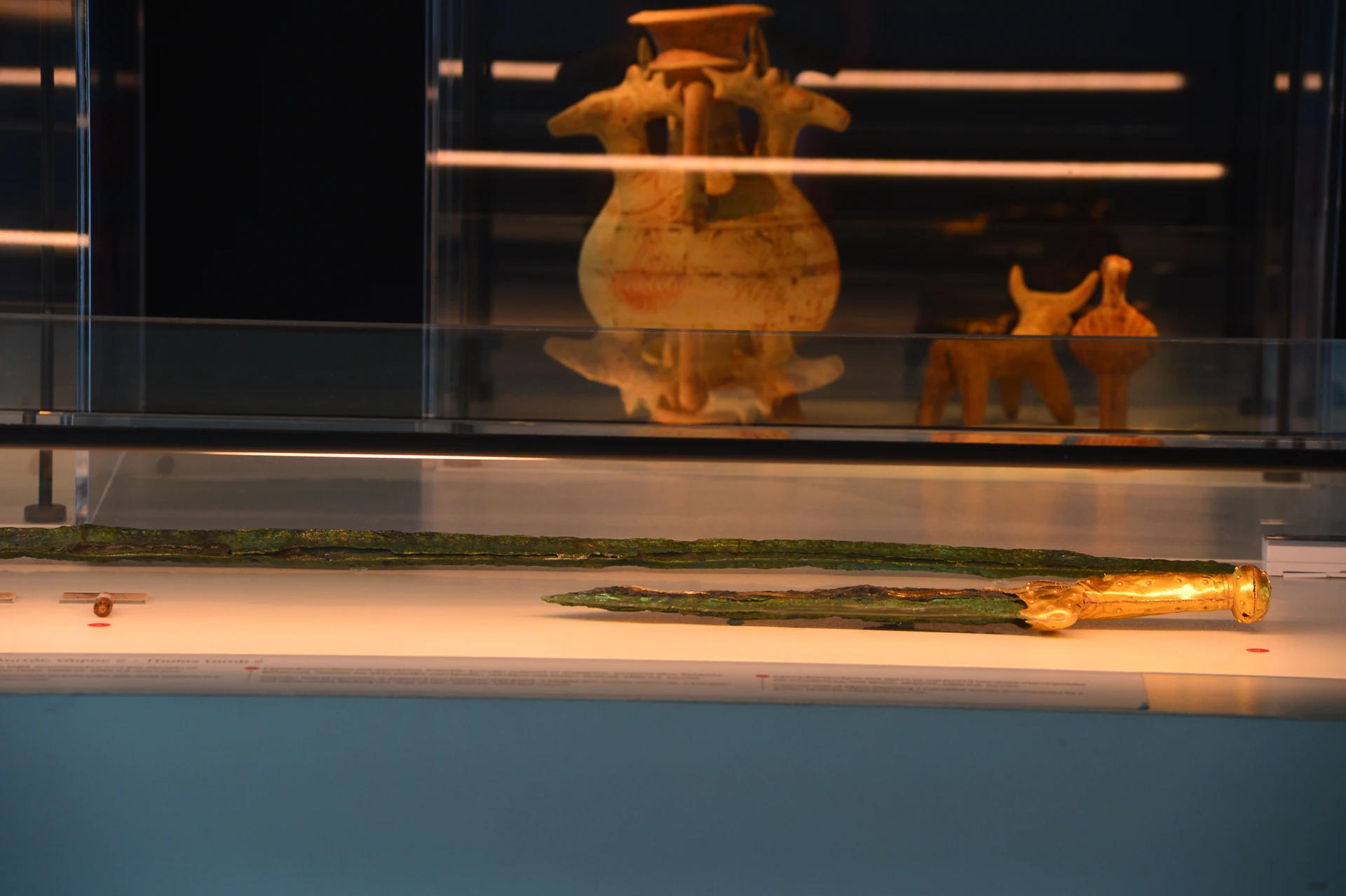
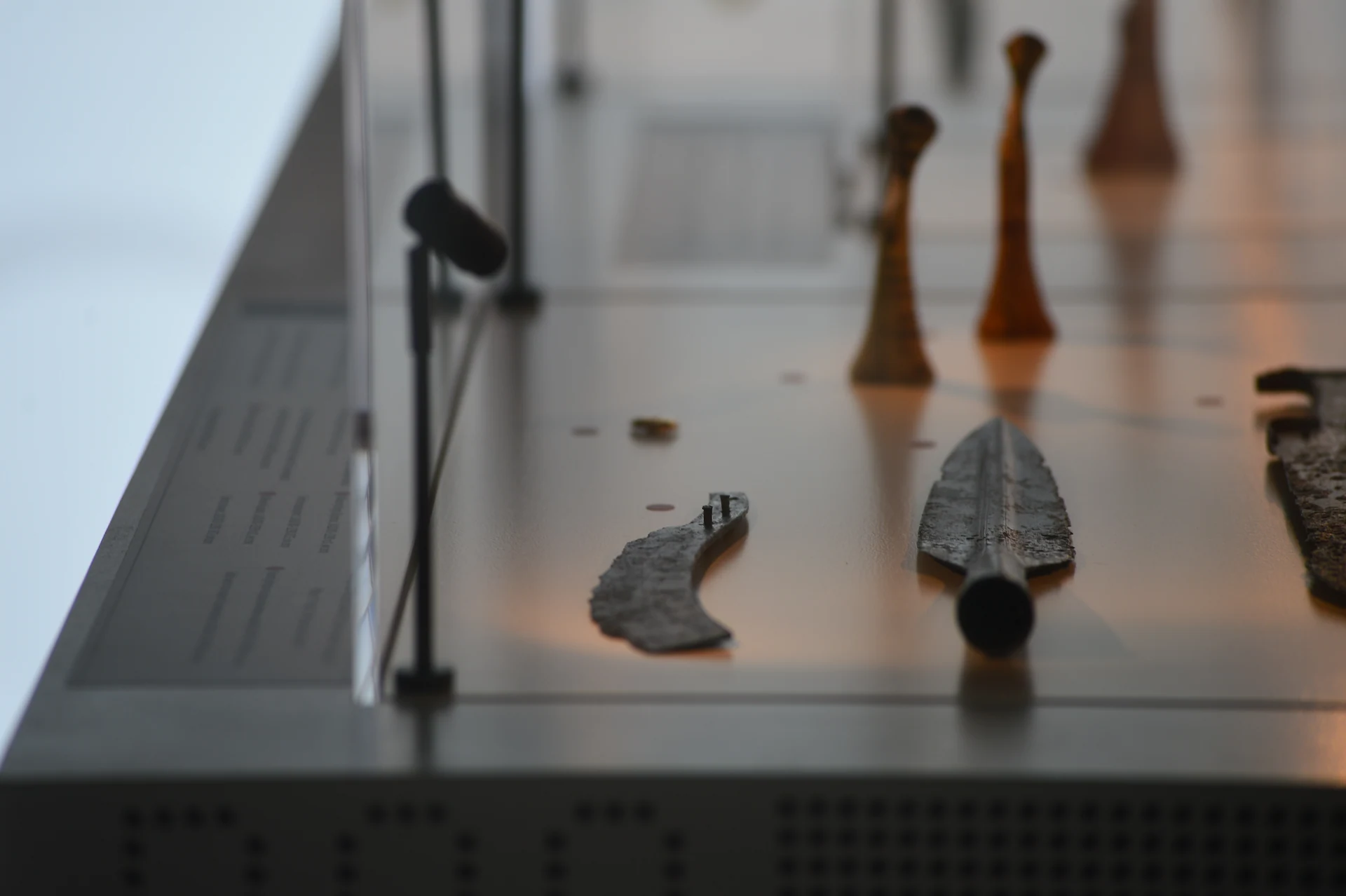
Long blades, a spearhead and smaller metal pieces appear in the cases. Some carry green patination; one blade has a gold-coloured detail. Another photograph places blades in front of animal-shaped pottery and clay figures, preventing the weapons from standing for the whole of Mycenaean material culture.

Metalworking required control of materials and specialised techniques. These objects are evidence of that capacity, but their presence alone cannot tell us how often a blade was used in combat or who owned it. Provenance, associated finds and manufacture matter to those questions.

The camera records length, surface and placement. It cannot supply the missing biography of an object, and the exhibition is more informative when those limits remain visible.
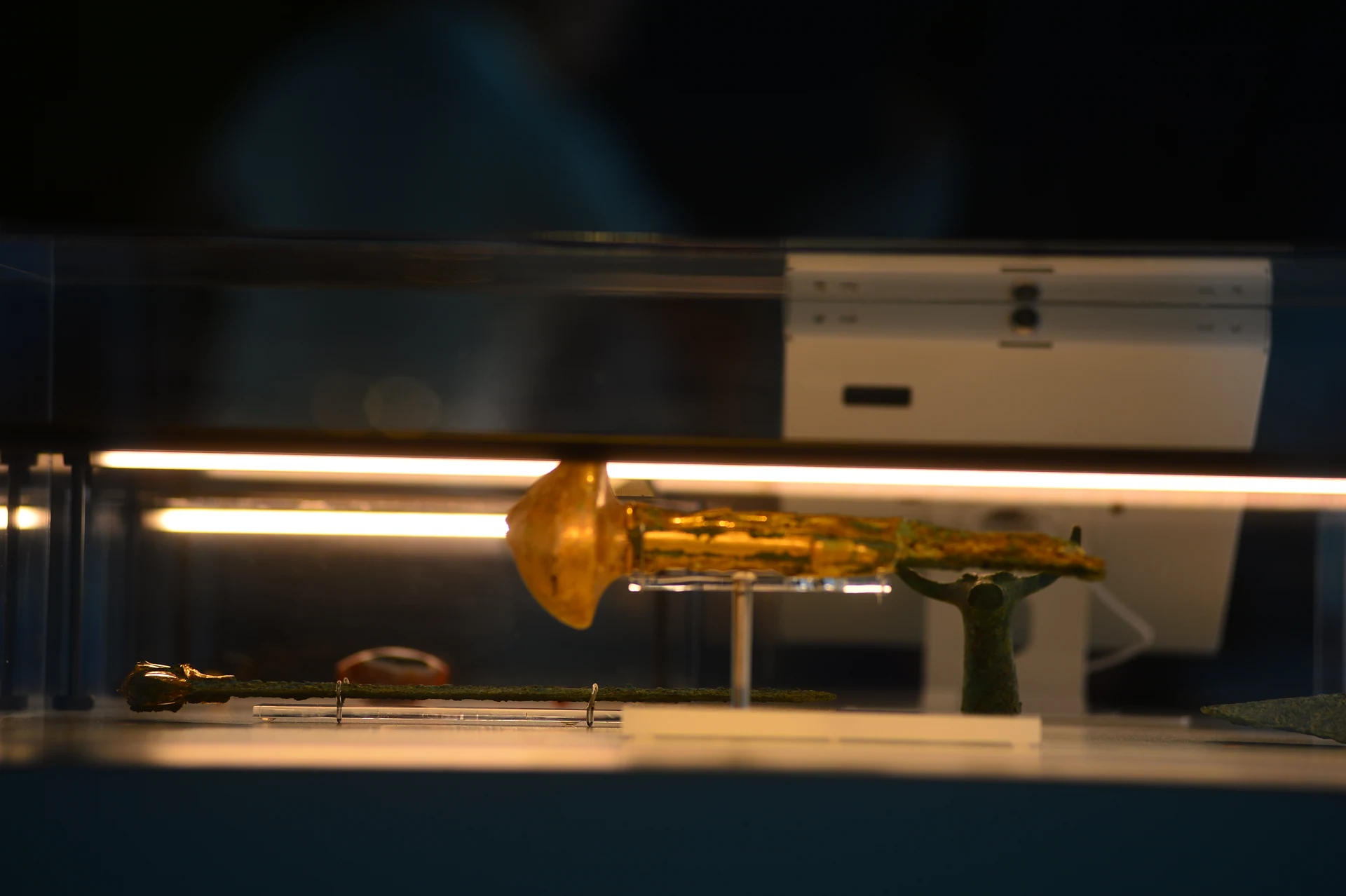
Long ancient metal objects, including a blade with a gold-coloured section, displayed horizontally.
Long metal blades in a horizontal case. One retains a gold-coloured detail; the display makes their length and surviving condition visible without establishing how each was used.
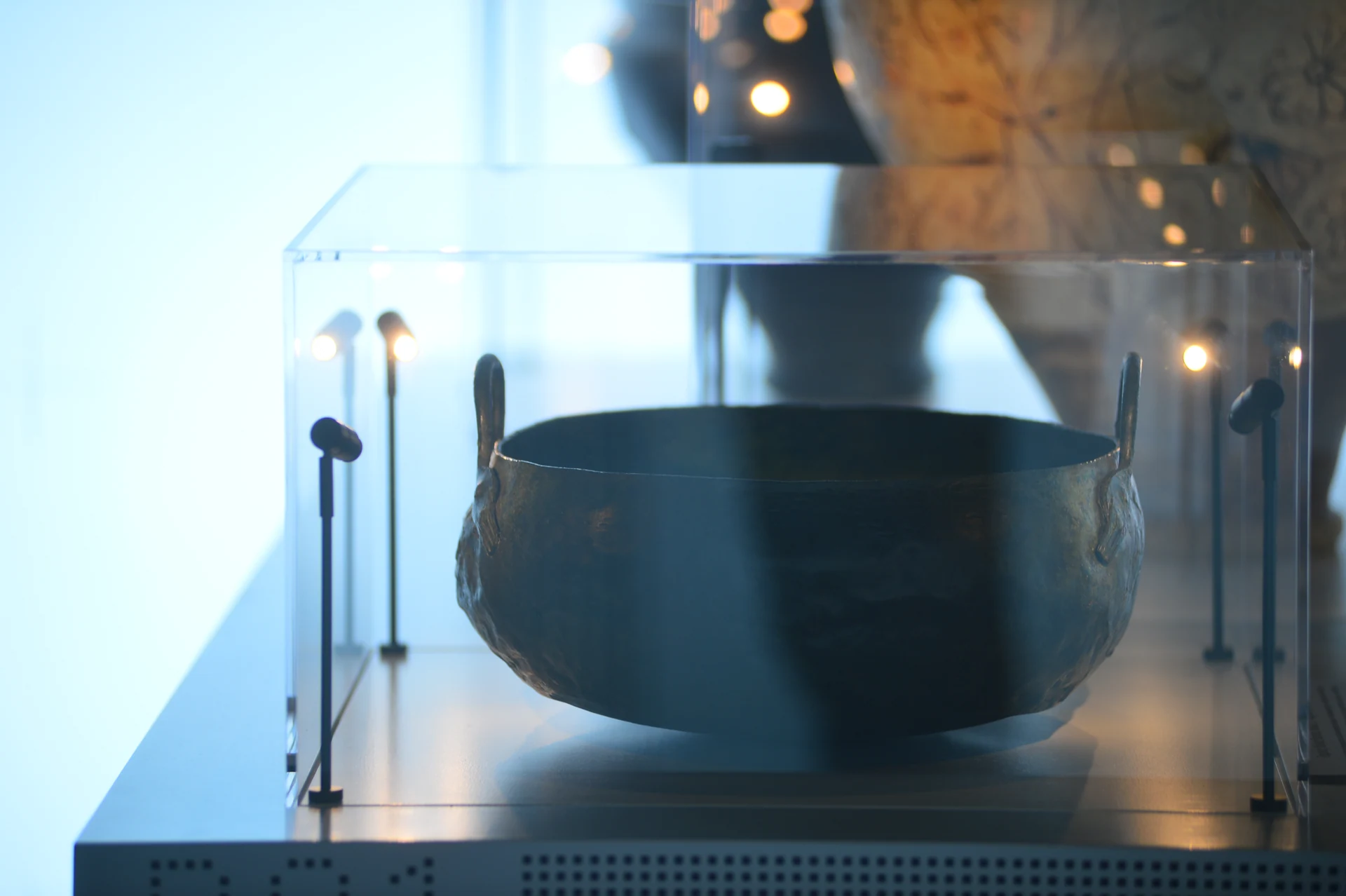
Large dark metal vessel with two upright handles displayed under museum lighting.
A large metal vessel with upright handles. The case lighting picks out the vessel's dark body and the two handles rising above its rim.
Two long metal blades displayed in front of an animal-shaped vessel and small clay figurines.
Blades displayed with clay objects. Two long metal pieces lie before an animal-shaped vessel and small figurines, widening the view beyond weaponry alone.
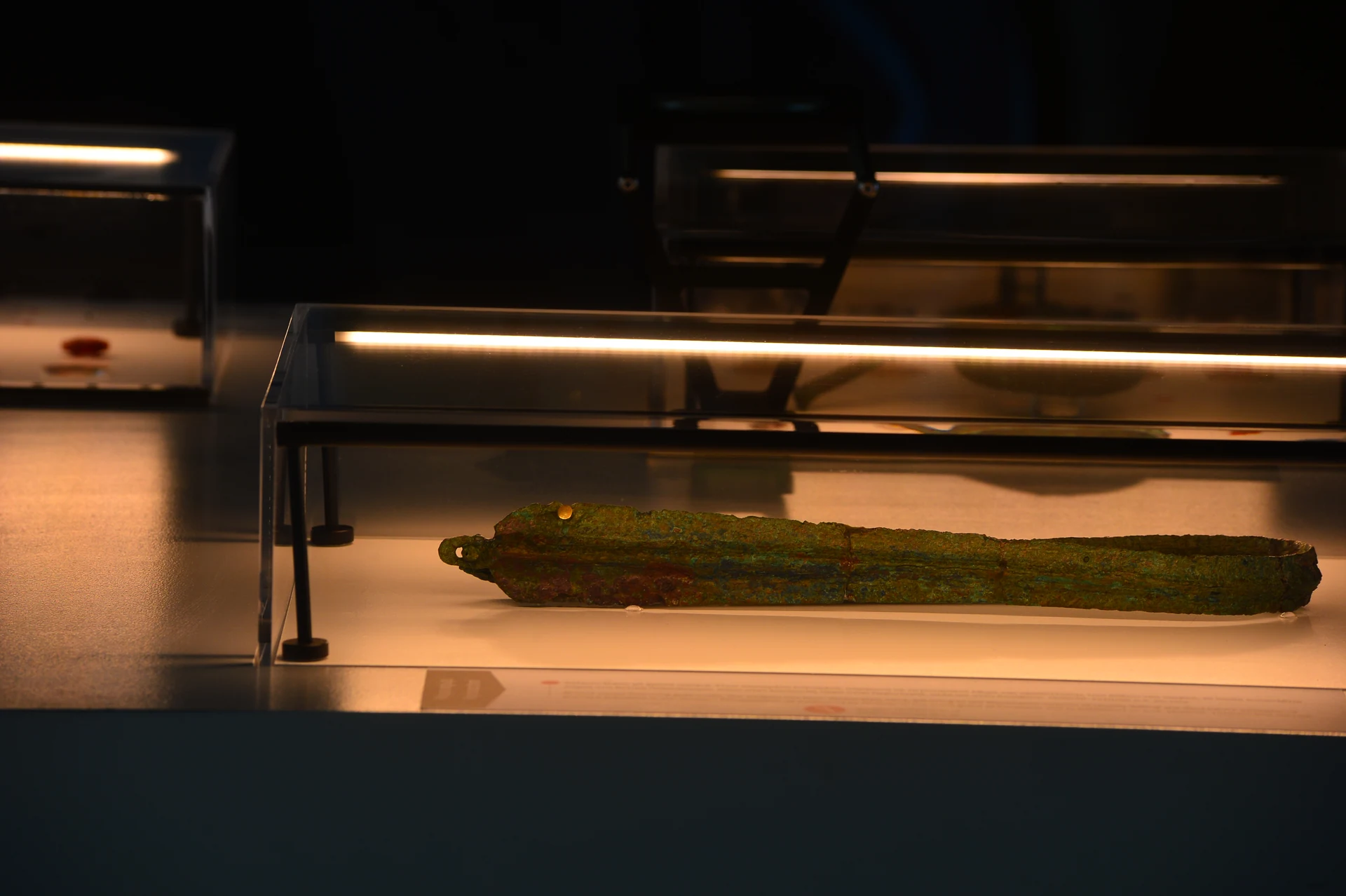
Close-up of a long green-patinated metal blade inside a horizontal museum case.
A green-patinated metal blade. The close view records its long surviving outline and altered surface within the horizontal case.
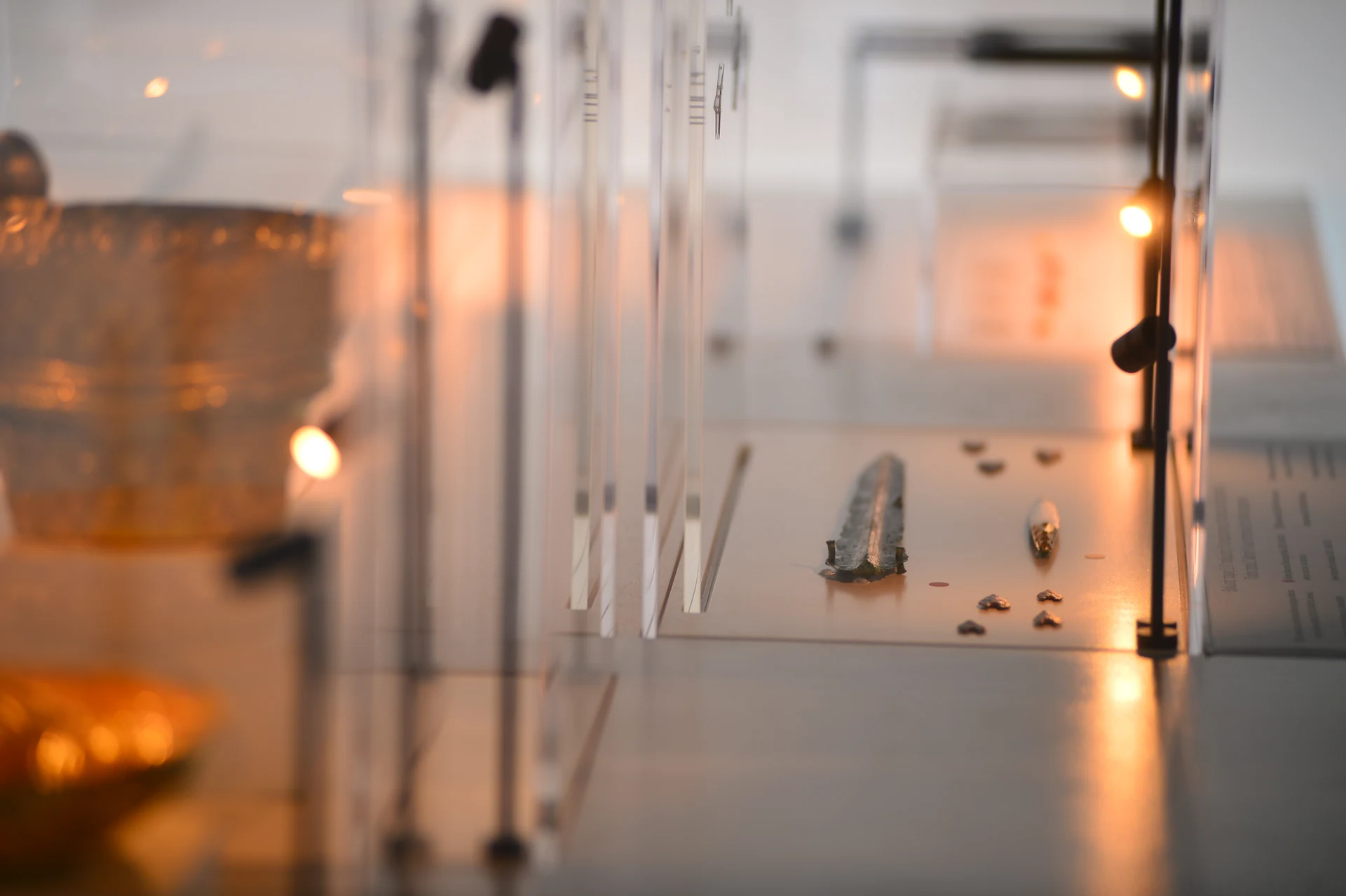
Small metal blade and several other metal objects arranged in a museum display.
Small metal objects beside a blade. Their grouping permits a direct comparison of size, shape and surviving surface.
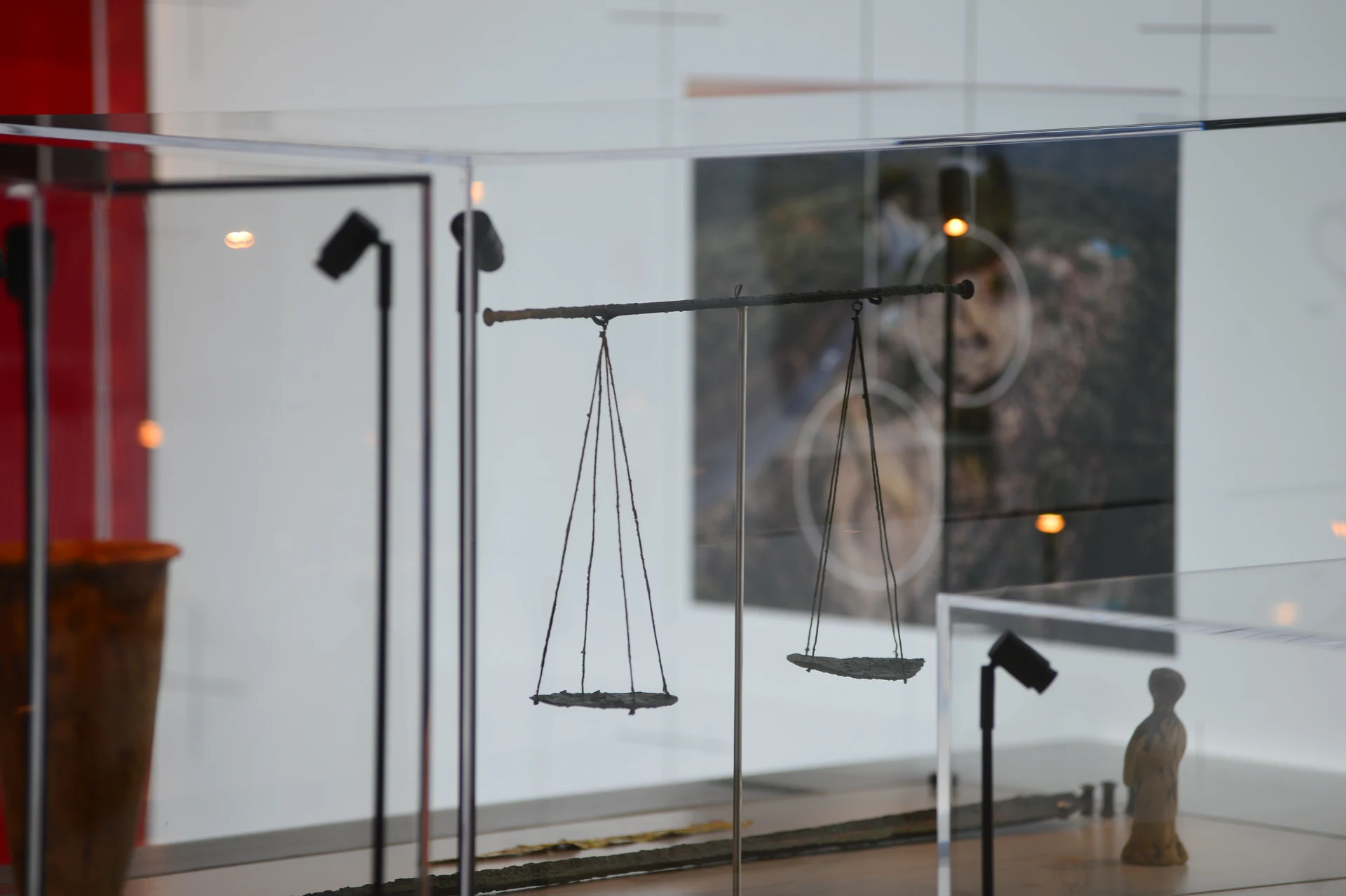
Suspended two-pan balance scale displayed inside a museum case.
A suspended two-pan balance. The display isolates the pans and central suspension, making the instrument's construction visible.
Ancient metal spearhead and smaller metal fragment displayed with elongated objects behind them.
A metal spearhead and related fragments. The display places the pointed piece with smaller and elongated metal objects for comparison.

Fragments of a Lost Visual World

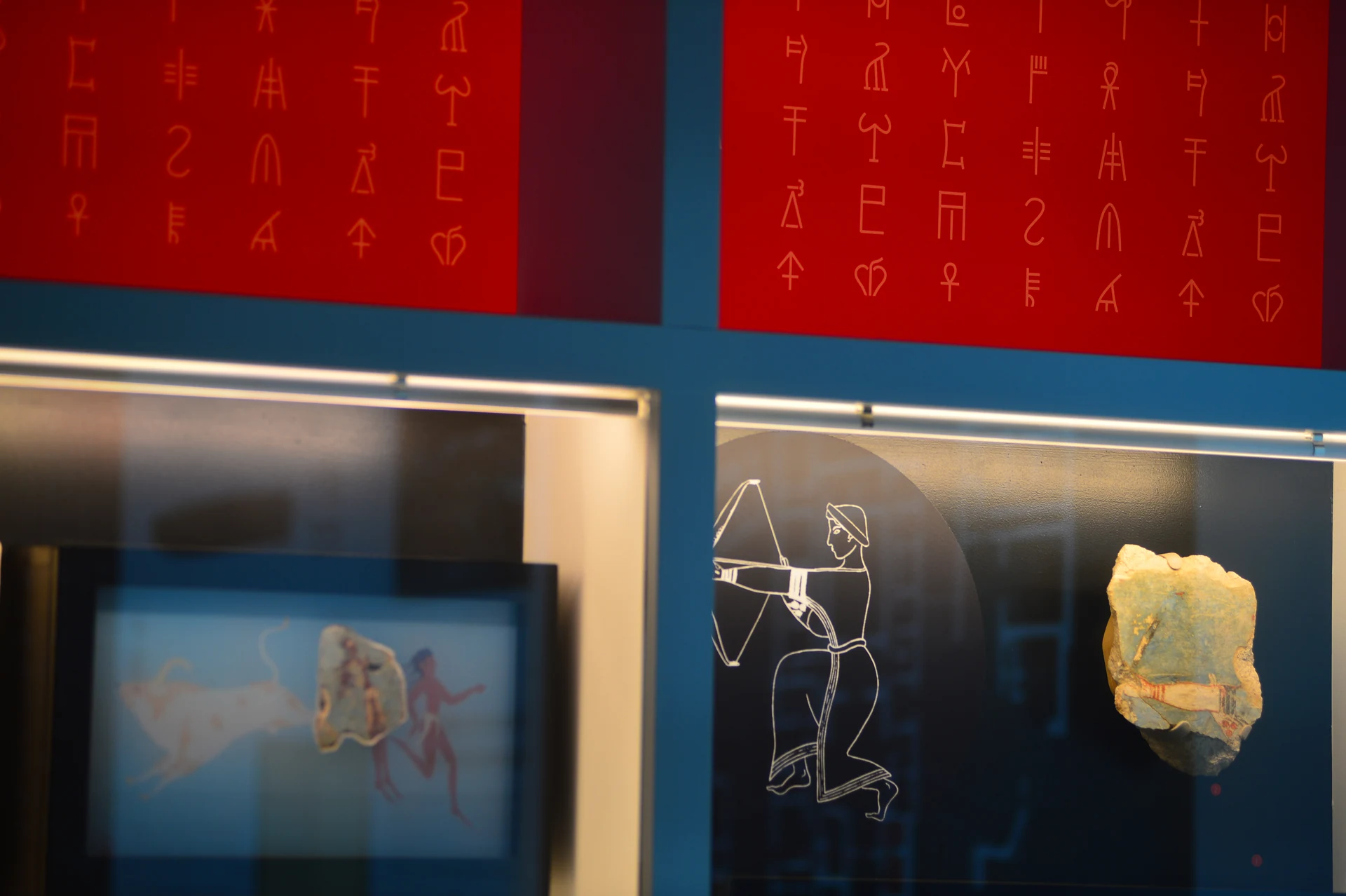
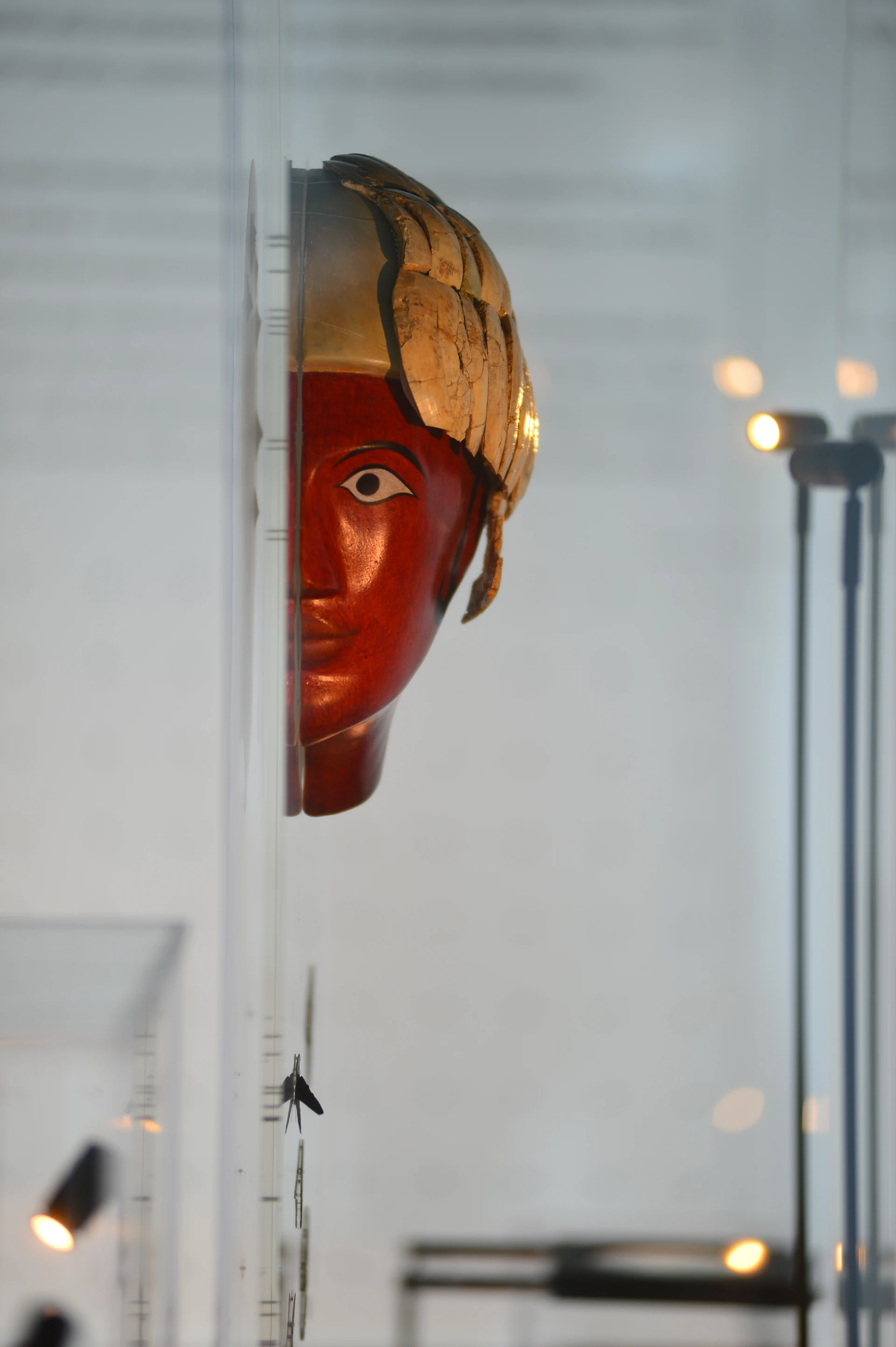
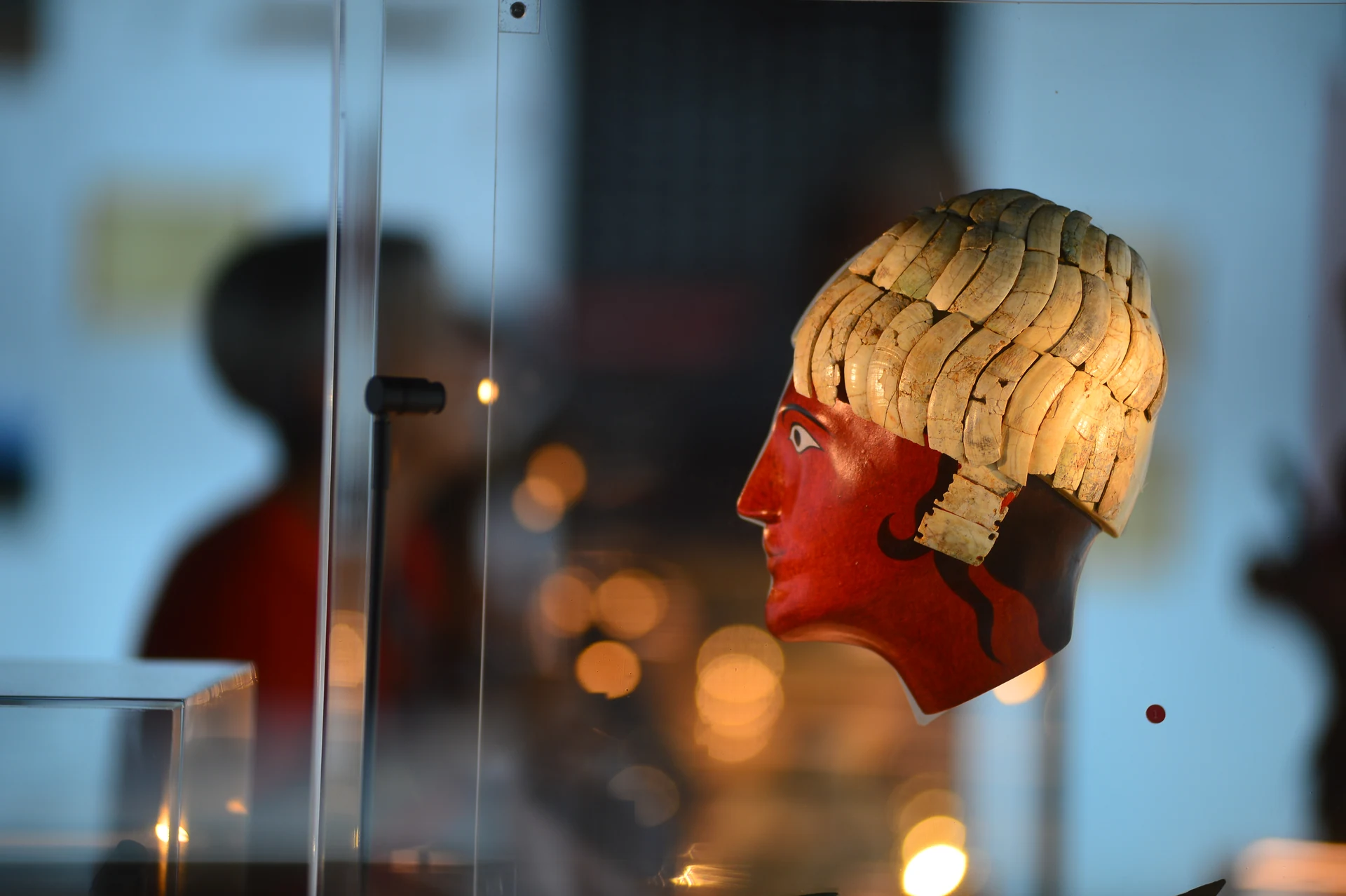
The fresco displays make the distance between evidence and reconstruction unusually clear. Painted plaster fragments sit over modern outlines of feline forms; elsewhere, pieces of a human figure and a reconstructed head are shown from more than one angle. The ancient colour survives in patches, while the larger image is an interpretive proposal.

Wall paintings once shaped the visual setting of a Mycenaean palace, but only parts of many compositions remain. Arrangement and reconstruction help a visitor grasp scale and subject. They also need to reveal which marks are ancient and which belong to a modern drawing.

That distinction matters equally in historical production. A convincing visual world can be built from research while still showing where interpretation begins.
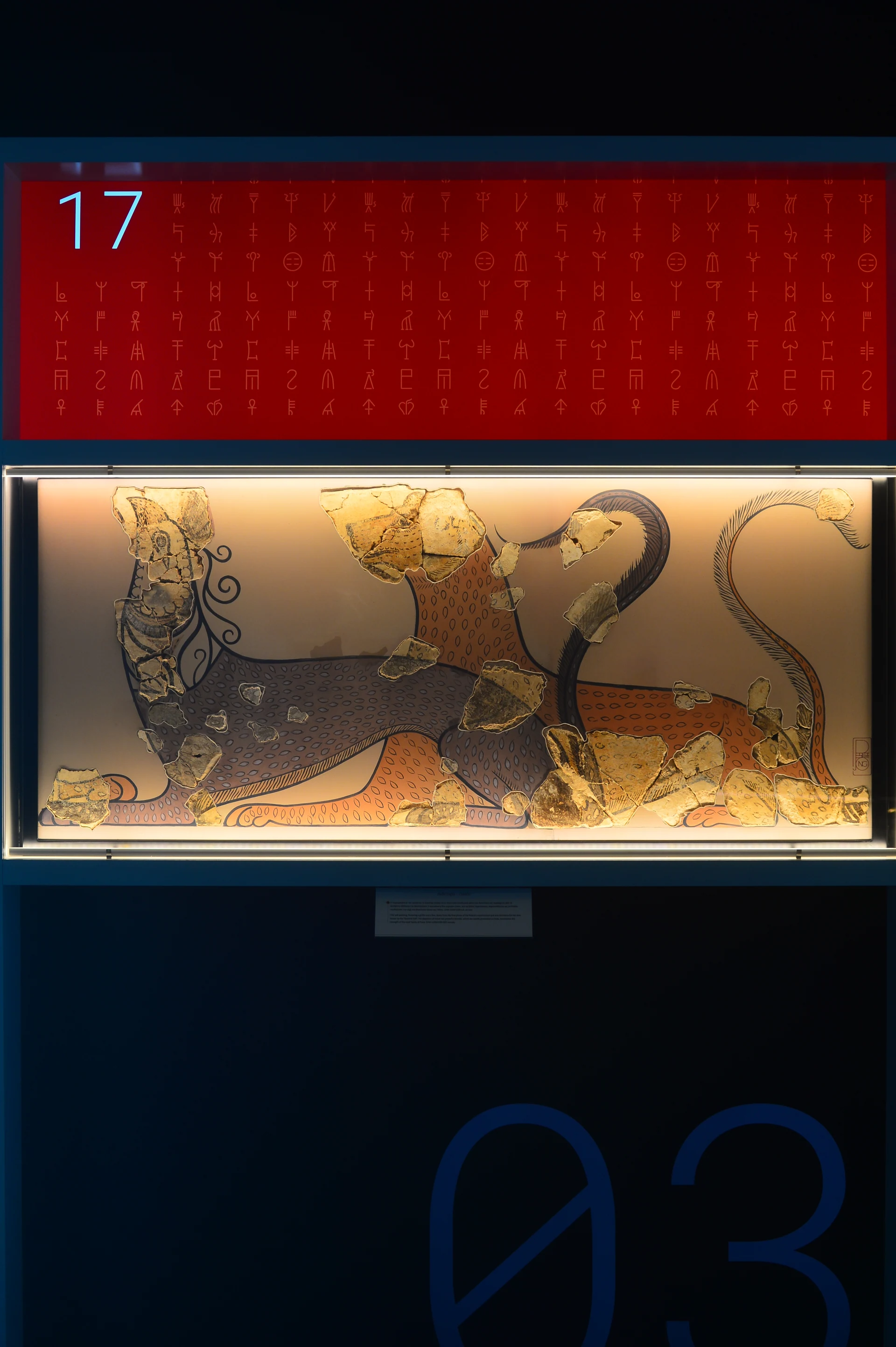
Fresco fragments set against a modern illustration of two felines, beneath red Linear B graphics.
Fresco fragments and feline outlines. Ancient patches of painted plaster sit within a larger modern drawing, keeping the surviving material distinct from reconstruction.
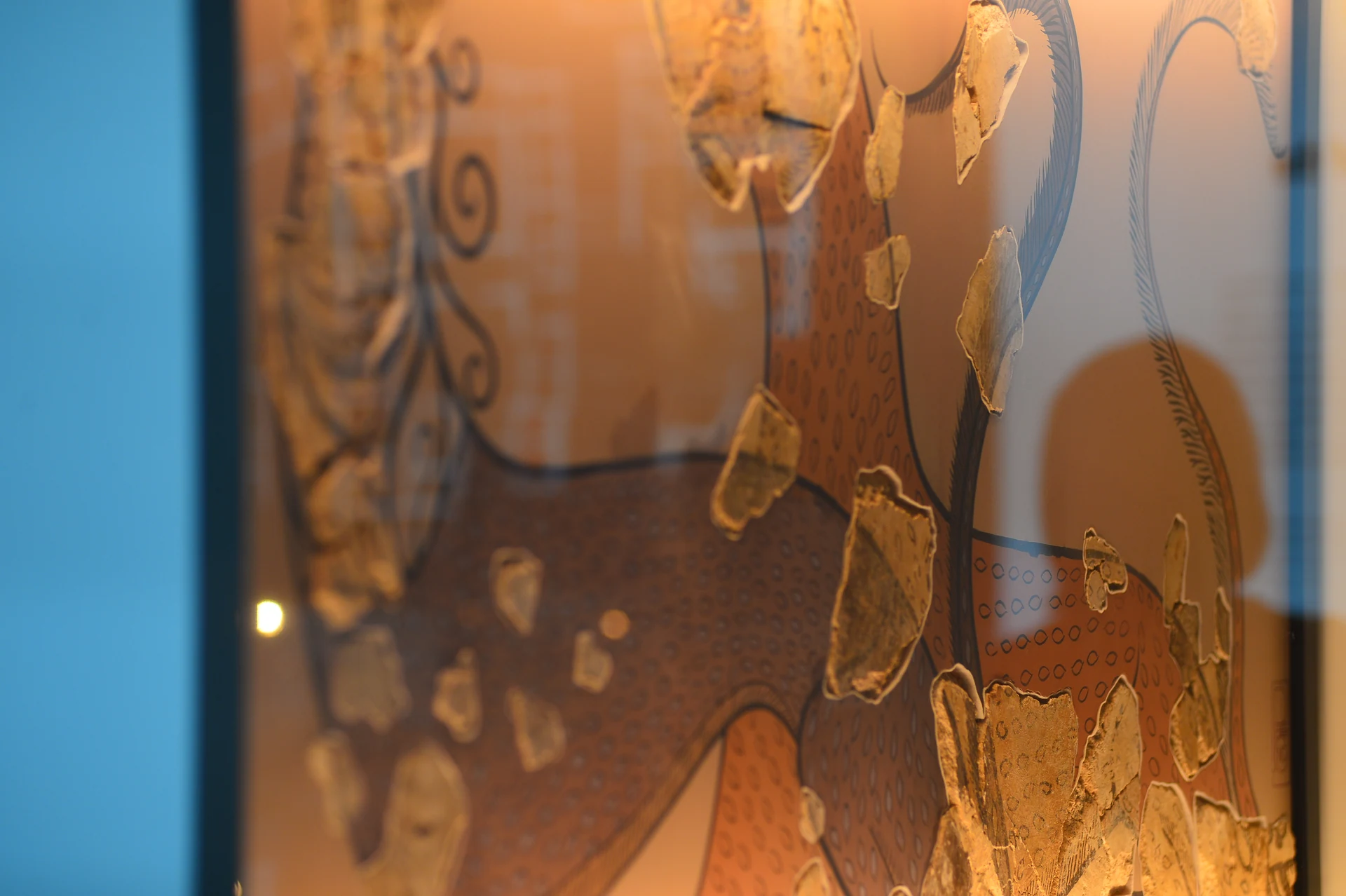
Close view of painted plaster fragments over a reconstructed feline outline in a museum display.
A closer view of the feline fresco display. Small areas of ancient pigment interrupt the modern outline that suggests the lost composition.
Exhibition display with red Linear B sign graphics above fragments of a painted human figure.
Writing and figure painting in one display. Red Linear B sign graphics appear above fragments of a painted human figure.
Frontal view of a reconstructed painted human head with surviving reddish and pale plaster fragments.
Frontal view of a reconstructed painted head. Reddish and pale surviving plaster occupies part of a larger interpretive form.
Side view of the same reconstructed painted head, showing its pale segmented hair or head covering.
Profile of the reconstructed painted head. The side view makes its pale segmented hair or head covering and surviving colour easier to distinguish.

The Exhibition as a Designed Experience

The sequence of cases, the height of a wall plan, a lens beside a small gold object and the graphic explanation next to a tablet all affect what can be seen and understood. None changes the ancient object. Each changes the conditions of looking.

The photographs record those conditions: spotlights and reflections around gold, diagrams close to tablets, restored outlines around fresco fragments and cases that bring unlike materials into one view. The exhibition alternates between close examination and a wider account of the palace.

This is a useful lesson for exhibition production and immersive experiences. Lighting, scale and spatial order can guide attention, but an interpretive device earns its place by helping the audience recognise the evidence it is built upon.

What Survives of a Kingdom?

The palace no longer functions as the administrative centre it once was. Its architecture remains in archaeological traces; its records survive in clay; pottery, metalwork and painted plaster preserve parts of its material and visual culture.

The photographs do not make that record whole. They show fragments at different distances and the museum's ways of connecting them. A plan can restore a sense of space, a diagram can unlock a tablet, and a reconstructed outline can suggest a wall painting's lost scale. Each also marks what is missing.

Research may alter the reading of individual finds. The exhibition's achievement is to give the public a coherent route through the present evidence while leaving room for that uncertainty.

Historical Storytelling and Cultural Production

For Archaeopolis, the visit offers a close study of how evidence becomes a public visual account. In historical production and exhibition production, choices about objects, architecture and reconstruction shape what an audience can understand. Immersive experiences add the conditions of space, sequence and attention. The Working Collection provides a practical reference for studying forms and materials before those choices are made.

This feature is an independent photographic account of the exhibition at the National Archaeological Museum in Athens. Archaeopolis did not organise, design or produce it.

Photography and Editorial Credits

Photography: Georgios Katsos / Archaeopolis

Location: National Archaeological Museum, Athens, Greece

Photography date: 24 October 2026

All 43 photographs are original Nikon images from the exhibition visit. The original files remain unchanged. The web images are resized and encoded copies for display.

Neither offers a complete account alone.

Selected sources and further reading

Editorial standard: this article distinguishes broad historical evidence from Archaeopolis production practice. Specific dates, artefacts and quotations will only be added with named sources.