The gap Nolan recognised
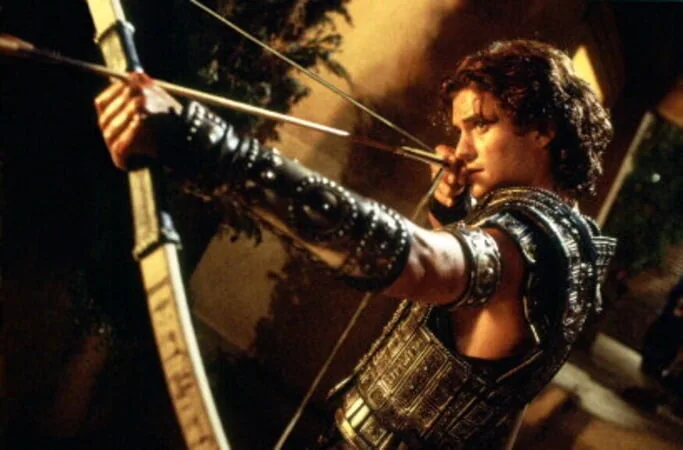
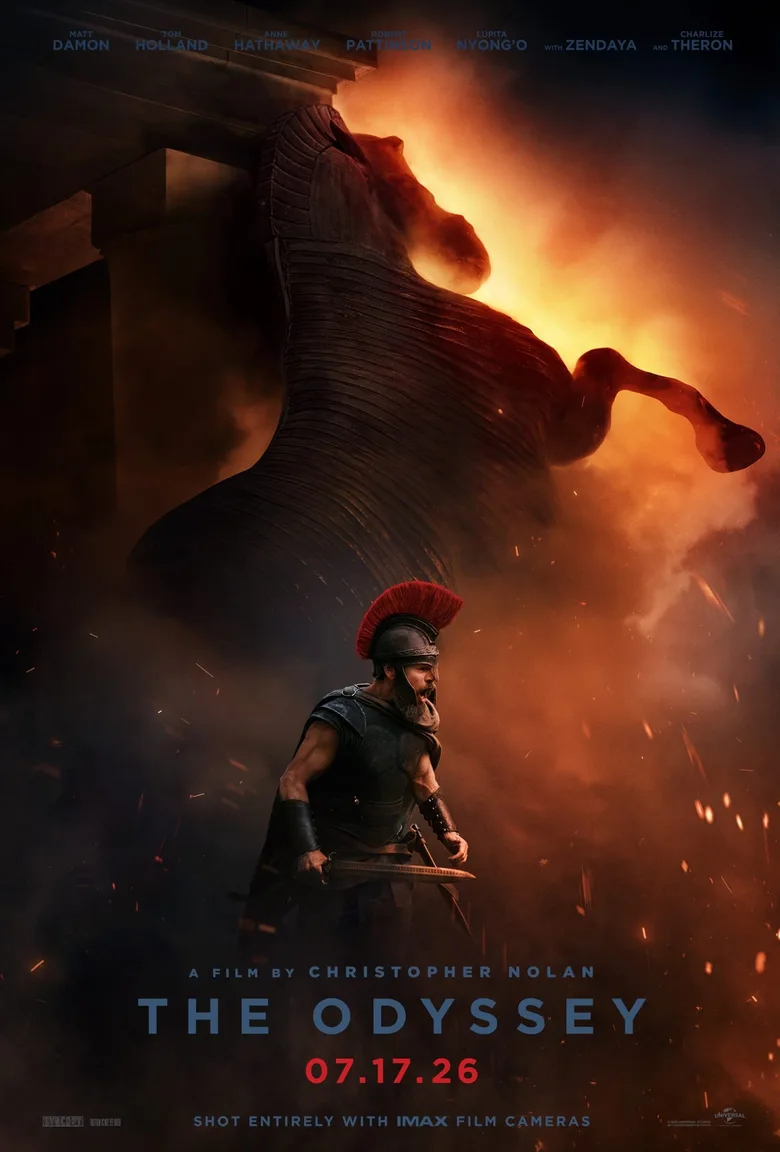
Christopher Nolan’s interest in bringing Homer’s world to the screen reaches back more than twenty years, to the period when he was briefly attached to Troy. The Trojan Horse was one of the images he continued to imagine before making The Odyssey.
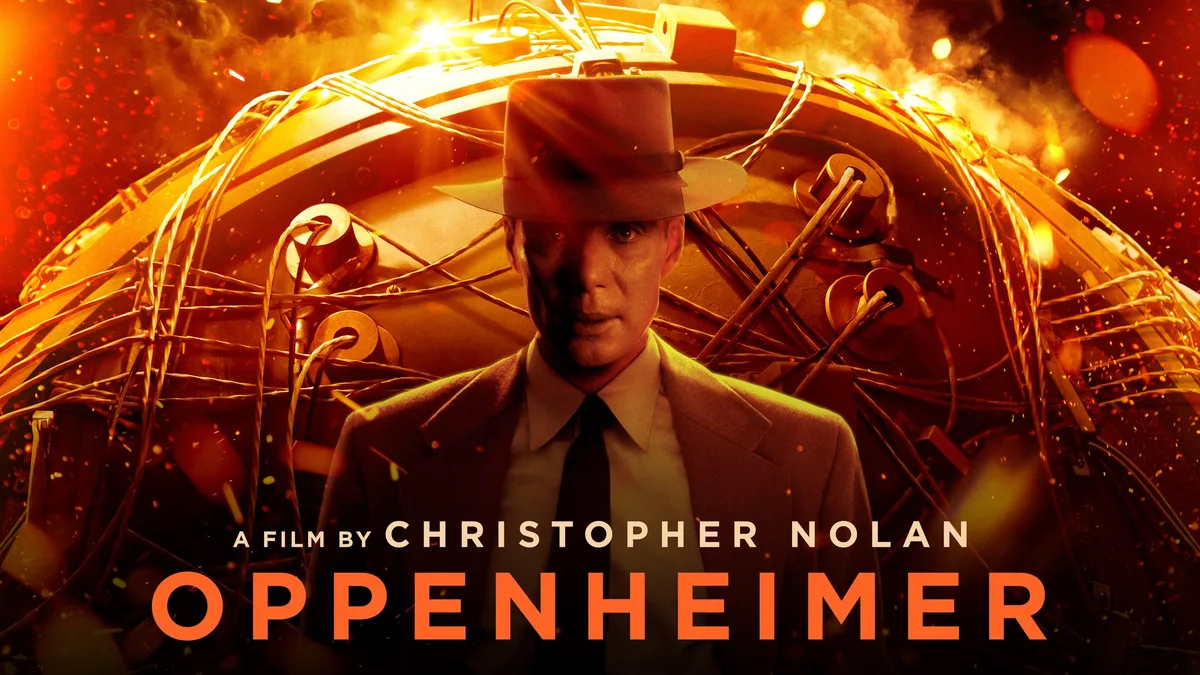
Two decades later, the success of Oppenheimer gave him an extraordinary degree of freedom. Few directors reach the point where a studio is prepared to support a project of enormous scale based largely on their judgment and reputation. Nolan used that freedom to return to Homer. His explanation included one phrase that deserves attention. There was a “gap in the culture”.
The phrase captures something that is easy to overlook. Modern culture produces an immense amount of material every day. Films, television series, books, podcasts, games, documentaries, exhibitions and digital content constantly expand the number of stories available to us. Historical subjects are revisited regularly, famous figures return in new forms and myths are adapted again and again. Within this constant production, some important subjects remain without a defining contemporary expression.
The Odyssey is one of them. The story has shaped literature and language for almost three thousand years. Odysseus remains one of the most recognisable figures in Western storytelling. The journey home, the Cyclops, the Sirens, Circe, Calypso and Ithaca are deeply embedded in cultural memory, while the word “odyssey” itself has become part of everyday language. Its cultural weight is enormous. Before Nolan’s adaptation, its presence in large-scale contemporary cinema had remained surprisingly limited.
That distance between cultural importance and contemporary representation is a useful way to understand what a cultural gap is. A subject may be famous, widely taught and frequently referenced while still lacking a form that fully communicates its scale, atmosphere or complexity to a modern audience.
Ancient worlds beyond familiar images
Ancient Greece offers many examples of this. Its influence is present throughout language, politics, philosophy, architecture, theatre and literature. Millions of people know the names of Athens, Sparta, Troy, Delphi, Alexander, Socrates, Plato and Aristotle. Greek myths are among the most recognisable stories in the world. Yet the image most people carry of ancient Greece is built from a relatively small set of visual references, usually white temples, marble statues, hoplites, philosophers, sandals, columns and a few familiar myths.
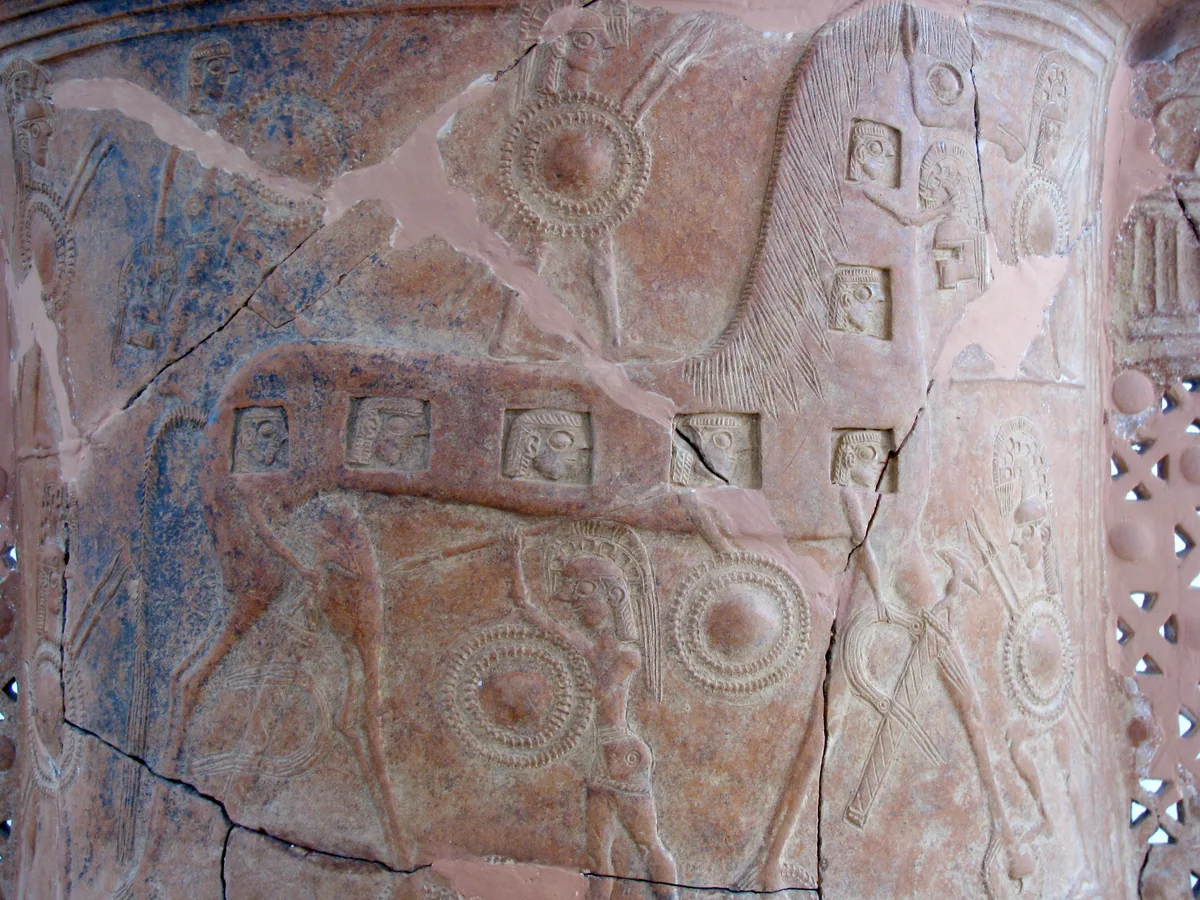
The historical world was far larger. Its cities were crowded, noisy, colourful and politically intense. Temples were painted. Public spaces were filled with markets, ceremonies, arguments, trade, religion and performance. Greek communities stretched across the Mediterranean and the Black Sea, while different regions developed their own customs, identities and political systems. Much of this is well documented in historical scholarship, and archaeologists, historians and classicists have spent generations reconstructing these societies in remarkable detail. That knowledge rarely reaches the wider public in a form that feels alive, and this is where the cultural gap becomes visible.
There are still many historical subjects that sit in a position similar to the one Nolan identified with The Odyssey. Xenophon’s Anabasis, the story of ten thousand Greek mercenaries stranded deep inside the Persian Empire and fighting their way home across thousands of kilometres, contains almost everything required for a major contemporary epic. The collapse of Alexander’s empire after his death and the wars of his successors created one of the most dramatic periods in ancient history, filled with shifting alliances, assassinations, dynastic marriages, enormous battles and the creation of new kingdoms from Egypt to Central Asia. Yet the Hellenistic world remains far less present in popular culture than the age of Alexander that preceded it.
Civilisations waiting for their stories
The Persian Empire presents another enormous cultural space. Cyrus the Great, Darius, Xerxes, Persepolis and the vast administrative system of the Achaemenid world are usually encountered through Greek wars and Greek sources. Persia itself rarely appears as the centre of its own story. A civilisation that ruled an extraordinary range of peoples and territories for more than two centuries still lacks the kind of large-scale cultural representation that would allow a modern global audience to enter its political, religious and social world.
Byzantium offers an even larger example. More than a thousand years of history connect Constantine, Justinian, Theodora, the construction of Hagia Sophia, the wars with Persia, the Arab conquests, the Macedonian renaissance, the Crusades and the final siege of Constantinople. Individual episodes are famous, while the civilisation connecting them remains strangely absent from global popular culture. Constantinople itself could support an entire universe of stories. For centuries it was one of the largest, richest and most politically important cities on Earth.
The ancient Mediterranean contains many more such gaps. The rise of Carthage, Hannibal’s crossing of the Alps and the Punic Wars have the scale of major historical epics. The Sicilian Expedition during the Peloponnesian War reads like a military tragedy written for cinema, with Athens sending an enormous expedition across the Mediterranean and watching it end in catastrophe. The naval world of Rhodes, the cities of Magna Graecia, Hellenistic Alexandria, the kingdoms of the Seleucids and Ptolemies, and the Greek cities of Central Asia remain almost invisible to mass audiences.
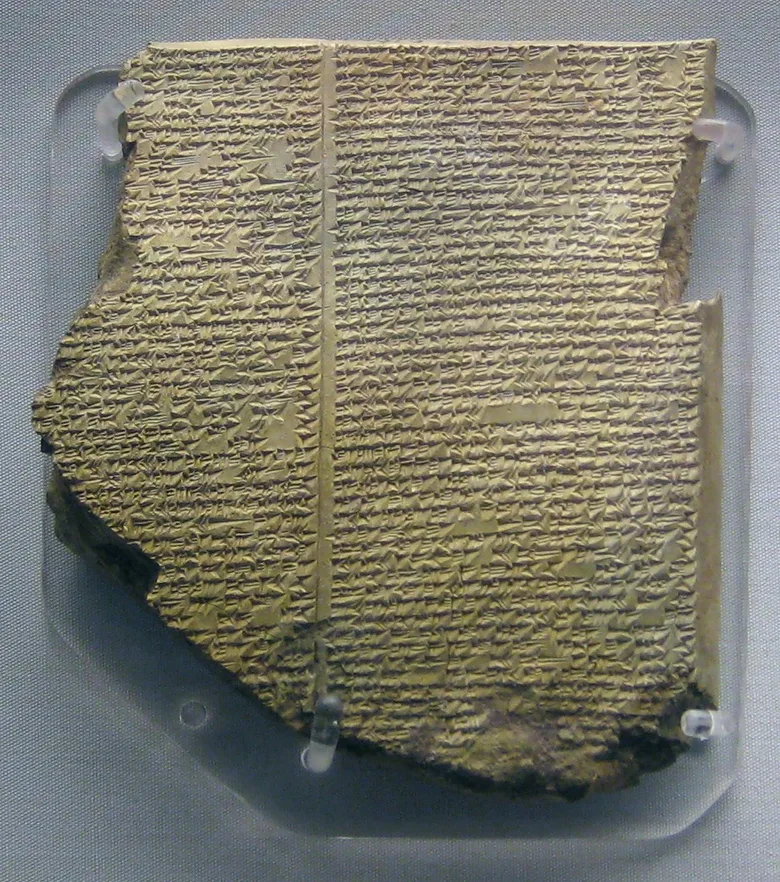
Some gaps are much older. The Epic of Gilgamesh is one of the oldest surviving works of literature, with themes of friendship, kingship, death and the human search for immortality that remain immediately understandable today. Mesopotamia produced cities, empires, writing systems, legal traditions and mythologies that shaped later civilisations, yet its presence in modern popular culture is remarkably small when measured against its historical importance.
Other gaps lie closer to the modern world. The medieval Mediterranean was a dense system connecting Byzantines, Arabs, Venetians, Genoese, Normans, crusader states and countless trading communities. The movement of merchants, mercenaries, pilgrims, diplomats, pirates and scholars created stories that rarely appear outside specialist history. Large parts of the Silk Roads, the maritime networks of the Indian Ocean and the great trading cities that connected Africa, Arabia, India and Asia remain culturally underrepresented despite their importance in the formation of the modern world.
These examples matter because they show how much historical material still exists outside the small group of periods and characters that contemporary entertainment repeatedly returns to. The supply of extraordinary stories has never been the problem. Much of human history remains largely untouched as a modern cultural experience.
The tools to make history tangible
The gap becomes especially visible when the available technology is considered. Today we possess tools that previous generations of filmmakers, historians and designers could barely imagine. Photogrammetry can reproduce archaeological sites in extraordinary detail. Satellite imagery can reveal landscapes and settlement patterns. Digital reconstruction can model buildings from fragmentary remains. Archaeological databases can combine evidence from thousands of sources, while modern cinematography can place large environments on screen with a level of physical realism that was previously impossible to achieve.
Historical research has also changed dramatically. We know more about ancient diets, trade networks, clothing, pigments, construction techniques, shipbuilding, warfare, migration and everyday life than filmmakers working fifty years ago could easily access. All of this creates new possibilities for cultural representation. A story such as The Odyssey can now be approached with a combination of historical knowledge, physical production and digital technology that simply did not exist when earlier adaptations were made.
The same applies far beyond cinema. Museums can reconstruct lost environments around original artefacts. Historical sites can use digital layers to show visitors how buildings once stood. Immersive installations can recreate sound, movement, ritual and public life. Games can place people inside historically grounded environments for dozens of hours. Live performance can combine research, costume, music, food, architecture and storytelling, while virtual worlds can eventually allow people to explore places that disappeared centuries ago.
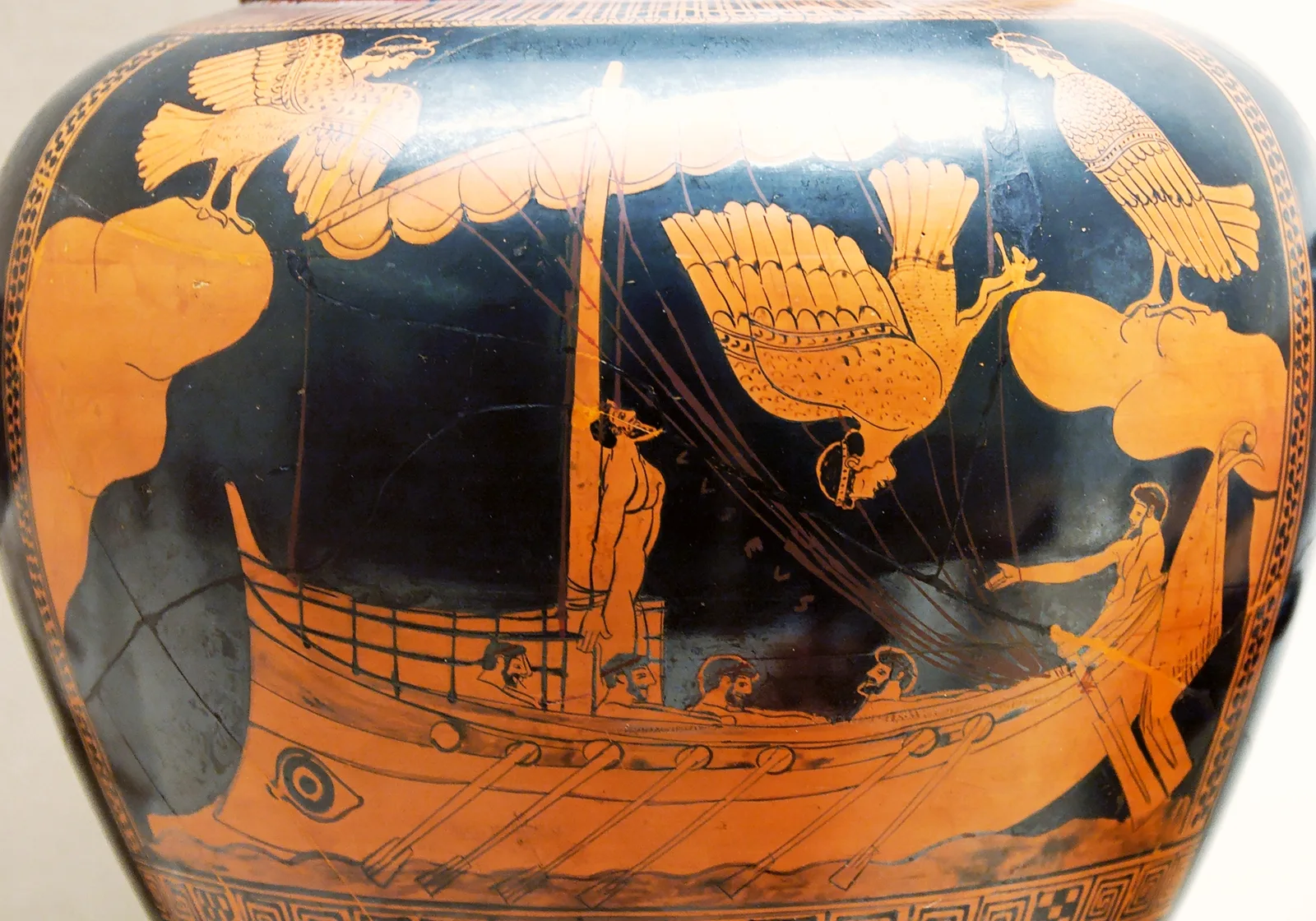
Archaeopolis’s archive film The Sirens offers a tangible example of this process. Created around the reconstructed Olkas ship, it brings a familiar Homeric encounter into a physical performance environment: timber, deck and rigging become part of the storytelling. The vessel gives the myth a place to unfold, connecting material reconstruction with movement and cinematic atmosphere.
From information to experience
The cultural opportunity lies in the ability to turn historical knowledge into experience. This becomes especially important because modern societies already possess enormous quantities of information about the past. Universities, archaeological institutions, museums, libraries and research centres have accumulated material on an extraordinary scale, yet much of it remains inside academic publications, specialist archives and technical databases.
The public usually encounters only a small part of it. A visitor may stand in front of a ruined temple and receive a short description on a sign. A museum may display an object that once belonged to a dense network of rituals, social relations, craftsmanship and political meaning. A schoolbook may compress a century of history into a few pages. The historical material exists in great quantity, while the experience available to the wider public is often much thinner.
This is where the idea of a cultural gap becomes useful beyond film. It gives us a way to examine which important stories have never received a serious contemporary treatment, which historical worlds are widely known by name and poorly understood in substance, which places attract millions of visitors while offering only a limited sense of the civilisation that created them, and which ideas have shaped the modern world while remaining almost invisible in popular culture. These areas contain enormous creative potential.
Why cultural judgment matters
Artificial intelligence will make this even more significant. AI systems are rapidly lowering the cost of producing images, video, text, sound and interactive environments, and the volume of cultural material will grow dramatically over the coming years. This will place greater value on cultural judgment because a powerful generation system can create thousands of scenes, while people still have to decide which world deserves reconstruction, which sources deserve trust, which details matter, which story carries meaning and which experience is worth building.
Historical accuracy also requires choices. Sources disagree, evidence is incomplete and reconstructions involve uncertainty. Researchers constantly distinguish between what is confirmed, probable and speculative. A serious cultural project has to deal with those distinctions carefully, even when the final audience experiences the result in a natural and seamless way.
The future may therefore produce a new kind of cultural creator working across history, design, technology, research and storytelling at the same time. Such people may move through archives, archaeological evidence, digital tools, physical production and narrative as parts of the same process. Their work may begin with the observation that an important part of human history remains culturally underdeveloped.
Learning to notice the gaps
Nolan’s decision to film The Odyssey is a useful example because the source material is so obvious. Homer has been present in Western education and culture for centuries. The story is famous, its characters are familiar and its influence is enormous. Someone with the scale, technical ability and artistic freedom to approach it looked at the cultural landscape and saw an empty space.
That is what makes the phrase “gap in the culture” so useful. It describes the ability to recognise areas of culture whose importance is much greater than their contemporary representation. Once you begin looking at culture this way, these gaps become easier to identify. Some have existed for decades, others for centuries, and the tools available to address them are becoming more powerful every year. The difficult part is learning to notice them.
The cultural opportunity lies in the ability to turn historical knowledge into experience.
Selected sources and further reading
Editorial standard: this article distinguishes broad historical evidence from Archaeopolis production practice. Specific dates, artefacts and quotations will only be added with named sources.