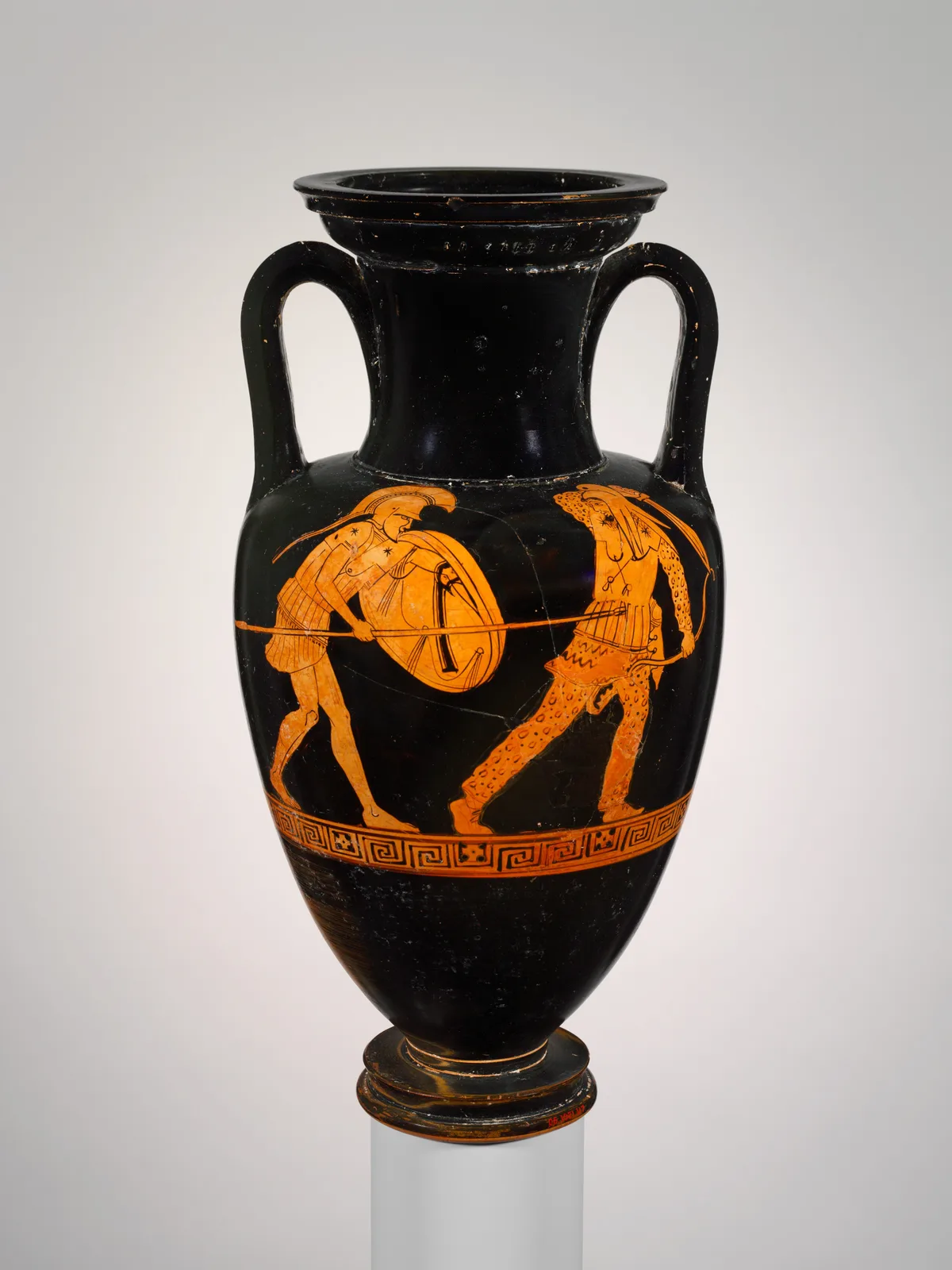
A Greek coalition
Spartans and Tegeans held the right of the allied line; Athenians and Plataeans stood on the left. The army was a coalition of Greek communities, not the achievement of one city alone.
Realised project · Plataea, Boeotia · 2016
An ancient Greek warrior presentation in the landscape of the decisive 479 BCE battle—where armour, shields and controlled movement turned military history into a physical encounter.
Hoplite presentation realised · Historical walking route in development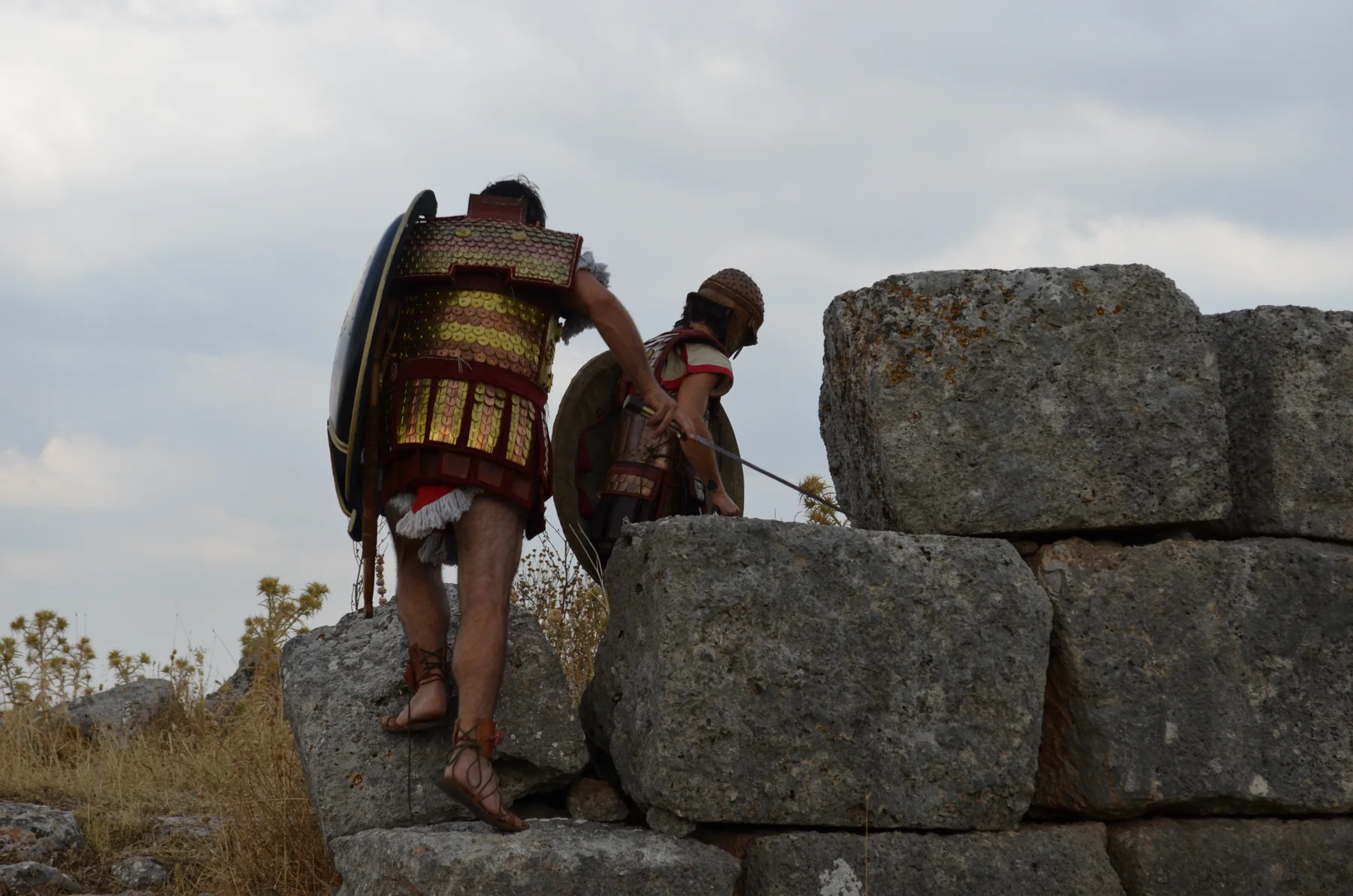
The realised presentation
In September 2016, Archaeopolis presented reconstructed hoplite equipment and controlled martial movement to an international cultural-travel group at Plataea. The encounter examined how armour changes the body, how a shield controls space and how a warrior’s weapons belong to a larger formation.
This documented presentation is the first chapter of The Plataea Walk. Its next leg will follow the march towards Plataea through the historical geography of Attica, Eleusis and Cithaeron.
Battle of Plataea · 479 BCE
Spartans and Tegeans held the right of the allied line; Athenians and Plataeans stood on the left. The army was a coalition of Greek communities, not the achievement of one city alone.
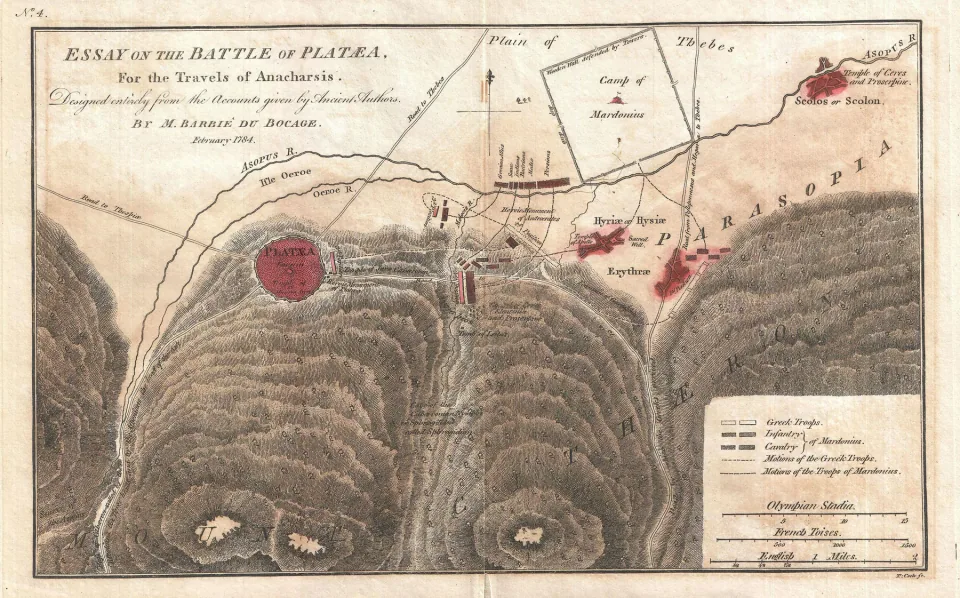
The Persian commander Mardonius faced the allies near Plataea and the Asopus. Herodotus describes movement, disrupted withdrawal and separated contingents before the fighting fully developed.
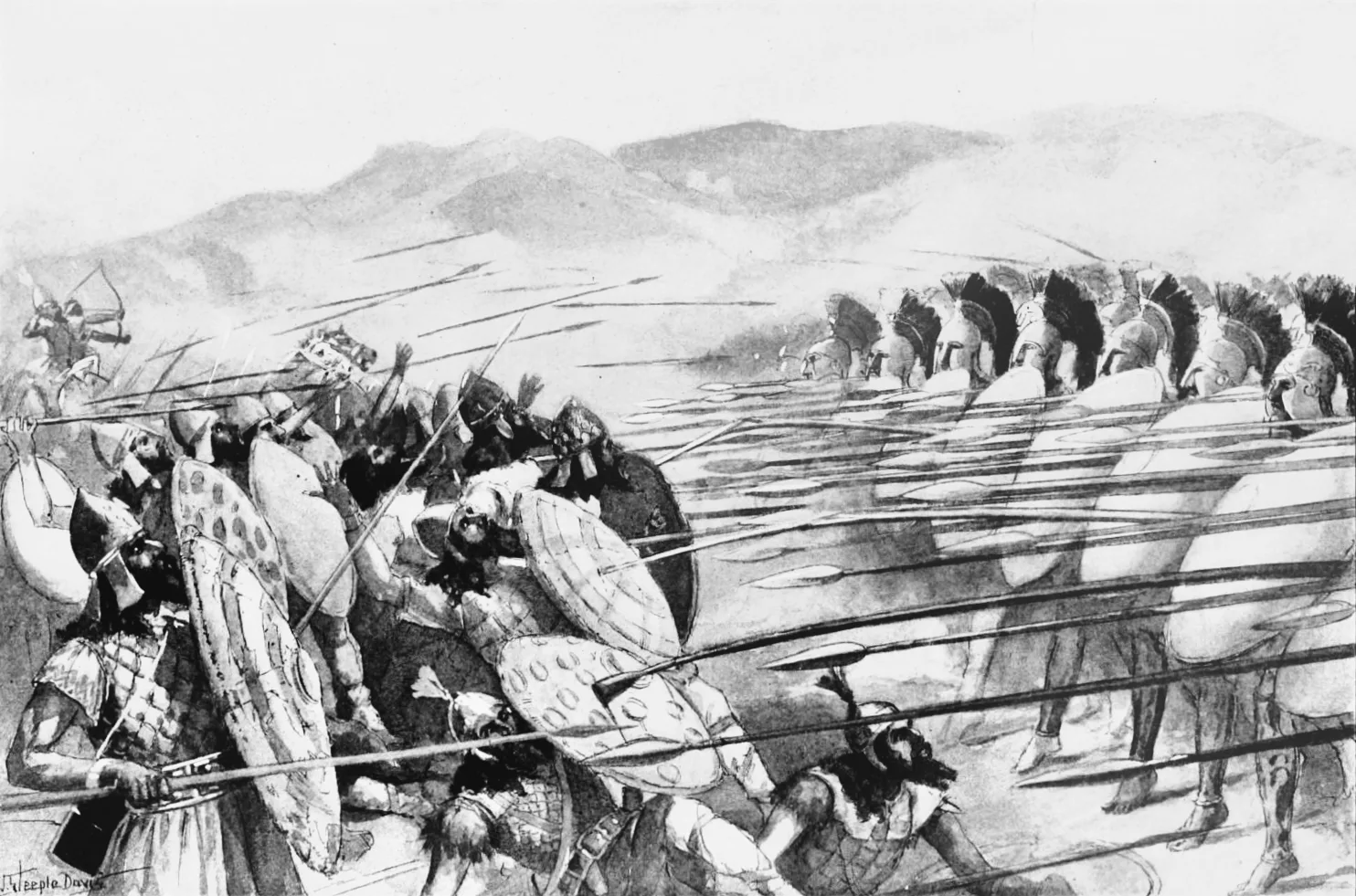
The Persian position collapsed after Mardonius was killed and the allied Greeks took the fortified camp. Plataea became the decisive land victory of the second Persian invasion of Greece.
Ancient troop totals and some tactical details remain debated. This page follows Herodotus for the narrative framework without treating every ancient figure or modern reconstruction as certain. The vase is ancient visual context; the map and battle scene are later interpretations, not contemporary records of the event.
The presentation
Rather than isolating objects in a display, the presentation brought reconstructed equipment into controlled movement: how a shield occupies the body, how visibility changes and how two armed figures negotiate distance and stone.
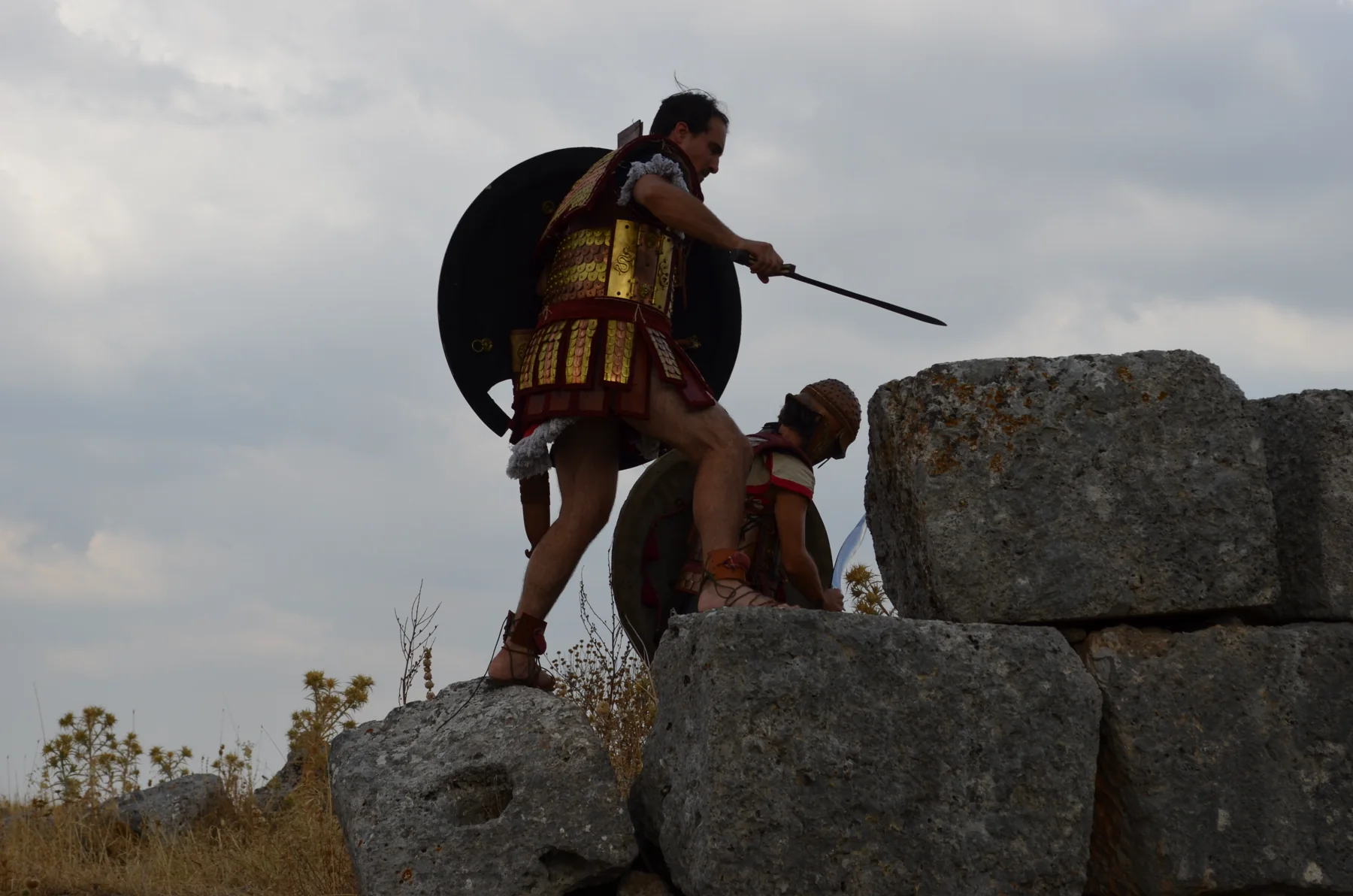
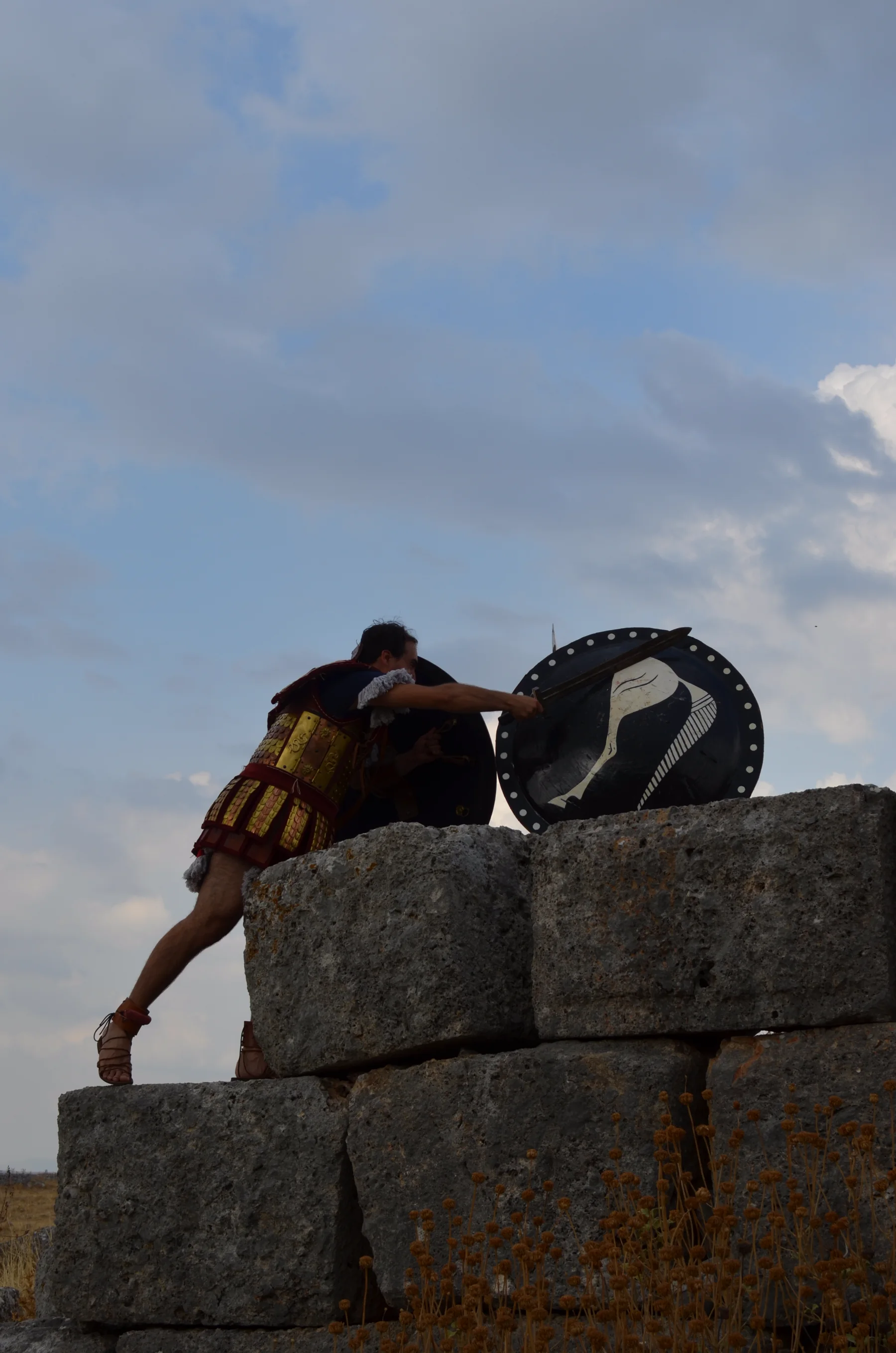
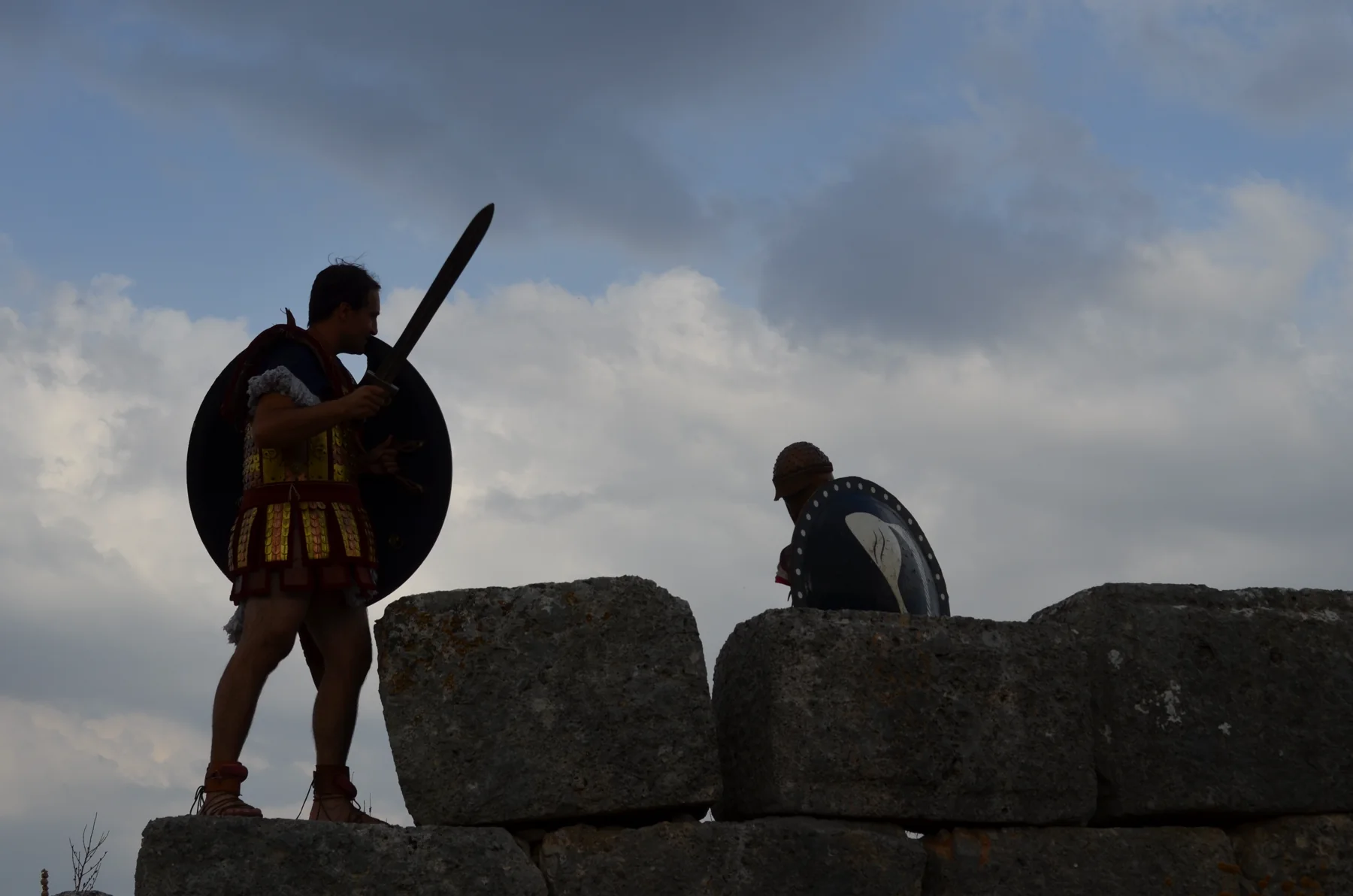
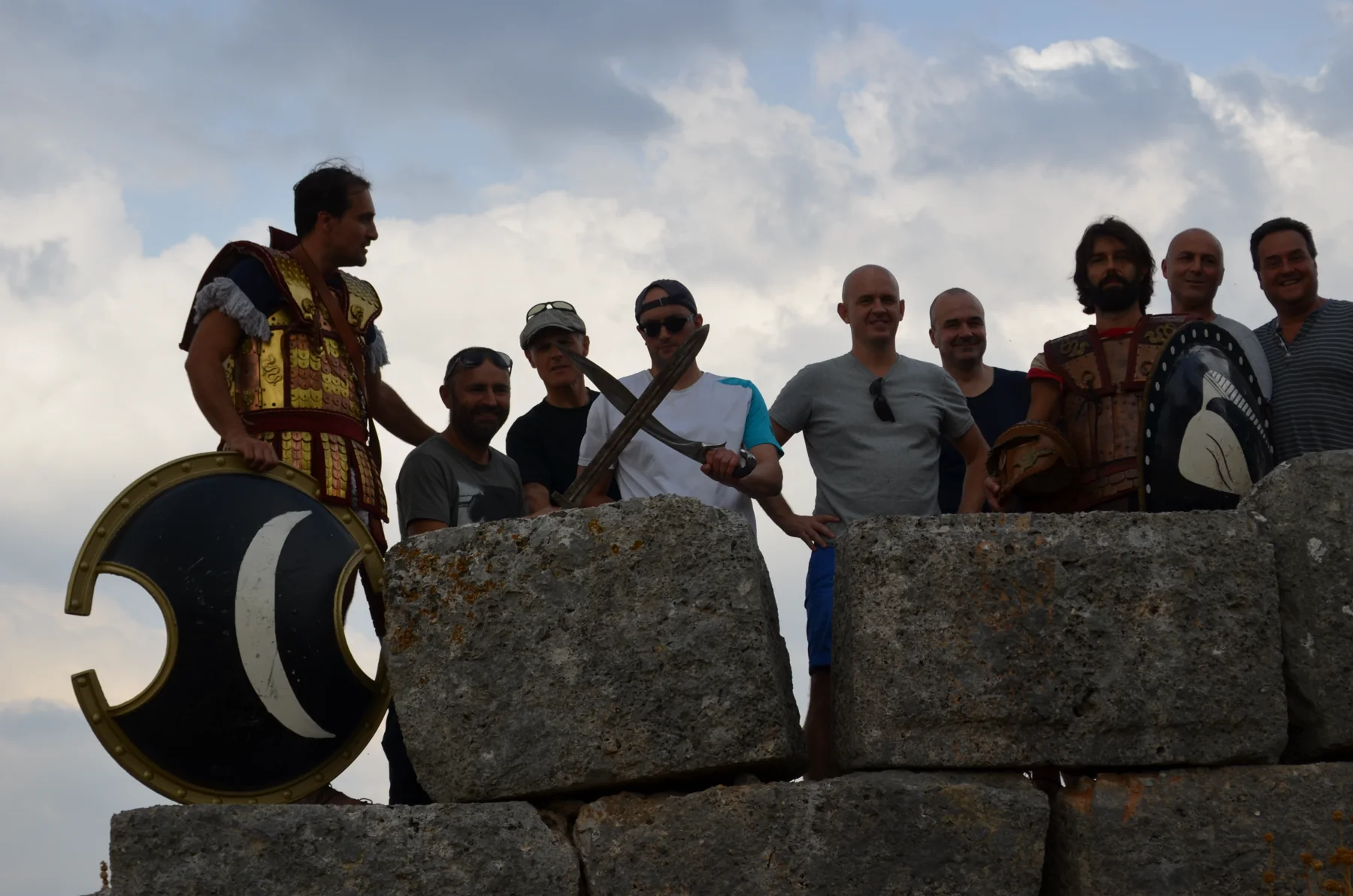
Realised hoplite presentation · Plataea · Archaeopolis archive · 2016
Ancient Greek phalanx
The classical hoplite did not fight as an isolated swordsman. Hoplites formed a close-order infantry line, normally carrying the spear in the right hand and the aspis on the left arm. The shield protected its bearer and extended towards the neighbouring man; cohesion made the line more formidable than any single warrior.
Rows behind the front rank added depth and continuity. Once formation broke, the exposed individual became far more vulnerable. Historians continue to debate exactly how often shield overlap, physical pushing and spear combat worked in practice, so the demonstration interprets principles of weight, coverage and distance rather than claiming to reproduce one unquestionable battle technique.
Hoplite armour, shields & weapons
The photographs record a modern historical presentation, not a uniform archaeological assemblage from 479 BCE. The guide below distinguishes the visible reconstructions from the broader classical Greek hoplite panoply.
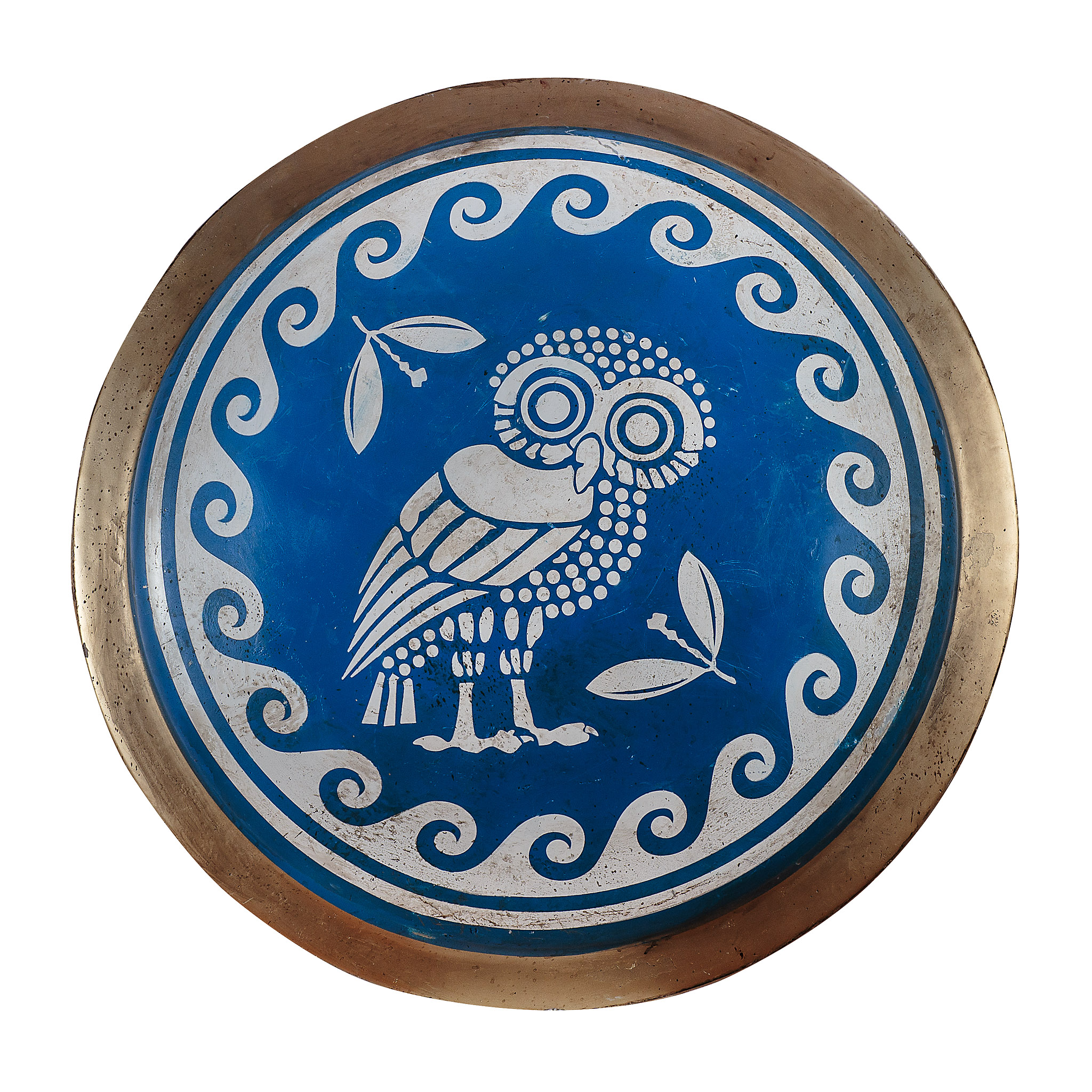
The large circular shield was the hoplite’s principal defence. A wooden body could be faced or edged with bronze and carried through a central forearm band and a handgrip near the rim. Its left-side coverage also supported the man beside the bearer in close formation.
See the documented object ↗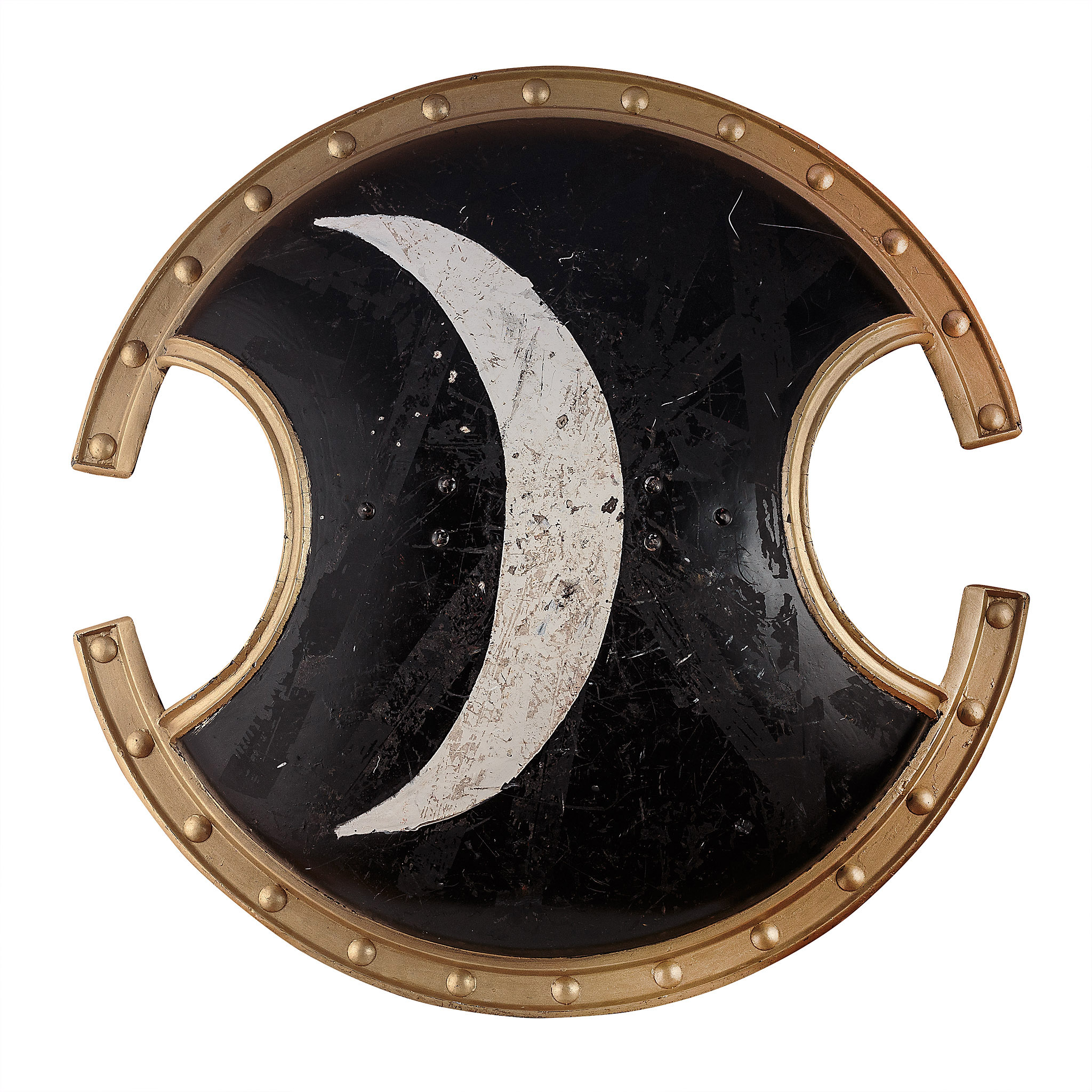
The cut-out shield visible in the photographs follows the profile conventionally called Boeotian, familiar from Boeotian coinage and ancient imagery. It is presented as a reconstructed regional form, not as proof that this exact shield was standard equipment at Plataea in 479 BCE.
See the documented object ↗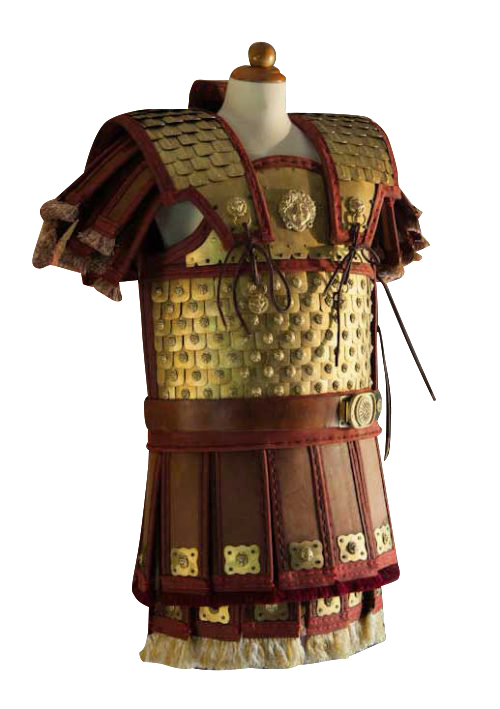
The interpreters wear reconstructed torso armour with layered, scale-like plates, shoulder protection and hanging strips at the waist. These parts distribute protection while leaving the hips and legs able to move; the photographed constructions should not be treated as a single universal hoplite uniform.
See the documented object ↗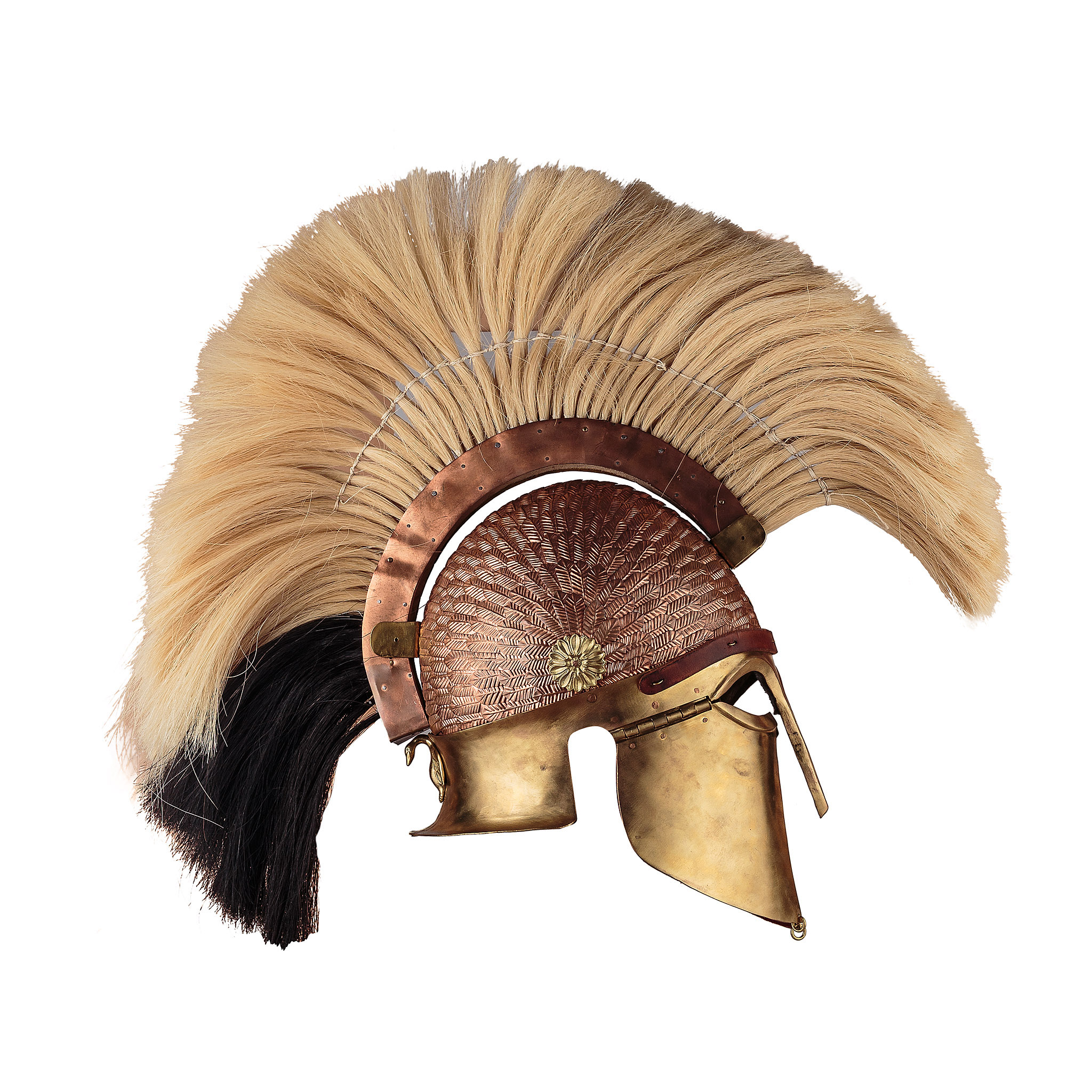
Greek heavy infantry used several helmet traditions, including bronze Corinthian types. The photographed figures show different reconstructed head solutions rather than a matched 479 BCE issue, reminding us that equipment varied by date, region, resources and interpretive brief.
See the documented object ↗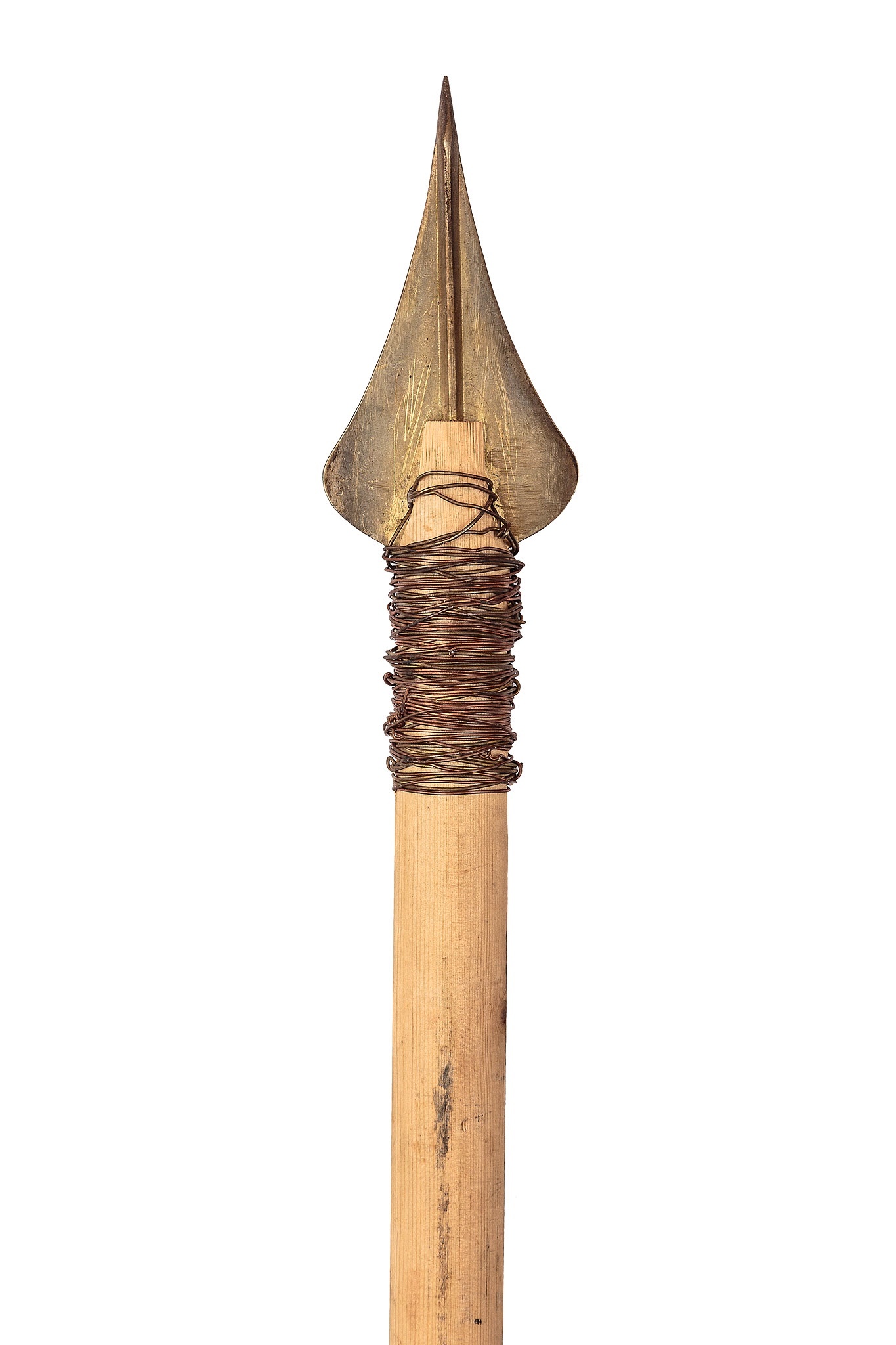
The spear was normally the hoplite’s primary weapon, used from the ordered line rather than chiefly thrown. A spear appears in the group photographs; the action sequence focuses instead on shields and secondary blades.
See the documented object ↗Straight and curved reconstructed blades appear in the photographic record. A short sword was a secondary weapon for the hoplite when the spear was lost, broken or the fight closed beyond effective spear use.
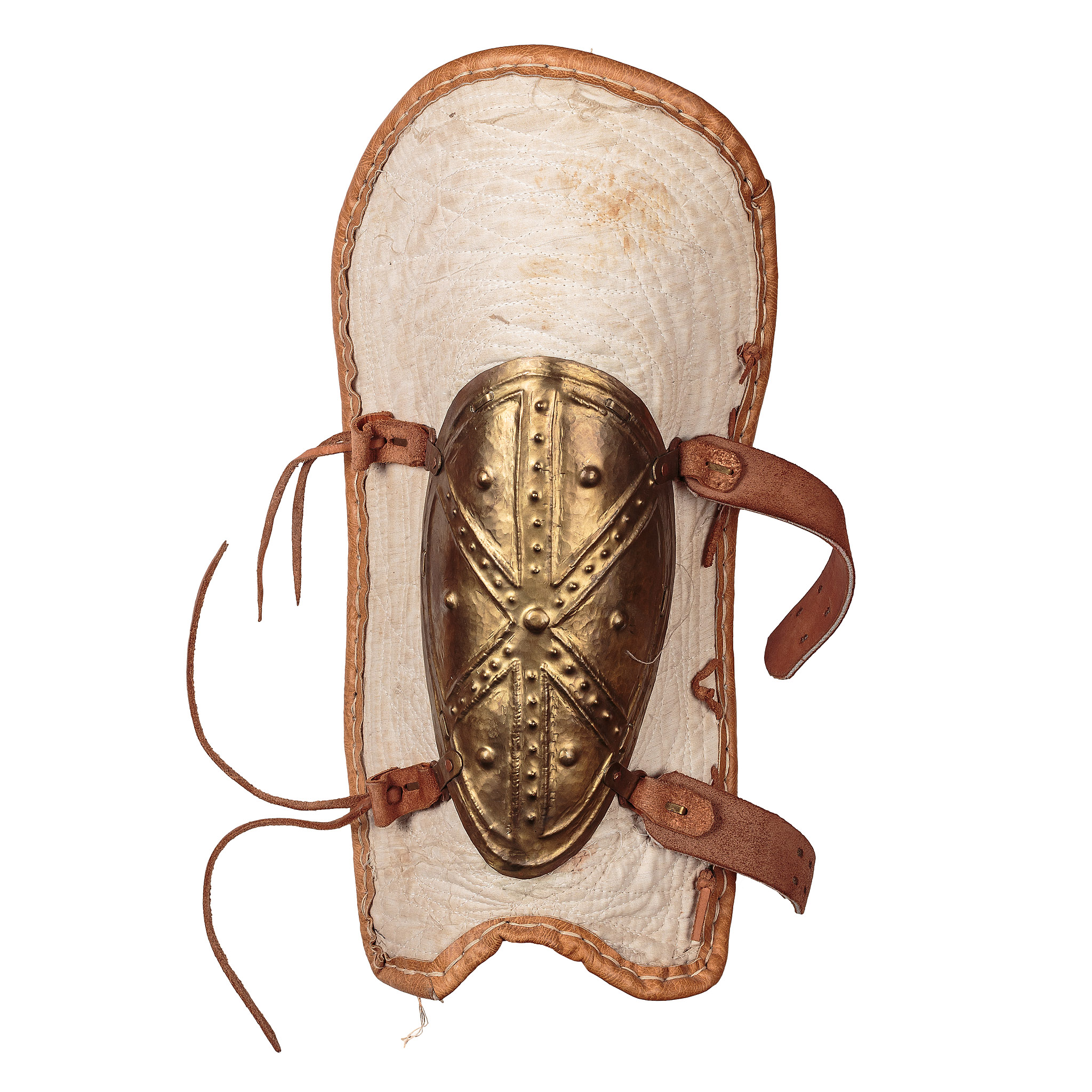
Bronze greaves commonly protected the shins in the ideal hoplite panoply, but they are not visible on the two interpreters here. Short garments, waist strips and laced footwear keep the legs mobile; they are elements of this presentation, not evidence for every warrior at Plataea.
See the documented object ↗Next chapter · In development
The ancient text preserves a sequence of places, not a turn-by-turn trail. The walking project will translate that sequence into a modern, field-tested journey while keeping the distinction visible.
Interpretive route framework · final walking alignment under field research
Departure context for the modern walking journey.
Herodotus records the forces joining here before advancing.
The army takes position on the mountain’s lower slopes.
The battlefield landscape completes the interpretive arc.
Sequence named in Herodotus, Book IX.19
Proposed modern walking connection
A shared landscape
The archive closes the realised chapter with the people who experienced it. The proposed walk extends the same principle: historical interpretation becomes memorable when landscape, material culture and human movement meet.
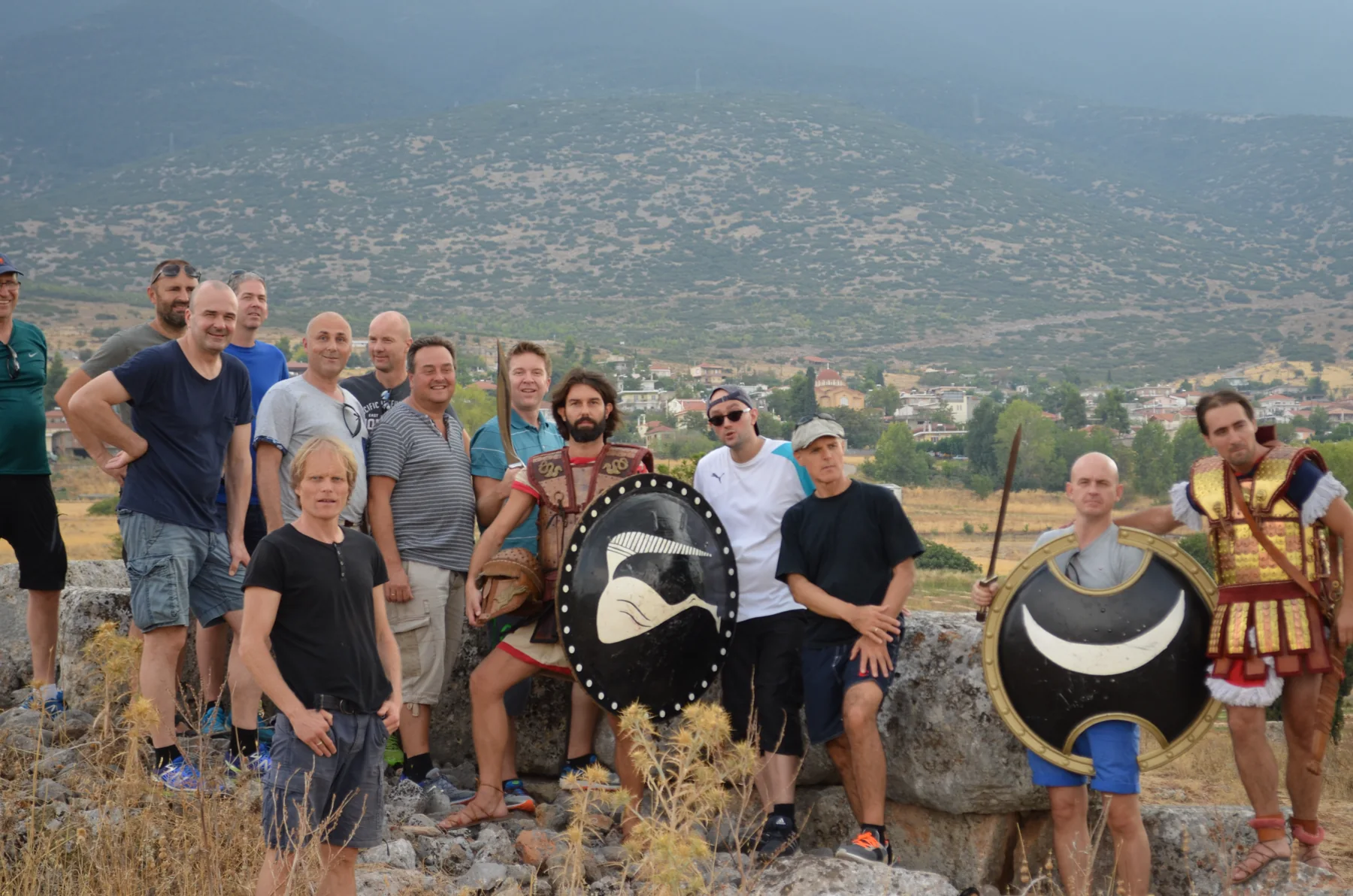
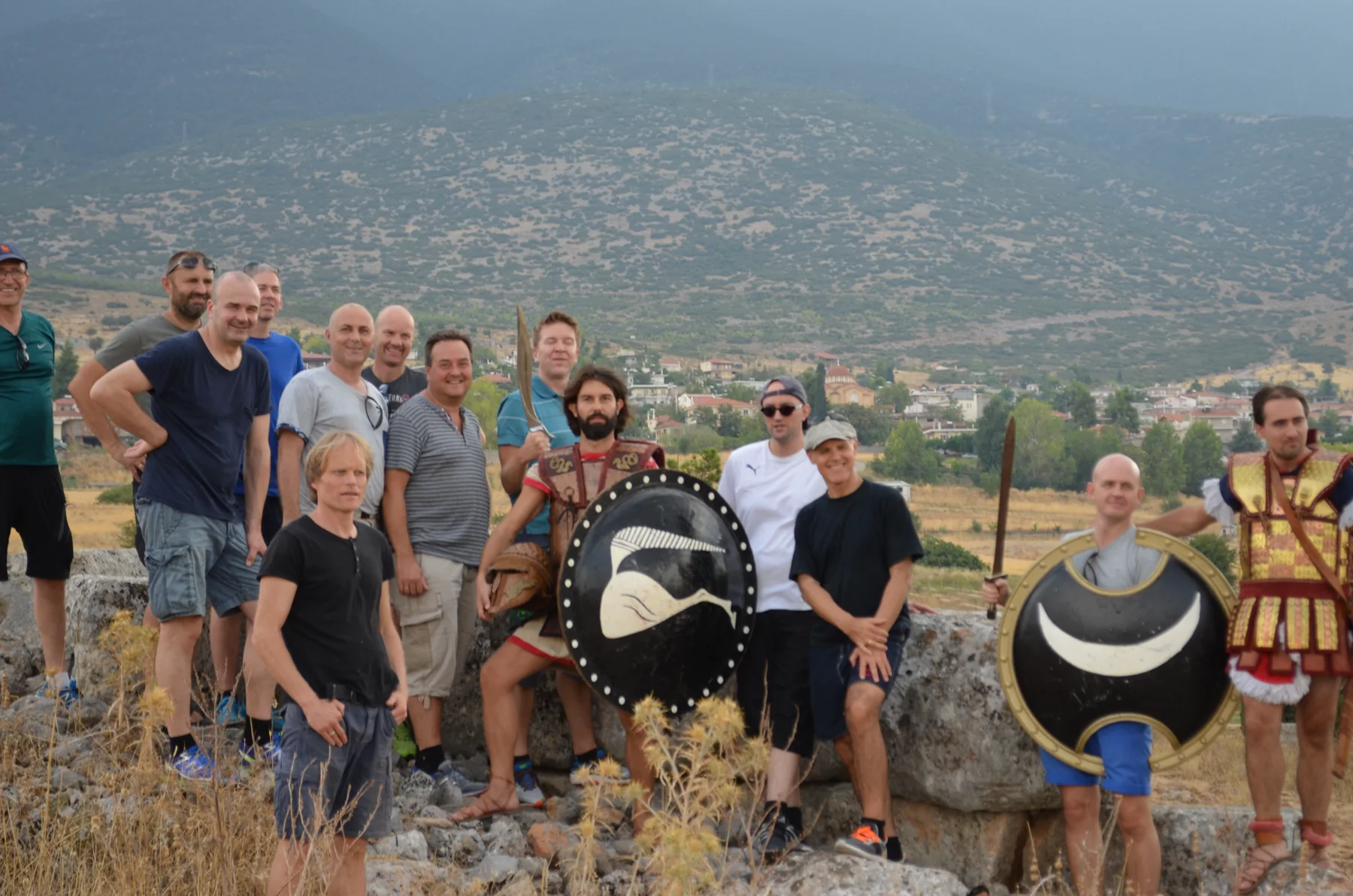
Realised hoplite presentation · Plataea · Archaeopolis archive · 2016
Follow the next leg
The hoplite presentation at Plataea is realised and documented. The longer Plataea Walk remains a developing cultural route, subject to field research, access, safety and the relevant permissions.
Discuss the project →