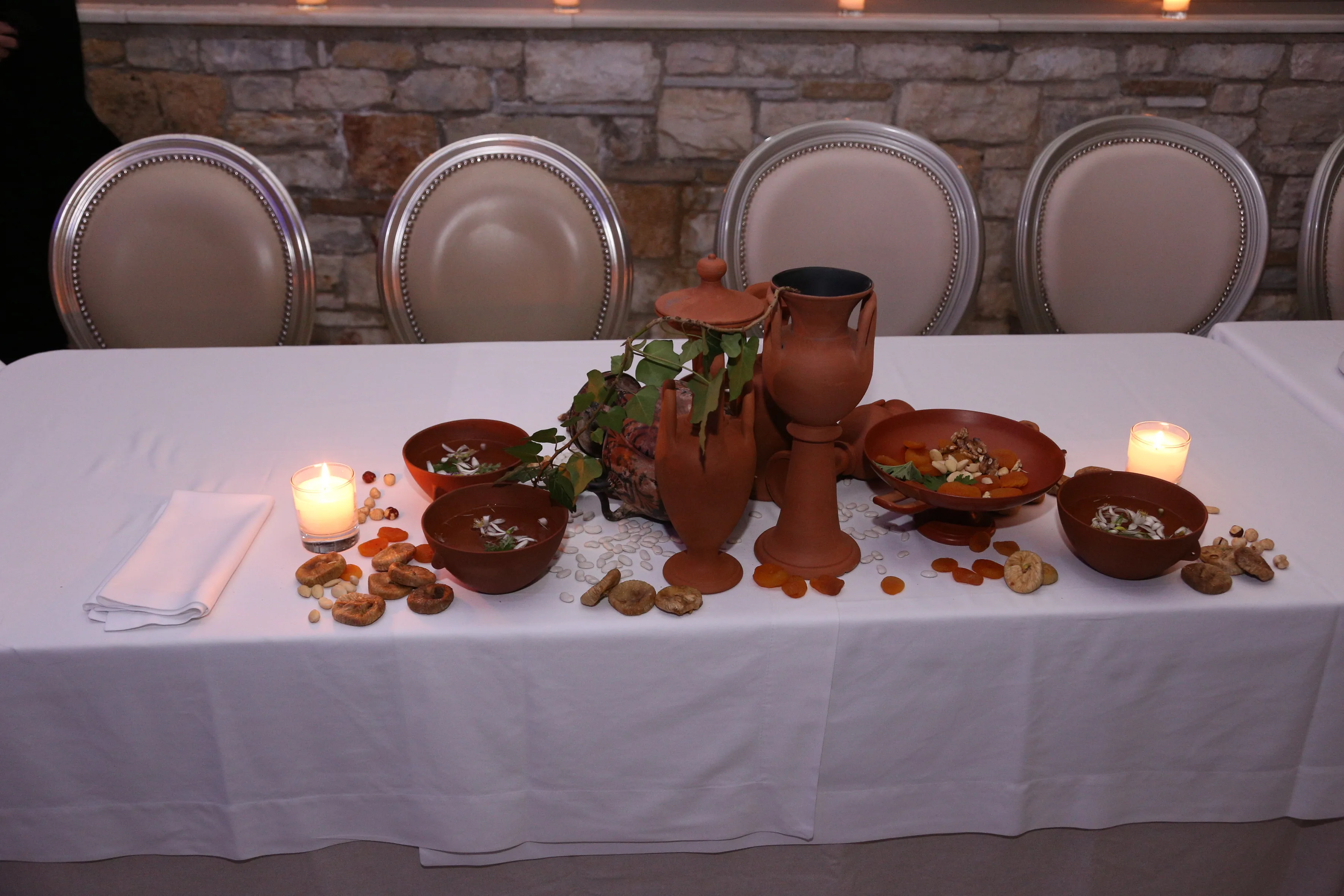
Imagine arriving after dinner
The tables have been cleared. Servants sweep away crumbs and bring water for the guests’ hands. A libation is poured, a hymn is sung and a large mixing bowl takes command of the room. Lamps warm the painted walls. One guest has prepared a serious question about courage; another has prepared nothing except a devastating imitation of his neighbour. Somewhere near the door an aulos player waits, a dancer is checking a circle of hoops, and somebody is already boasting about his aim in the wine-lees game.
This is the symposium: not the meal itself but the drinking gathering that followed it. The Greek word means a drinking-together. It could be orderly, philosophical and ceremonious, or loud, flirtatious and gloriously ridiculous—often all within the same evening. To call it simply an Ancient Greek banquet is to lose its most interesting quality. Food prepared the company; wine, conversation and performance transformed it.
First came the deipnon, then the party
A formal evening usually began with the deipnon, the meal. Bread or barley preparations, olives, cheese, pulses, greens, fish, meat and sauces appeared according to region, season and wealth. There was no single menu called ‘Ancient Greek food’, and a modest household did not eat like a wealthy Athenian host. The evidence points instead to many local cuisines and enormous differences of status.
When the meal ended, the room changed purpose. Tables could be removed or reorganised; guests washed, poured a libation and entered the symposium proper. Later snacks—tragemata such as nuts, dried fruit, cheese or cakes—helped keep the wine company. This distinction matters for modern hospitality: the ancient experience was created by a change of rhythm, not by placing every dish on the table at once.
The krater was the evening’s control centre
Greek wine was normally mixed with water in a krater before it reached the cup. Drinking unmixed wine was commonly represented as excessive, uncivilised or dangerously foreign. The host or an elected symposiarch could determine the mixture, the size of the cups and sometimes the rules of drinking.
That did not make the evening sober. It made intoxication social and negotiated. A weak mixture prolonged conversation; a stronger one accelerated the descent from eloquence to singing, dancing and regrettable confidence. Xenophon has Socrates praise wine for awakening friendly feeling, then warn that flooding the body makes it as unable to stand upright as an overwatered plant. His solution is wonderfully practical: frequent small cups, enough to make the company playful without making speech impossible.
Food could be clever, comic and provocative
Symposium food did not need to behave like a solemn museum label. A cook could build appetite through contrast: salty fish followed by sweet fruit, pungent herbs against fresh cheese, onions and bulbs beside honeyed cakes. Comic poets made food a language of greed, luxury and social ambition. Guests could recognise a miser in a thin serving, a show-off in an imported delicacy and a bad host in a platter that never reached the far couch.
The table therefore carried stories as well as calories. A dish might recall an island, a poet, a medical idea, a sacrifice or a famous appetite. The point was not to reproduce one frozen recipe but to make taste participate in the evening’s argument. Even an unassuming olive could begin a dispute about farming, trade, moderation or whose estate produced the better oil.
Objects choreographed every gesture
The krater mixed the wine; an oinochoe poured it; the kylix encouraged a particular grip and a broad, shallow drinking movement. Skyphoi, kantharoi, cooling vessels, strainers, lamps, couches and small tables each belonged to an action. Images painted inside a cup might reveal themselves only as the drink disappeared, turning consumption into a visual joke or erotic surprise.
These objects were not background decoration. They controlled posture, service, sightlines and pace. A convincing contemporary interpretation begins here. Reconstructed tableware becomes meaningful when guests understand why the wine is mixed, how a cup is handled and why the room changes after the meal.
Kottabos: flirting by throwing your drink
Kottabos was the party game that converted the last mouthful of wine into ammunition. A player hooked a finger through the handle of a cup and flicked the lees toward a target, trying to strike or dislodge it with a clean, elegant throw. Skill mattered; so did theatrical swagger.
The throw could be dedicated to a desired person, which made kottabos part sport, part flirtation and part public performance of confidence. It also guaranteed a certain amount of mess. Imagine trying to discuss justice while the guest opposite repeatedly launches wine across the room in the name of his latest beloved. The symposium’s genius lay in allowing the elevated and the absurd to occupy the same space.
Riddles, songs and the guest who thought he was funny
Conversation was not one unbroken philosophical seminar. Guests recited poetry, proposed riddles, exchanged gossip, sang skolia in turn and challenged one another with questions. A performer or comic parasite might sharpen the humour, but the guests themselves were expected to contribute. The worst failure was not ignorance; it was being dull.
Xenophon’s Symposium preserves an evening full of teasing. Socrates says he wants dancing lessons; his friends laugh at his stomach; a comic performer imitates the graceful dancers so badly that the company becomes thirsty from laughing. These scenes remind us that the surviving philosophical dialogues are literary compositions, not CCTV recordings—but they also preserve an essential truth. Intelligent hospitality needs relief, surprise and permission to be foolish.
Music changed the temperature of the room
The aulos, lyre and kithara could accompany song, poetry and dance. Music did more than fill silence: it altered the pace of drinking, drew attention toward a performer and gave guests a shared emotional rhythm. A skilled musician could move the company from reflection to desire, from solemn hymn to comic release.
In Xenophon’s account, a flute player, a cithara-playing boy and an acrobatic dancer enter after the libation. The dancer juggles twelve hoops and later somersaults through a hoop fitted with upright swords. The guests are delighted and terrified. Entertainment at a symposium could be intimate, athletic and genuinely dangerous—not a polite soundtrack playing unnoticed behind the conversation.
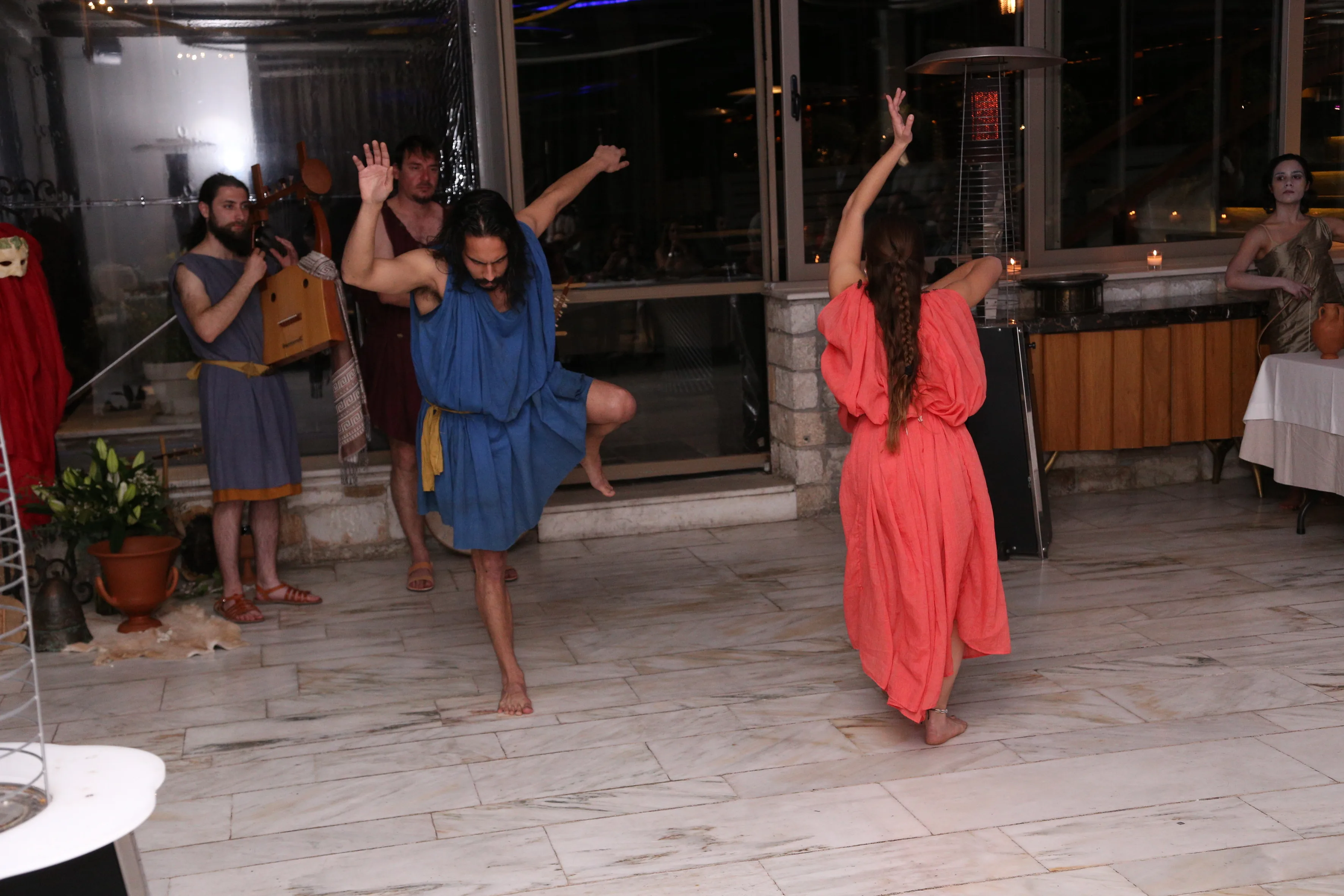
Dancers, acrobats and embodied mythology
Dance could display agility, beauty, humour, gendered fantasy or martial skill. Performers might imitate myths and relationships; armoured dances could turn combat into controlled spectacle. At the end of Xenophon’s Symposium, a staged encounter between Dionysos and Ariadne becomes so persuasive that the married guests hurry home while the unmarried men make vows to marry.
The story is comic, but it shows the power assigned to performance. Myth was not merely explained. It entered the room through bodies, sound and desire. A successful modern experience can learn from that immediacy without pretending that a contemporary choreography is an exact recovery of a lost ancient dance.
Courtesans, sex and the hierarchy behind the pleasure
Sexual desire was part of symposium imagery and literature. Hetairai—courtesans who could be valued for conversation, music and social skill as well as sexuality—and other women identified more directly as prostitutes appear in texts and vase painting. Elite citizen wives and daughters were generally excluded from the male Athenian symposium, while female musicians, dancers and enslaved attendants worked inside it.
That distinction should not be romanticised. The freedom enjoyed by the male guests depended on labour and unequal power. Some women may have exercised unusual independence; others were enslaved, hired or exposed to coercion. Even the term hetaira covers different realities. A responsible account can acknowledge seduction, humour and erotic display without turning exploitation into elegant décor.
The evidence is also more complicated than a single rule. Practices changed across places and centuries, and images of women drinking or playing kottabos may express fantasy, satire, desire or real female sociability. The honest answer is often not ‘this is exactly what happened’, but ‘this image tells us what its audience was prepared to imagine’.
Dionysos presided over freedom—and its limits
The symposium belonged to the world of Dionysos, god of wine, theatre, altered identity and dangerous release. Libation and hymn gave drinking a ritual frame. Wreaths, perfume, vessels and songs helped separate the gathering from ordinary time.
Yet Dionysian freedom required structure. The mixture in the krater, the order of service, the symposiarch and the shared rules kept pleasure within a social form. The best symposium balanced abandon and control. Too little freedom produced a tedious evening; too much produced men who could no longer stand, speak or remember which doorway belonged to their host.
And then came the komos
The party did not always finish quietly. Drinkers might leave in a komos: a noisy procession of singing, dancing and public display. In literature and vase painting the komos can be exuberant, erotic or disruptive. It carried the private energy of the dining room into the street.
This is where the beautifully regulated symposium could become someone else’s problem. A group of wealthy young men with torches, wine and absolute confidence was not automatically charming. Ancient writers knew the comic possibilities of drunken arrogance, broken doors, insults and fights. Meaningful hospitality depended on knowing when the evening had reached its perfect ending—and when one more krater was one too many.
Philosophy was real, but it was not the whole party
Plato’s Symposium made the drinking party one of the most famous stages for philosophy: a sequence of speeches on love culminating in Socrates’ account of Diotima and interrupted by the spectacularly drunk arrival of Alcibiades. Xenophon created a different gathering, lighter in tone and crowded with jokes and performers.
Neither text should be treated as a literal timetable for every Greek household. They use the symposium as a literary machine because it brings different characters into one room, loosens their speech and tests the gap between public reputation and private behaviour. That is precisely why the form still feels modern. A dinner party reveals people by making them speak, listen, perform and drink together.
Designing a symposium today
A modern symposium should not become a costume dinner with a lecture attached. It needs a clear historical frame, an intelligible sequence and enough participation for guests to influence the evening. The welcome, first taste, libation, mixing of wine, stories, music, games, courses and performance should build one another.
Historical responsibility also means declaring what is reconstructed, what is inspired and what has been adapted for contemporary ethics, safety and comfort. We do not reproduce ancient social exclusion or exploitation. We study the structure that made the event compelling—shared attention, material intelligence, controlled surprise and the alternation of seriousness and play.
From research to a living private experience
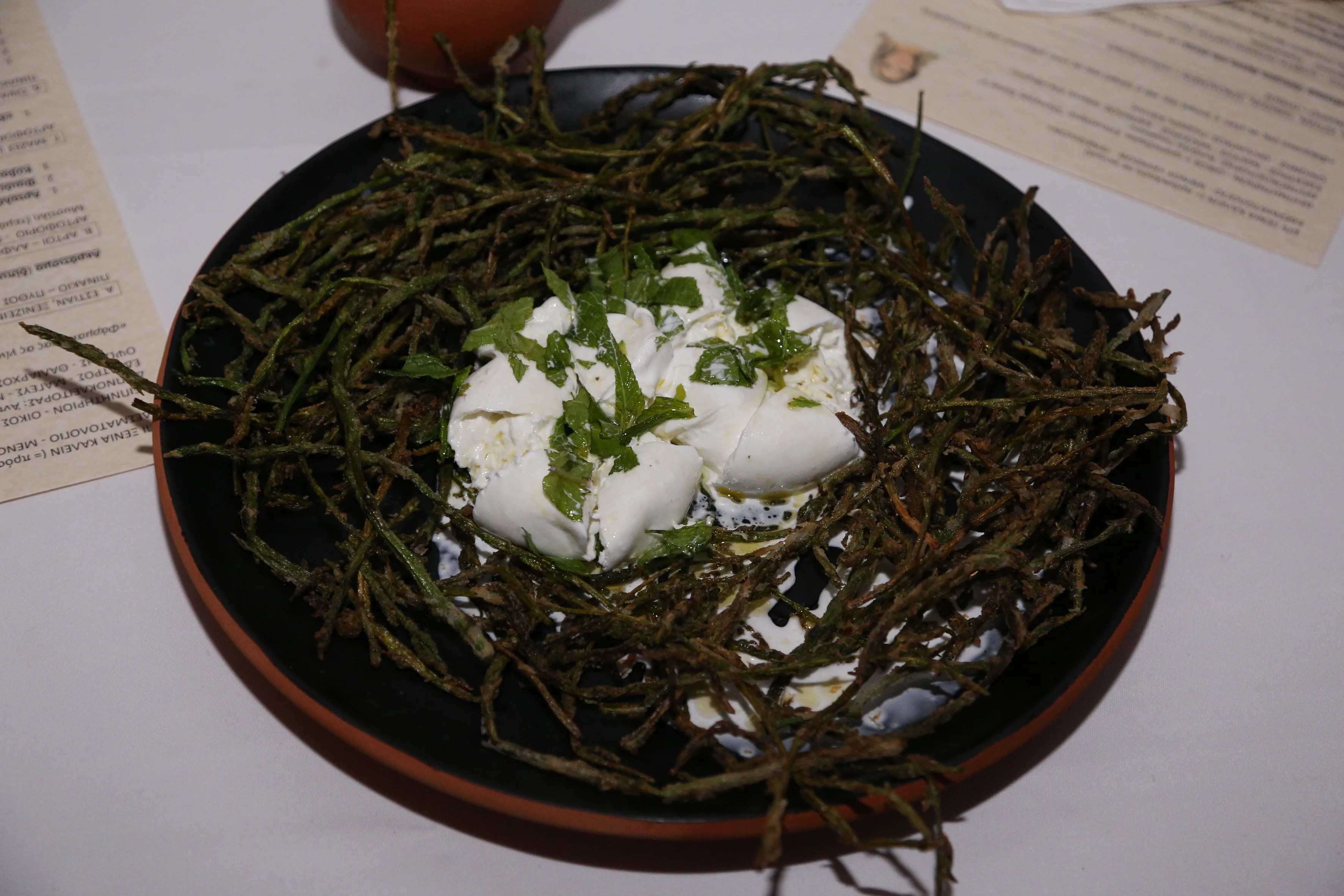
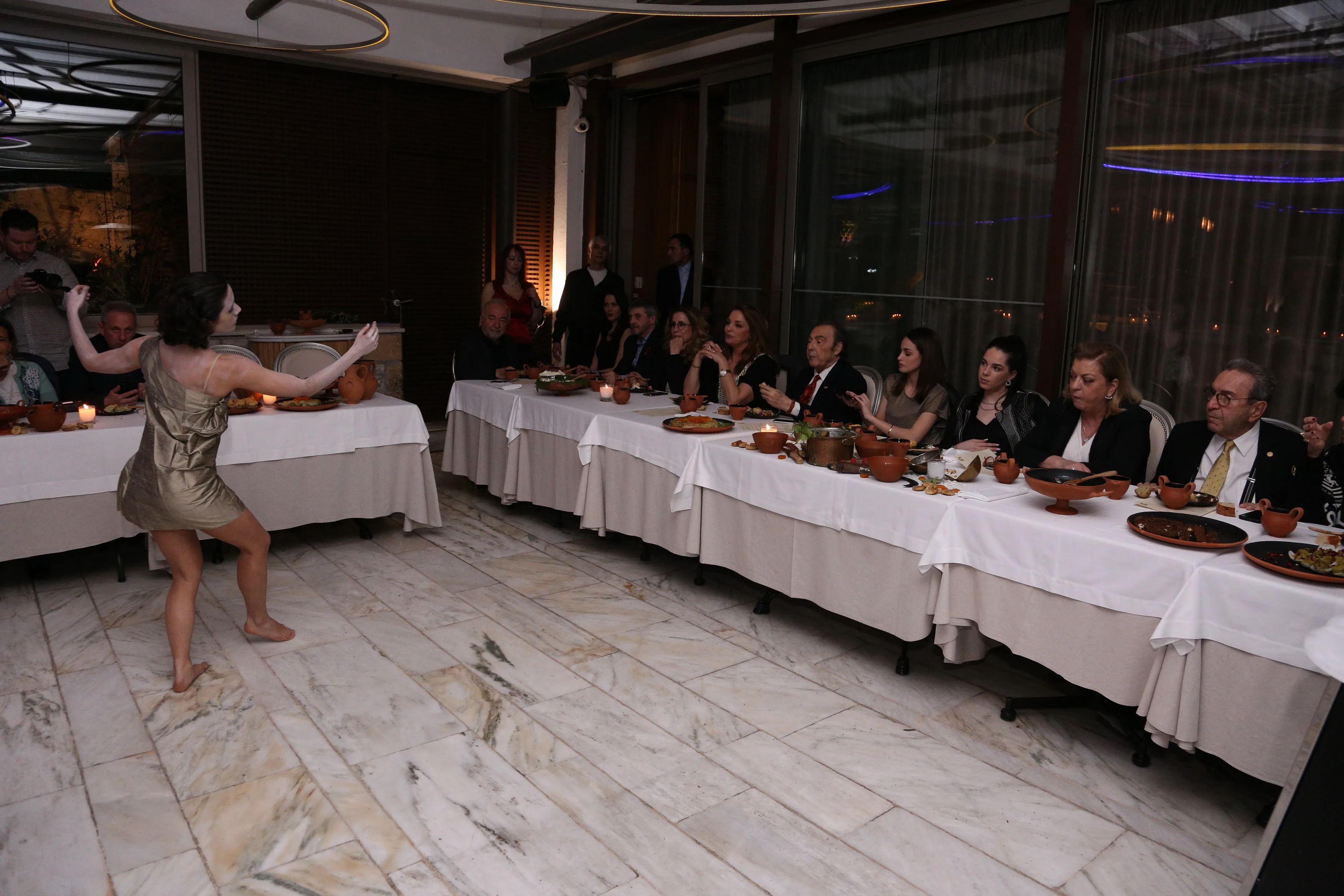
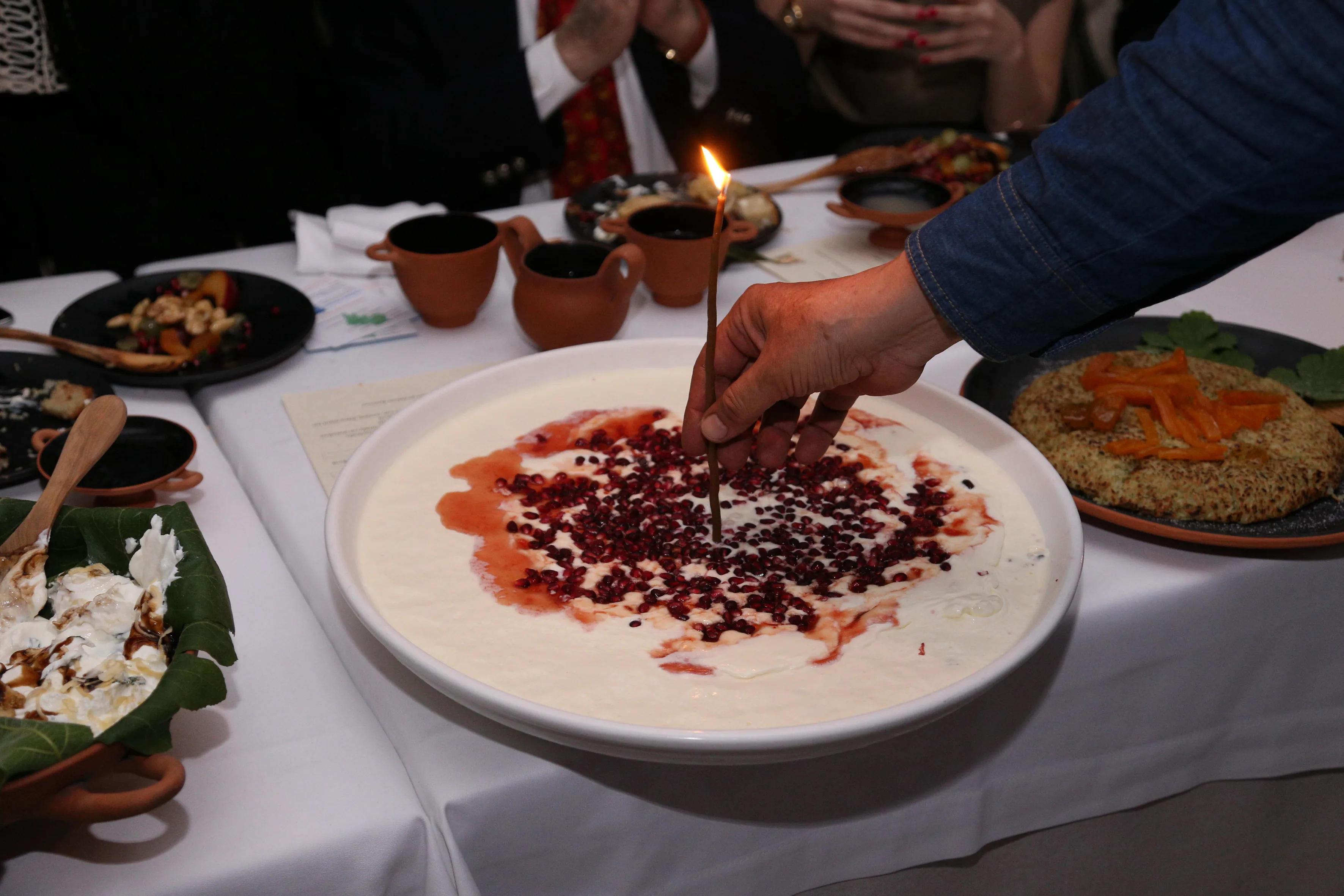
Archaeopolis develops private symposium experiences through historical gastronomy, reconstructed ceramic vessels, music, dance, storytelling and guest-facing interpretation. For a private birthday dinner at Dionysos Zonar’s in Athens, the table moved from breads, pulses, cheese, greens and salted fish to a chicken-and-wheat main course, fruits, honeyed desserts and a reconstructed birthday ammilos. Handmade cups and jugs, historically informed drinks, musicians and mythological performers created one continuous world around the guests.
The aim was not to claim a perfect copy of one ancient evening. It was to translate the symposium’s strongest principle into contemporary hospitality: every taste, object, story and performance should give the company something to share. When that happens, history is no longer decoration. It becomes the social life of the room.
Evidence sets the boundaries. Production gives the encounter its life.
Selected sources and further reading
- The Metropolitan Museum of Art — The Symposium in Ancient Greece
- J. Paul Getty Museum — Reclining and Dining (and Drinking) in Ancient Greece
- Xenophon, Symposium, Book 2 — Perseus Digital Library
- Xenophon, Symposium, Book 3 — Perseus Digital Library
- J. Paul Getty Museum — Ancient Wine Practices and Kottabos
Editorial standard: this article distinguishes broad historical evidence from Archaeopolis production practice. Specific dates, artefacts and quotations will only be added with named sources.