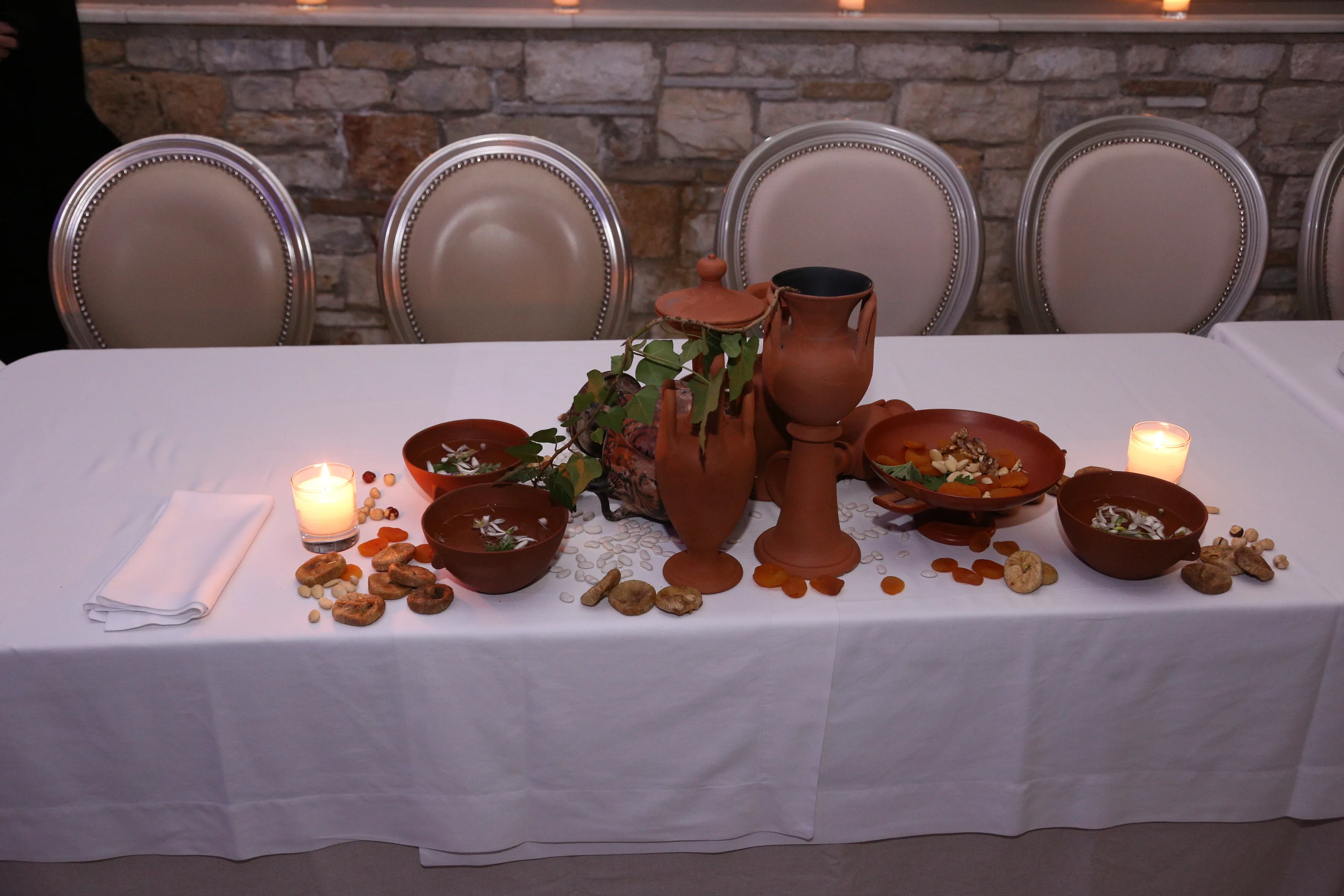
Before anyone tasted the wine, the room already had a flavour
A symposium began before the first cup reached the lips. Oil warmed on skin. Fresh leaves and flowers sat against hair. Wine, smoke, lamps, wool, wood, food and many bodies changed the air. The experience was not divided into the modern categories of menu, decoration, entertainment and fragrance. It arrived as one environment.
That is why smell matters. It is the sense most easily lost when antiquity is reduced to photographs of objects in glass cases. A kylix preserves its shape; a wall painting preserves colour; a text preserves a name. The air that once connected them has disappeared. Reconstructing that air responsibly does not mean inventing a single authentic aroma. It means recognising that scent helped mark hospitality, pleasure, status, ritual and the movement from ordinary time into the symposium.
Perfume, incense, flowers and wine were not the same thing
Modern writing often compresses every ancient aroma into the word perfume. The evidence is more interesting when we separate four overlapping practices. Personal perfumes and anointing oils were applied to hair, skin or clothing. Incense and burnt aromatics changed the atmosphere of a room and could carry ritual associations. Fragrant wreaths brought leaves and flowers directly onto the body. Wine and other preparations supplied their own aromas through herbs, resins, fruit and the vessels in which they were mixed and served.
These categories could meet during the same evening, but they performed different work. One announced care for a guest; another honoured a god; another made the body attractive; another altered the taste and pace of drinking. A historically informed experience becomes richer when it preserves those distinctions rather than spraying one generic classical fragrance over the room.
Athenaeus describes an entrance made of scent
In Book XV of the Deipnosophists, Athenaeus preserves a banquet world in which garlands, perfumes, frankincense and music could announce a new movement in the evening. The text is late and encyclopaedic, quoting earlier authors across different periods, so it should not be read as a universal timetable for every Greek household. Yet it proves that ancient writers understood aroma as part of the choreography of dining.
Scent could therefore function like lighting or music in a modern production. Its arrival told the company that the room had changed. The meal was not simply continuing; another phase of pleasure and sociability had begun. This is useful evidence because it connects fragrance with sequence. The question is not only what the room smelled like, but when a smell appeared and what action it accompanied.
A wreath was worn, smelled and understood
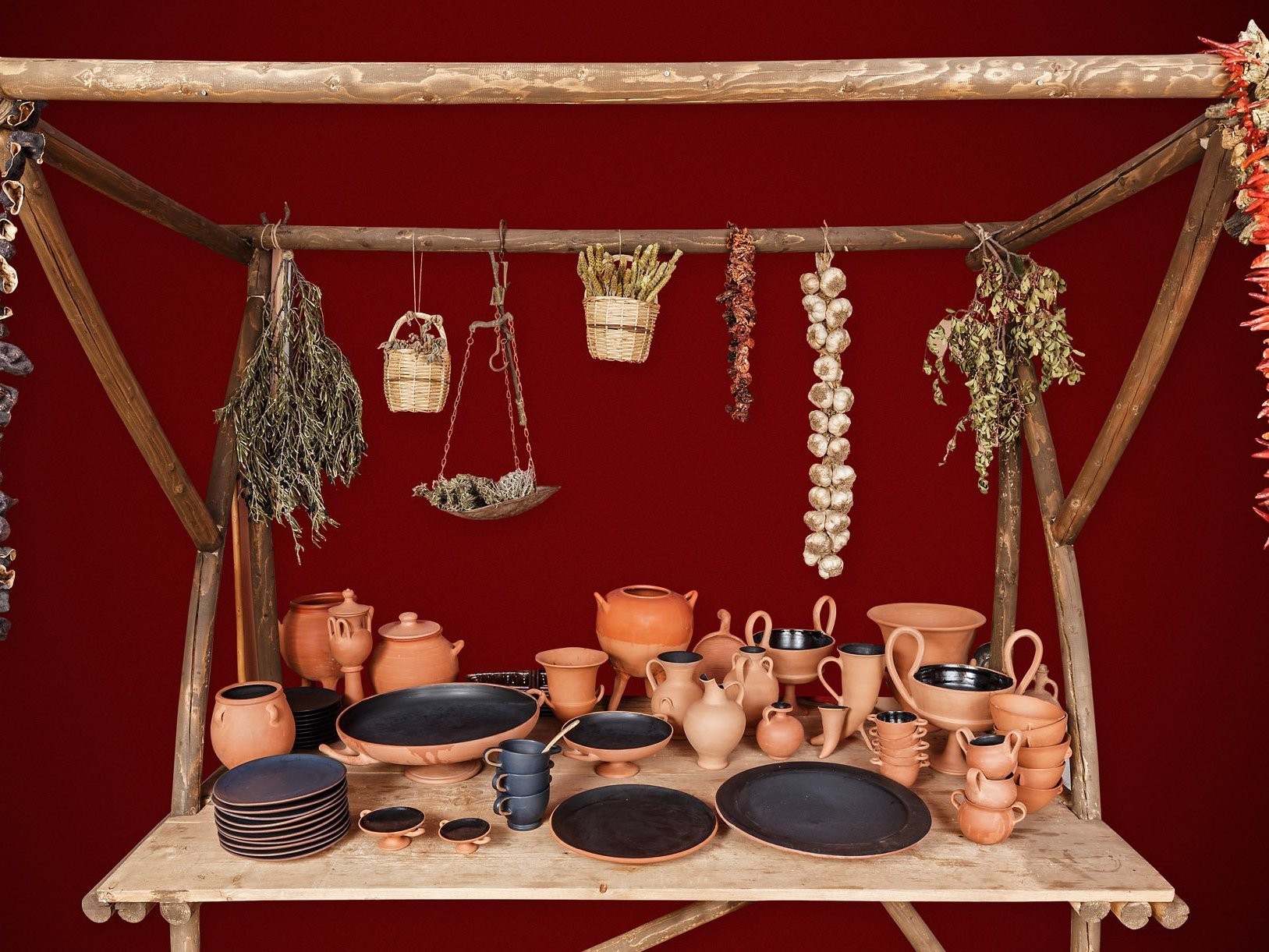
Ivy, myrtle, roses, violets, lilies, bay, marjoram, thyme and other plants appear in ancient discussions of garlands. Their availability varied by season and place, and literary catalogues can be more luxurious than ordinary life. Still, a wreath was never merely a circle of colour. It touched the hair and skin, released scent as the wearer moved and carried botanical, social and sometimes sacred associations.
Ancient authors also repeated medical explanations for wreaths, including the belief that certain plants cooled the head or moderated the effects of wine. Those explanations belong to historical medicine and should not be presented as modern physiology. Their importance lies elsewhere: drinkers believed the plants surrounding their heads participated in the management of pleasure. Botany, medicine, ritual and fashion occupied the same object.
Perfume placed hospitality directly on the body
To offer fragrant oil was to do more than improve a room. It acknowledged the guest's body. Oils could soften skin, arrange hair, carry expensive ingredients and signal that the host had prepared for pleasure rather than basic nourishment. Athenaeus preserves lists of perfumes associated with rose, violet, lily, mint, thyme, crocus, myrrh, iris, spikenard and marjoram, as well as discussions of applying different preparations to different parts of the body.
Such catalogues reveal status and imagination even when they do not give us a reliable recipe. Ingredients travelled; quality varied; names changed meaning; and many preparations remain chemically uncertain. We should resist turning a literary name into a confident modern formula. What survives clearly is the social principle: fragrance made generosity perceptible at intimate range.
Desire was in the air—but so were power and inequality
The symposium was an erotic environment. Perfumed bodies, wreaths, music, exposed skin, textiles, wine and proximity all helped create anticipation. Vase painting and literature connect drinking with courtship, flirtation, courtesans and sexual display. Smell belonged to that language because it crossed the distance between people without requiring touch.
But an elegant sensory history cannot erase the hierarchy that supported the pleasure. In many elite male symposia, enslaved attendants, hired musicians, dancers and sex workers served guests who controlled the room. Some women described as hetairai may have possessed education and unusual social agency; others lived under coercive conditions. Perfume could signify luxury and attraction while also revealing who had the freedom to consume and who was required to perform.
The vessels tell us how aroma travelled
Lekythoi, alabastra, aryballoi and other small containers held oils and fragrant preparations. Their narrow mouths limited pouring; their scale encouraged controlled use; their surfaces could carry images that linked grooming, athletics, funerary practice, marriage or desire. The Metropolitan Museum of Art also includes the oil flask among the characteristic material equipment associated with the symposium.
The object matters because scent was not abstract. It had to be stored, carried, poured, rubbed, heated or burned. Clay, stone, glass and metal each affected cost, durability and appearance. A small vessel passed from hand to hand can tell a guest more about ancient practice than a cloud of anonymous fragrance released invisibly from a modern machine.
Wine had a nose before tasting notes existed
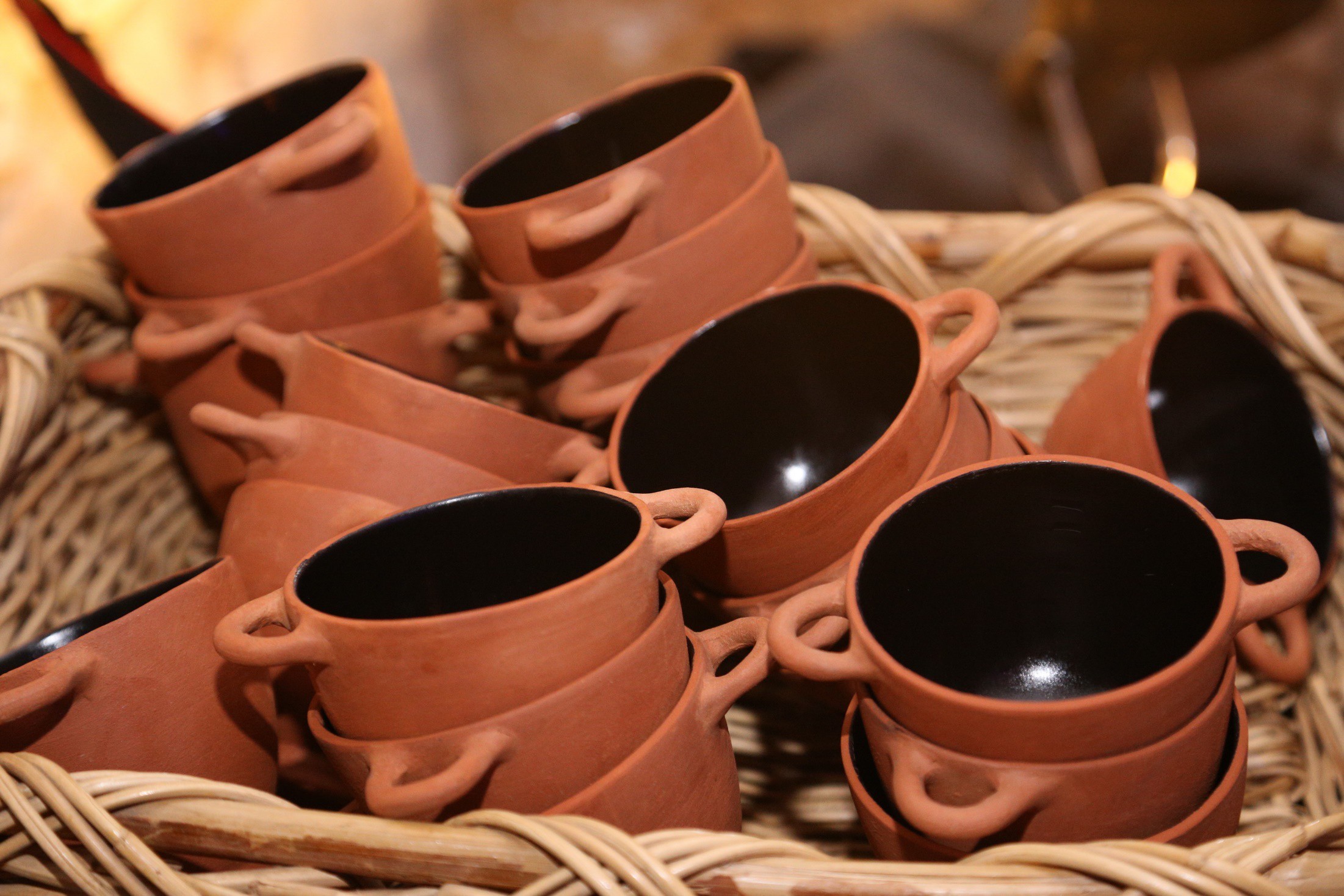
The symposium centred on mixed wine, and wine brought an aromatic world of its own. Age, storage, resin, herbs, fruit, dilution, temperature and the vessel changed what drinkers experienced. Ancient sources discuss many named wines and preparations, but the surviving language does not always map cleanly onto modern categories.
For historical hospitality, the important lesson is not to manufacture a theatrical drink and call it an authentic ancient recipe. It is to treat aroma, dilution, service and explanation as connected. A guest should understand why a drink is mixed, what evidence informed its flavour and where a modern safety or taste adaptation has been made. Transparency does not weaken the experience. It gives pleasure an intellectual structure.
How Archaeopolis translates scent into a living environment
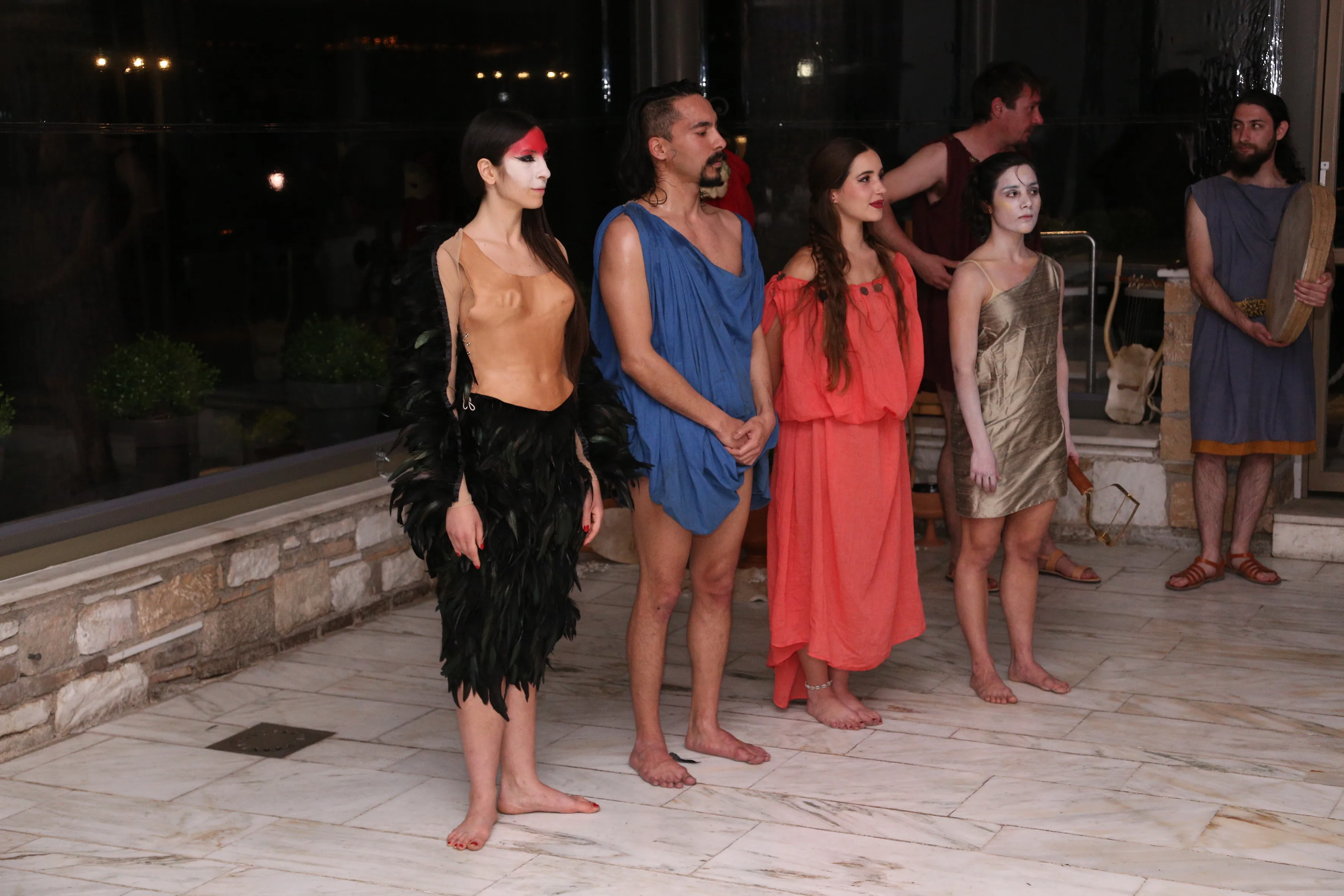
In Archaeopolis practice, the table begins with material relationships: ceramic cups and jugs, food, botanicals, textiles, lamps, music and the route by which guests enter and are served. Existing projects such as the Seikilos Symposium and the private dinner at Dionysos Zonar's demonstrate how reconstructed vessels, menus and performance can be composed as one continuous encounter.
Where fragrance is introduced in a future commission, it should follow the same evidence-led method. We would identify the historical world and season, separate documented ingredients from interpretive choices, test intensity in the actual venue and coordinate scent with food, performers, ventilation and guest comfort. Allergies, asthma, pregnancy, cultural sensitivities and a scent-free option are production requirements, not afterthoughts. The objective is not maximum perfume. It is a precise sensory cue that belongs to the story.
A contemporary signature scent can be historically informed without pretending to be ancient
A modern hotel, villa, yacht, museum dinner or destination event may want a memorable olfactory identity. The responsible solution is a signature accord developed from historically relevant botanicals and materials, clearly described as a contemporary interpretation. Myrtle, rose, thyme, resinous woods or dried herbs might establish a direction, but the final composition must answer modern regulation, sourcing, skin safety and ventilation.
This is where historical research becomes creative direction. The past supplies relationships and meanings rather than a fake certificate of authenticity. A welcome aroma might appear only at arrival; a botanical wreath might release scent through touch; an aromatic drink might accompany one story; a resinous note might mark a ritual transition. Restraint gives every cue a purpose.
Scent still directs behaviour in contemporary spaces
The ancient symposium did not invent the use of aroma to define a social environment, and the practice did not disappear with antiquity. Today, hotels, shops, restaurants, casinos, exhibitions and entertainment venues use ambient scent to make an interior recognisable, support a brand identity or signal a transition between spaces. Fragrance may be dispersed through a ventilation or diffusion system, introduced at an entrance or connected to a particular material, product or moment in the visitor journey.
In Greece, Georgios Katsos has personally observed this logic extending beyond the interior of retail and entertainment premises, including fragrance detectable at the approach to some OPAP stores. That observation is included as an example of contemporary spatial practice, not as a claim about an official OPAP-wide policy. The broader use of scent marketing in retail and hospitality is well documented, but research does not support the simplistic promise that any pleasant smell automatically improves sales. Congruence, intensity, duration, cultural expectation, ventilation and the visitor's awareness of persuasion all affect the response.
For event planning and immersive event production in Greece, the useful lesson is not to copy retail diffusion. It is to treat scent as part of the event architecture. The aroma should belong to the world being created, arrive at the right point in the guest journey and remain subordinate to comfort, food, performance and historical interpretation. A scent detectable before entry may act as an invitation; inside, excessive intensity can quickly become fatigue, distraction or exclusion.
When cinema gives antiquity a scent
Cinema cannot transmit smell, so it teaches the eye to imagine it. Smoke moves through light. Oil shines on skin. Flowers crowd a procession. Heavy textiles seem to hold incense and heat. Fruit, wine and fire appear in the same frame. Actors pause, inhale, recoil or lean closer. Through these visual signals, a film creates an olfactory world inside the viewer's memory.
Cleopatra (1963) remains a spectacular example of this sensory coding. Its saturated colour, monumental interiors, gold, flowers, cosmetics, fabrics and ceremonial smoke produce an antiquity of overwhelming abundance. That world is a twentieth-century cinematic construction shaped by studio design, performance and the politics of spectacle. It is not evidence for a Greek symposium. It is valuable because it shows production designers how strongly audiences read materials as imagined scent, temperature and luxury.
Other films use related strategies in different registers: the courtly surfaces of Alexander, the bodily oils and ritual fires of Troy, the intellectual and urban textures of Agora, or the darker association between perfume, memory and danger in Perfume: The Story of a Murderer. None should replace literary, archaeological or scientific evidence. They belong in the creative-reference layer, where we study how modern audiences have learned to feel the ancient world.
From screen atmosphere to a room people can actually enter
A production image can tolerate smoke that would overwhelm dinner guests, flowers that trigger allergies and oil that stains costume or furniture. A live environment cannot. Translating cinematic abundance into hospitality requires testing, control and an exit route from every sensory choice.
The strongest contemporary symposium does not imitate Cleopatra's scale. It understands the film's method: coordinate colour, surface, movement, sound, light and aromatic suggestion so that each supports the same world. One fragrant wreath, a warmed herb released at the right narrative moment and a carefully explained drink can be more convincing than a room saturated with incense. The visitor should remember a sequence, not a diffuser.
Smell makes history personal—and therefore demands honesty
Scent enters memory quickly and often emotionally. That makes it powerful for cultural interpretation, but also easy to abuse. A label such as the smell of Ancient Athens promises knowledge we do not possess. A better description states the evidence, the reconstruction method and the creative decision: a modern aromatic composition informed by plants named in ancient sources and designed for this particular experience.
That wording leaves room for wonder without confusing atmosphere with proof. It also allows the same research to generate different outcomes for a private symposium, museum programme, film set, festival or hospitality commission. The aim is not to bottle antiquity. It is to restore scent to the conversation about how ancient hospitality worked—and to use that knowledge to design rooms in which people pay attention to one another.
Evidence sets the boundaries. Production gives the encounter its life.
Selected sources and further reading
- Applied Sciences — Aromachology and Customer Behavior in Retail Stores: A Systematic Review
- Journal of Marketing Management — The Effect of Ambient Scent on Consumers' Perception, Emotions and Behaviour
- Athenaeus, Deipnosophists, Book XV — Perseus Digital Library
- The Metropolitan Museum of Art — The Symposium in Ancient Greece
- The Metropolitan Museum of Art — Ancient Greek Bronze Vessels
- J. Paul Getty Museum — The Ancient Origins of the Flower Crown
- J. Paul Getty Museum — Reclining and Dining (and Drinking) in Ancient Greece
- Cleopatra (1963) official trailer — Rotten Tomatoes Classic Trailers
Editorial standard: this article distinguishes broad historical evidence from Archaeopolis production practice. Specific dates, artefacts and quotations will only be added with named sources.