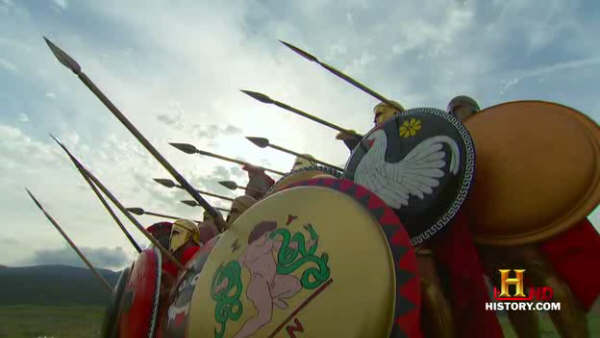
A set is not a collection of attractive objects
When I enter a location before a production, I do not begin by asking where to place the shields. I look at the routes people will take, the surfaces the camera will see, the direction of light, the actions the scene requires and the modern details that will break the illusion. A historical environment succeeds when architecture, objects, costume, movement and practical use belong to the same world.
This is why historical set design is not decoration applied at the end. It is a chain of decisions that begins with evidence and finishes only when the environment can survive performers, camera positions, repeated takes and the working rhythm of a crew.
Start by defining the world precisely
‘Ancient Greece’ is too broad to function as a production brief. A useful starting point identifies place, period, social setting, season, activity and the people who occupy the scene. A harbour, armour store, domestic room, dining space and sacred precinct require different materials, densities and signs of use—even when they belong to the same century.
The first practical task is therefore to reduce ambiguity. What must the audience understand immediately? Which details will be close to the lens? What action must the environment support? Which parts are documented, which are reconstructed by analogy and where has the production chosen deliberate creative licence?
Research must become a visual and physical hierarchy
A production cannot place every piece of research in the frame. Evidence has to be organised. Hero objects receive close scrutiny; action props must work repeatedly; background objects establish occupation and scale; textiles control colour and movement; ordinary tools make the space feel inhabited.
This hierarchy also protects the budget. It is better to build a smaller coherent world, with the strongest resources placed where camera and action need them, than to fill a large space with unrelated historical-looking objects. Research becomes useful when it tells the production what matters most.
Design for bodies, not only for still photographs
Armour changes posture. A shield changes the width of a doorway. A long spear changes spacing between performers. A couch, stool or table determines how a body sits and how costume falls. These relationships are often invisible in a drawing and obvious the moment the first fitting or rehearsal begins.
Objects intended for action must be tested with the people who will use them. Weight, grip, balance, visibility, heat, restricted movement and safe distances influence choreography and shot planning. A convincing object that cannot complete the required action is not production-ready.
Safety begins before the first take
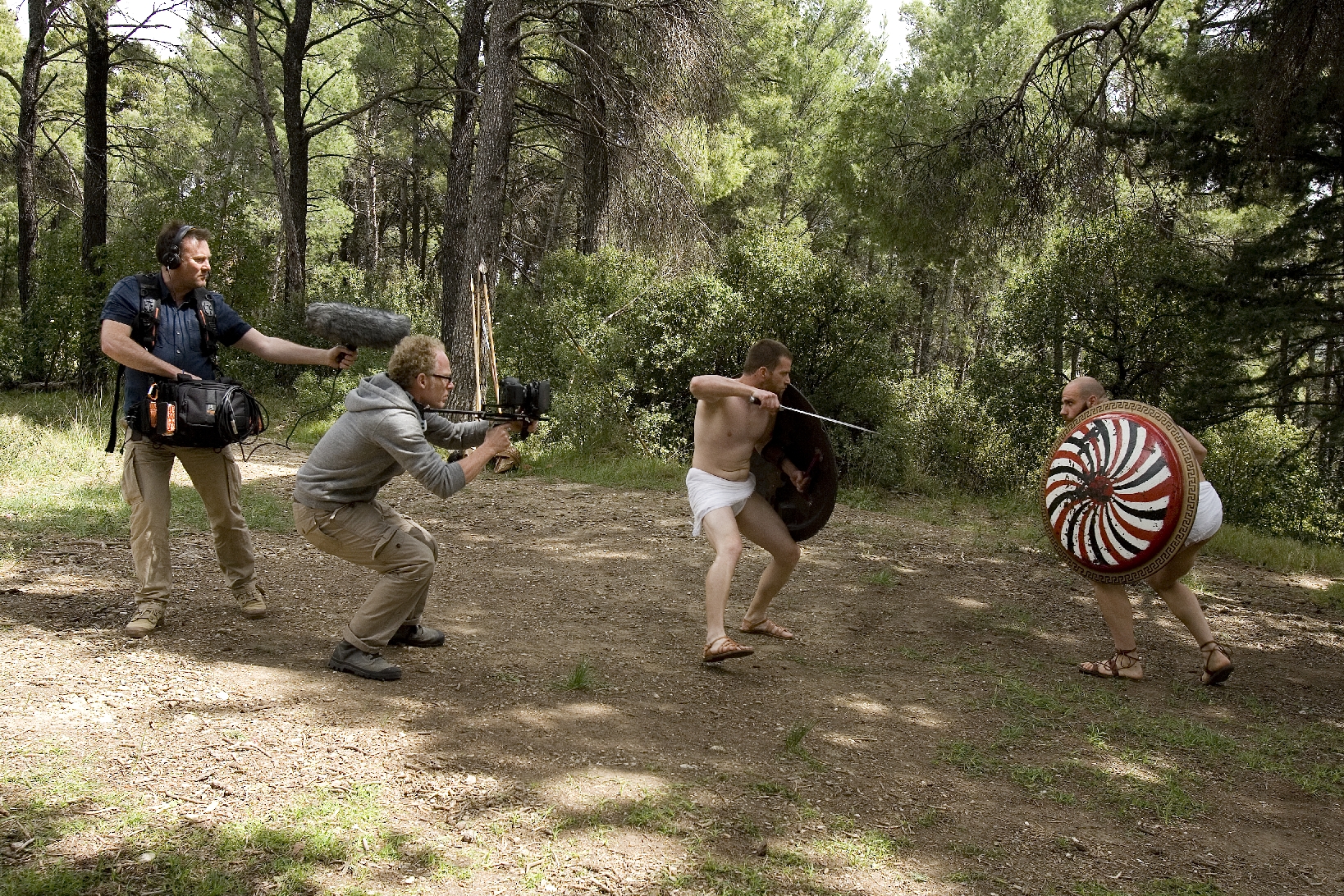
A prop that looks harmless can become dangerous when it fails. A shield made from polyester resin or another rigid composite may appear light and convenient, but if it cracks under impact the broken edge can become extremely sharp—effectively a cutting blade inside a fast-moving action. For filmed combat we inspect construction and condition, define what may make contact, separate display pieces from action-safe equipment and stop using any object that shows damage. Choreography, distance, rehearsal and supervision are not optional additions to the visual design.
Heat creates a different production risk. Armour, helmets, layered garments and repeated physical action can raise strain quickly during summer filming. Water alone may not always be enough during prolonged exertion: rest, shade, suitable food and an appropriate hydration and electrolyte plan must be coordinated by the responsible production and qualified safety or medical personnel. Performance continuity depends on nutrition and recovery as much as rehearsal.
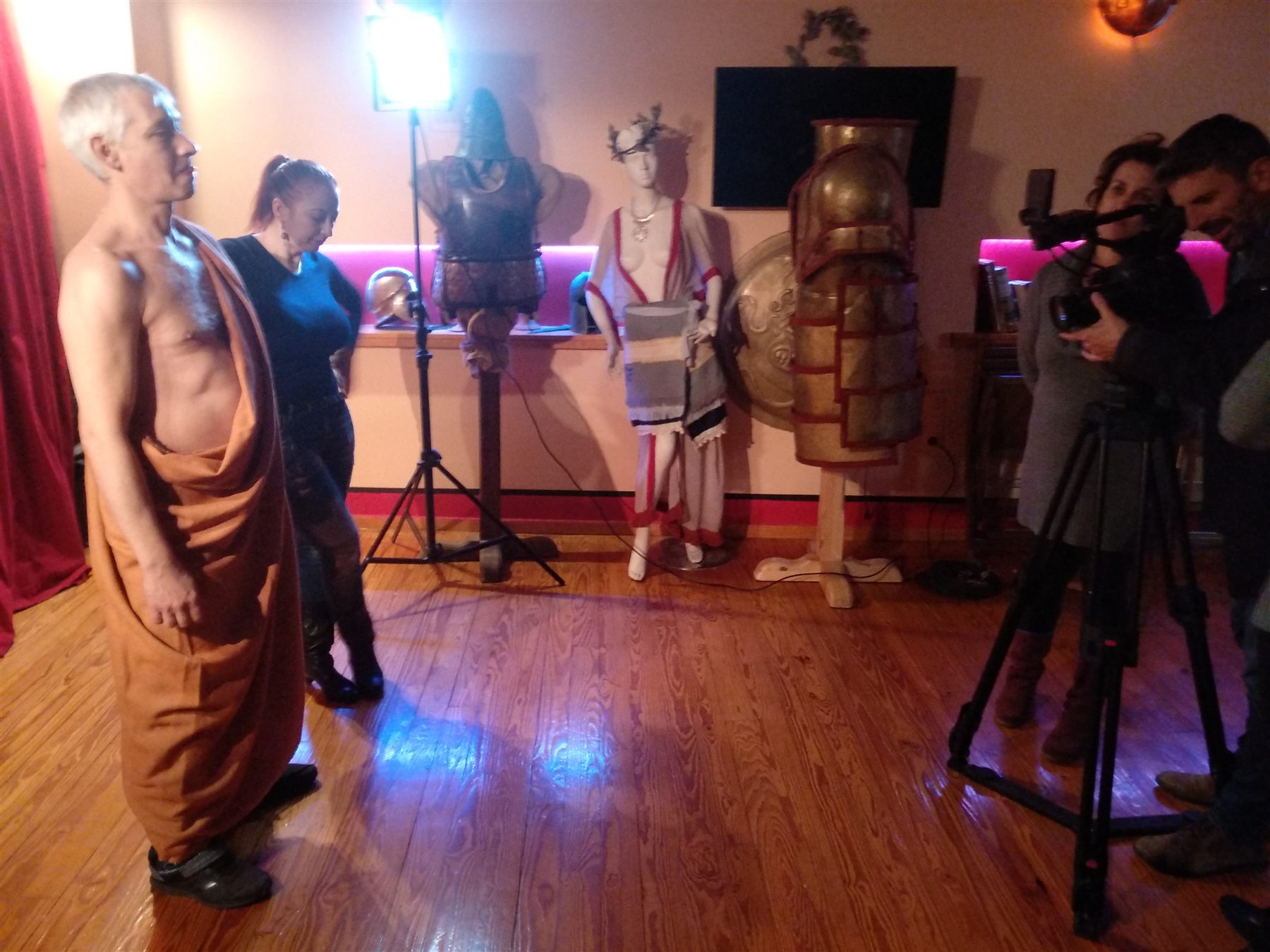
Armour also acts differently on a body that is not accustomed to wearing it. Male guests, presenters and performers can experience pressure, pinching, chafing, restricted breathing or unfamiliar loading across the shoulders, waist and groin when equipment is fitted too quickly or worn in the wrong sequence. We therefore allow time for fitting and gradual familiarisation, check movement before action and never assume that a standard size or a visually correct position is physically suitable for every person.
The camera reads surfaces differently
Materials that appear acceptable to the eye may look artificial under hard light or in close-up. Fresh paint can flatten a shield; uniform fabric can feel modern; an untouched vessel can look like a shop display. Equally, artificial ageing applied without logic becomes another visual effect rather than evidence of use.
Surface treatment should follow the imagined life of the object: where hands touch it, where smoke settles, where a base meets the ground, where leather bends and where metal is protected or exposed. The goal is not to make everything dirty. It is to make wear, maintenance and material behaviour believable.
Build, adapt or select: three different decisions
Not every production needs every object made from zero. Archaeopolis may select from its working collection, coordinate a group of existing pieces, adapt an object for a specific visual or practical need, or direct a bespoke construction through collaborating workshops and artists. The choice depends on period, framing, intended handling, schedule, transport and budget.
Existing objects can give a production immediate depth, but they still require period matching and a coherent selection. Bespoke work is valuable when the script, camera or action demands a form that the collection cannot supply. In both cases, the design language must remain consistent across the complete environment.
Installation is where the plan meets reality
A set changes when it enters the actual location. Floor levels, access routes, wind, weather, power, fire rules, protected surfaces and the needs of other departments can alter the initial plan. Heavy pieces may need a different route. Textiles may need safer fixing. A market or dining scene may require practical clearance for camera movement and service.
For this reason, packing lists, dimensions, installation order and responsibility for each element matter as much as the concept drawings. The crew should know what arrives, what must be assembled, what can be handled, what requires supervision and how the environment will be struck and collected.
On-set historical support is practical work
Historical consultancy on set is rarely a lecture. It is a series of fast, concrete decisions: whether an object belongs in the shot, how a performer carries it, whether a costume component obstructs an action, how a table should be used or which modern detail needs to leave the frame.
The consultant must understand the evidence but also the pressures of production. A useful answer distinguishes what is essential, what is preferable and what can be adapted without destroying the historical logic. That allows the director and departments to make informed creative choices rather than being given an abstract list of prohibitions.
What the Assassin’s Creed work demonstrates
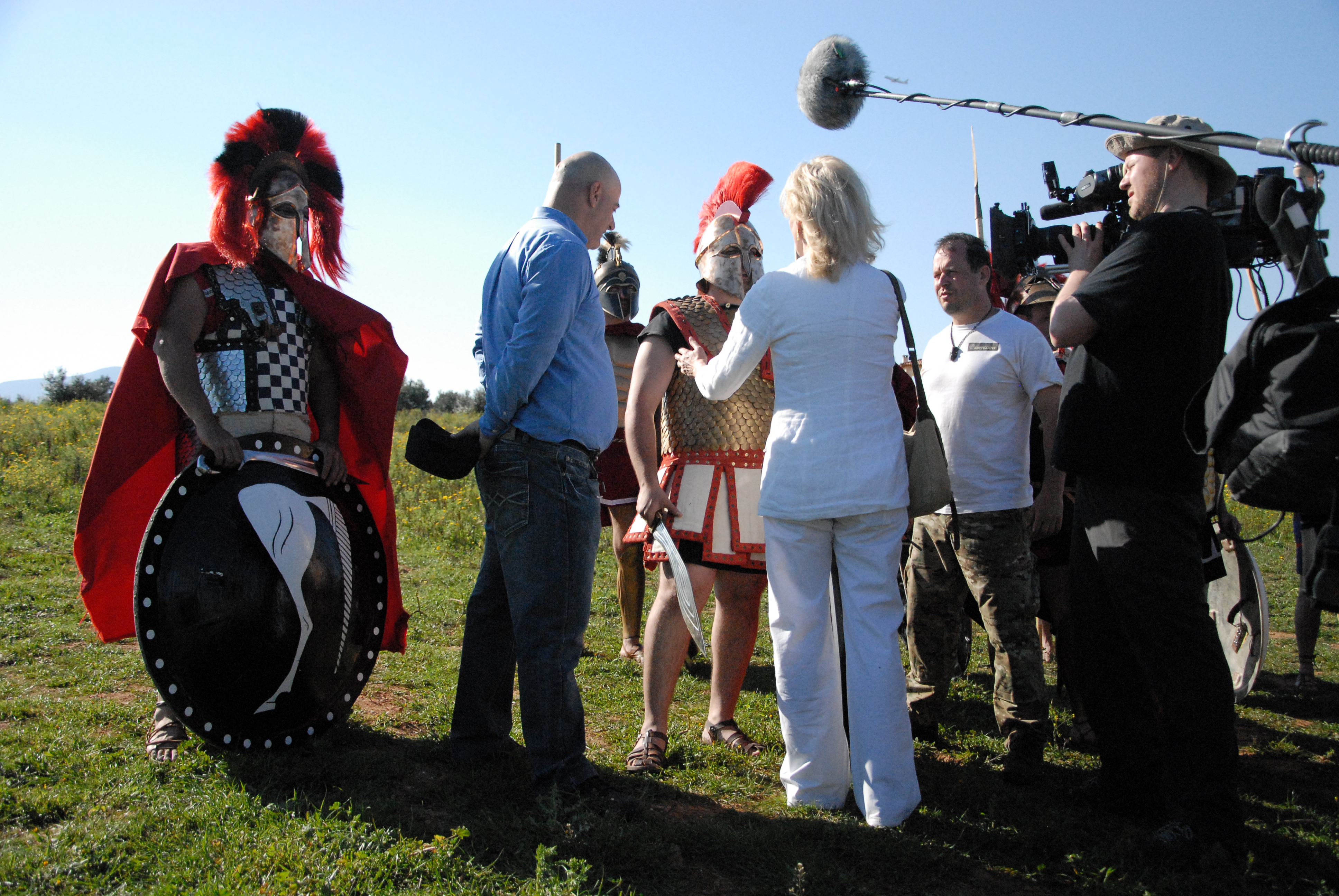
The documented Assassin’s Creed Odyssey programme brought together reconstructed equipment, environments, costume, physical activity, gastronomy, music and performance within an international filming and creator context in Greece. Archaeopolis contributed as a historical and physical production resource; it did not create the game or claim authorship of the complete campaign.
Its value as a case study lies in coordination. Armour could not be separated from movement, vessels from food, shields from training or an environment from the performers using it. The project shows how a working collection and field knowledge can support both filmed sequences and live cultural encounters without confusing those two production formats.
What the COSMOTE HISTORY work demonstrates
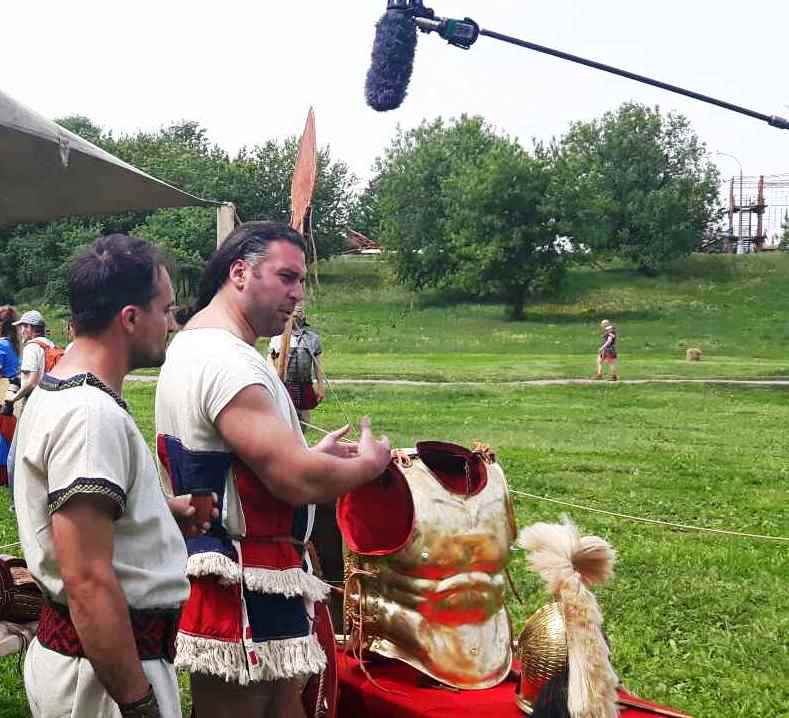
The COSMOTE HISTORY records show a different production scale: historically informed dress, reconstructed material culture and specialist interpretation prepared for factual television. Here the camera needs clarity as much as atmosphere. Garment structure, object function and the relationship between presenter, performer and material evidence must remain readable.
The lesson is that historical production support must change with the format. A documentary demonstration, a dramatic trailer and an immersive public event do not use the same density, rhythm or level of intervention. The research method may remain consistent, but delivery follows the shot, audience and editorial purpose.
What a production should include in the first brief
A useful first brief states the production type, dates, country and location, historical period, scenes or activities, required environments or objects, number of performers, intended handling, installation needs, supervision requirements and approximate budget. Reference images are helpful when they describe mood, but they should not replace the historical and practical questions.
From that information, Archaeopolis can propose an individual hero object, a coordinated prop collection or a complete historically informed environment. Depending on destination and scale, existing objects may be shipped, selected equipment may travel with supervising personnel, or approved elements may be developed locally with production partners.
Camera-ready does not mean historically absolute
No responsible production should pretend that every missing detail can be recovered with certainty. The stronger approach identifies the level of evidence behind each decision: documented ancient form, reconstruction from comparative evidence, historically informed interpretation or explicit creative adaptation.
That distinction does not weaken the image. It gives the production a coherent foundation and prevents confident invention from being mistaken for fact. A camera-ready historical environment is not a museum room frozen in time. It is a functional world built for a particular production, made credible through evidence, material understanding and disciplined choices.
Evidence sets the boundaries. Production gives the encounter its life.
Editorial standard: this article distinguishes broad historical evidence from Archaeopolis production practice. Specific dates, artefacts and quotations will only be added with named sources.