Begin by defining “Homeric”
For a production designer, “Homeric” is a starting question. Is the project reconstructing a particular Bronze Age setting, adapting the language and action of an epic, or creating a deliberately stylised mythological world? Each approach can support a coherent film, but each asks different things of the research, props and costume departments.
The distinction has a scholarly basis. Gregory Nagy’s study of a Cretan Odyssey approaches Homeric poetry as an oral medium that developed over time. It is therefore useful to distinguish the world evoked by the poems from a single archaeological moment. Our production recommendation is to make that distinction explicit in the visual brief.
Mycenae, Pylos and the archaeological reference
The Metropolitan Museum of Art’s overview of Mycenaean civilisation describes a mainland culture with palatial centres, workshops, trade and Linear B records. Mycenae and Pylos offer important archaeological points of reference, while contact with Minoan Crete helps explain connections across the Bronze Age Aegean.
For a screen project, this research should become a reference file tied to the scenes being made. Record the place, approximate date, source object or image, and what the evidence actually supports. A vessel shape may be useful for a table; it does not establish the entire room, the people in it or the action of a feast. Keep those additional decisions visible in the design process.
Achilles, Patroclus and the equipment brief
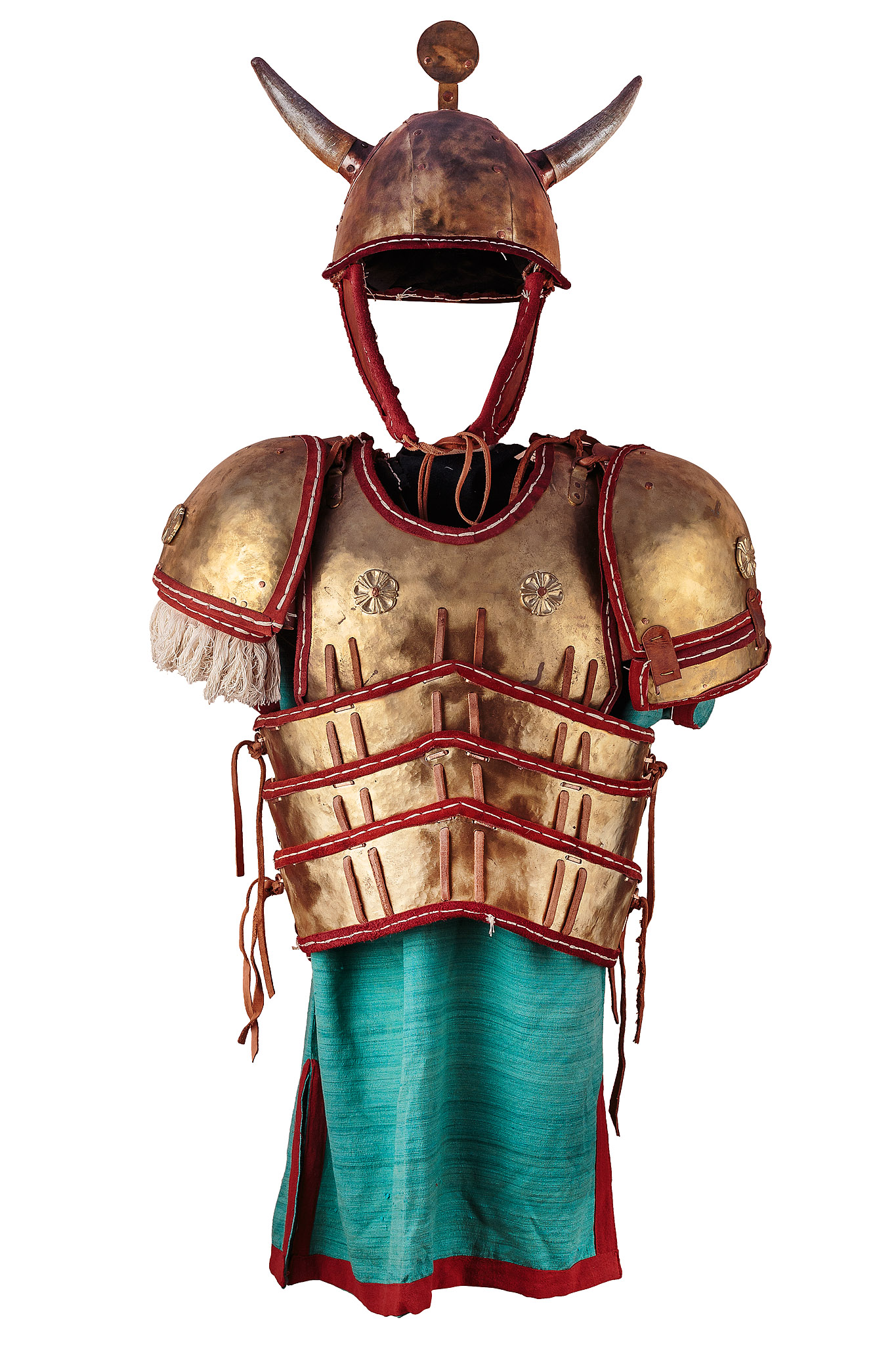
A character’s name does not by itself specify a helmet, shield or cuirass. Before selecting equipment for Achilles, Patroclus or another figure in the Trojan story, agree the production’s visual approach and the actions the performer must execute. Walking in armour, a close-up, a rehearsal and a fight sequence may require different practical solutions.
The object brief should record the intended appearance, dimensions, fit, movement and handling. It should also distinguish a research reference from a modern reconstruction and from the final screen prop. A collection photograph can show a useful starting point; suitability, availability and adaptations still need to be agreed.
Build the life around the hero object
A coherent scene also depends on what surrounds its central character. Meals need vessels and a workable sequence of serving. Clothing needs decisions about fastening, layering and wear. A household, palace or camp needs a relationship between people, furniture, textiles and the tasks taking place.
For scenes involving religion or burial, research the particular narrative and its material references before choosing a generic ceremonial look. Record where the evidence ends and the adaptation begins. This gives the director room to make creative decisions while allowing costume, props and set dressing to work from the same assumptions.
Odysseus, ships and the physical setting
A maritime scene begins with the action required of the vessel: a deck encounter, rowing, a landing or a distant view. Research into the chosen historical reference should sit alongside the practical brief for performers, camera positions and the elements that must be built or dressed.
Archaeopolis’s archive film The Sirens offers an example of myth interpreted through a physical performance setting around the reconstructed Olkas ship. It illustrates an approach to staging; it should not be treated as evidence that the vessel reproduces Odysseus’s ship. That distinction makes the example more useful to a production team considering its own visual choices.
A reference shared across departments
Historical worldbuilding becomes practical when research travels with the design. A useful scene dossier combines the script requirement, selected references, costume and object lists, making decisions and unresolved questions. It also identifies the pieces already available, the work to commission and the time needed for fittings or rehearsal.
Archaeopolis can develop this work through historical research, collection review, costume direction, specialist making and agreed production support. For a first discussion, share the story, intended period and location, dates, key scenes, visual references and indicative budget. The Mycenaean production page presents relevant equipment editions and a direct route to a production enquiry.
A coherent screen world begins with shared decisions about evidence, interpretation and use.
Selected sources and further reading
Editorial standard: this article distinguishes broad historical evidence from Archaeopolis production practice. Specific dates, artefacts and quotations will only be added with named sources.