Start with the stack, not the chatbot
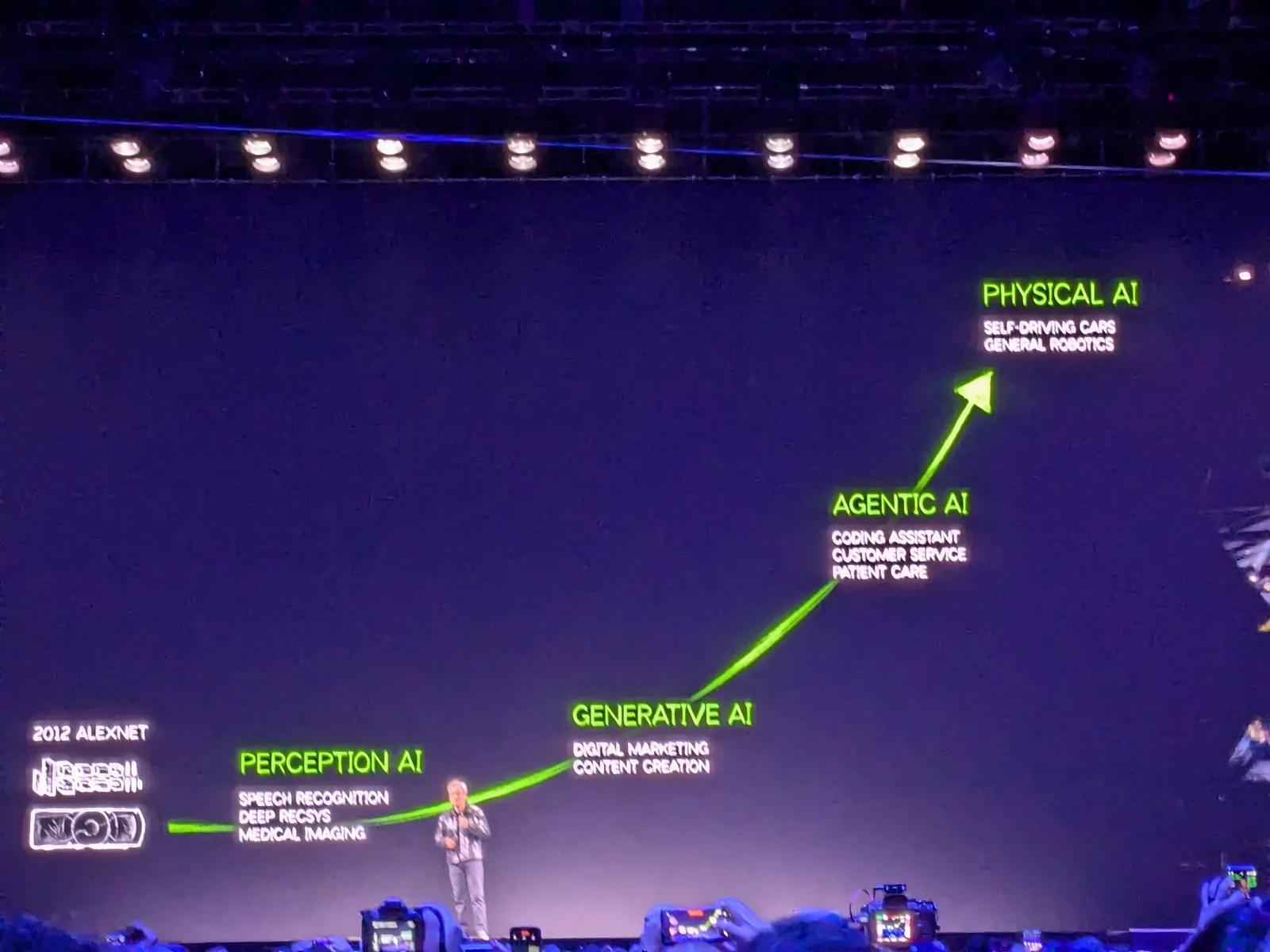
“AI event planning” is often sold as one magic assistant. In practice, a reliable system has at least five separate layers. The source layer contains the approved programme, venue map, policies, supplier facts and guest information. The model layer reads or generates language. The tool layer may search, send, schedule or update a record. The control layer defines permissions, approvals and logs. The fallback layer keeps the event operating when the network, model or device fails.
Most dangerous mistakes happen when those layers are hidden. A chatbot may sound certain while reading an obsolete spreadsheet. A recommendation may be sensible but write directly into a live schedule without approval. A multilingual answer may be fluent but contradict the venue’s current accessibility route. The visible conversation is the smallest part of the system.
The first design task is therefore not choosing a model. It is creating one controlled source of truth in which every operational fact has an owner, a status and a last-updated time. AI can then accelerate access to that truth. It should never be allowed to manufacture the truth because the production team did not maintain it.
The four-gate test: which tasks should AI touch?
A task is a good candidate for AI only when it passes four gates. It must be bounded: the system knows exactly what information and action are in scope. It must be verifiable: a person or rule can check the result. It must be reversible: an error can be withdrawn without harming a guest or the production. And it must be owned: one named person remains responsible for approval and correction.
Drafting three versions of an invitation passes the test. Publishing the final version without brand, date and legal approval does not. Suggesting possible session matches passes; moving a guest’s confirmed appointment without consent does not. Summarising anonymous feedback can pass; inferring a guest’s health, sexuality, income or emotional state from behaviour does not.
This rule exposes a useful truth: the value of AI is not proportional to how dramatic the demo looks. The best first use is often a dull, high-volume task with stable inputs and a cheap correction. That is where time is saved without transferring unacceptable risk to the guest.
The American model: turn intent into a platform workflow
In the United States, one visible direction is the integration of AI into established event-management platforms. Cvent’s 2026 announcements describe an assistant intended to translate an organiser’s stated intent into actions across the platform. An organiser could provide a budget, previous brief or promotional plan and receive a branded draft event using existing organisational templates.
The important word is “workflow”. The system is not inventing the purpose of the gathering. It is using structured information to populate the repetitive layers around it: event records, registration, brand templates, invitations, schedules and reporting. Cvent also describes AI-supported attendee recommendations, session scheduling, networking matches, summaries and follow-up content.
Some of these capabilities are available, some are in beta and others were announced for later delivery in 2026. That distinction matters. Event teams should plan around tested functions, not a launch-stage promise that may change before the doors open.
The unglamorous asset behind Cvent’s approach: structured context
The Cvent model connects three kinds of intelligence. The first is organisational context: brand rules, past events, budgets, templates and approval structures. The second is attendee context: registrations, declared interests, session choices and engagement. The third is operational context: check-in, room use, meetings, exhibitors, feedback and post-event reporting.
When those layers are connected, AI can reduce manual transfer between spreadsheets, email, registration tools and reporting dashboards. It can suggest an agenda, surface a relevant exhibitor, draft a warm introduction between two attendees or turn survey comments into themes for the next edition.
The hidden requirement is data hygiene. If the capacity sheet, registration system and production schedule disagree, the model does not resolve the disagreement—it amplifies it. Before adding AI, an event team should identify which system wins for each fact, who may change it and how quickly a correction reaches every guest-facing channel.
An American activation: Pinterest and Adobe at Cannes Lions
A different American example moves AI from the organiser’s dashboard into the guest experience. At Cannes Lions in 2025, Pinterest and Adobe created a “Discover Yourself” installation that produced personalised style readings.
The experience began with physical interaction. Guests used thermal scanners that changed the ambient lighting, selected objects as creative prompts and chose style tags. Those choices became inputs for an AI-generated visual reading. Adobe Firefly Services supplied the image-generation capability through creative APIs, while style controls kept the output within Pinterest’s visual language. Guests then received the generated images on their phones and could customise a physical key charm.
The useful lesson is not “put an image generator in the room”. The activation had a clear sequence: bodily trigger, choice, interpretation, generated artefact and physical takeaway. AI occupied one chapter inside a designed guest journey rather than becoming the whole event.
American immersive production at monumental scale: The Wizard of Oz at Sphere
The Wizard of Oz at Sphere in Las Vegas shows another use: AI as part of a vast content-production pipeline. Sphere Entertainment, Google DeepMind, Google Cloud, Magnopus and other partners worked to expand the 1939 film for Sphere’s 160,000-square-foot curved screen, alongside 4D effects developed by Sphere Studios.
Google’s account is explicit that the result depended on AI in the hands of thousands of artists and technologists. The technology helped extend images and adapt cinematic material to a display format that did not exist when the film was made. The immersive production still required artistic direction, technical integration, spatial judgement, sound, physical effects and a venue capable of synchronising them.
This example corrects a common misunderstanding. Generative AI may make an unprecedented canvas possible. It does not decide why the audience should care about the image, when the reveal should happen or how every physical and digital layer should agree.
Worked example: 500 guests, one assistant, zero permission to improvise
Imagine a 500-guest destination conference in Greece. The assistant is connected only to the approved programme, transport plan, venue map, accessibility information and published guest policies. It is not given unrestricted email, the complete CRM or permission to change bookings. Every answer displays its source and last update; if the required fact is absent or disputed, the conversation moves to a human desk.
Before the event, the system checks the brief for unanswered operational questions and drafts communications. A person verifies dates, prices, names and commitments before release. During the event, it may answer “Where is Room B?”, show the step-free route or explain the shuttle timetable. It may flag that a session appears over capacity, but the operations lead—not the model—decides whether to redirect people or open another room.
After the event, it groups feedback only after names and unnecessary identifiers are removed. The team compares those themes with observations from producers and front-of-house staff. The measurable target is not “more AI”. It is fewer repetitive queries, faster safe answers, fewer version conflicts and no guest left without a human route when the system is uncertain.
The Chinese model: make the whole event an intelligent operating system
In China, the most instructive examples often operate at the scale of infrastructure. For the Hangzhou Asian Games, Alibaba Cloud supported games management, results distribution and games-support systems across 56 venues. The cloud environment served more than 100,000 broadcasters, staff and volunteers, while more than 5,000 hours of footage were distributed through 68 high-definition and ultra-high-definition feeds.
The system joined operational data rather than treating each venue as a separate island. A real-time visualisation platform supported the Asian Games villages. Early-warning functions were designed to alert organisers to overcrowding, extreme weather, power failures and fire. A natural-language service robot offered bilingual answers about village services around the clock.
This is AI event planning at a scale very different from a private dinner or brand launch, but the principle transfers: collect the right operational signals, define who is responsible for acting on them and make information available before a small problem becomes a public failure.
Alibaba: participation, accessibility and sustainability
Alibaba Cloud also used digital systems to shape participant behaviour and access. A sustainability web application allowed people in the Asian Games villages to record lower-carbon actions through QR codes and earn rewards. Alibaba reported more than 310,000 visits and over seven tonnes of recorded carbon reduction after the villages opened.
For the Asian Para Games, the company deployed a digital avatar called Xiaomo to translate between Chinese sign language and spoken Chinese. The system combined visual recognition, motion tracking, translation models and a dataset assembled with sign-language practitioners and people with hearing loss.
Both examples begin with a defined human need. One makes sustainable actions visible and rewarding; the other reduces a communication barrier. The interface is not added because AI looks futuristic. It is built around a specific action that a participant needs to complete.
Tencent: the venue becomes a responsive interface
Tencent Cloud presents another Chinese pattern: AI embedded in exhibition and venue touchpoints. Its interactive-exhibition solution combines computer vision, natural-language processing and cloud delivery for functions such as face effects, check-in, responsive installations and visitor analytics. Tencent states that versions of the solution have been used at Tencent TDAY, the Tencent Global Digital Ecosystem Summit, the China International Import Expo and other public-facing environments.
Its digital-human platform adds motion capture, 2D or 3D modelling, text-to-speech and real-time interaction. A digital guide can be placed on a large screen, website, mobile application or WeChat mini-program to answer questions, explain content or represent a brand.
These systems can increase capacity and consistency, but a realistic face does not guarantee a trustworthy host. The knowledge base, response limits, language quality, disclosure, accessibility and route to a real member of staff all have to be designed. Otherwise the “digital human” is simply an expensive queue.
What the American and Chinese approaches reveal
The American examples emphasise workflow automation, personalised marketing, attendee matching and generative content. The Chinese examples show the value of integrating venue operations, public services, accessibility, crowd information and responsive interfaces at large scale. The boundary is not absolute, but the contrast is useful.
Both approaches depend on context. AI performs better when it has governed event data, a limited task and a clear approval path. It performs badly when it is asked to compensate for a vague brief, disconnected departments or content that nobody has verified.
The strongest model is therefore not “AI-first”. It is responsibility-first: decide what the system may recommend, what it may generate, what requires human approval and what must continue to work when the network, model or device fails.
Give AI narrow jobs before, during and after the event
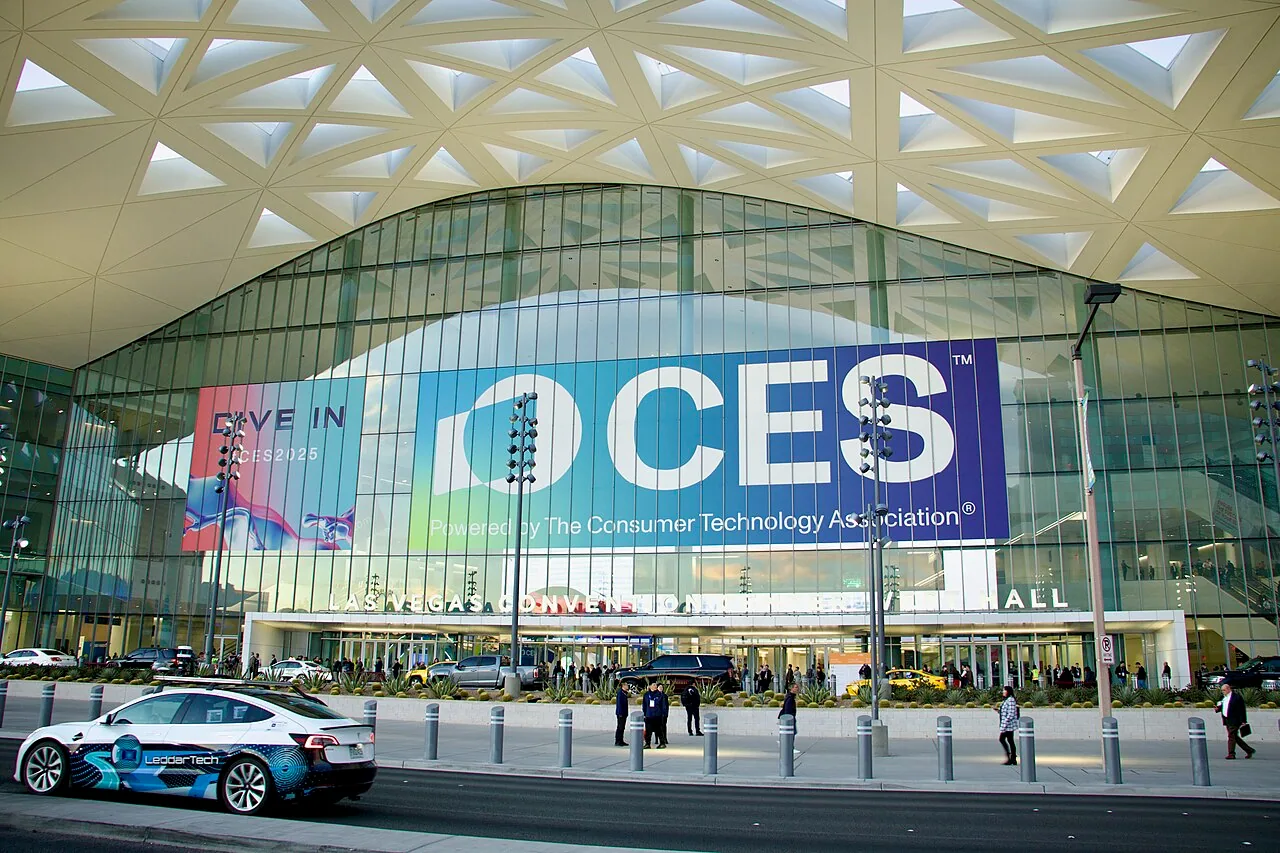
Before the event, AI can consolidate a brief, compare versions, draft schedules, identify missing information, build initial guest communications, translate working documents and model operational scenarios. It can help a team see dependencies, but supplier facts, prices, availability, permits and safety requirements still need verification at source.
During the event, a controlled assistant can answer practical questions from an approved knowledge base, provide multilingual guidance, recommend sessions, support accessibility and help an operations team read check-in or room-use data. Every live system needs an escalation route and a manual fallback.
After the event, AI can cluster feedback, summarise transcripts, identify recurring issues and prepare different follow-up drafts. It should not silently infer sensitive personal characteristics from guest behaviour or turn an incomplete dataset into a confident story about what the audience felt. A useful calculation is simple: staff time genuinely removed minus the hours spent on integration, content preparation, testing, supervision and fallback. If the second number is larger, the “automation” is theatre.
Eight questions that expose a weak AI-event vendor
Ask exactly what data the system reads, where that data is stored, how long it is retained and whether it is used to train another model. Ask which actions it can take—not merely which answers it can generate—and whether every write action can require approval. Ask whether responses and source records can be exported for audit.
Then ask operational questions. What happens when the model provider, Wi-Fi or registration integration is unavailable? Can the event team freeze the last verified knowledge base? Can one incorrect answer be corrected everywhere at once? Is there a human handoff that works in every language offered? What accessibility testing has been completed? Does the price include integration, content preparation, rehearsals and on-site support, or only software access?
A supplier that demonstrates only the happy path has not demonstrated an event system. Request a test using your own messy brief, one changed room, one cancelled session, one accessibility request and one missing answer. The quality of recovery is more important than the fluency of the first response.
Run the ugly rehearsal, not the polished demo
The pre-opening test should include an incorrect guest name, a strong accent, a question about an allergy, a request to withdraw consent, a malicious prompt, a missing session, a dead QR camera and a complete network outage. Staff should also test whether an authorised last-minute correction appears on every relevant interface without exposing private information.
Set pass conditions before the rehearsal. A guest must reach a human without starting again. Safety and allergy questions must never be guessed. A public screen must not reveal personal information. The system must state when it does not know. The event must continue with printed or locally stored essentials. A correction must have a named owner and an audit trail.
If recovery requires the software company’s engineer to join a video call, the system is not ready for a live event. Production resilience means trained people, clear authority and a fallback that can be activated in minutes, not a slide promising high availability.
What AI still cannot direct
AI does not carry responsibility. It does not stand in the rain while the processional route changes, notice that a performer is overheating, understand why a family member has gone quiet, negotiate a last-minute cultural concern or decide that an elegant concept has become unsafe.
It can generate a hundred versions of a table image without knowing whether the vessels can be held, washed, transported or replaced during service. It can propose “Greek-themed entertainment” without distinguishing evidence, cliché and cultural meaning. It can optimise a schedule while missing the emotional rhythm that makes hospitality feel generous rather than processed.
Human creative direction remains responsible for historical and cultural research, the relationship between space and bodies, the coherence of food, music and performance, supplier judgement, rehearsal, guest care and the live decisions that protect both the idea and the people inside it.
Privacy, disclosure and the guest relationship
The more personal the event experience becomes, the more disciplined its data practice must be. Registration details, dietary requirements, photographs, interaction histories, inferred interests and biometric signals do not become harmless because an AI system can process them quickly.
NIST’s AI Risk Management Framework recommends governing, mapping, measuring and managing AI risk across the system lifecycle. In Europe, Article 50 transparency obligations under the AI Act have applied since 2 August 2026 to certain interactive and generative systems. People should be informed when they are interacting with AI, while deepfakes and certain AI-generated or manipulated content require disclosure and technical marking.
For an event, good practice begins with data minimisation, an identified purpose, appropriate consent or lawful basis, controlled access, retention limits and a visible human alternative. Emotion recognition, face analysis and synthetic hosts require particular caution. Surprise can belong to the performance; it should not belong to the collection of personal data.
A practical AI event-planning workflow for Greece
A useful workflow begins with a human-owned brief: occasion, audience, location, cultural context, budget range, accessibility, risk and the desired emotional journey. AI can then help structure questions, create a first dependency map and identify where information is missing.
The team should connect the system only to approved sources and label every output by status: draft, verified, approved or live. Every live fact needs an owner and a last-updated time. Named people remain responsible for creative direction, production, hospitality, technical systems, safety and data governance. Automated guest communication should have an owner and an escalation path.
Before opening, the team runs the ugly rehearsal and approves the fallback pack: printed programme and contacts, venue maps, transport instructions, accessibility routes, emergency procedures and a manual guest list appropriate to the event. After the event, AI may help analyse what happened, but the review must include the people who were in the room. Operational data explains part of the evening; observation and conversation explain the rest.
Where Archaeopolis fits: AI backstage, humans frontstage
For human-led event planning in Greece, Archaeopolis uses AI backstage where it is genuinely useful: structuring a complex brief, comparing versions, coordinating schedules and suppliers, mapping dependencies, supporting multilingual preparation, organising logistics and preparing controlled working documents. It helps our production team reduce administrative friction. It does not replace the producer, venue, DMC, safety lead or the people who make and approve live decisions.
Our default guest-facing direction is different: AI backstage, humans frontstage. We do not add a chatbot, face scan, generated host or compulsory app merely to make an event appear current. Unless a digital element is essential to the concept and accepted by the client and guests, Archaeopolis concentrates on a screen-light or digitally free experience—place, conversation, food, music, movement, material objects and participation without constant prompts, notifications or data capture.
This is not anti-technology. It is a deliberate response to a world in which AI mediation is likely to keep expanding. There is already evidence of demand for a different kind of gathering: Eventbrite reports that phone-free events grew 567% globally between 2024 and 2025, while attendance rose 121%, based on events using phone-free language on its platform. We do not assume that every audience wants devices removed, but the signal supports designing screen-light formats as a real benefit rather than a nostalgic gesture.
We believe the rarer luxury will be undivided human attention: an event that also offers a credible digital detox. We expect that value to become stronger over time, but present it as a creative conviction—not as a guaranteed market prediction.
Clients can send an event brief describing the audience, place, purpose, date, logistics and any technology already in the production stack. Archaeopolis can use AI to help organise the work while protecting the guest experience from unnecessary digital intrusion. The first question is not which model to use. It is what the gathering should mean—and what deserves to remain fully human.
AI backstage. Humans frontstage. The guest should remember the gathering, not the interface.
Selected sources and further reading
- Cvent — 2026 product innovations and AI-powered event workflows
- CventIQ — AI solutions for event teams
- Adobe — Pinterest and Firefly personalised style readings at Cannes Lions
- Google Cloud — The Wizard of Oz at Sphere and AI-assisted immersive production
- Alibaba Group — Hangzhou Asian Games core systems and digital villages
- Alibaba Cloud — AI-powered sustainability and sign-language tools at the Asian Games
- Tencent Cloud — AI interactive-exhibition solution
- Tencent Cloud — AI Digital Human platform
- NIST — Artificial Intelligence Risk Management Framework
- European Commission — Article 50 AI transparency guidelines
- Eventbrite — The rise of phone-free experiences in 2026
Editorial standard: this article distinguishes broad historical evidence from Archaeopolis production practice. Specific dates, artefacts and quotations will only be added with named sources.