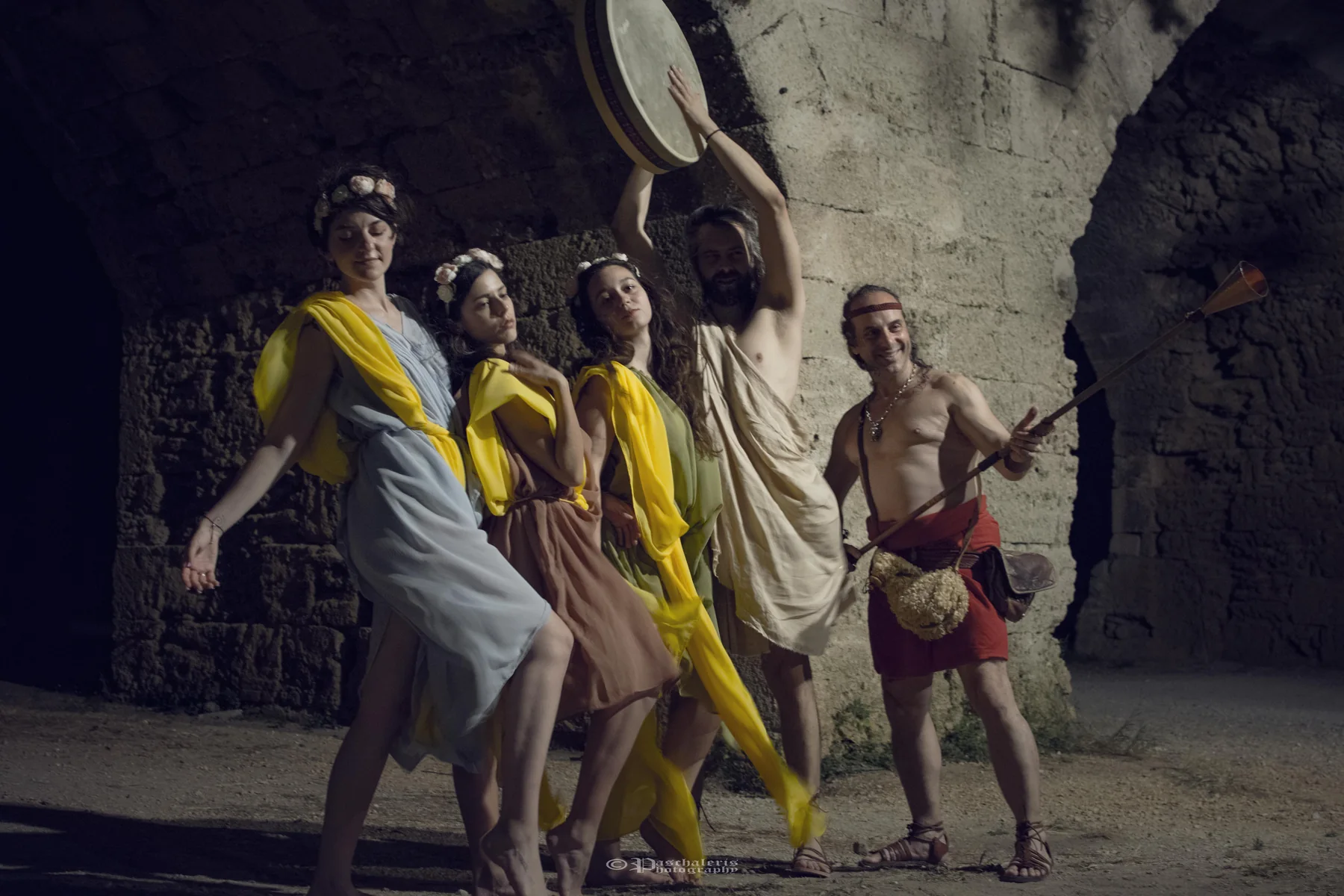
Event planning existed long before anyone printed it on a business card
The first event planners did not have spreadsheets, radio headsets or a production deck. They still had a date that could not move, important guests, nervous participants, food that had to arrive on time and weather capable of destroying the plan. They also understood the central fact of every live production: a crowd does not become an audience by accident.
Long before event planning became an industry, communities were already organising ceremonies, processions, contests, feasts and spectacles. Someone chose the route, prepared the objects, arranged the performers, controlled access, announced transitions and decided what the gathering meant. The tools have changed. The human problem has not: how do we bring different people into one place and make them feel that what happens there matters?
A fire, a circle and the beginning of shared attention
The oldest gatherings leave incomplete evidence, but their basic spatial intelligence remains familiar. Fire created light, warmth, danger and a natural centre. A circle allowed people to see one another. Rhythm synchronised bodies. Food transformed necessity into exchange. Repetition turned an action into ritual.
This is still the foundation of event direction. Before scenery, catering or entertainment, there is a relationship between bodies and space. Where do guests gather? What draws the eye? Who is visible? Who is excluded? When does ordinary time end and the event begin? A badly positioned registration desk can damage a modern gala for the same reason a confused entrance could weaken an ancient ceremony: people cannot surrender to the experience while they are trying to work out where to go.
Ancient Greek festivals were complete civic productions
Greek festivals joined religion, politics, trade, athletics, music, theatre, sacrifice and collective identity. A procession was not decoration before the real event; it was a moving public statement about order, belonging and the relationship between a city and its gods. Competitors, officials, musicians, animals, offerings and spectators had to occupy the right places at the right moments.
The Panathenaia, Dionysia and Panhellenic festivals differed greatly in scale and purpose, but all demonstrate programme architecture. There was anticipation, arrival, public movement, focal action and aftermath. Visitors needed accommodation and food. Objects had to be commissioned. Performers rehearsed. Authorities managed status and access. In contemporary language, this was cultural production, destination management, ceremonial direction and public communication operating at the same time.
The symposium understood that dinner needs a second act
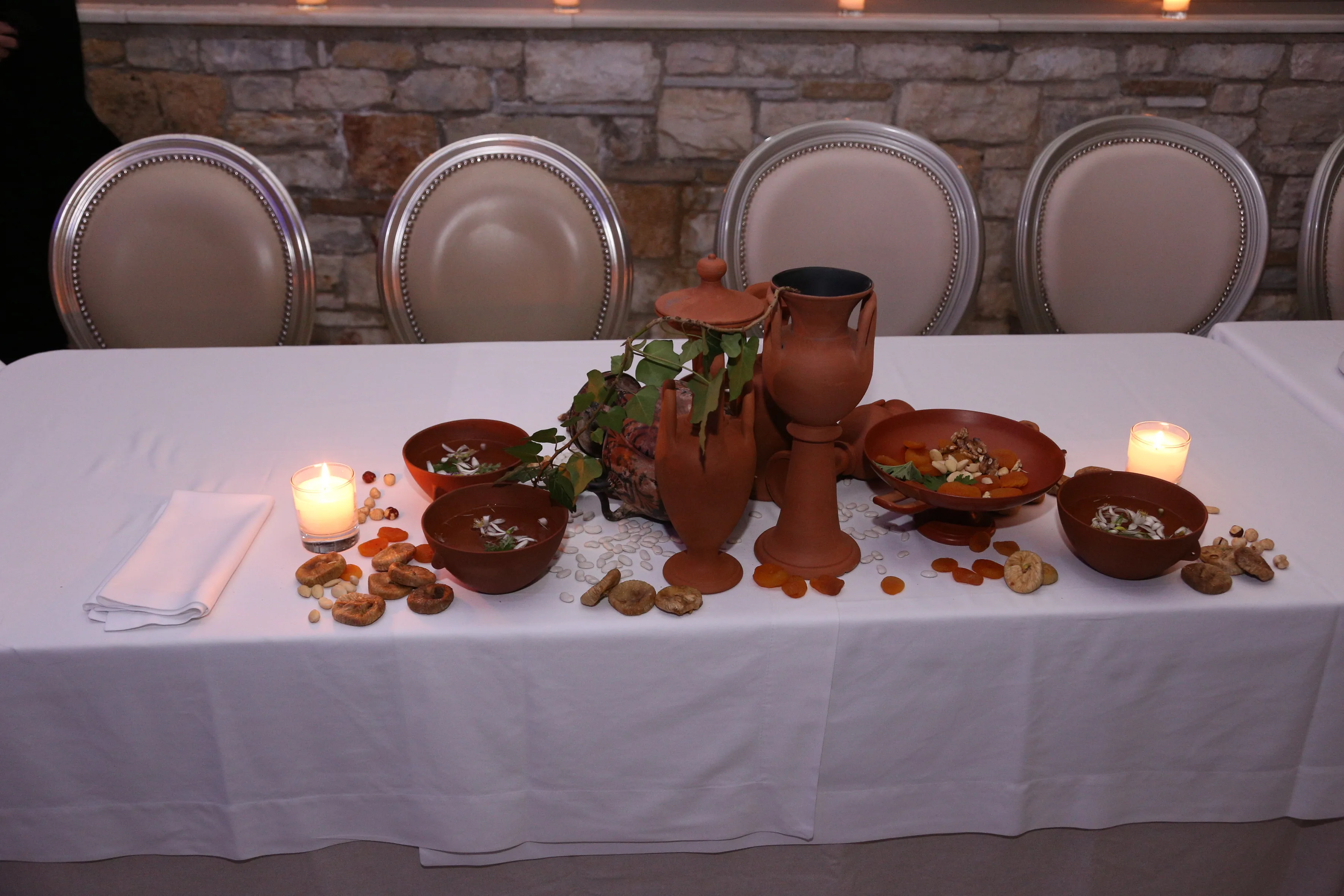
The Greek symposium offers one of history's sharpest lessons in guest experience. The meal and the drinking party were related but distinct phases. After dining came mixed wine, conversation, poetry, music, games, perfume, wreaths and performance. The room changed without the guests having to leave it.
This sequencing prevented the evening from becoming a long meal with entertainment placed on top. Objects choreographed behaviour: the krater organised drinking, cups circulated, couches shaped posture and lamps altered the atmosphere. Musicians, dancers and other performers could shift the emotional temperature of the room. Eroticism and wit belonged to the setting too, although its pleasures were inseparable from the inequalities of the society that produced it.
The practical lesson is wonderfully modern: do not give guests everything at once. Build chapters. Let the table, light, music, aroma and human interaction reveal the experience gradually.
Rome scaled the problem until logistics became spectacle
Roman public entertainment demonstrated what happens when ceremony meets infrastructure and imperial ambition. Arenas, theatres, triumphal routes, baths and dining environments could move enormous numbers of people through carefully differentiated spaces. Architecture did part of the crowd management; hierarchy did the rest.
Spectacle depended on operations hidden behind spectacle: entrances, holding areas, performers, animals, scenery, machinery, water, security, announcements and the relentless supply of material. The audience experienced abundance. The organisers experienced timing. Anyone who has waited behind a set while a procession, combat sequence or reveal is held for one late cue will recognise the gap between those two realities.
Ceremony became a technology of power
Across the Byzantine world and later courts, receptions, liturgy, diplomatic entrances, banquets and public appearances used space and sequence to make authority visible. Clothing, insignia, sound, incense, architecture and prescribed movement told participants where power sat before a word was spoken.
Modern events still use this language, even when they pretend not to. A red carpet, a raised stage, a private lounge, a head table and the order of speeches are all spatial arguments about importance. Creative direction becomes stronger when it recognises these signals instead of treating them as neutral logistics. Every room has a politics; good planning makes it intentional and appropriate to the occasion.
Fairs and exhibitions invented the modern appetite for the new
Industrial exhibitions and world fairs transformed event production again. Temporary architecture, national displays, new technologies, printed publicity and mass transport brought enormous audiences into environments designed around discovery. Visitors did not simply attend a ceremony; they navigated a curated world.
This introduced a recognisably modern tension. The event had to educate, impress, entertain, move crowds and satisfy commercial or political objectives at once. The exhibition plan became a visitor journey. Signage, maps, tickets, refreshment, press coverage and souvenir culture became part of the experience. The promise was no longer only participation in tradition. It was access to something the public had never seen before.
Hotels, agencies and corporations professionalised the gathering
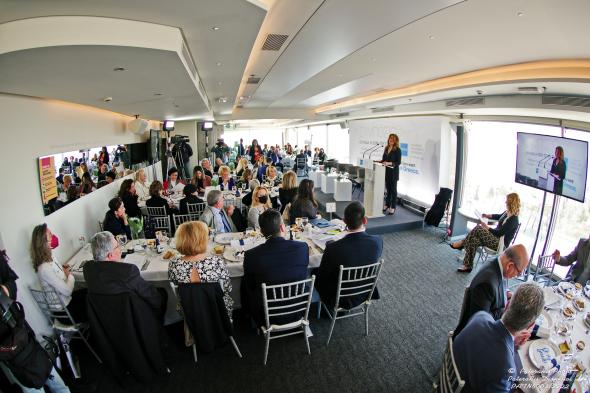
During the twentieth century, conferences, product launches, trade shows, destination celebrations and large private occasions created specialised roles. Venues developed banquet departments. Agencies managed suppliers. Technical production expanded. Lighting, amplified sound, projection, transport and communications allowed events to grow more complex and more repeatable.
The advantage was professionalism. The danger was sameness. A ballroom could receive a stage, branded panels, flowers and a dinner service with impressive efficiency while saying very little about why those people had gathered. That is the point at which event planning and creative event direction begin to separate. One ensures that the evening functions. The other asks what world the evening creates.
Immersive does not mean filling the room with actors
The contemporary appetite for immersive experience is often described as something new, but its strongest methods are ancient: participation, ritual, sensory change, shared food, movement through space and a story understood through action. What is new is the range of technical and commercial contexts in which those methods now operate.
An event becomes immersive when the guest's choices, body and attention matter to its design. Actors alone do not achieve that. Nor do expensive projection systems. A convincing environment might begin with the route of arrival, the weight of a reconstructed cup, the aroma released at one transition, a task completed with another guest or a performer who speaks to people rather than at them.
The test is simple: if the guests vanished, would the programme still unfold in exactly the same way? If so, it may be an excellent show, but it is not yet a truly participatory world.
From the field: the illusion usually breaks at the practical edge
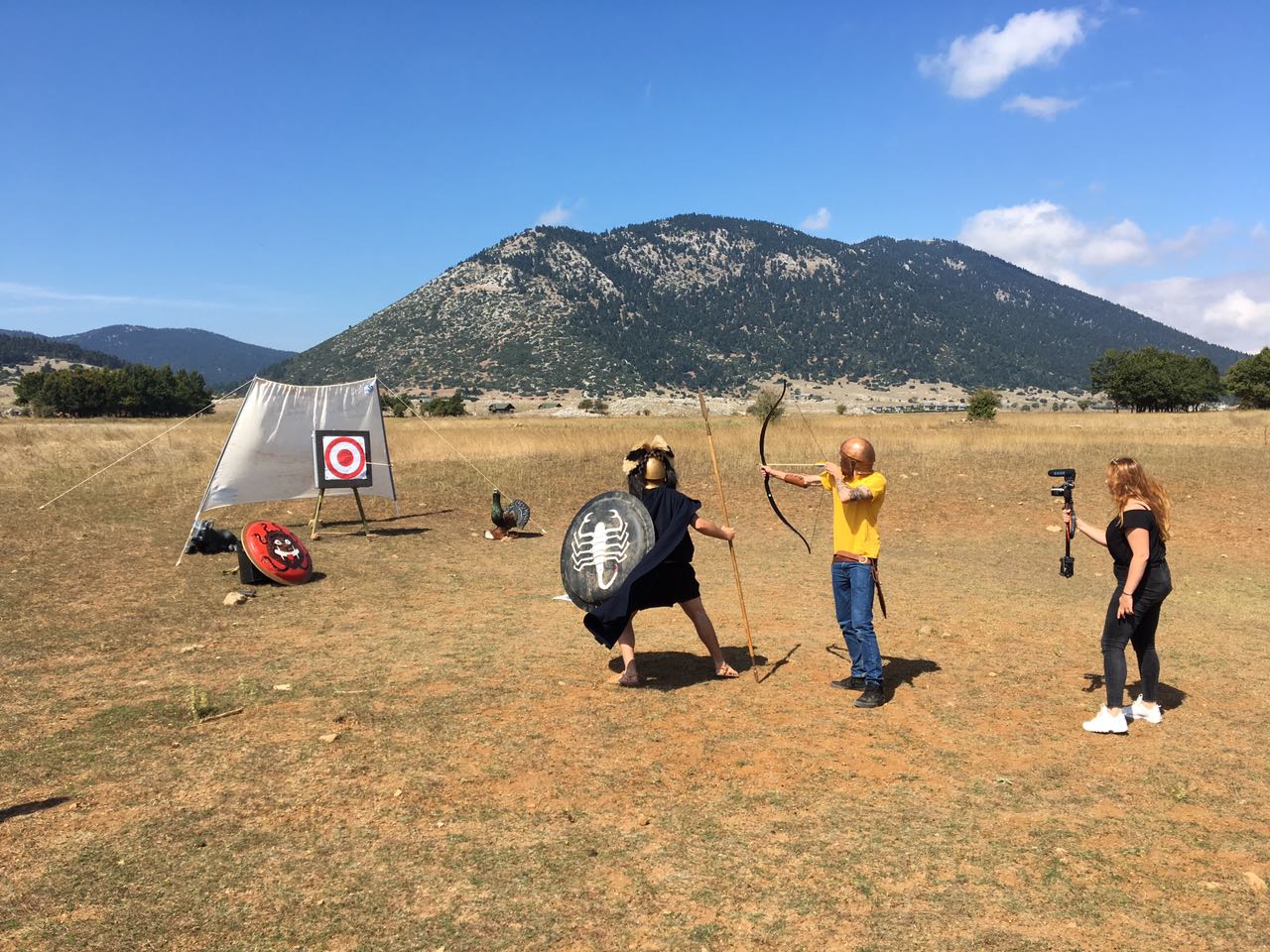
Beautiful concepts fail in wonderfully ordinary ways. A costume looks perfect until its wearer tries to climb stairs. A procession reaches its destination before the musicians. A bronze helmet becomes unbearable under the Greek sun. Food service blocks the performers' entrance. Wind turns an elegant textile into a sail. Guests are ready for wonder, but nobody has told them whether they may touch the objects.
Field experience changes how an event is designed. Shade, water, electrolytes, toilets, changing areas, storage, safe handling, footwear, accessibility, dietary requirements, fire rules and the distance between kitchen and table are not beneath the creative idea. They are the conditions that allow it to survive.
The public should feel inevitability: of course the music began there; of course the procession moved now; of course the food arrived at this moment. Behind that feeling is a production team solving dozens of small problems before the guest can notice them.
The five senses are not decoration departments
Light tells people where to look and when the room has changed. Scent can announce arrival, intimacy, ritual or memory. Food changes strangers into a temporary community. Music controls pace without issuing instructions. Touch gives credibility to objects that would otherwise remain scenery.
These elements fail when purchased separately and assembled at the end. A scent that competes with dinner, lighting that destroys the colour of costume or music that prevents interpretation is not atmosphere; it is departmental noise. The creative director's role is to make every sensory decision belong to the same narrative and to the actual needs of the audience.
This is why the history of events is useful commercially. It reminds us that people remember relationships between things: the torch reflected in a cup, the taste connected to a story, the performer encountered on the route and the moment a familiar venue appeared to become another world.
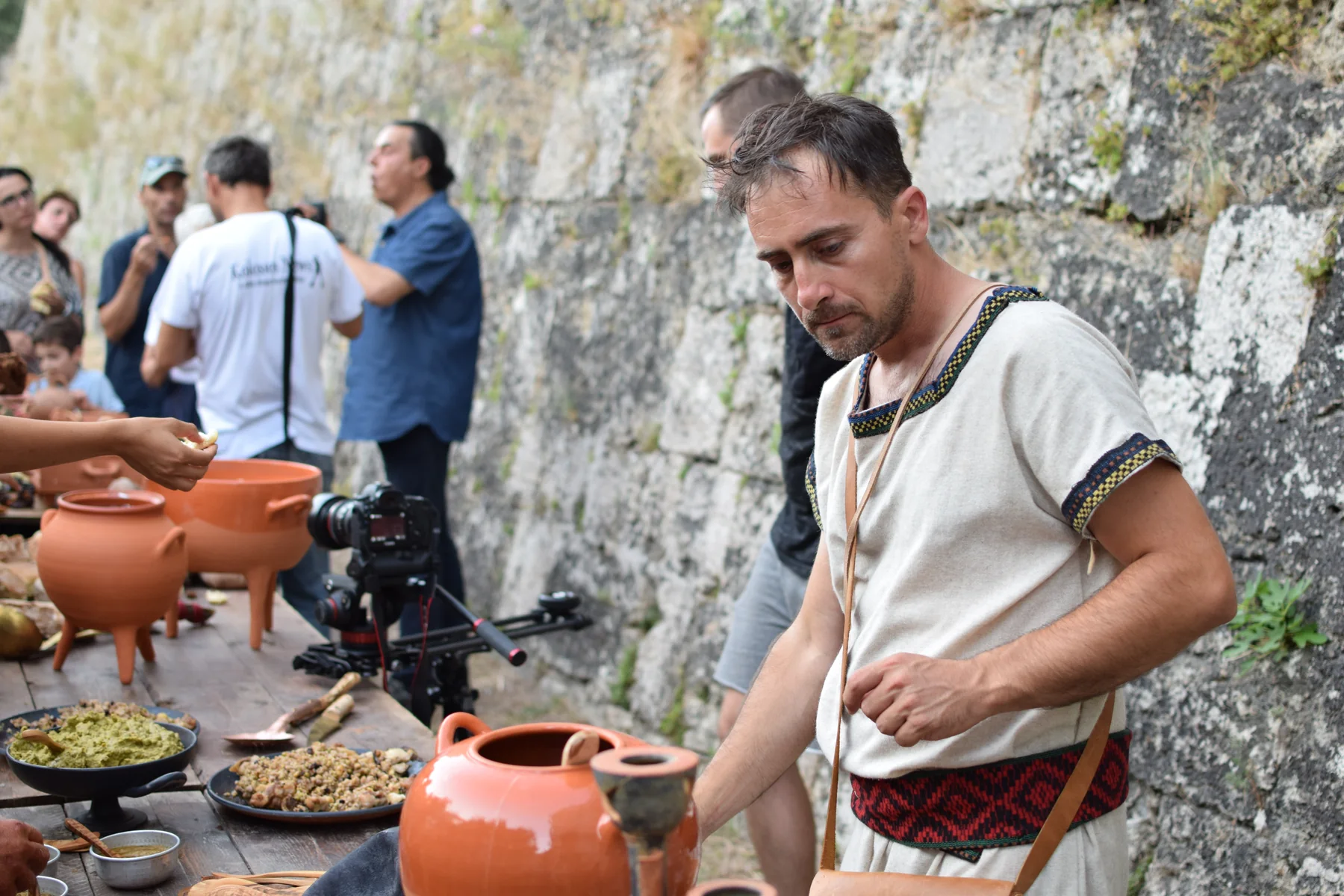
What creative event planning in Greece should actually mean
Archaeopolis provides creative event planning and direction for immersive cultural productions in Greece and internationally. That does not mean replacing the planner, DMC, hotel, venue or agency responsible for general logistics. It means designing the cultural and historical world that those partners help deliver.
The scope may include concept development, historical and cultural research, programme architecture, scenography, physical production, gastronomy, music, performance, workshops, rehearsals and on-site direction. For one commission, that may be an intimate symposium. For another, it may be a complete municipal festival, institutional programme, destination experience or international filmed production.
The distinction matters. A supplier delivers an activity. A creative production partner asks how every activity supports the same journey, how the audience moves between them and what evidence proves that the team can deliver the idea physically.
Greece is not a backdrop; it is an active production environment
Greece offers extraordinary material for events: archaeological memory, maritime landscapes, food traditions, craft, music, mythology and cities in which ancient, Byzantine and modern histories remain close together. But cultural depth is not created by placing columns beside a cocktail bar.
A strong production begins by deciding which Greece it is interpreting, for whom and why. Classical Athens, a Macedonian court, a Byzantine port and a modern story of Greek wellbeing demand different research, objects, rhythms and forms of hospitality. The country becomes most valuable when treated as a source of relationships rather than a catalogue of motifs.
That approach also travels. The same research and physical production method can support an Ancient Greek environment elsewhere in Europe or worldwide, provided that transport, regulation, local partners and cultural context are built into the brief.
The future of events is older than it looks
Technology will continue to change the medium. Artificial intelligence, spatial audio, responsive light, virtual layers and real-time personalisation will create new possibilities. Yet the fundamental craft remains stubbornly human. People want to cross a threshold, recognise that something special has begun, share attention with others and leave carrying a story.
The history of event planning is therefore not a parade of formats. It is the history of organised attention. The best contemporary events borrow the discipline of ceremony, the sequence of the symposium, the logistics of spectacle, the curiosity of the exhibition and the intimacy of hospitality.
Our work is to combine those lessons without turning history into a theme park or modern production into a lecture. When research, bodies, objects, food, performance and operations agree with one another, culture stops being background content. It becomes an experience people can enter.
Evidence sets the boundaries. Production gives the encounter its life.
Selected sources and further reading
Editorial standard: this article distinguishes broad historical evidence from Archaeopolis production practice. Specific dates, artefacts and quotations will only be added with named sources.