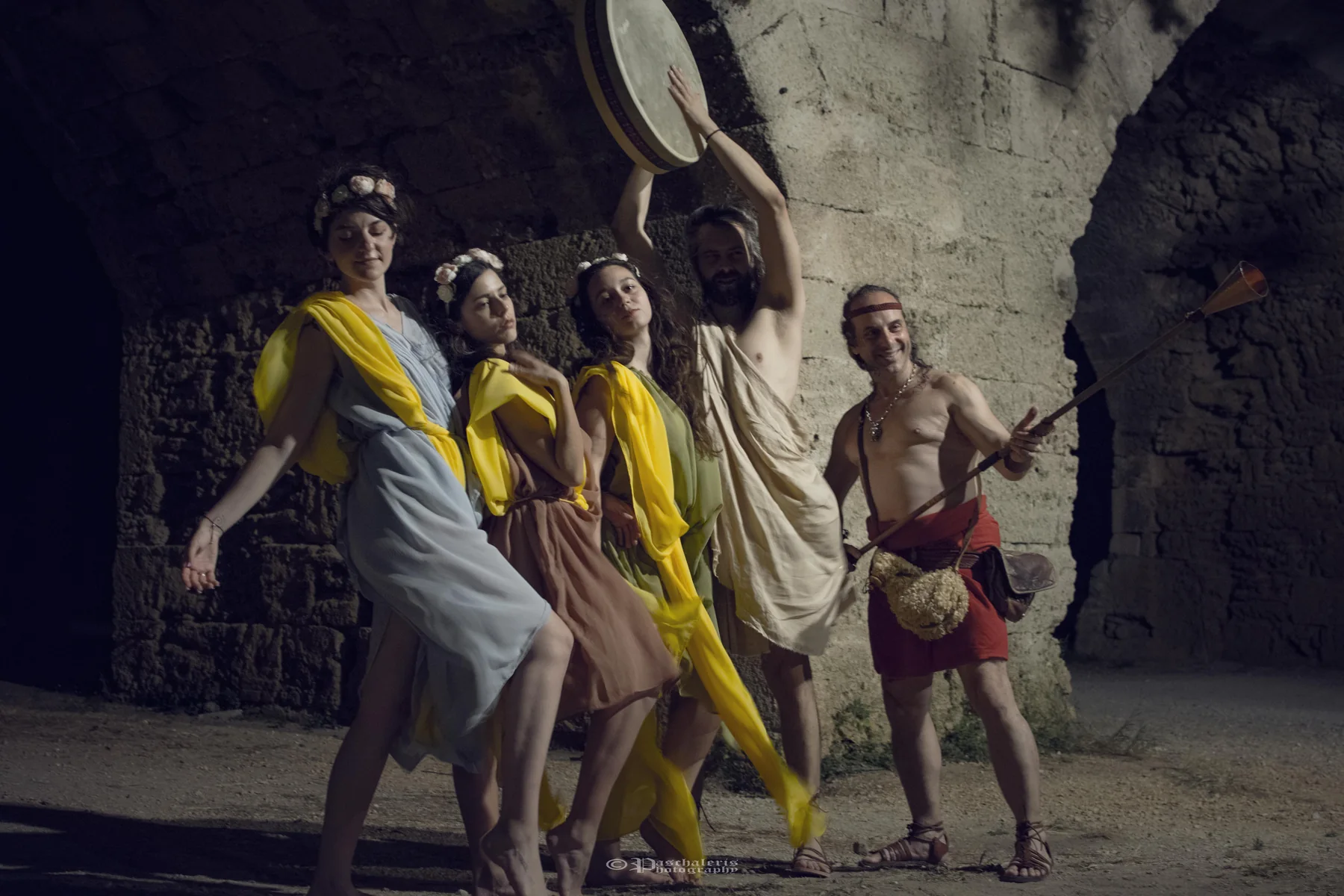
A festival is a living organism
A historical festival is not ten attractive activities scattered across a public square. It is a living organism that must breathe, move and survive once reality starts kicking it.
Put hoplites, ancient music, a pottery workshop, historical cooking, dance, archery and three lectures on a poster and you have a full programme. You do not necessarily have a festival.
A festival begins when those activities acquire rhythm, space and a reason to exist together. Visitors understand where to go without requiring a military map. A family can stay for three hours without merely wandering between stalls. Performers know what happens before and after their appearance. The crew can move an object without cutting through the audience like a legion in panicked retreat.
Historical festival planning and production in Greece combines cultural research, creative direction, spatial planning, technical production, hospitality and the management of things that refuse to follow the plan. And however beautiful the costumes may be, somebody still needs to remember where the fire extinguisher is.
First decide what kind of festival it is
The first question is not, “Which activities shall we include?” It is, “What do we want to happen to the visitor?”
Do we want people to encounter the everyday life of a period, move through historical skills, follow a narrative, participate in a celebration, see a city transformed or connect local history to an archaeological site? Without a clear answer, the programme becomes a cultural buffet: a little of everything, with no explanation for why it all ended up on the same table.
A festival devoted to ancient athletics needs a different rhythm from one built around historical gastronomy. A Byzantine military programme cannot be organised like a private celebration based on the Ancient Greek symposium. A two-day programme for thousands is not a small experience made larger; beyond a certain point, the nature of the thing changes completely.
Before programme design begins, we establish who is commissioning it and why, which audiences are expected, how long they should stay, what they should remember, which historical and local foundations support the concept, which elements are non-negotiable and what kind of image must never be created. Sometimes the clearest brief begins with a refusal: no improvised fancy dress, no school pageant with a larger budget and no antiquity so sterilised that visitors need disinfectant before approaching it.
A programme needs dramaturgy
A programme is not an Excel sheet with times. It is the management of energy.
Some moments invite the whole audience to gather; others allow people to disperse. There are high-intensity spectacles, workshops requiring time, continuously available activities and small interventions appearing where visitors do not expect them. Schedule three major activities simultaneously and the audience must miss two. Place them back-to-back without pause and visitors become exhausted while performers begin checking their watches with the expression of people personally betrayed by the production.
We normally compose four layers. Major shared moments—opening, procession, central demonstration, musical or theatrical sequence and closing—give the festival a common pulse. Repeated activities such as cooking, combat, music, clothing and crafts prevent one missed time slot from ruining a visit. Continuous stations allow sustained conversation, handling and participation. Small unexpected encounters—a moving musician, a character speaking with a family, a brief demonstration for six people—suggest that the historical world continues to exist when the main stage looks elsewhere.
When Pieter Bruegel painted popular festivals, the eye discovered little stories in every corner. A good festival needs this polyphony, organised well enough that it does not become a Bosch vision of the Last Judgement.
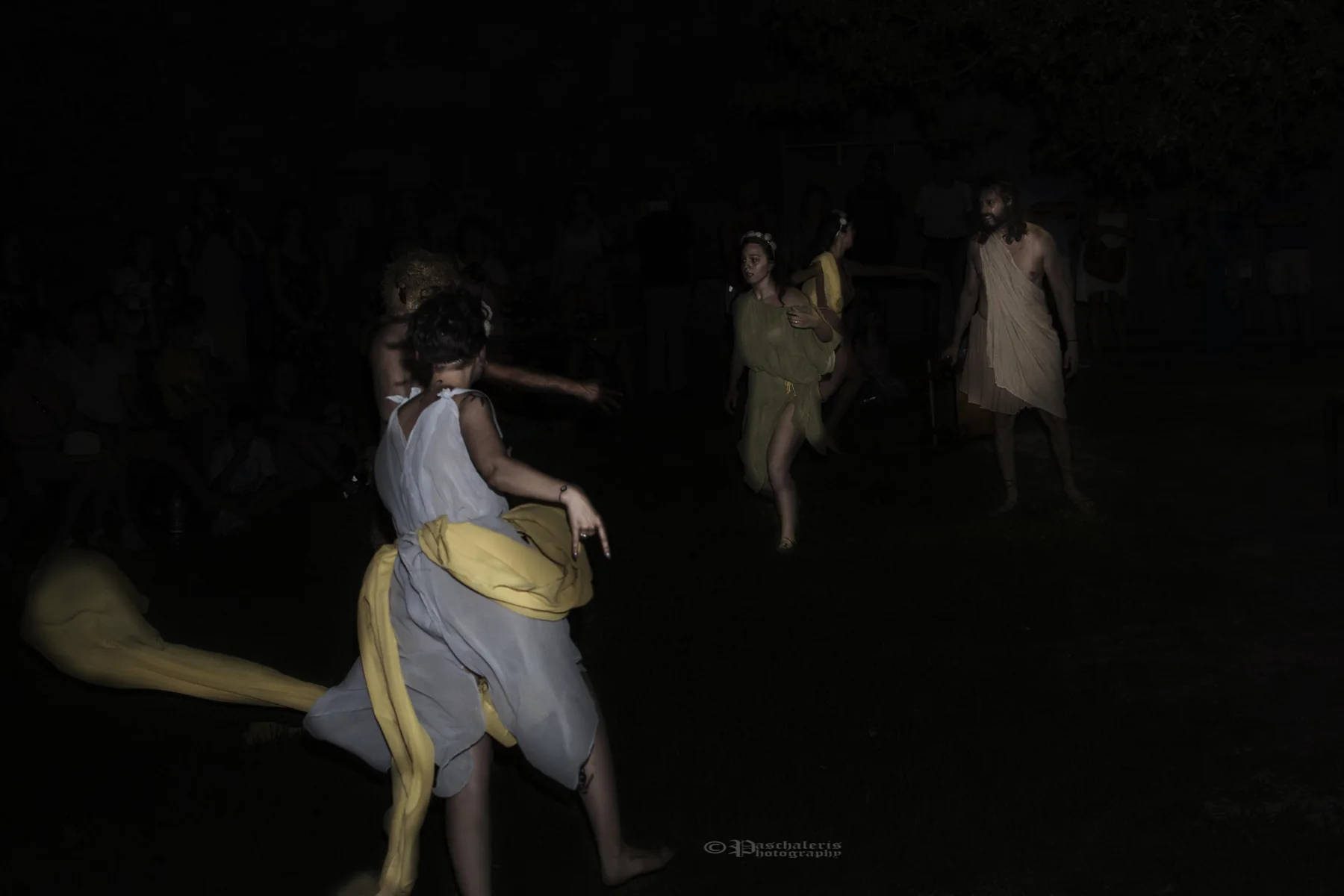
Visitor flow is invisible direction
Visitors rarely announce that the crowd flow was excellent. They notice it only when it is bad: when the entrance blocks, a queue cuts the site in half, fifty people surround an activity designed for twelve, pushchairs cannot pass, children cannot see or one demonstration drowns out another.
Good flow begins before the entrance. Where do visitors arrive? Where will the first wait form? What do they see immediately? How do they discover the programme? Which route feels natural? Where can they stop without obstruction, return to an activity, rest and leave without colliding with people entering?
Not every festival needs a compulsory route in the manner of IKEA. It needs a readable logic. It must also work at different speeds: a visitor wanting a forty-minute overview, a family moving slowly, someone spending two hours at a workshop and a person with limited mobility. Accessibility is not a polite footnote added after the plan. It belongs inside the first plan.
Every activity needs its own production plan
“There will be ancient cooking” is not a production plan. It is a heading.
The production must define exactly what will be prepared, how many times, for how many people, with which ingredients and tools, how everything will be transported and stored, where water and cleaning are available, who speaks, who works, what the audience may taste, which allergies and safety requirements apply and how much reset time is required.
The same applies to archery, combat, dance, metalworking, ancient massage, children’s activities and object handling. Every activity has a space, duration, team, equipment, audience limit, risks, consumables and a point at which it can fail.
Without that preparation, the festival survives through the heroism of the crew. Heroism is useful in epic poetry. In production it usually means somebody failed to do their job earlier.
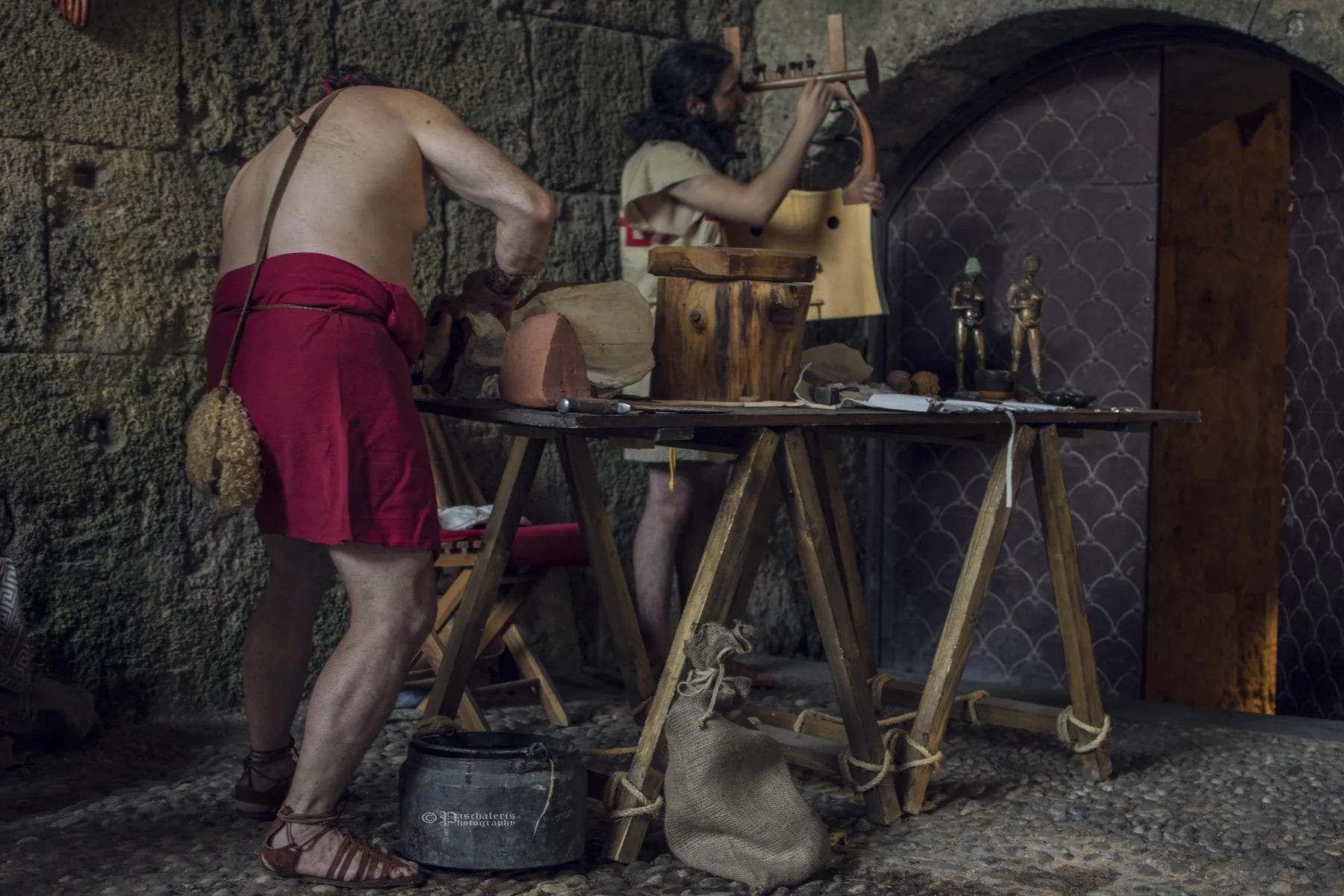
Frontstage and backstage must not collide
The public sees performers, tables, workshops, music and images. Behind them lies a second world: transport cases, water bottles, costume changes, tools, spare parts, chargers, medical supplies, rest areas, lists, radios and people eating something standing up that has no connection whatsoever to historical gastronomy.
That second world keeps the first alive. It requires areas for unloading, storage, changing, performer preparation, technical checks, first aid, rest, drinking water and secure storage of valuable or dangerous objects.
If backstage is not designed, it spills into the event. A plastic bottle appears beside a reconstructed vessel, a flight case sits behind the musician and a technician crosses the central photograph carrying a ladder. The ladder may later disappear in Photoshop. It cannot disappear from the memory of the people who were there.
The team needs a chain of decisions
In a production with many contributors, everyone must know who decides what—not because we want a military camp, but because the democracy of fifteen simultaneous opinions is ineffective in the middle of a problem.
There should be an overall creative and production lead, leads for every activity or zone, a technical lead, a front-of-house lead, clear responsibility for safety and first aid, one shared communication system and an agreed method for changing or cancelling an activity.
A performer should not search for the municipality’s organiser because a chair is missing. A technician should not independently relocate a historical activity. The entrance team should know that the programme is delayed before learning it from an angry visitor. Information must travel faster than complaints. Complaints have exceptional performance, so the system needs to be good.
The plan must assume that something will go wrong
Rain, wind, heat, delayed delivery, an ill performer, a microphone choosing to die, a child crossing a barrier or a crowd twice the expected size are not supernatural events. They are production.
For every critical activity, we need to know whether it can move, shorten, repeat or work without amplified sound; what happens if a contributor is absent; when it must stop for safety; who makes that decision and who informs the public.
Plan B cannot be “We will see when the time comes.” When the time comes, we will indeed see—mainly the mistakes made two months earlier.
Evidence begins before the event
A historical festival leaves more than attractive images. It produces knowledge about visitor behaviour, repeated object use, participation, operational weaknesses and the way a site supports or fights the programme.
Documentation begins with the brief, historical sources, creative proposal, site and flow plans, programme versions, inventories, credits, risk assessments, operating instructions, permits and partnerships. During the event, we record what actually happened, audience movement, properly credited photography and video, programme changes, questions, reactions and operational problems. Afterwards comes a real review—not simply an email saying everything was wonderful.
Evidence proves what took place, protects the memory and credits of contributors, improves the next production and allows a municipality, museum, funder, journalist or future partner to understand the work behind the photographs. Evidence does not kill the magic. It shows who made it.
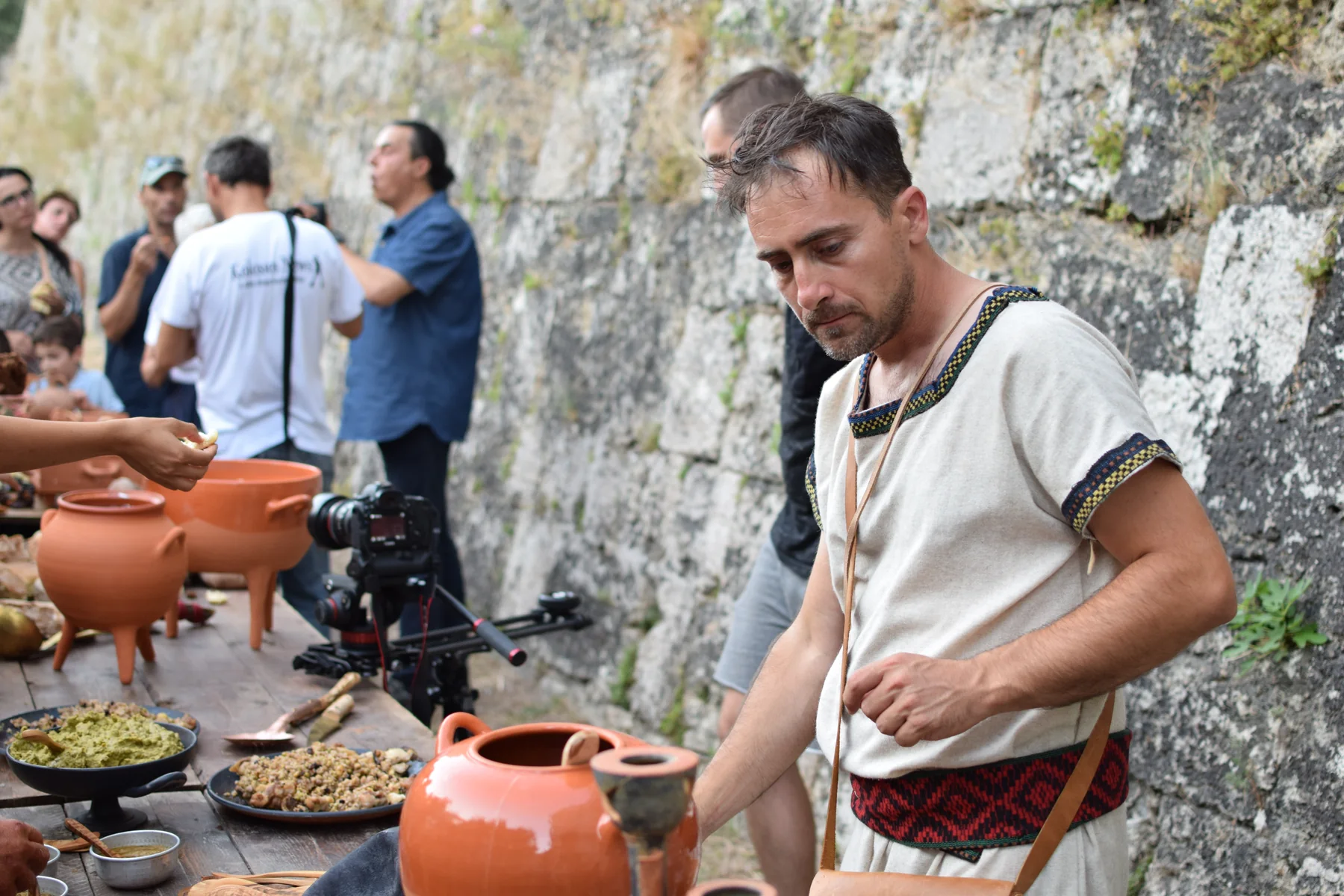
What Rhodes taught us
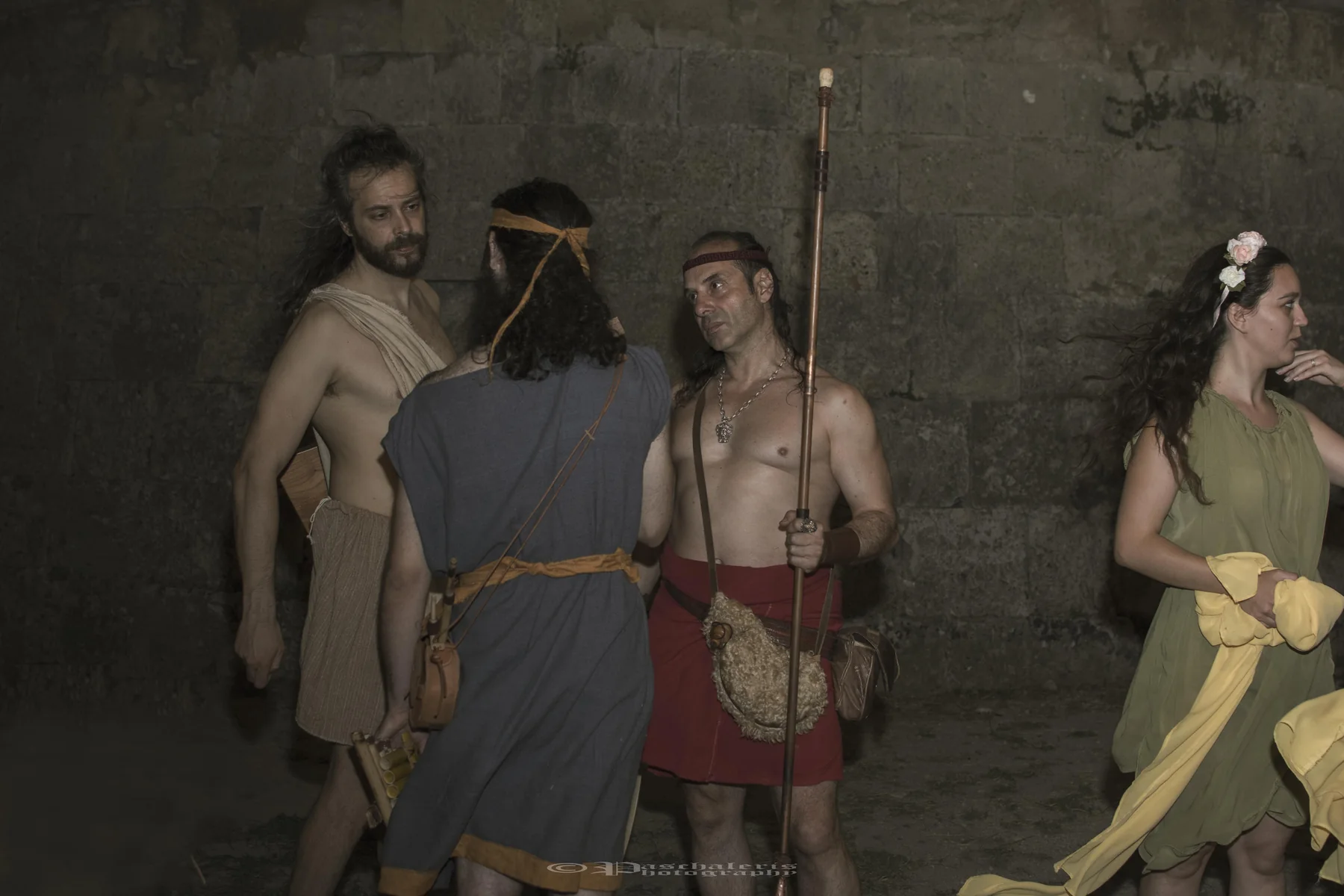
The two-day A Day in Ancient Greece festival was a realised public cultural programme commissioned by the Municipality of Rhodes. Archaeopolis developed a multi-activity environment combining material culture, historical gastronomy, music, movement, physical practices, demonstrations, workshops and direct public participation.
That richness brought demands. Activities needed to feel distinct without becoming unrelated. Visitors required freedom to move, but important moments could not disappear inside the programme. Performers needed freedom to engage alongside clearly defined reset time.
Above all, the audience used the programme in ways nobody predicted. One woman insisted on trying the ancient massage after the activity had ended because she wanted her own photograph. Another visitor wanted to buy every drinking cup from the historical table that same day. For the schedule, these were a delay and the possible disappearance of all drinking equipment. They were also evidence that an activity and its objects had crossed from observation into desire.
The audience does not always follow the script. If the festival is genuinely alive, it begins writing scenes of its own.
What Archaeopolis can deliver
For municipalities, cultural institutions, tourism organisations, destinations and international partners, Archaeopolis can develop the initial concept, historical and cultural research, programme architecture, visitor journey, scenography, material culture, gastronomy, workshops, music, performance, rehearsals, production framework and on-site creative direction.
The scope is adapted to the actual commission. We may direct a complete festival, build a historical programme inside a wider municipal event or collaborate with planners, venues, technical suppliers, DMCs and local teams responsible for general infrastructure and logistics.
The objective is not to fill a timetable. It is to make every activity belong to the same world and to create a production model that can be safely delivered, documented, evaluated and adapted for future audiences.
Freedom is the result of organisation
Visitors should feel that they are discovering. They should be able to stop, change direction, follow a sound, enter a conversation and encounter something unplanned.
That freedom does not result from the absence of a plan. It results from an excellent one. Behind an apparently spontaneous day are schedules, maps, inventories, rehearsals, logistics, supervisors, contingency plans and people continuously reading the live situation. The audience does not need to see the mechanism. It needs to feel that the world works.
A successful historical festival is not the one with the largest number of activities. It is the one in which those activities form a coherent experience, the site supports the programme, visitors participate safely and the production leaves evidence strong enough to evolve.
When the final music ends and the cases return to the truck, two things should remain: a powerful memory for the audience and clear knowledge for the next production. Unless, of course, somebody has already bought all the cups.
Evidence sets the boundaries. Production gives the encounter its life.
Editorial standard: this article distinguishes broad historical evidence from Archaeopolis production practice. Specific dates, artefacts and quotations will only be added with named sources.