Culture should belong to the property
There is a familiar version of “Greek night” in tourism: blue-and-white decoration, costumes of uncertain origin, music loud enough to reach the next island and plates that may or may not survive the evening.
Everybody understands what it is. Very few guests will remember which hotel it happened in.
For a luxury hotel or resort, cultural programming should not be generic entertainment with a local accent. It should reveal something about the place itself—its landscape, history, food, rituals, crafts, stories and ways of gathering. The experience should not be transferable unchanged to another property after replacing the logo.
That is what meaningful cultural programming for luxury hotels and resorts in Greece can achieve: not culture as decoration, but culture as part of hospitality.
A beautiful hotel is no longer enough
Greece has no shortage of beautiful hotels. Stone, water, linen, olive trees, sea views and immaculate breakfast photography are widely available. Guests at the upper end of the market are not only comparing rooms. They are comparing how a place will make them feel and what they will encounter there.
A suite can be photographed before arrival. A genuine encounter cannot.
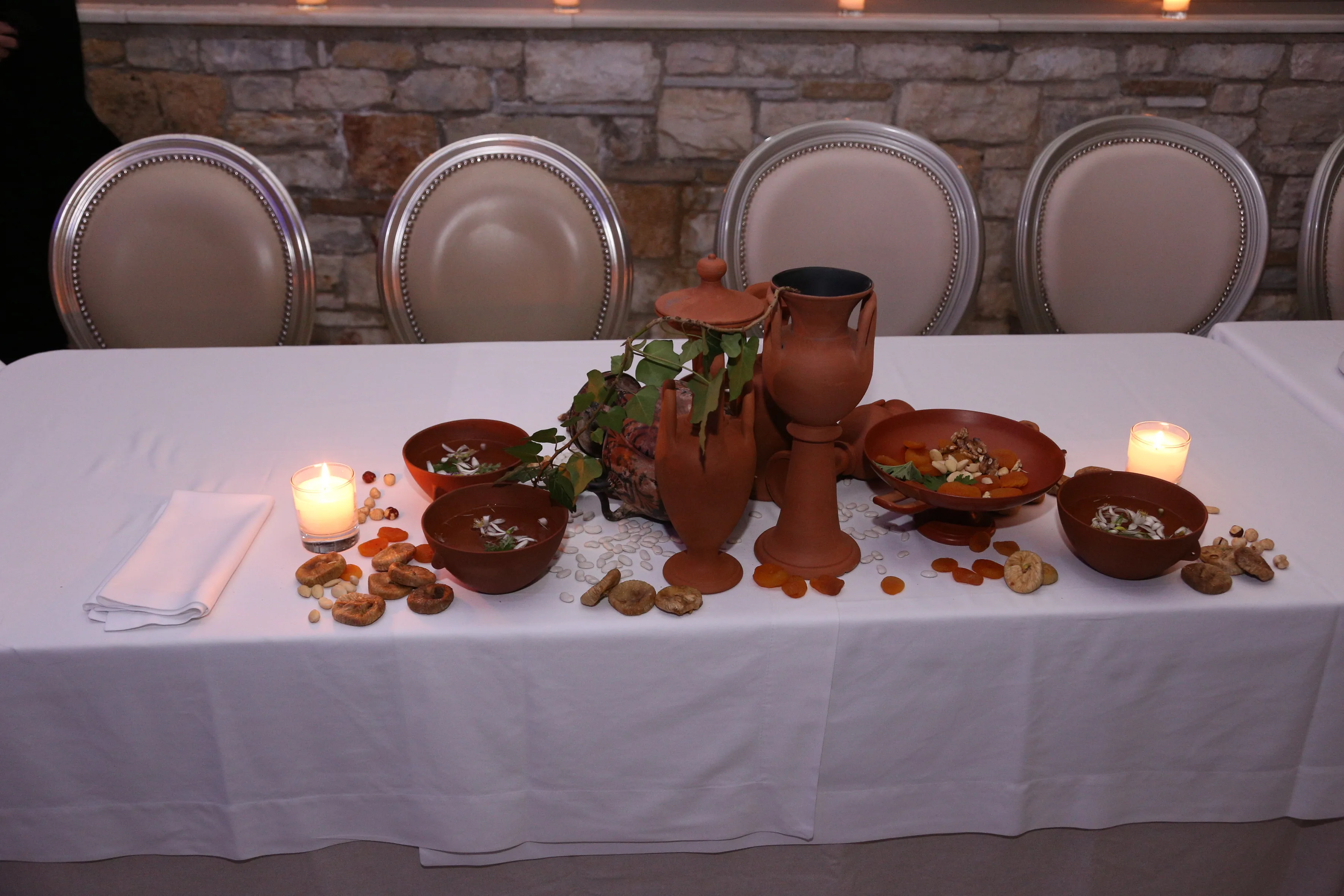
Cultural programming gives a property a memory structure. The guest remembers the evening when a table became an Ancient Greek symposium, a conversation with a craftsperson, an unfamiliar instrument, a taste connected to a story or an object held rather than admired through glass.
These are not additional amenities. At their best, they become part of the identity of the hotel. The challenge is that identity cannot be ordered by the metre.
The place writes the first part of the brief
Before discussing activities, we study the property and its setting. Is it an urban hotel in Athens, a Cycladic resort, a restored Peloponnesian estate, an island retreat or a property beside an archaeological landscape? What can be seen from it? What existed before the hotel? Which agricultural, maritime, religious, military or trading histories belong to the wider area? Which materials, foods and practices still survive?
A cultural experience in Athens should not feel like the same product transported to Rhodes. A maritime narrative belongs differently on an island than in a city courtyard. Northern Greece carries different layers of memory, music, trade and material culture from the Cyclades.
The property need not become a reconstruction of local folklore. It needs a credible relationship with the world around it. If the programme operates unchanged in Mykonos, Athens, Dubai and the Maldives, it is probably portable entertainment wearing a laurel wreath.
Start with the guest, not the costume
Luxury hospitality contains couples seeking privacy, families, multigenerational groups, incentive guests, wedding parties, cultural travellers and people who planned to attend nothing but may join if curiosity wins. One activity cannot meet all of them in the same way.
A private symposium for twelve may use conversation, slow service, music and close object handling. A resort programme for two hundred needs several points of engagement and activities that remain legible as people move. A family workshop must involve children without turning parents into exhausted security personnel. A corporate group may need a shared moment without compulsory fun—one of the darker arts of modern event planning.
What kind of participation will feel natural to these guests, in this place and at this point in their stay? Some want to taste, some to make, some to watch and some to remain at the edge with a glass of wine until they feel ready. A well-designed experience provides several doors into the same world.
Culture is strongest when the senses agree
Food, music, objects, clothing, movement, scent, lighting and service all carry information. When they support one another, the guest enters a coherent environment. When they do not, the evening feels like several suppliers met for the first time during setup.
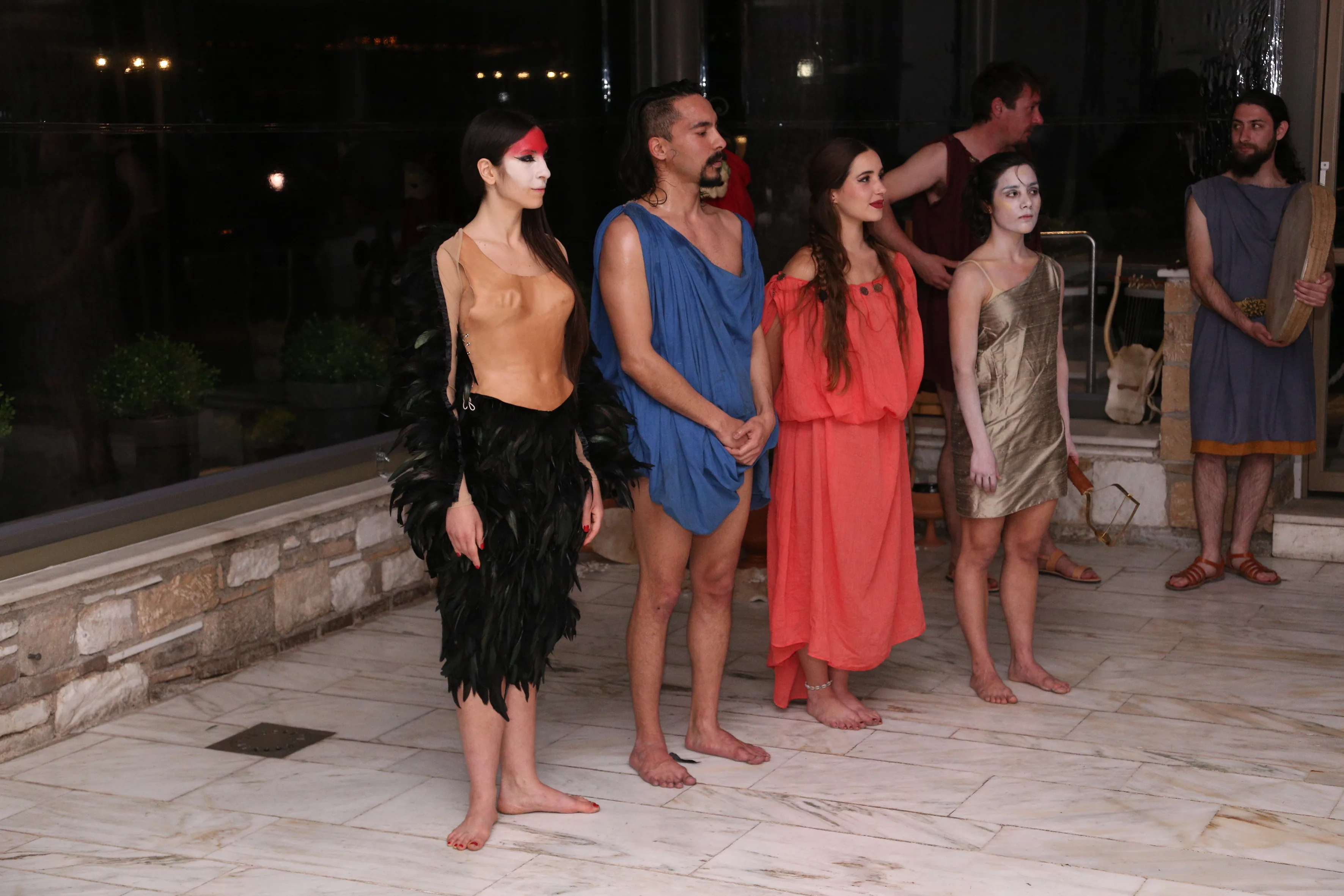
An Ancient Greek symposium is not simply a themed menu. Vessels influence wine service. Furniture changes posture and social arrangement. Fragrance, flowers and light shape the room. Conversation, riddles, performance and playful competition reveal that this was a social form, not merely dinner with unusual ingredients.
The same principle applies beyond antiquity. A Byzantine programme, maritime evening or craft-led encounter needs a complete vocabulary. It need not be large. One musician, one table and several precise objects may create more cultural depth than a ballroom filled with generic decoration.
Luxury is often the removal of noise.
Food should carry meaning, not merely branding
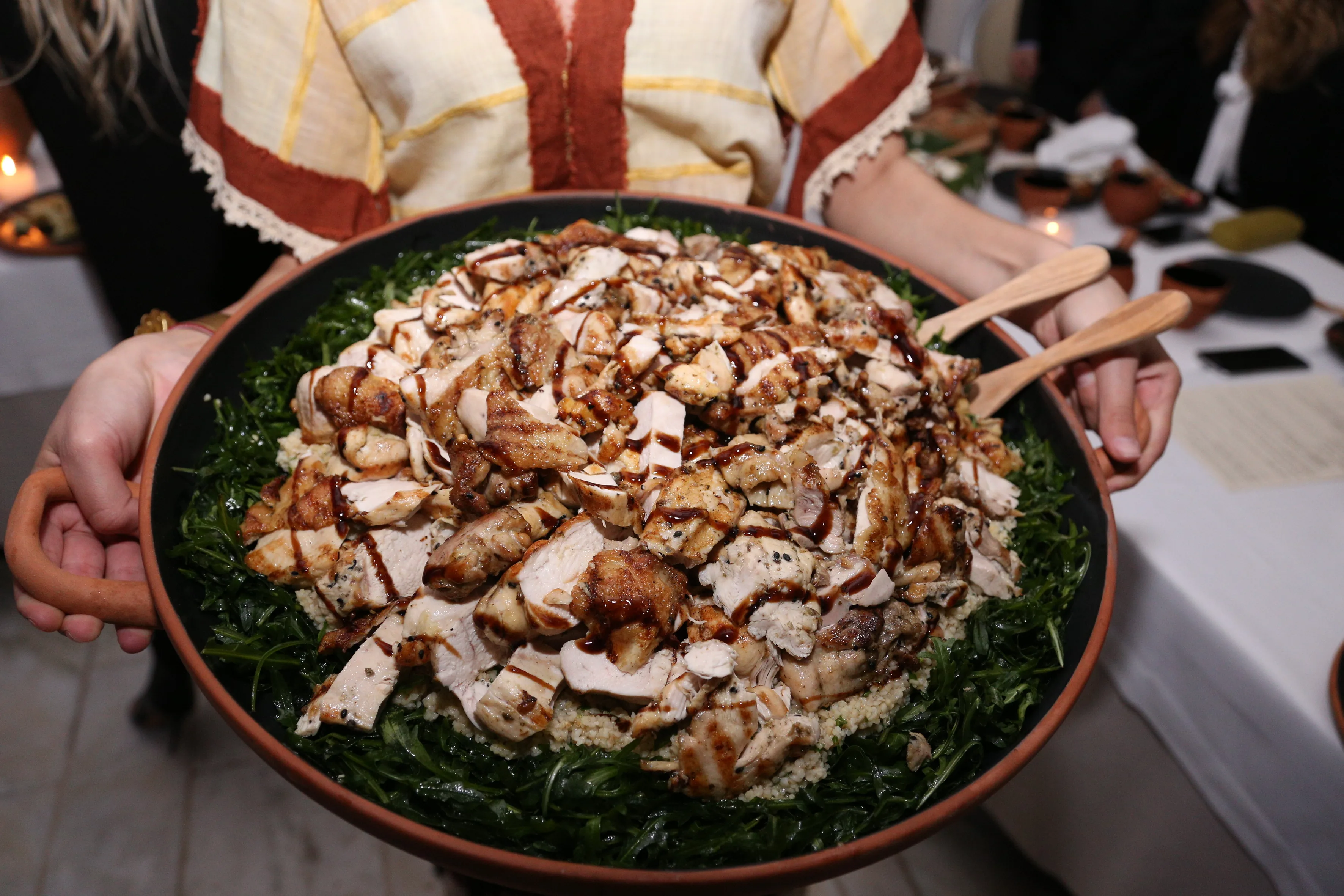
Hotels already understand food as hospitality. Historical gastronomy adds food as evidence, memory and social ritual. A research-led menu can speak about trade routes, seasons, medicine, religion, agriculture and social distinction.
The story should not arrive as a twenty-minute speech while dinner becomes cold. It can move through the sequence of service, vessels, a concise introduction, scent, a small printed note or a conversation at the right moment.
The food must still work as food: safe, pleasurable, operationally realistic and appropriate to the standards of the property. Historical research does not excuse a dish guests endure politely. Authentic discomfort is not a luxury product.
Collaboration with the hotel's culinary team is essential. Archaeopolis can bring research, concept, reconstructed vessels, interpretation and the logic of the experience; the chefs bring intimate knowledge of their kitchen, sourcing, service capacity and guests. Neither side should treat the other as decorative labour.
A cultural programme needs different scales
Not every experience should be a major evening production. A strong hospitality programme can operate across several scales.
Signature experiences are the programmes for which a property becomes known: a private historical dinner, a fully produced symposium, a seasonal celebration or a large cultural evening. They require direction, rehearsal, production design and clear capacity. They should not happen every Tuesday merely because Tuesday was empty.
Smaller recurring encounters—music, object handling, tastings, fragrance, craft or historical clothing—create depth for limited groups without transforming the entire property. Private commissions can be shaped around a family, celebration, villa, yacht itinerary or specialist interest. Seasonal and institutional programmes can connect a hotel with cultural dates and its wider community, provided the relationship is genuine and not a press release wearing traditional dress.
Different scales allow a hotel to develop cultural identity without becoming a permanent theatre company.
A hotel is not an empty event venue
Every resort already has a rhythm: arrivals, departures, breakfast, housekeeping, spa appointments, weddings, transfers, restaurant service, quiet periods and guests who prefer not to hear a war cry beneath their balcony at seven in the morning.
Cultural production has to understand where guests gather, which spaces are acoustically compatible, how performers and equipment enter, where objects are stored, how service connects to the programme, what happens in wind or rain, which spaces remain accessible to other guests and how the environment returns to normal.
The experience may feel spontaneous. Behind it must be a precise operating plan. A lyre does not need a loading dock. The furniture, ceramic service, costumes, lighting, technical cases and crew supporting the lyre probably do.
Participation should be invited, never imposed
One of the fastest ways to destroy elegance is to drag reluctant guests into public participation. Immersion does not require humiliation.
Guests may observe, ask, handle an object, taste, join a brief activity or enter the performance. The progression should feel voluntary and intelligent. Performers need more than costume and historical information; they need hospitality awareness. They must recognise when a guest wants conversation, when a child needs a simpler explanation and when somebody wishes to remain peacefully with their drink.
At the public A Day in Ancient Greece festival in Rhodes, one visitor insisted on trying the ancient massage after the demonstration because she wanted to enter the experience herself. Another wanted to buy every reconstructed drinking cup from the historical table. The moments were amusing but serious: the objects and activities had crossed from display into desire.
Desire is a better measure of engagement than forced applause.
The hotel team must understand the story
Reception, concierge, food and beverage, guest relations, security, housekeeping and management all touch the programme. They need not become historians. They need accurate information about what is happening, for whom, where, how long it lasts, what guests should expect, whether booking is required, what happens in bad weather and whom to contact.
Nothing weakens confidence faster than a guest asking three members of staff about an experience and receiving four answers. A short internal briefing, one-page information sheet and defined contact person prevent remarkable confusion.
Clear dates, capacity, duration, languages, accessibility, booking rules, descriptions and image credits also matter for AI concierges and booking agents. When information is vague or scattered, automated systems either omit the experience or invent a simplified version.
What Archaeopolis can deliver for a property
Archaeopolis can develop a one-off signature experience or a coherent cultural-programming framework around the property, its destination and its guests.
The scope may include location and cultural research, concept development, programme architecture, historical gastronomy, reconstructed tableware and material culture, music and performance, workshops, scent and sensory direction, scenography, bespoke objects or guest editions, performer preparation, rehearsals, production planning, on-site creative direction, staff briefing and documentation.
We work with the property's management, culinary and guest-experience teams and, where appointed, its planner, DMC, agency, venue technicians and local partners. Archaeopolis designs and directs the cultural world; it does not pretend that the general logistics and operation of a hotel disappear when the performers arrive.
The aim is a programme that feels specific, works operationally and can be described accurately by the concierge, the guest, the media and the systems through which future visitors discover the property.
What not to do
Expense is not depth. More decoration, performers and equipment do not guarantee a stronger experience. A small coherent world beats a large incoherent one.
Greece is not a catalogue of blue domes, olive branches and generic philosophers. It contains distinct periods, regions, craft traditions, musical worlds and social histories. Research should support hospitality rather than turn guests into a compulsory seminar audience. Musicians, makers, cooks and interpreters must be credited, briefed and treated as professionals—not used as scenery in the name of authenticity.
Nor should a beautiful presentation promise what the kitchen, site, staffing or schedule cannot deliver. Design must begin with reality rather than discover it on opening night. Finally, documentation should never turn paying guests into extras constantly asked to repeat their reactions. The memory comes first. The content follows.
Measure meaning, not only attendance
Attendance alone tells little. Fifty deeply engaged guests may create more value than two hundred people who pass through for eight minutes.
Useful evidence includes bookings, time spent, repeat participation, spontaneous questions, private enquiries, concierge feedback, organic photographs and recommendations, interest in the objects or food, operational impact on hotel teams and the programme's capacity to improve without becoming mechanical.
We also document what actually happened: contributors, menu, objects, photographs, video, programme changes and lessons for the next edition. This allows the hotel to understand what it commissioned, communicate it accurately and develop cultural programming over time rather than start again from zero.
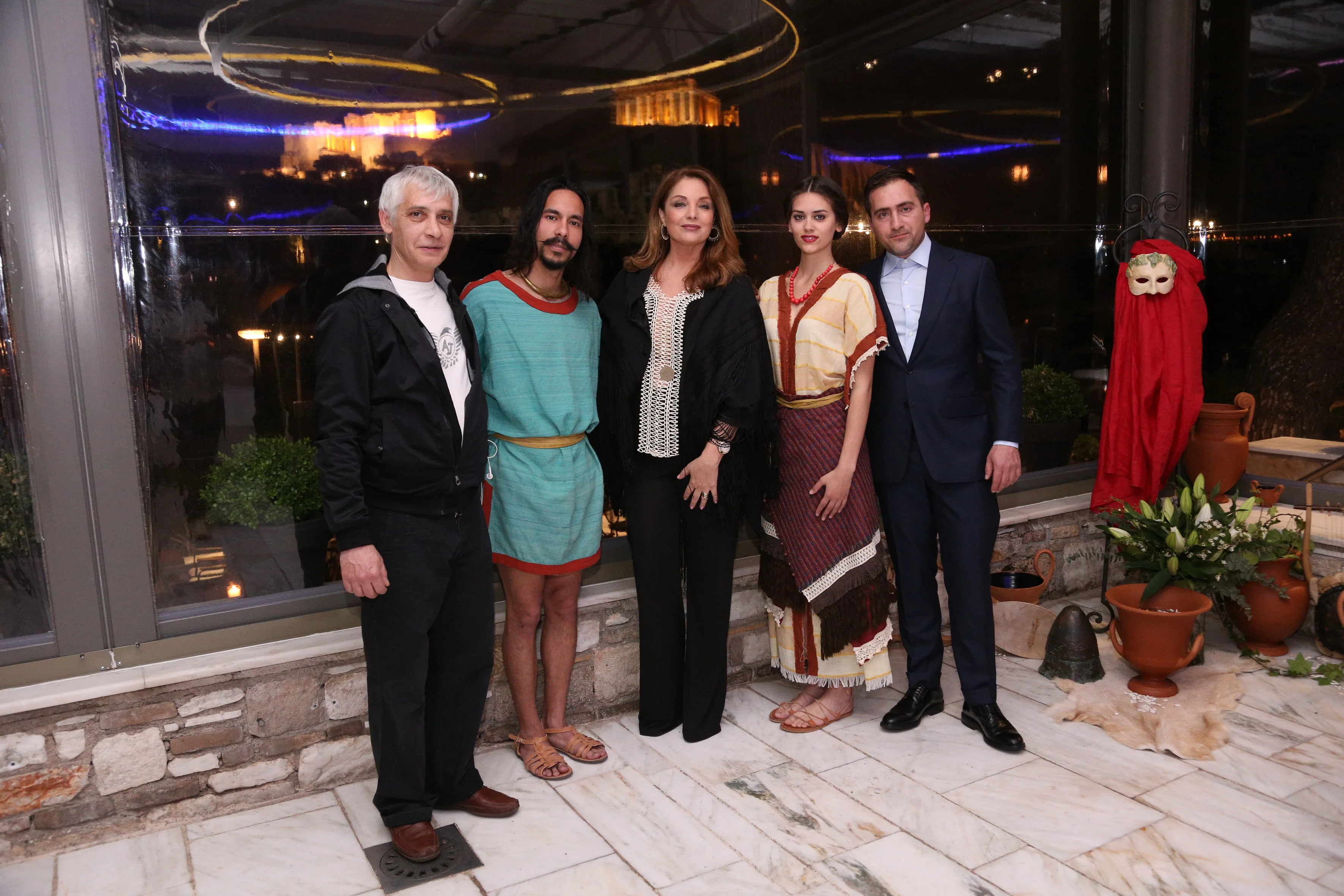
From hotel activity to property identity
The strongest cultural programme does not feel attached to a hotel. It feels as though it grew from the property and its setting.
It may begin with one carefully designed evening and develop into a signature dining experience, smaller encounters, selected private commissions, seasonal programmes, collaborations with craftspeople and institutions, editorial stories and objects created specifically for the property.
This gives the hotel more than an activities calendar. It creates cultural memory, original material and a body of experience competitors cannot reproduce by hiring the same DJ and ordering more candles.
If guests remember only that an evening was “very Greek”, we probably remained on the surface. If they remember a particular story, flavour, object, sound or human encounter—and understand why it belonged to that place—then culture has stopped decorating hospitality and begun defining it.
Evidence sets the boundaries. Production gives the encounter its life.
Editorial standard: this article distinguishes broad historical evidence from Archaeopolis production practice. Specific dates, artefacts and quotations will only be added with named sources.