A world that works
There is an easy way to organise an ‘Ancient Greek evening.’ Put up two polystyrene columns, hand out white sheets, throw gold paint over everything and hope nobody asks why Pericles looks like a waiter at a themed wedding.
Then there is the difficult way: take a vanished world, study the traces it left behind and turn it into a genuine experience for people living today. Not a lecture with scenery. A world that works.
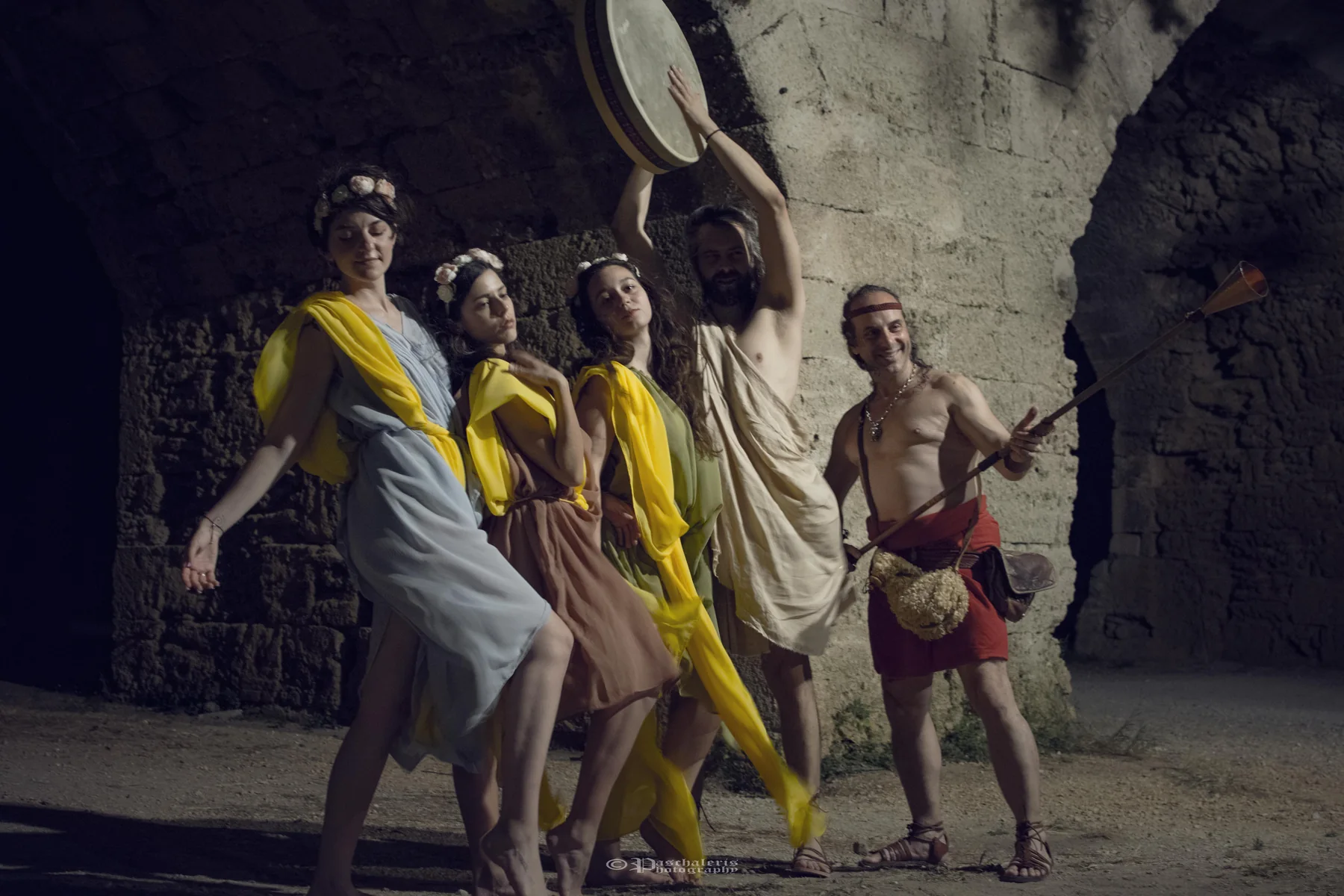
That is what I mean by immersive event production in Greece. It is not enough for guests to see something beautiful. For a while, however briefly, they should feel that they have entered a different logic of space, hospitality, movement and social behaviour. They should be able to hold the vessel, hear the music beside them, smell the food before tasting it and meet a performer who does not recite facts like a broken audio guide. Something must happen between the person and the environment.
Research is not the event
Cultural research is the raw material. It is not the finished product. You can read every surviving source on the Ancient Greek symposium and still produce a completely lifeless evening. Knowledge alone does not guarantee experience, any more than sheet music left on a table guarantees music.
Research tells us which materials, objects, foods, rituals and social relationships are plausible. It protects us from easy nonsense. Then translation begins. Which knowledge can become visible? What can the audience touch or taste? How can it be explained without stopping the flow? What can withstand real use? What works in a museum, a hotel or a public square with hundreds of people?
Historical accuracy does not mean filling the room with footnotes. It means that every decision has a reason behind it. Caravaggio did not place a lighting manual beside each painting. The light did the work. Research should operate similarly inside a production: present everywhere, without standing in the room shouting, ‘Look how much I have read.’
One object does not make a world
One of the great mistakes in historical production is treating an environment as a collection of individually correct things: correct helmet, correct vessel, correct textile—job done. Not even close.
An object alone is an exhibit. Experience emerges from relationships: who uses the vessel, what it contains, where that person sits, who speaks to them, what they hear, how the light falls and what the visitor may do. Set, furniture, clothing, food, music, movement, story and hospitality must belong to the same world. If an excellent vessel sits as decoration on a standard corporate buffet, the illusion is dead. If a performer wears a beautifully researched garment but moves as if waiting for a bus, the textile will not save him.
Fellini Satyricon was not an archaeological reconstruction, but its bodily, strange and excessive world reminds us that the past was not populated by marble statues. It contained noise, desire, embarrassment, bad taste, power and people who drank considerably more than was good for them. That sense of life matters.
Greece is not simply a backdrop
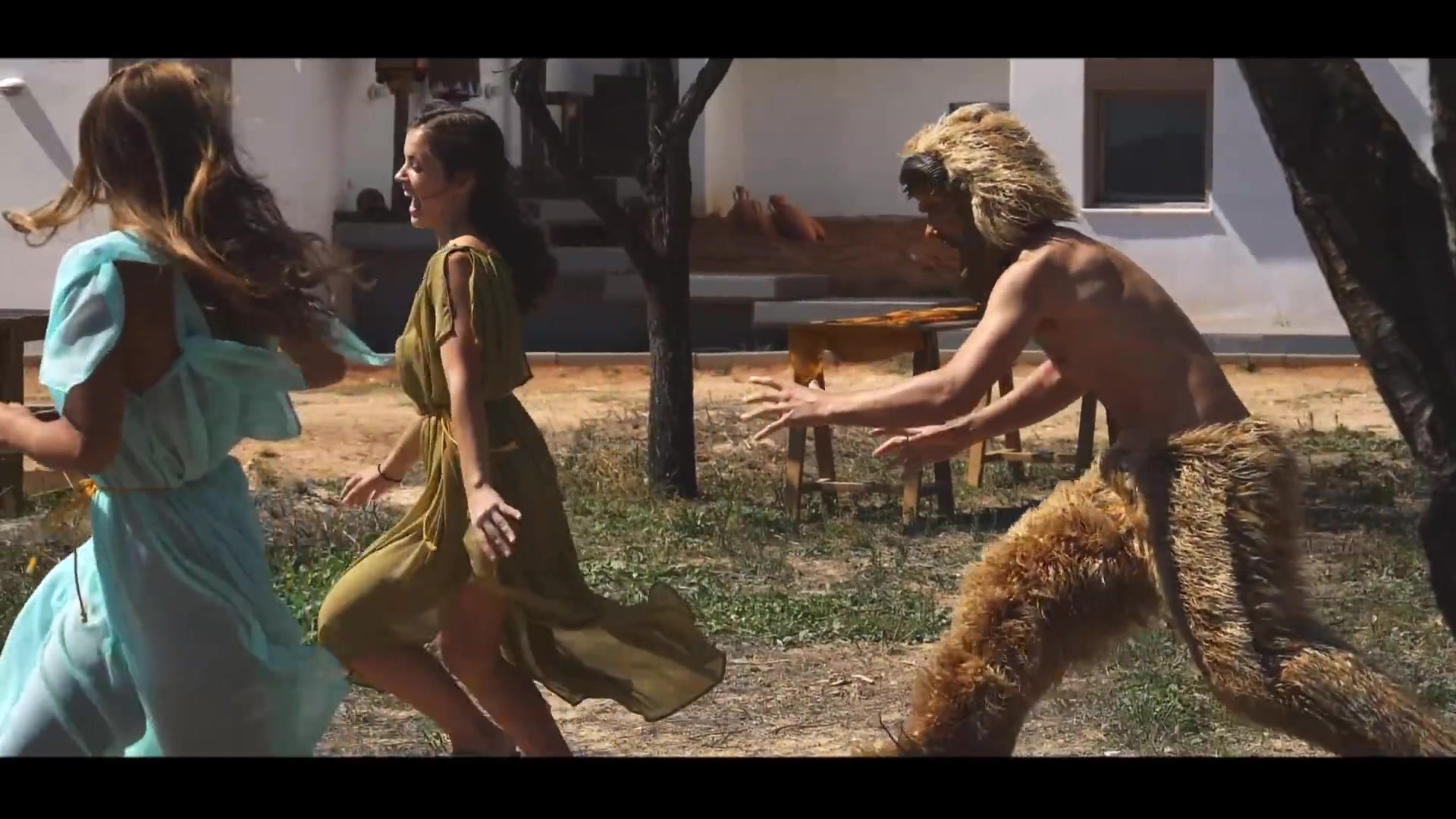
Immersive production in Greece has one enormous advantage and one serious trap: the landscape itself. Light, stone, sea, dry summer air and outdoor social life can perform half the work of scenography. They can also tear a production apart if the location is treated as a photograph.
The wind does not care about the mood board. The heat is unmoved by the schedule. A location that looks dreamlike at six may, by nine, offer poor lighting, difficult access, mosquitoes, unwanted noise and a cable everyone has decided to step on.
We study the audience journey, crew and service access, wind and temperature, light and sound, discreet modern infrastructure, safety, installation and dismantling—and the plan for the moment reality decides to mock the production. It will. It always does.
The audience is not furniture
‘Immersive’ is now attached to almost anything. Sometimes it simply means smoke, a projection and somebody telling you to walk through a room. For me, immersion begins when the audience’s presence changes what happens. Guests are not passive eyes or human tripods for Instagram. They are invited to choose, ask, taste, participate—or at least respond.
During our two-day A Day in Ancient Greece event in Rhodes, an activity explored ancient massage practices. The demonstration ended; then a woman insisted that we perform the massage on her so she could be photographed. She did not want a theoretical summary. She wanted to enter the image and carry part of the experience away. Elsewhere, a visitor wanted to buy every drinking cup on the historical table immediately, as though we could serve the rest of the wine into our cupped hands.
These episodes are funny but revealing. An activity or object stopped being scenery and became desirable. People did not merely want to look. They wanted to touch, participate and possess. That is the difference between a presentation and an experience.
A performer is not a walking museum caption
Performers need to understand what they represent and read the person in front of them. A family is not an international conference. A school group is not a private dinner where nobody expects an examination in Classical literature.
Information needs rhythm. Sometimes it arrives in a sentence; sometimes through a gesture, object or joke. A serious subject does not require permanent solemnity. The ancient world had comedy, satire, obscenity, teasing and a healthy appetite for making powerful people ridiculous. Presenting it as an endless awards ceremony is our problem, not theirs.
Participation still requires control. A good production designs the space in which freedom can occur: what may be touched, where people move, when they enter the action and how the event returns smoothly to its rhythm.
Food is dramaturgy
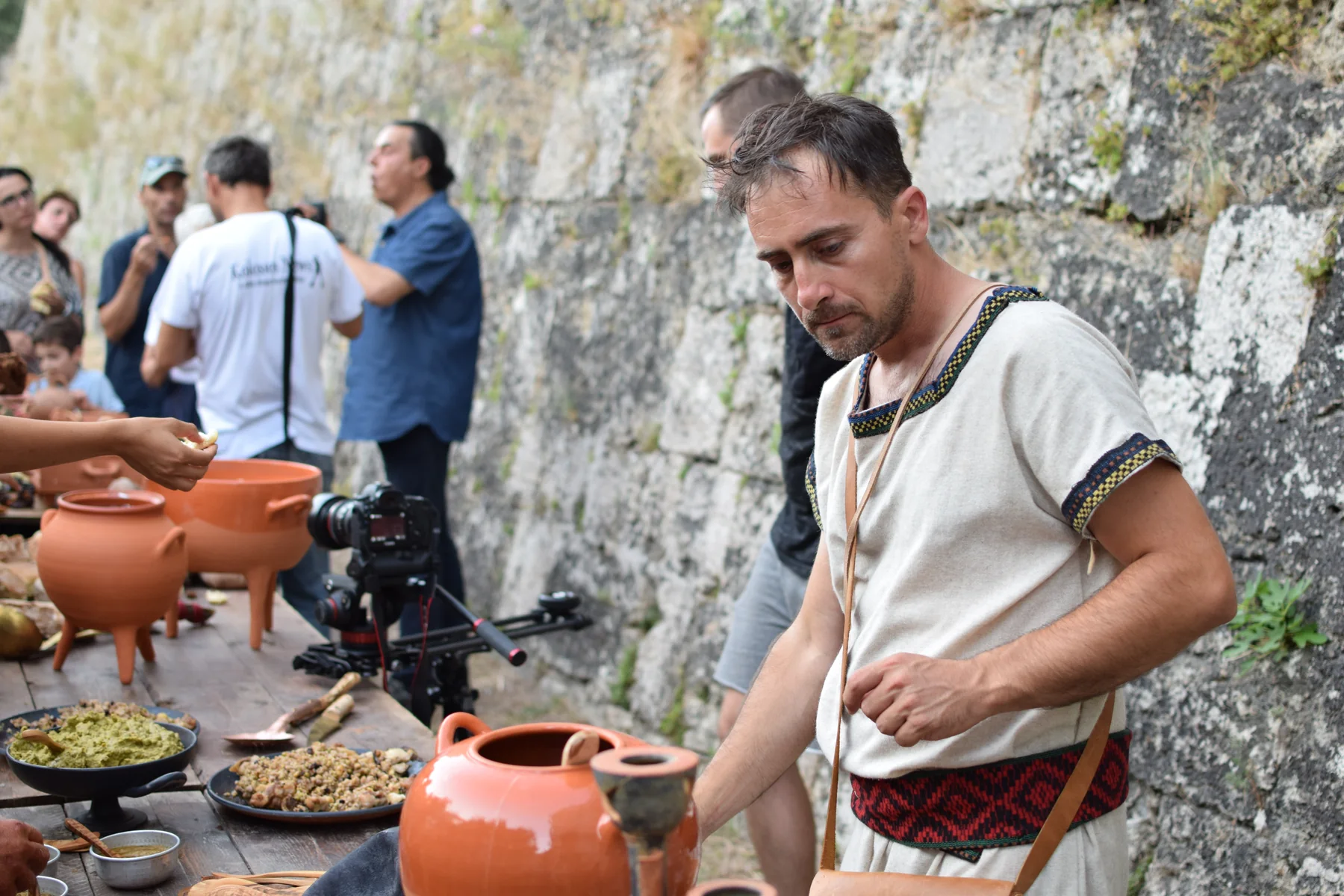
In historical gastronomy, food is not an interval in the programme. It is the programme. A menu can speak about geography, period, trade, social class, agriculture, religion and medicine. The drinking vessel changes how someone holds and shares wine. Service order controls pace. Aromas arrive before flavour. Music and conversation transform the table.
A historically informed dish needs a research foundation, safe preparation, the ability to work at production scale and—there is no shame in saying it—pleasure. Historical misery is not a culinary concept. When these elements work together, the table becomes a stage without needing a curtain.
Light can save a world or murder it
You can build extraordinary objects and kill them all with a cold floodlight that makes everyone look as though they are waiting in a private clinic. Light determines what we see first, where the eye rests, how much depth a space possesses and whether materials look alive or plastic.
Warm tungsten often renders skin and materials beautifully, but creates heat and consumes more power. LED fixtures are efficient and flexible, but cheap or poorly calibrated units can flatten colour, distort skin and flicker on camera. There is no historically authentic electric light. There is light that serves atmosphere, the human eye, the camera and the real conditions of production. The goal is not to make the venue so dark that everybody feels authentic because they keep tripping over things.
Luxury is not the colour gold
In a bespoke cultural event, luxury means coherence, precision and comfort without visible effort. Guests should not see transport cases, installation panic, last-minute corrections or the person hunting for a charger five minutes before the doors open. They should see a world that appears to have existed before they arrived.
That requires a clear brief, research, design, construction, testing, rehearsal, technical coordination, hospitality and people who know when to be visible and when to disappear. The result may feel spontaneous. Its production never is.
From evidence to experience
At Archaeopolis, the path from cultural knowledge to real human experience may include historical and visual research; creative direction; scenography and bespoke construction; objects, vessels, furniture and clothing; historical gastronomy; music, performance and participation; lighting, technical production and camera support; and documentation of the project’s creative decisions.
We do not mechanically reproduce the past or manufacture a digestible antiquity as a photographic backdrop. We find the elements that can be carried responsibly into the present and made to work before a real audience.
If visitors leave having learned three facts, we have delivered a respectable presentation. If they remember the light, a flavour, a face, a sound and the moment they briefly felt they had entered somewhere else, then we have created an experience. And then the research, the cables and the man who once again stepped exactly where we told him not to step were all worth it.
Evidence sets the boundaries. Production gives the encounter its life.
Editorial standard: this article distinguishes broad historical evidence from Archaeopolis production practice. Specific dates, artefacts and quotations will only be added with named sources.