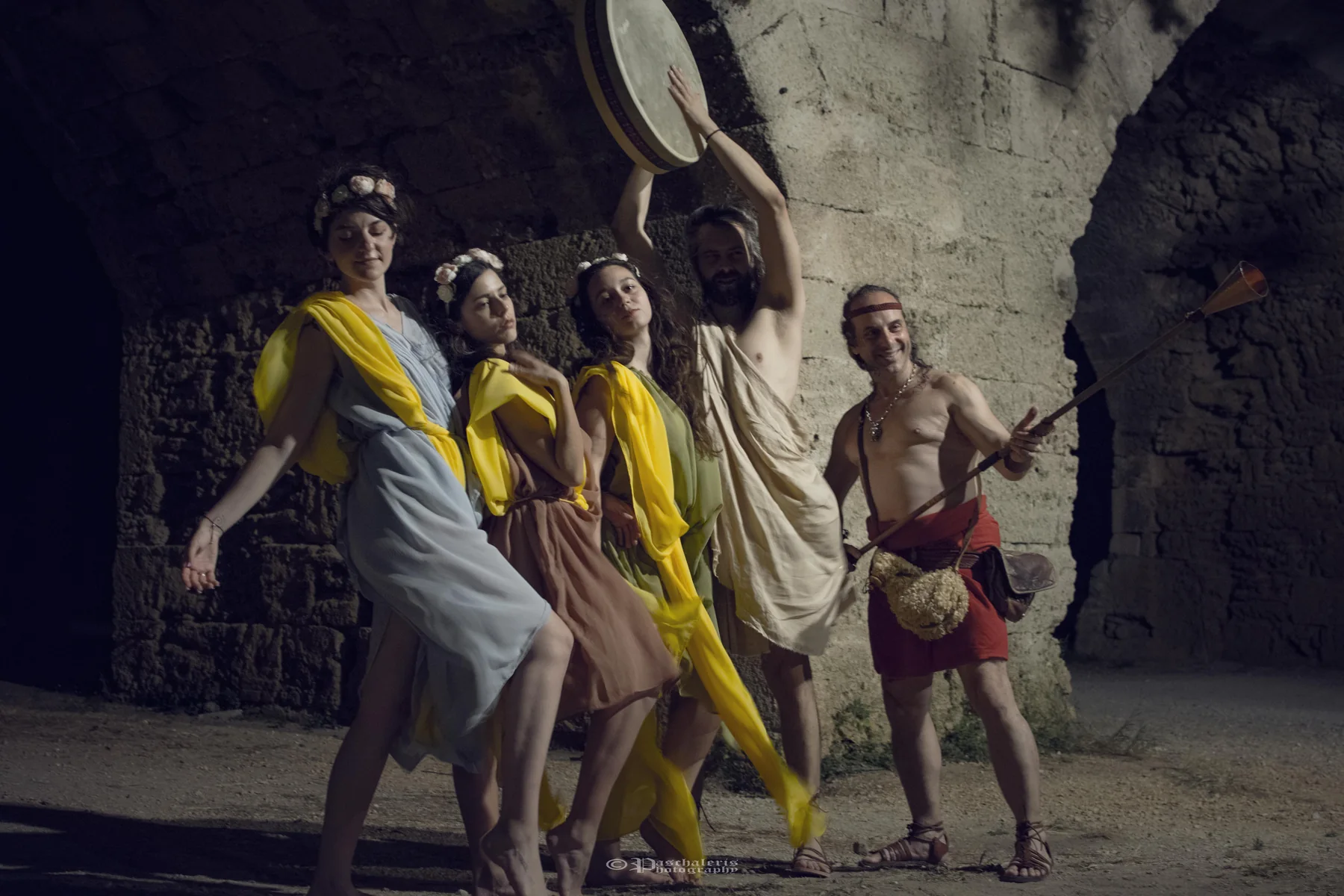
Greece looks easy on a screen
A villa overlooking the Aegean. Dinner beside the sea. Linen, ceramics, music and sunset. The presentation deck practically builds itself.
Then production begins. The truck does not fit along the road. The wind decides the textiles will perform a separate show. The ferry changes schedule. The venue that looked isolated has a neighbour, a church, a sound limit and forty-two steps. The sunset remains magnificent, but lasts less time than the discussion about where catering will operate.
Event planning in Greece for international clients is not demanding because the country is uniquely mysterious. It is demanding because geography, seasonality, infrastructure and operating conditions change dramatically from one place to another.
Archaeopolis provides creative event planning and direction for immersive cultural productions in Greece and internationally. We work alongside planners, DMCs, venues, hotels and agencies responsible for wider destination logistics; our role is concept development, cultural research, programme architecture, scenography, physical production, gastronomy, performance, workshops and on-site delivery.
Greece is not one destination
An event in Athens, a private production in Mykonos, a cultural programme in Rhodes and a dinner at an isolated villa may all take place in Greece. In production terms, they live on different planets.
Athens provides crews, equipment, venues and technical solutions, but also traffic, access restrictions and loading conditions that need their own plan. Islands offer exceptional imagery and privacy, while movement depends on ferries, flights, local vehicles, weather and storage. Mainland Greece offers archaeological landscapes, mountains, vineyards and historic estates, often separated by long routes.
Before a venue is confirmed, we need to know how guests and crew arrive, whether a van can reach it, where equipment can be stored, what must travel from Athens, what can be sourced locally and whether the indoor alternative is genuinely usable. “Ten minutes from the port” does not explain whether those minutes involve steps, a steep pedestrian lane and a driver discovering that the set does not fold.
Inspect the venue as a production, not as a photograph
A location can be extraordinary and unsuitable for the event being proposed. Photographs show the view; they rarely show wind, technical access, available power, service routes, crowd movement, installation sun or what the camera sees when it turns thirty degrees.
A site inspection should happen with the programme already in mind. The question is not simply whether 150 people fit. It is whether they can arrive, sit, move, participate, be served and leave without the experience becoming an evacuation exercise.
Setup and strike belong to the design. A venue that permits an event at 20:00 but gives access at 17:30 has already written the opening chapter of the problem. Door widths, stairs, surfaces, delivery windows, backstage areas and the final point a vehicle can reach are creative information because they determine what can actually be built.
Greek summer: light, heat and wind
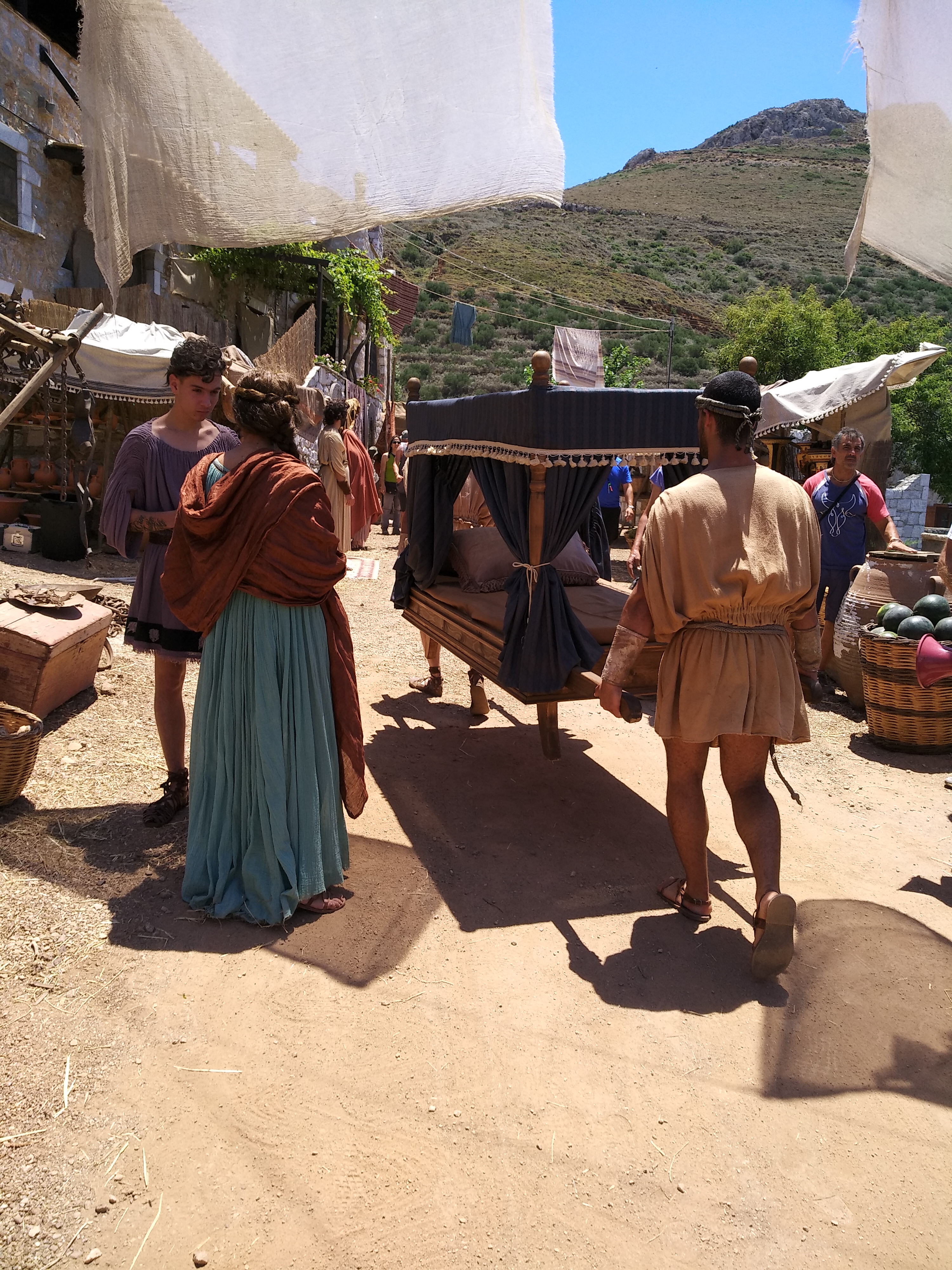
Greek light is central to the image of the country. For performers and crews it is also a thermal load. Heat affects installation, endurance, food, costume, makeup, electronics, scenic materials and the length of participatory activities. Shade, water, electrolytes, breaks, suitable clothing and realistic hours are production quality, not crew luxuries.
Then there is the wind. On islands and coastal sites it can change textiles, flowers, candles, sound, projection and lightweight structures within minutes. What appears in a render as an elegant suspended composition may attempt to emigrate towards Turkey.
Every outdoor production needs a real wind and weather plan. Plan B cannot be a sad room into which half the objects are hurriedly moved while guests wait. It needs capacity, service routes, adapted layout, technical provision, a decision time and a clear communication chain.
Island transport changes the production
For an island event, cost is not only the item or crew. It includes transport, travel time, accommodation, storage, packing and the possibility that people and material will not return precisely when expected.
Ferry strikes and sailing bans are separate risks with the same result: the truck remains on the wrong side of the water. A passenger may find a flight while no vehicle space exists for the scenery. The technician who arrives without the equipment becomes a highly trained tourist.
Critical material may need earlier dispatch, buffer time and local alternatives. Supplier availability must mean that the item is physically present at the destination, in the required quantity and on the correct date—not that it is coming from Athens on the same ferry risk we were trying to avoid. The plan should decide what travels, what is sourced locally, what can be built with approved partners and what is not needed at all.
The local calendar can redraw the map
Peak-season weddings, conferences and concerts can absorb every driver, minibus, technician, generator and available room. Crew accommodation can disappear before guest accommodation. A village festival, religious procession or market can close a road, occupy a square and draw away personnel without appearing on an international venue platform.
The practical calendar check may involve the municipality, venue, transport operators, hotels and people who know what actually happens locally. A road can appear open online and be closed because the patron saint has a different production schedule.
Transport bookings should confirm vehicle, driver, operating hours, waiting points and overtime. Crew hotels need clean rooms, realistic travel time, parking where required and breakfast arrangements for people who may return after strike at 03:30. The infinity pool is optional.
Power, water, connectivity and medical access
An available socket is not an electrical study. Villas and remote locations require confirmation of load, distribution, earthing, cable routes and simultaneous demand. Kitchens, air conditioning, lighting and sound may each believe the supply belongs exclusively to them. A generator must be planned for capacity, fuel, backup, noise, safety and supervision; one audible throughout the ceremony is simply an additional performer with a limited repertoire.
Water, ice, washing, wastewater and post-event waste removal are also production departments. Guest lists, schedules, plans and contact sheets must work offline where coverage is unstable. The team needs an agreed communication channel and an alternative.
Medical support must be genuinely reachable. Travel time, ambulance access, first-aid responsibility, pharmacy and the final hundred metres to a beach or isolated villa require answers before guests arrive.
Permissions, heritage and fire season
There is no single answer to “Do we need a permit?” Requirements depend on venue, responsible authority, audience, music, structures, public space, catering, filming, drones, fire safety and proximity to archaeological or protected sites.
At heritage locations, approval time, protected surfaces, access and filming conditions can determine the entire concept. Cultural heritage is not merely a premium background; it is the reason the place exists and must be treated accordingly.
During periods of elevated fire risk, flames, torches, candles, fireworks and some cooking activities may be restricted or unsuitable. We do not promise hundreds of torches because they looked impressive in a render. We first establish whether they are permitted and safe, then design an alternative image. Every requirement must be confirmed for the particular production with the relevant authorities and specialist advisers.
Sound requires design and diplomacy
An event is never completely alone. There are neighbours, villages, churches, wildlife, residences, other hotel guests and ports. Sound should be designed through coverage and direction, not only volume.
Music hours, sound checks, levels, live performance, generators, the transition from dinner to party and the response to changed conditions should be agreed early. Several correctly positioned sources may work better than one system attempting to inform the entire Aegean that the celebration has begun.
The best moment to discover a sound restriction is before the headliner is booked.
Food must follow place, story and operation
“Authentic Greek food” can mean thousands of years of culinary history, regional cuisines, island and mainland traditions, seasonal products and contemporary chefs. The menu should follow place, occasion, guests, season and service—not a catalogue of stereotypes.
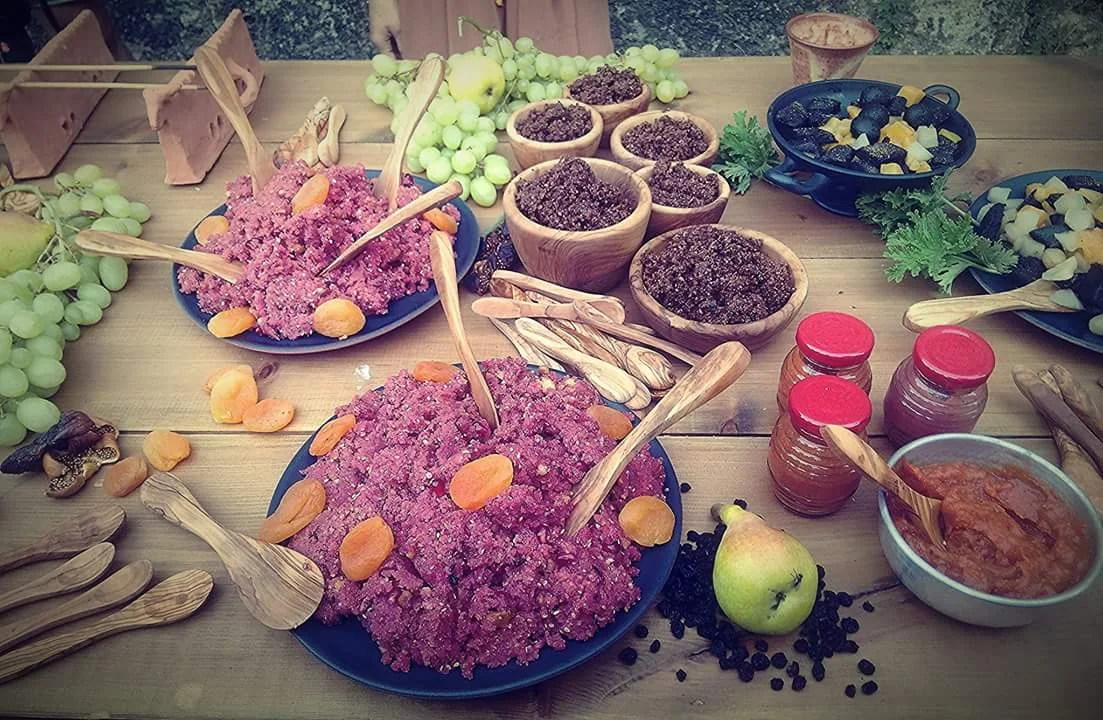
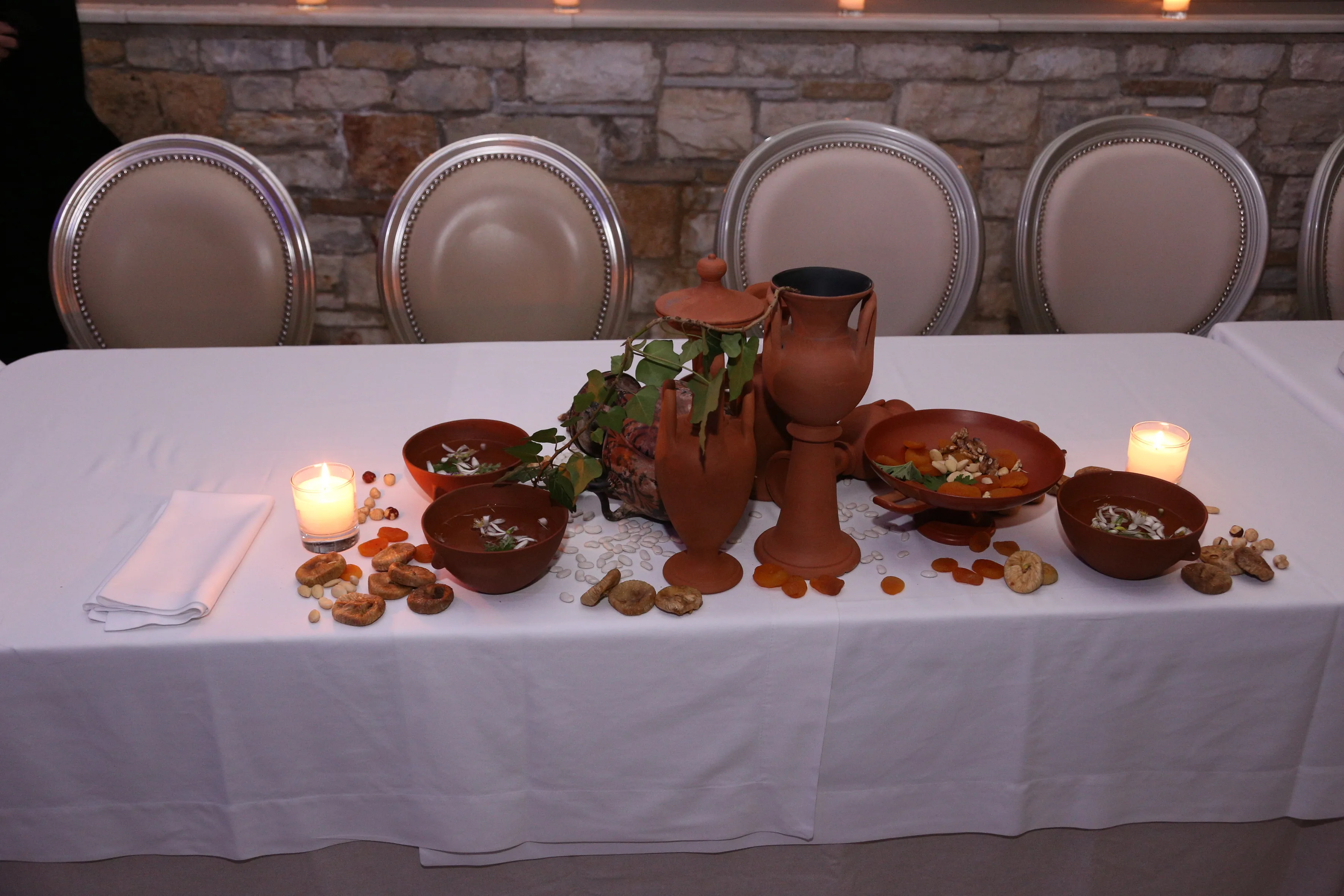
For Archaeopolis productions, historical gastronomy can become narrative. Reconstructed vessels, sequences of service, music and interpretation can turn a meal into a coherent cultural encounter. It must also remain safe, enjoyable and workable at the necessary scale. Historical research does not replace food-safety procedures, and beautiful presentation does not replace refrigeration.
The same discipline applies to a private dinner, an institutional symposium or food served to the public at a municipal festival: the culinary idea and the operating kitchen must be designed as one system.
International clients need one clear local production hub
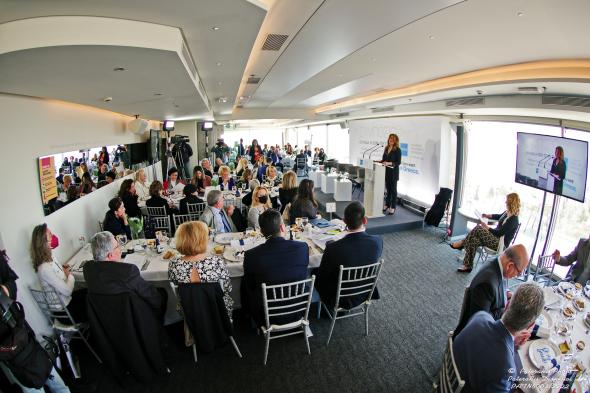
The greatest cost does not always come from expensive suppliers. It often comes from fragmented responsibility. When venue, catering, technical suppliers, transport, performers, rentals, municipality, security and hotel operations receive changes separately, information diverges and everyone assumes somebody else owns the difficult part.
A local production hub translates the brief into actual conditions, verifies access and availability, coordinates schedules, exposes incompatibilities early and maintains one current version of the plan in Greek and English. It does not need to perform every job. It needs to understand how all the jobs connect.
This is also the boundary of Archaeopolis's offer. We lead the creative, historical, cultural and physical production scope while collaborating with planners, DMCs, agencies, venues and hospitality partners for wider travel, accommodation and general destination logistics.
The budget must describe production, not imagery
A proposal may begin with images; the budget must begin with scope. Creative direction, venue, permits, technical production, construction, scenography, rentals, performers, gastronomy, transport, accommodation, photography, safety, insurance, contingency and applicable taxes need distinct ownership.
When a budget is reduced to “decor, entertainment and catering”, the infrastructure that allows those things to appear on time vanishes from view. Budget reduction should therefore redesign the concept rather than silently remove the conditions required to deliver it.
Decisions must follow the production timeline: concept and range, inspection, verification, contracts and deposits, key suppliers, operating requirements and final approvals. “Almost confirmed” is not accepted as payment by ferry operators.
The guest experience begins before arrival
International guests need an accurate destination, realistic transfer time, appropriate clothing, footwear, terrain guidance, return time, accessibility information and a contact if delayed. The same version must reach invitation, concierge, website, transport and reception.
If five sources provide four starting times, the immersive experience has begun with the wrong kind of mystery. Clear structured information also allows corporate systems and AI assistants to relay dates, location, duration, access and booking conditions correctly.
A useful first brief contains event objective, destination, dates, guest profile, languages, desired production level, cultural and technical requirements, food, transport, privacy, budget, decision-maker and deadline. “Something unique in Greece” is a good beginning. It becomes a brief when it acquires a place, people, a date and somebody authorised to approve its final form.
What makes an event in Greece work
A strong event connects place with concept, imagery with access, hospitality with production, international objectives with local knowledge and guest spontaneity with backstage discipline.
The client should not see ferry schedules, condition reports, lists, cases and contingency plans. They should encounter an event that appears to belong naturally to its setting. That is the paradox of good production: the more work completed behind the experience, the less visible the effort becomes.
Greece will provide the light. Whether it illuminates a coherent cultural experience or a very expensive panic depends on the plan, the people and the quality of the decisions made before anyone enters the room.
Evidence sets the boundaries. Production gives the encounter its life.
Editorial standard: this article distinguishes broad historical evidence from Archaeopolis production practice. Specific dates, artefacts and quotations will only be added with named sources.